A Beginner's Guide to AI Agents: Understanding How Digital Workers Are Reshaping Human-Computer Interaction

A beginner's guide explaining how AI Agents autonomously understand, plan, and execute tasks as digital workers.
This article introduces AI Agents as digital workers that understand natural language, plan tasks, coordinate tools, and execute autonomously. Through real-world examples like auto-liking WeChat posts and placing Taobao orders, it demonstrates how agents reshape human-computer interaction from the tool era to the assistant era, powered by LLMs and protocols like MCP.
From the Tool Era to the Assistant Era
Bill Gates once predicted that AI Agents are about to change the way we use computers. That prediction is rapidly becoming reality. With the maturation of large model capabilities and the adoption of tool protocols like MCP (Model Context Protocol), AI agents have entered a true era of explosive growth.
MCP is a standardized protocol officially proposed and open-sourced by Anthropic in late 2024. Its design philosophy is similar to API interface specifications in software development, but it addresses the standardization of interactions between large language models and external tools or data sources. Before MCP, various AI agent frameworks (such as LangChain, AutoGPT, etc.) each had their own tool-calling methods, leading to severe ecosystem fragmentation. By defining a unified "server-client" communication architecture, MCP enables large models to connect to various external services in a standardized way—much like how a browser accesses web pages—from database queries and file management to third-party application control. The widespread adoption of this protocol is accelerating the transition of AI agents from laboratories to production environments.
What it means to "change the way we interact" is essentially a redefinition of our relationship with electronic devices. These "electronic devices" include not just phones, computers, and tablets, but also smartwatches, cars, and all kinds of smart hardware terminals. In the past, people operated devices through clicking, swiping, and entering commands. In the agent era, people only need to express their intent in natural language, and the AI handles all the understanding, planning, and execution.

The core logic behind this is a generational leap in human-computer interaction paradigms—from the "tool era" to the "assistant era." Looking back at history, human-computer interaction has undergone several major transformations: the earliest command-line interfaces (CLI) required users to input precise text commands; the graphical user interface (GUI) introduced by Apple's Macintosh in 1984 allowed people to operate computers by clicking icons with a mouse; the iPhone's multi-touch interface in 2007 ushered in the mobile interaction era; voice assistants (Siri, Alexa) later attempted to introduce natural language interaction but remained limited to simple commands due to their constrained understanding capabilities. AI agents are called a "generational leap" because they represent the first qualitative shift from "single-turn command-response" to "multi-step autonomous planning and execution"—users only need to express their intent, and the system independently completes complex task chains.
What Is an AI Agent?
In one sentence: an AI agent is a digital worker that can autonomously understand natural language, plan task steps, coordinate tools, and execute tasks to completion. The key difference from traditional software is that you no longer need to tell it "how to do it"—you only need to tell it "what to do."
It's worth noting that AI Agents are fundamentally different from traditional automation tools we've known before (such as RPA, or Robotic Process Automation). RPA essentially executes fixed processes according to pre-set scripts—developers need to precisely define the UI elements, click positions, and decision logic for each step. Once the application interface changes (e.g., a button moves), the script breaks. AI agents, leveraging the semantic understanding and visual recognition capabilities of large language models, can "read" interface content and make dynamic decisions like a human, adapting to application layouts they've never encountered before. This transformation from "hard-coded processes" to "intelligent understanding and execution" is the truly disruptive technological breakthrough of AI Agents.
Four Core Capabilities of AI Agents
From a technical implementation perspective, an AI Agent operates through a complete closed loop:
- Natural Language Understanding: Comprehending users' vague, colloquial instructions, such as "buy me two pairs of socks."
- Task Planning and Decomposition: Breaking down a general request into executable multi-step operations. The large model needs to employ Chain-of-Thought reasoning to transform vague requirements into an ordered sequence of sub-tasks.
- Tool Coordination: Automatically calling different applications or tools (such as WeChat, Taobao) based on the needs of each step.
- Autonomous Execution: Simulating human operations to complete the entire task chain step by step.
Behind these four-step closed-loop capabilities, the fundamental reliance is on a Large Language Model (LLM) serving as the core reasoning engine. In recent years, significant improvements in reasoning capabilities from models like OpenAI's GPT-4, Anthropic's Claude 3.5, and Google's Gemini—particularly advances in Function Calling and structured output—have directly driven AI agents from proof-of-concept to practical applications. The "emergence" of large model capabilities is the most fundamental prerequisite for the agent explosion.
One important detail: AI Agent capabilities often need to be combined with protocols like MCP to be realized. MCP essentially provides large models with a standardized set of "hands and feet," enabling them to actually operate external applications rather than remaining at the conversation level. This is precisely the technical foundation that allows "AI Agents combined with MCP" to automatically drive devices.
Two Real-World Examples: What Can AI Agents Actually Do?
Theory tends to be abstract, so let's use two specific scenarios to intuitively understand the practical capabilities of AI agents.
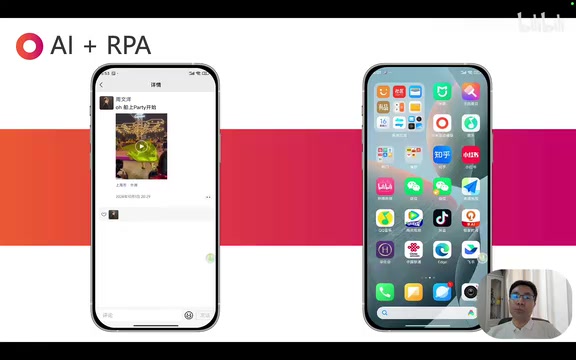
Example 1: Automatically Liking a Friend's Moments Post
When a user gives the instruction "Like the second Moments post of my contact Zhou Wenyang on WeChat," the agent's execution flow is as follows:
- Automatically opens the WeChat application
- Searches for the contact using pinyin initials ZWY
- Enters the contact's profile page and locates the second Moments post
- Completes the like action
The entire process requires no manual intervention from the user at any step. This demonstrates the agent's autonomous operation capability on mobile application interfaces—it can perform a series of coherent operations on a phone just like a real user.
From a technical implementation perspective, an agent's autonomous operation of apps on a phone relies on the deep integration of multimodal large models and device control frameworks. Specifically, the agent typically captures the current interface through screenshots, uses vision-language models (such as GPT-4o, Qwen-VL, etc.) to identify text, buttons, input fields, and their coordinate positions on the interface, and then simulates user actions like clicking, swiping, and typing through Android's Accessibility Service or iOS automation interfaces. Notable projects in the industry include Google's Project Mariner, Apple's Apple Intelligence-enhanced Siri, and open-source community projects like AppAgent and Mobile-Agent. This technical approach is also known as "GUI Agent" (Graphical User Interface Agent).
Example 2: Automatically Placing an Order
The second example better demonstrates the "assistant" nature of AI agents. When a user says "Place an order for two pairs of men's socks on Taobao and pay for them," the agent will:
- Automatically open Taobao and search for "men's socks"
- List multiple candidate products (such as Nanjiren, Langsha, and other brands)
- Proactively ask the user about preferences: "Would you prefer Nanjiren or Langsha?"
- When encountering sensitive operations like payment, display a confirmation prompt: "This task involves important operations. Do you want to continue?"
- Complete the product selection and hand off to the user for payment confirmation
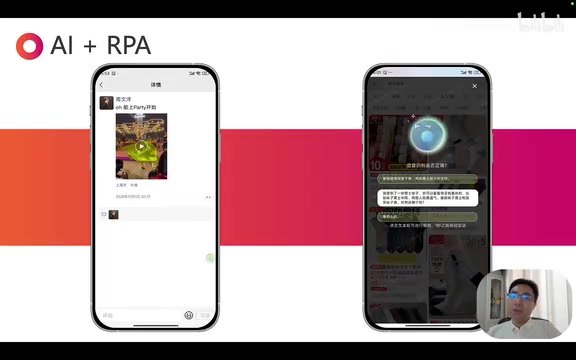
This example reveals two important design principles of mature AI agents: proactive interaction at key decision points, and human confirmation before high-risk operations (such as payments). This design ensures both automation efficiency and the bottom line of safety and controllability.
In fact, these safety designs are not coincidental but stem from the classic AI safety concept of "Human-in-the-Loop" (HITL). Companies like Microsoft and Google explicitly require in their agent product design specifications that "confirmation checkpoints" must be set for high-risk operations such as payments, data deletion, and message sending. Additionally, many agent frameworks introduce permission-tiering mechanisms—low-risk operations (like searching for information) can be fully automated, medium-risk operations (like adding calendar events) require single confirmation, and high-risk operations (like bank transfers) require multi-factor verification. This layered authorization approach is becoming an industry consensus for productizing AI agents.
Why You Must Learn About AI Agents Now
AI agents represent not just a simple feature upgrade, but a complete restructuring of application software.
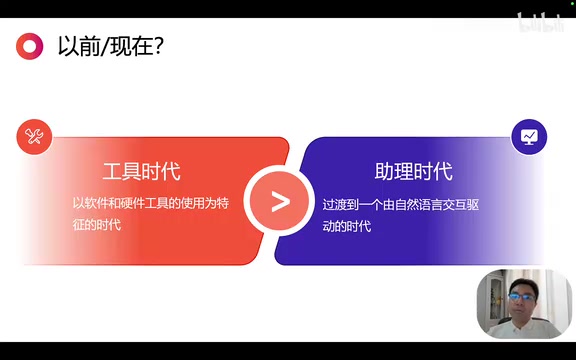
In the tool era, whether you were completing business workflows in software (such as summarizing meeting notes and sending emails) or repeating manual operations on hardware production lines, the essence was always "humans adapting to tools." In the assistant era, this logic is completely reversed—tools begin to proactively adapt to humans.
You only need to express your requirement in a single sentence, and the AI Agent will automatically understand, decompose, coordinate tools, and complete all the work. This paradigm shift means that virtually every industry and every form of software could be redefined.
For ordinary people, understanding and mastering how AI Agents work is becoming a critical entry point for catching this wave of technological transformation.
Getting Started in the Agent Era
For beginners with no prior background, understanding AI Agents doesn't require diving into complex technical implementations right away. You can gradually build your understanding across three levels:
- Conceptual Level: Understand that an agent is a "digital worker that can autonomously complete tasks," with the core being the four-step closed loop of understanding, planning, coordinating, and executing.
- Application Level: Observe real-world cases like liking Moments posts and placing Taobao orders to appreciate how agents transform natural language into a series of concrete operations.
- Technical Level: Further explore the underlying technical components that make up agent capabilities, such as large models and the MCP protocol. Specifically, you can start by learning about the Function Calling mechanisms of mainstream large language models, then gradually study the server-client architecture of the MCP protocol, and the basic working principles of agent frameworks (such as LangGraph, CrewAI, AutoGen, etc.).
The leap from tools to assistants has already begun. Whether you're a developer or an everyday user, building a systematic understanding of AI Agents early on will be an important investment for the future.
Key Takeaways
Related articles

RAG Getting Started in Practice: From Principles to Building an Enterprise Knowledge Base
Bilibili RAG course highlights: from retrieval-augmented generation principles, document chunking and vectorization, to five accuracy factors and enterprise knowledge base boundaries, with fine-tuning vs RAG selection advice.

AI Model Selection Guide: DeepSeek vs. Qwen3 in Practice
How should AI developers choose models? Based on a Bilibili tutorial, this article breaks down the Function Calling differences between DeepSeek V3 and R1, Qwen3's programmatic thinking mode switching and agent capabilities, and outlines a multi-model learning path and practical selection logic.

Anchoring, Loss Aversion, and Nudges: 5 Psychological Tactics Retailers Use to Make You Spend
Behavioral economics reveals how retailers use anchoring, framing, loss aversion, and nudge theory to manipulate your spending decisions. This article breaks down 5 common psychological tactics and offers counterstrategies like slowing down decisions and setting your own anchors to see through the pricing design behind discounts.