A Complete Guide to Learning AI Agents from Scratch: From Beginner to Practice

A systematic guide to learning AI Agents from scratch, from fundamentals to real-world practice.
This article outlines a clear learning path for AI Agents—covering fundamentals, core technologies like RAG and multi-agent collaboration, and hands-on projects—while rationally critiquing crash-course marketing rhetoric. It helps learners build a truly practical knowledge system instead of chasing shortcuts.
Introduction: Cool-Headed Reflection Amid the AI Agent Learning Craze
As large model technology rapidly gains popularity, AI Agents are becoming one of the most closely watched technical directions. The market is flooded with crash courses touting slogans like "from zero to hero" and "master it in seven days," many of which have racked up tens of thousands of views. However, as one Bilibili tutorial creator candidly admitted while preparing his course—after spending a month browsing numerous online tutorials, his impression was that they were "a mixed bag, full of filler and mediocrity."
This phenomenon deserves the vigilance of every learner: In an era of information overload, building a truly systematic and practical knowledge system for AI Agents is far more important than blindly chasing "complete tutorial packages." This article uses this as a starting point to outline a clear learning path for AI Agents, while maintaining a rational perspective on the marketing rhetoric of today's crash courses.

What Exactly Is an AI Agent
From Large Models to Agents
An AI Agent is not a feature that can be accomplished by simply calling a large model API once. Its core lies in the "autonomous decision-making and execution loop": receive a goal → plan tasks → invoke tools → observe results → iterate and adjust. A mature Agent typically includes the following key modules:
- Planning: Breaking down complex goals into executable subtasks
- Memory: Managing short-term context and long-term knowledge bases
- Tool Use: Interacting with external APIs, databases, and code execution environments
- Reflection: Evaluating execution results and self-correcting
Understanding these four pillars is the first step to getting started with AI Agents. Any tutorial that departs from this underlying logic and only teaches "copy-paste Prompts" makes it hard for learners to truly grasp the essence of the technology.
To understand the fundamental difference between AI Agents and traditional large model applications, we need to trace the academic origins of the Agent concept. The ReAct (Reasoning + Acting) paradigm is an important theoretical foundation for current Agent design. Proposed in 2022 by research teams at Princeton University and Google, its core idea is to have the large model alternate between reasoning (generating chains of thought) and acting (invoking tools), thereby forming a "think-act-observe" loop. This paradigm addresses the pain point of pure Prompt generation struggling with multi-step complex tasks. In addition, the "Generative Agents" experiment jointly released by Stanford and Google in 2023 built 25 AI characters with memory, planning, and reflection capabilities in a virtual town, systematically verifying for the first time the feasibility of the four modules—planning, memory, tool use, and reflection—working in concert. It is precisely this research that laid the theoretical foundation for today's Agent architecture, and it also explains why "copy-paste Prompt" tutorials divorced from the underlying logic struggle to cultivate genuine engineering capabilities.
Why Are AI Agents So Popular Now
As the capabilities of GPT-4, Claude, and various open-source large models have surged, Agents have moved from a laboratory concept to actual production. From automated customer service and code assistants to complex multi-agent collaboration systems, the range of real-world applications keeps expanding—which is the direct reason for the explosive growth of all kinds of tutorials.
A Reasonable Learning Path for AI Agents
Fundamentals: Building Cognition and a Development Environment
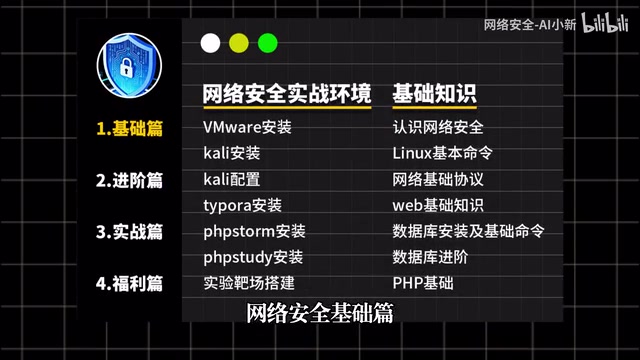
Referring to the structure of mainstream tutorials, a solid introduction should start with environment setup and basic concepts. The goal at this stage is not to rush into running a flashy demo, but to understand:
- What are an LLM's context window, tokens, and temperature parameter
- How to configure a local or cloud development environment
- The basic principles of Prompt Engineering
The creator mentions that he will "walk everyone through setting up an experimental environment step by step"—this is indeed the point where beginners get stuck most easily. Beginners are advised to first get a minimal viable Agent loop working, then gradually add complexity.
Intermediate: Diving into Core Technologies
After building a solid foundation, intermediate learning should focus on:
- Tool Use and Function Calling: Giving the Agent the ability to operate on the external world
- RAG (Retrieval-Augmented Generation): Connecting the Agent to a private knowledge base
- Multi-Agent Collaboration: Orchestrating multiple Agents using frameworks like LangChain, AutoGen, and CrewAI
- Memory Mechanism Design: Vector databases and context management strategies
This stage is the watershed that separates "knowing how to use" from "knowing how to build." Only by mastering these can you build Agent applications that truly solve real-world problems.
Among the intermediate technologies, RAG (Retrieval-Augmented Generation) deserves a dedicated discussion. This technique was first proposed by Meta AI in 2020. Its core is that before generating an answer, it first retrieves relevant document fragments from an external knowledge base and injects them as context into the Prompt, thereby mitigating the "hallucination" problem of large models and overcoming the timeliness limitations of training data. A complete RAG pipeline includes document chunking, vector embedding, vector database storage (such as Chroma, Milvus, Pinecone), similarity retrieval, and reranking—the parameter design of each step significantly affects the final result. As for multi-agent frameworks, LangChain excels at chained orchestration and tool integration, Microsoft's AutoGen focuses on multi-agent conversational collaboration, and CrewAI simulates team collaboration through "role division." Each framework has its own emphasis, and understanding the differences in their design philosophies is far more valuable in the long run than memorizing how to call the APIs.
Practice: From Theory to Implementation
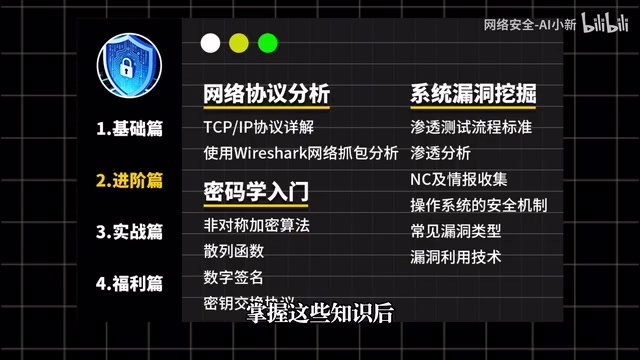
The most valuable learning always happens through practice. The tutorial emphasizes "improving skills through hands-on work and turning theoretical knowledge into practical applications"—this concept is correct. Recommended practical projects include:
- Building a research-oriented Agent that can automatically search and summarize materials
- Developing an intelligent Q&A system connected to a database
- Building an automated workflow with multi-agent collaboration
A Rational Look at "Crash Course Marketing"
Beware of Overpromising
"748 episodes," "from newbie to master in seven days," "guaranteed employment upon completion"—these slogans are highly attractive, but they need to be viewed calmly. AI Agents involve multiple dimensions such as programming fundamentals, large model principles, and engineering deployment. Any claim that you can become a "master" in an extremely short time is worth doubting.
Genuine technical growth follows the principle of "deliberate practice": understand the principles → implement hands-on → encounter problems → debug deeply → accumulate experience. This process cannot be compressed into seven days.
The marketing slogan of "from newbie to master in seven days" fundamentally violates the scientific laws of skill acquisition. The "deliberate practice" theory proposed by psychologist Anders Ericsson points out that the formation of expert-level ability depends on high-quality practice with clear goals, timely feedback, and continually challenging the boundaries of one's comfort zone—not on merely accumulating time or passively watching. As for AI Agents, their knowledge stack spans multiple layers including programming fundamentals, machine learning principles, software engineering, and system deployment, and large model technology itself is still iterating rapidly—framework versions update, API interfaces change, and new paradigms keep emerging. This means learners must have the ability to continuously track the frontier and independently solve problems. Crash courses often create an illusion of control with a "complete roadmap," while sidestepping the truly experience-building key stages of debugging errors, optimizing Prompts, and handling edge cases.
The Value and Limitations of Learning Resources
Tutorials usually come with resources like mind maps, study schedules, material packs, and e-books, which do help beginners build a learning framework. But note: resources themselves do not equal capability. What truly determines learning outcomes is whether you have personally written code, independently debugged a failing Agent, and understood the logic behind every line of the calls.

Practical Advice for AI Agent Learners
Combining the analysis above, here is some advice for readers preparing to get started with AI Agents:
- Build a solid programming foundation: Python is an unavoidable language; you should at least master functions, classes, asynchronous programming, and other basics
- Prioritize understanding principles: Don't settle for copying Prompts—understand the Agent's decision loop
- Doing beats watching: Rather than finishing all 748 video episodes, it's better to personally complete 3 full projects
- Pay attention to open-source frameworks: LangChain, AutoGen, CrewAI, and others are the current mainstream tools worth studying in depth
- Maintain critical thinking: Stay rational about promotions like "the most complete on the internet" and "avoid 99% of detours"
Conclusion
AI Agents are undoubtedly a highly promising technical direction, and systematic tutorials can provide learners with a valuable roadmap. But there are no shortcuts in learning technology—real gains come from a solid understanding of principles and continuous hands-on practice. Rather than being swept up by the marketing rhetoric of "seven-day crash courses," it's better to build your own knowledge system step by step—this is the fundamental way to avoid detours.
Key Takeaways
Related articles

Network Doctor: An Open-Source Terminal Tool for Network Fault Diagnosis
Network Doctor is an open-source terminal network diagnostic tool that integrates ping, dig, curl, and traceroute, automatically detecting connectivity in stages and outputting fault conclusions in natural language.

LangChain Guardrails Explained: Building Safe and Controllable AI Agents
A detailed guide to LangChain Guardrails covering layered ecosystem architecture, middleware implementation, deterministic and model-driven protection for building production-grade secure AI Agents.

Deep Dive into Microsoft's AI Security Tools: Does Performance Really Surpass the Competition?
Microsoft launches enterprise AI security tools claiming superior performance. This deep analysis examines core capabilities, ecosystem advantages, and risks to guide enterprise security decisions.