A DeepSeek Researcher's Confession: The AI He Trained Is About to Replace Him
DeepSeek's top kernel engineer says AI will outperform him within a year, but presses on for open-source ideals.
Liu Shengyu, a PKU Turing Class graduate and core operator engineer at DeepSeek V4.1, has made a rare public admission: he expects AI to fully surpass his operator-writing ability within six months to a year. From a documentation helper six months ago to a tool now capable of reading CUDA PTX and independently optimizing kernels, AI's capability leap has exceeded all expectations. Liu faces a structural paradox—the better he performs, the faster models iterate and the sooner he's replaced—yet industry competition leaves him no choice but to continue. His deeper fear is societal: AI could push the world toward a *Cyberpunk 2077*-style dystopia of technological monopoly. That's why he remains at DeepSeek, committed to open-sourcing powerful AI as a counterforce to inequality.
A Top Kernel Engineer's Late-Night Confession
"I have no choice but to bury my talents in yesterday." This near-brutal admission came from Liu Shengyu, the engineer behind the core operators of DeepSeek V4.1. A graduate of Peking University's elite Turing Class and a former world supercomputing competition champion, Liu now works on the lowest-level kernel code at DeepSeek — a person at the very pinnacle of the AI engineering pyramid, yet one who openly admits that the AI he helped build is pushing him toward obsolescence.
What made this confession spark such widespread discussion is precisely who it came from: someone who, by all accounts, should have nothing to worry about. Operator optimization is considered one of the most technically demanding disciplines in large model engineering, requiring deep expertise in low-level hardware, compilers, and numerical computation. When even someone in this role starts feeling the pressure from AI, it's hard not to draw broader conclusions.
An operator (Operator) is the smallest computational unit in a deep learning framework that performs specific mathematical operations — such as matrix multiplication, attention computation, and LayerNorm. The goal of operator optimization is to make these computations run as efficiently as possible on specific hardware (especially GPUs), which requires a deep understanding of GPU memory hierarchies (shared memory, register files, global memory), warp scheduling mechanisms, and numerical precision trade-offs. The speed and cost of large model training and inference depend heavily on the quality of core operator implementations. This is why kernel engineers have long been considered among the hardest to replace in the large model pipeline — which makes Liu Shengyu's anxiety all the more significant.
In Half a Year, the Tool Became a Rival
Liu described a clear capability inflection curve. Half a year ago, AI was just a minor utility in his eyes — something to look up documentation or hunt for bugs. Now it can read low-level code like CUDA PTX and independently complete operator optimization tasks.
His forecast is blunt: within another six months to a year, AI's ability to write operators will, with high probability, surpass his own entirely. This isn't distant science fiction — it's a close-range judgment made by a practitioner based on his day-to-day work experience. For those familiar with large model training pipelines, this trajectory isn't exaggerated. Once a model can read low-level code and self-optimize, its iteration speed on specific engineering tasks will far outpace human learning.
The Paradox of Excellence: The Better You Are, the Closer You Are to Being Replaced
His situation embodies a sharp paradox: the better he writes, the faster the model iterates, and the sooner the day of his own replacement arrives. This is the structural contradiction that virtually every frontline AI developer faces — their value lies precisely in accelerating a process that may eventually put them out of a job.
Rather than giving up, Liu's response to this tension is a thought-provoking line: "Of course I don't want to be revolutionized out of existence — but if it must happen, I want the one doing it to be me."
CUDA PTX (Parallel Thread Execution) is an intermediate assembly language for NVIDIA GPUs, sitting between high-level programming languages like CUDA C++ and the machine code actually executed by the GPU. Developers typically write in CUDA C++, which a compiler then converts to PTX, which the GPU driver in turn compiles to binary instructions. The ability to directly read and write PTX means bypassing high-level abstractions to fine-tune the lowest-level execution details — memory access patterns, register allocation, instruction pipelines — making it one of the most difficult skills in operator optimization. Previously, AI-assisted tools could generally only understand CUDA C++ logic; the ability to comprehend and generate PTX-level code represents a major leap in AI's low-level engineering capability, and is a key basis for Liu's judgment that a capability inflection has occurred.
Why Keep Pushing Hard When You Know You'll Be Replaced?
Anyone else might have collapsed into anxiety or simply checked out. But Liu's answer is grounded in practical reality: he has no choice.
The logic is brutally competitive: even if he personally chose to stop, models at other companies would keep evolving — and eventually outpace him anyway. On the AI track, an individual's decision to coast can't slow the industry's overall momentum; it only means getting eliminated sooner. This "can't stop" dynamic of collective acceleration is the most honest portrait of the AI race today.
A Worry Bigger Than Personal Unemployment: Two Extreme Futures
What Liu Shengyu truly fears isn't just his own job — it's the direction society as a whole might take. He believes AI could push the world toward two diametrically opposite extremes.
One direction is a complete liberation of productivity, where AI becomes a universally accessible tool that benefits everyone. The other is a Cyberpunk 2077-style dystopia — a handful of companies holding the most powerful AI, technological capability highly monopolized, and ordinary people unable to even buy a ticket for upward mobility.
This concern about technological monopoly is one of the central issues in AI ethics discussions in recent years. When the most advanced models are concentrated in the hands of very few institutions, the technology gap can easily solidify into a social divide.
Open Source: The Reason He Stays
It's precisely this concern that explains why Liu Shengyu chooses to stay at DeepSeek: to research powerful, fast, and universally accessible AI — and to keep it open source. In his view, open source may be the path that pulls the world back from the "2077 abyss" — allowing powerful capabilities to spread as widely as possible rather than being monopolized by a handful of players.
This also aligns with DeepSeek's consistent open-source stance. For ordinary users and developers, open-source models mean lower barriers to access and more opportunities for participation — a direct response to the demand for democratized AI.
Starting in 2024, DeepSeek has progressively open-sourced several of its flagship models, including the DeepSeek-V2 and DeepSeek-Coder series, standing in sharp contrast to the closed-source approach taken by mainstream players like OpenAI and Anthropic. Open-source large models allow researchers, developers, and enterprises to deploy and modify model weights on their own hardware, breaking the dependency on "pay-per-call API access." Against a backdrop of AI capabilities increasingly concentrated among a small number of tech giants, high-quality open-source models are widely seen as a critical force for maintaining diversity in the technology ecosystem and lowering the barrier for smaller teams to participate. Liu Shengyu's direct link between "open source" and "accessibility" reflects this judgment: if the most powerful capabilities exist only in closed-source form, the technology gap will inevitably translate into deeper social inequality.
A Final Note
What makes Liu Shengyu's confession resonate isn't any stunning technological prediction — it's the honest portrayal of an AI practitioner's inner conflict: simultaneously an accelerator and a potential casualty; clear-eyed about the risks, yet choosing to press forward anyway.
Whether or not his timeline proves accurate, this authentic voice from the frontlines is worth serious reflection for anyone who follows AI. When the pace of technological progress outstrips humanity's ability to adapt, how should we find our footing — and in which direction should we steer the future?
Related articles
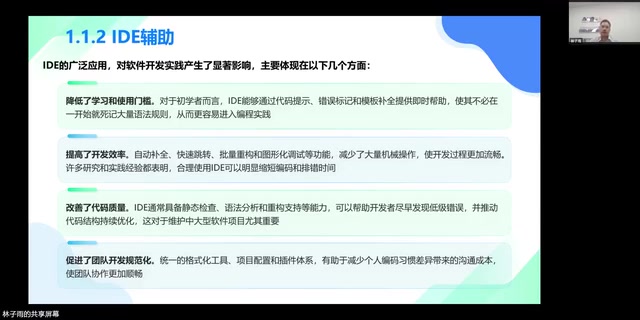
AI Programming at Xiamen University: A Full Breakdown from Textbook to Teaching
Xiamen University's Lin Ziyu shares how he built an AI programming course — covering three coding eras, Claude Code's production-ready milestone, three methodologies, and a fully free, reproducible curriculum design.

n8n Automation in Practice: How AI Workflows Help SMBs Cut Costs and Boost Efficiency
Learn how SMBs use n8n and AI tools to automate multi-platform messaging, AI customer service replies, and bulk exam data entry — real-world workflows for cutting costs.
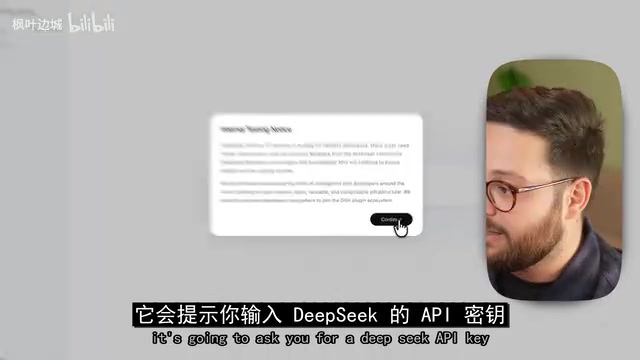
DeepSeek Harness Hands-On: Build Your Own Coding Agent for Free
DeepSeek Harness hits 190K GitHub stars as a free Claude Code alternative. This hands-on review covers installation, plugin models, full traceability, and driving Claude Code as a subprocess.