n8n Automation in Practice: How AI Workflows Help SMBs Cut Costs and Boost Efficiency
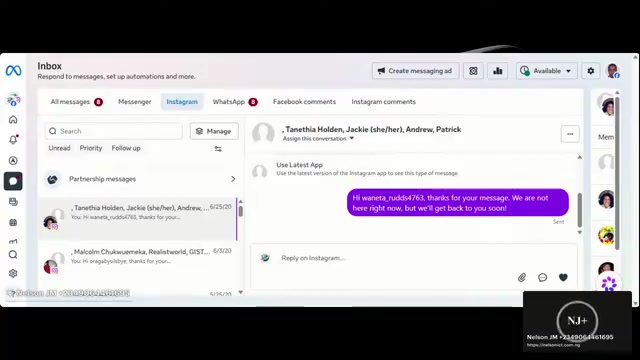
How SMBs use n8n and Meta APIs to fully automate high-volume messaging and exam data entry.
This article traces a real SMB automation journey inspired by an African education service provider's operational challenges. It covers three core practices: aggregating Facebook Messenger, Instagram, and WhatsApp messages into a unified inbox via Meta Business Suite; using n8n workflows to chain AI-generated replies for intelligent customer service; and developing an Exam Suite tool to automate bulk candidate registration data entry with planned AI name validation. The article also notes how automation infrastructure can evolve into a full educational service platform.
From Manual Messaging to AI Automation: A Real Business Pain Point
Many small and medium-sized businesses have long embraced the internet, yet their automation maturity remains stuck at manual operations. The source material for this article comes from a practitioner working in rural Africa providing network and education services — and the pain points he describes are remarkably relatable: sending messages daily to roughly 1,500 people, managing a contact database of over 10,000 entries, and juggling social media across platforms like Facebook Messenger, Instagram, and WhatsApp.
Without automation tools, handling that volume of communication is virtually impossible. He noted that around 500 messages per week once required manual replies — "almost all of them we had to respond to ourselves." As the business scaled, relying purely on human effort to manage this communication load became unsustainable, which is exactly what drove the adoption of automation tools.
Multi-Platform Message Aggregation: The Role of Meta Business Suite
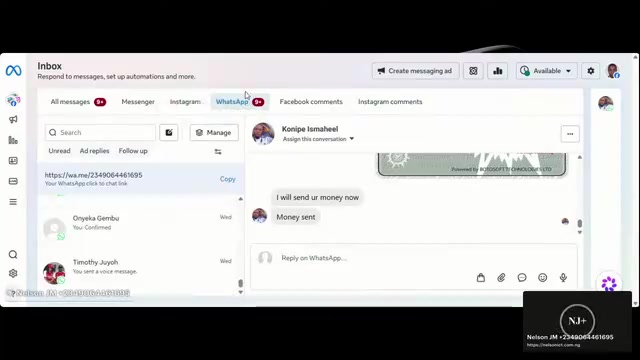
One noteworthy practice highlighted in the source material is consolidating messages from different social platforms into a single unified inbox. Through Meta Business Suite, messages from Facebook Messenger, Instagram DMs, WhatsApp, and Facebook comments are all managed in one place.
This "unified inbox" model works by leveraging the open APIs provided by each platform. As the author puts it, "all these platforms allow you a certain level of automation — through the use of APIs, you can automatically communicate with many people at the same time." For businesses running multiple social media accounts, this kind of aggregation dramatically reduces the cost of switching between channels and lays the groundwork for automated replies downstream.
Meta Business Suite's unified inbox relies on Meta's Graph API and Webhooks infrastructure. When a user or customer sends a message via Facebook Messenger, Instagram Direct, or WhatsApp Business, the platform pushes the event in real time to a callback URL registered by the business, which can then read the message content and trigger automated workflows. It's worth noting that WhatsApp Business API differs significantly from a regular WhatsApp account in terms of features and access requirements: the former requires application through Meta or an authorized partner and is suited for high-volume messaging scenarios, but is subject to strict message template review; the latter has limited functionality and cannot support large-scale automation. In emerging markets like those in Africa — where WhatsApp is often the primary communication channel — the ability to successfully integrate with the Business API is critical to the viability of any automation solution.
AI Auto-Reply: From n8n to Intelligent Customer Service
With the introduction of workflow automation tools like n8n, operational efficiency has improved noticeably. The author mentions that users who communicate with them "sometimes receive automatic AI replies" — any incoming message can trigger an AI-generated response.
n8n, as an open-source workflow automation platform, can chain together message triggering, AI-generated replies, and cross-platform delivery into a single seamless pipeline. Combined with the growing ecosystem of AI tools entering the market, businesses can "use any one of them to easily build their own brand." These low-code/no-code automation approaches are actively lowering the barrier for SMBs to access AI capabilities.
n8n is a node-based, open-source workflow automation platform operating under a "Fair-code" license model that allows self-hosting — avoiding the privacy risks of uploading data to third parties. Its core design connects "Triggers" and "Actions" from different services as visual nodes, enabling complex cross-system integrations without deep programming knowledge. In a message automation scenario, a typical workflow looks like this: Meta Webhook receives a new message → a node passes the message text to OpenAI or a locally hosted LLM → the model generates a reply → another node sends the reply via the corresponding platform's API. Compared to commercial alternatives like Zapier or Make (formerly Integromat), n8n's self-hosted model is better suited for organizations with data sovereignty requirements or tight budgets — though it does require managing your own server environment.
Data Entry Automation: Eliminating Repetitive Manual Work
Beyond messaging, the author also shares automation practices applied to exam registration for educational institutions. For organizations managing multiple schools, manually entering CA (Continuous Assessment) data for each candidate is simply not feasible: "If you have 10 to 15 schools like everyone else, you might have around 1,500 candidates — you simply don't have time to enter them one by one."
Manual entry is not only labor-intensive but also error-prone and easy to miss. To address this, they developed an "Exam Suite" automation software with the following capabilities:
- CA Auto-Entry Tool: Simply import the student list and enter the center number — the system automatically fills in all registration data.
- Image Resizing Tool: Automatically adjusts photos to the exact dimensions required by the registration portal.
- Planned AI Validation System: Automatically flags name entry errors before submission, preventing invalid data caused by hasty inputs.
The author emphasizes that if this AI validation feature can be realized, "it will be a great assistant for every agent" — because name entry errors are among the most common and hardest-to-fix mistakes in the registration process.
CA (Continuous Assessment) data entry is a standard process in the exam systems of West African countries (such as Nigeria's WAEC and NECO), requiring schools to submit each candidate's personal information, subject choices, and continuous assessment scores to the exam body's online portal before national exams. Since these portals typically don't support bulk imports, the traditional approach is for staff to manually fill out forms one by one — extremely time-consuming when candidate counts reach hundreds or even thousands. Automation tools typically use RPA (Robotic Process Automation) techniques to simulate human interaction with the browser, or leverage any bulk upload interfaces the portal may offer. Name entry errors are particularly difficult to correct because exam bodies generally do not process name change requests after certificates are printed and records are archived — a spelling error can result in a mismatch between the certificate and the candidate's official ID, affecting university admissions or employment prospects.
From Tool to Platform: The Extended Value of Automation
Automation doesn't stop at internal efficiency gains — it can also unlock new service capabilities. The source material describes how institutions can apply through a website to gain "teacher status," which then allows them to register schools, enroll students, and create test questions and answers for those students.
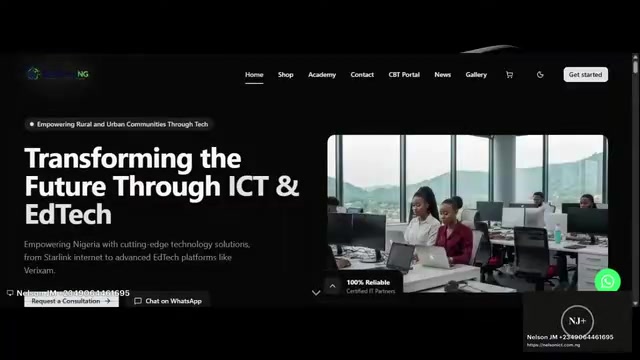
This means an automation infrastructure can support a complete educational service loop: from candidate data management, to online assessments, to course delivery. The author also mentions that approximately 10,000 "centers" have already accumulated phone number records, providing a data foundation for future large-scale outreach and automated marketing.
Practical Note: Runtime Environment Dependencies for Software Deployment
For users planning to actually deploy this type of automation software, the author offers a specific setup reminder: the CAS software requires a version 4.0 runtime environment to be installed first (particularly for users on older systems like Windows 7) — "if you don't install this before trying to install the software, you won't be able to complete the installation."
This detail serves as a good reminder that when rolling out automation tools, environment dependencies and prerequisite configurations are often the most overlooked yet most experience-critical factors.
Conclusion: Automation Is Reshaping How SMBs Operate
Though presented in a conversational, sometimes fragmented style, this firsthand account clearly outlines the full journey an SMB can take toward automation: from multi-platform message aggregation, to AI-powered auto-replies, to bulk data entry and intelligent validation. The combination of workflow tools like n8n with increasingly mature AI capabilities is steadily bringing automation — once affordable only by large enterprises — within reach of ordinary organizations and individual practitioners.
For business scenarios characterized by high communication volume, repetitive manual work, and complex data processing, automation is no longer a "nice-to-have" — it's a necessity for sustaining business at scale.
Related articles
AI Programming at Xiamen University: A Full Breakdown from Textbook to Teaching
Xiamen University's Lin Ziyu shares how he built an AI programming course — covering three coding eras, Claude Code's production-ready milestone, three methodologies, and a fully free, reproducible curriculum design.

A DeepSeek Researcher's Confession: The AI He Trained Is About to Replace Him
DeepSeek V4.1 kernel engineer Liu Shengyu admits the AI he trained will surpass his own skills within a year—yet he keeps pushing forward. Here's why.
DeepSeek Harness Hands-On: Build Your Own Coding Agent for Free
DeepSeek Harness hits 190K GitHub stars as a free Claude Code alternative. This hands-on review covers installation, plugin models, full traceability, and driving Claude Code as a subprocess.