A Guide to Cleaning Zombie Vectors in RAG Systems: Identifying and Eliminating Stale and Orphaned Vectors

A systematic guide to detecting and cleaning stale, orphaned, and residual vectors in RAG systems.
RAG systems accumulate zombie vectors—stale, orphaned, and deleted-but-retrievable embeddings—that degrade retrieval quality and pose compliance risks. This guide explains the three types of problem vectors, why vector database hygiene is chronically overlooked, and provides actionable best practices including metadata-driven source linking, idempotent sync mechanisms, deletion verification, and regular health checks.
Introduction: The Overlooked Problem of Vector Database Hygiene
Retrieval-Augmented Generation (RAG) has become the dominant architecture for building enterprise-grade AI applications. The core idea behind RAG is to combine external knowledge retrieval with the generative capabilities of large language models: when a user asks a question, the system first converts the query into a vector representation, retrieves the most semantically similar document chunks from a vector database, and then feeds this contextual information along with the question into an LLM to generate the final answer. This architecture effectively addresses inherent limitations of LLMs—such as training data cutoff dates and the tendency to hallucinate—and has been widely adopted in intelligent customer service, enterprise knowledge base Q&A, legal document retrieval, and other scenarios.
Developers love discussing how to improve recall rates, optimize embedding models, and fine-tune chunking strategies—for example, choosing between OpenAI's text-embedding-ada-002 and open-source BGE models, or deciding between fixed-length chunking and semantic paragraph-based chunking. Yet they often overlook a more fundamental and thornier problem: data hygiene in vector databases.
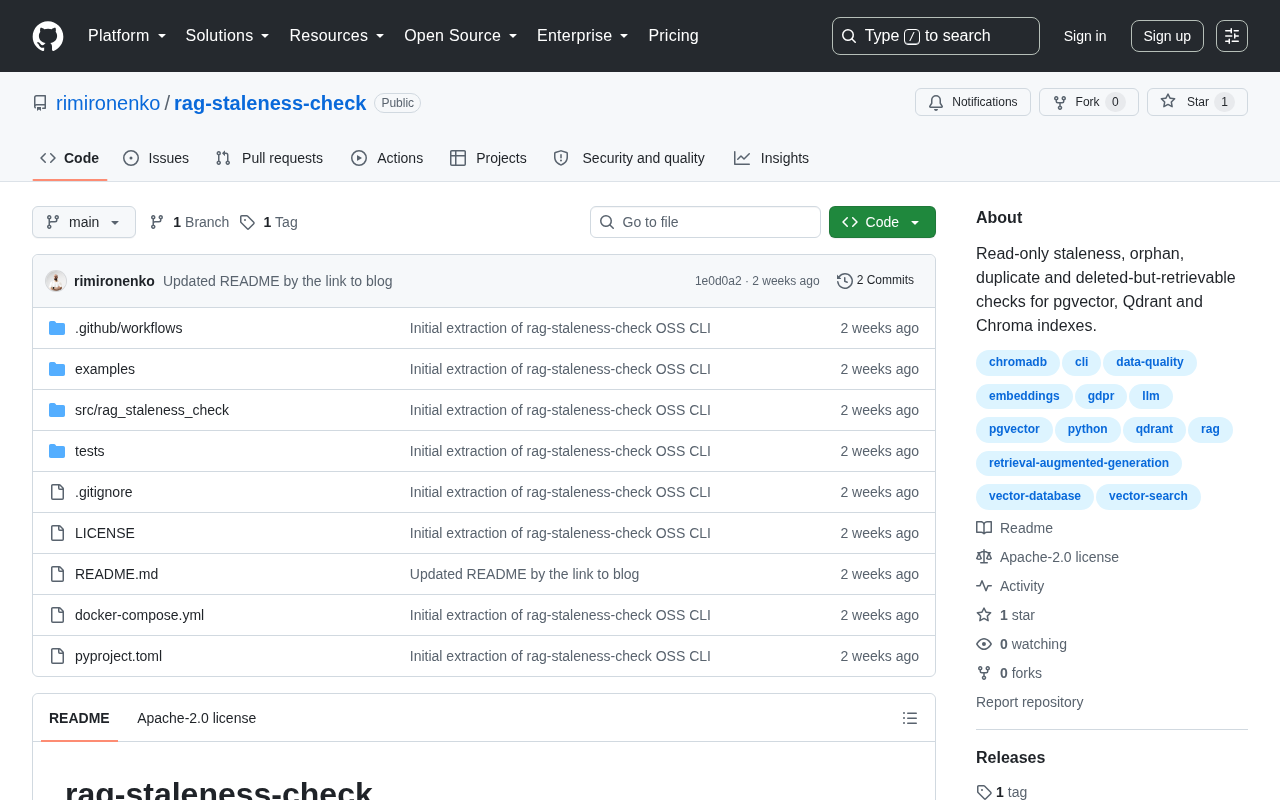
Recently, an open-source project caught the community's attention—one focused on discovering stale, orphaned, and deleted-but-retrievable vectors in RAG systems. This seemingly niche tool actually reveals a widely underestimated operational blind spot in current RAG engineering practices.
What Are Zombie Vectors? Three Common Types Explained
In production RAG systems, data is never written once and left unchanged. As source documents are updated, deleted, and migrated, various "problem vectors" gradually accumulate in the vector database. These zombie vectors can be broadly categorized into three types:
Stale Vectors
Stale vectors arise when source document content changes but the corresponding vector embeddings are not recalculated and updated in time. Vector embedding is the process of using an embedding model to convert text into high-dimensional numerical vectors (typically arrays of 768 or 1536 floating-point numbers)—essentially a mathematical representation of the text's semantics. Once the source text changes without regenerating the embedding, the semantic information carried by the vector diverges from the actual content.
For example, if a product manual is upgraded from v1.0 to v2.0 but the vector database still retains embeddings generated from v1.0 content, user queries may match outdated information, causing the AI to deliver incorrect answers. At the chunking strategy level, if document restructuring changes paragraph structures, the original chunk boundaries may no longer be appropriate, further amplifying the negative impact of stale vectors.
Orphaned Vectors
Orphaned vectors are vector records that have lost their association with source data. This typically occurs when data synchronization logic has flaws: documents in the source system are deleted or restructured, but corresponding entries in the vector database remain due to broken ID mappings, incomplete transactions, or failed asynchronous tasks.
In practice, orphaned vectors often stem from the complexity of system architecture. When document management systems, embedding computation services, and vector databases run as independent distributed components, a failure at any point—network timeouts, message queue backlogs, service restarts—can interrupt the operation chain, leaving inconsistent states. These "ownerless" vectors not only consume storage space but can also pollute search results, since the search algorithm cannot distinguish an orphaned vector from a legitimate one.
Deleted-but-Retrievable Vectors
This is the most dangerous category of zombie vectors. Many vector databases employ soft delete mechanisms or deferred index rebuilding strategies. Soft delete means that when a record is deleted, it is not immediately removed from physical storage; instead, it is marked as logically deleted via a flag bit. The design intent is to support data recovery and audit trails while avoiding the performance overhead of frequent physical deletions. Deferred index rebuilding is a problem unique to vector databases: since building efficient vector indexes is computationally expensive, many databases don't rebuild the index after every deletion, opting instead for batch or scheduled rebuilding strategies.
This means that vectors marked as "deleted" may not have been physically removed, or they may still be retrievable through certain index query paths. For scenarios involving sensitive data or compliance requirements, this can pose serious data leakage risks. Take GDPR's (General Data Protection Regulation) "right to be forgotten" as an example: Article 17 explicitly states that individuals have the right to request that data controllers delete all personal data related to them. In RAG systems, this requires not only deleting original documents from the source database but also ensuring that vector embeddings generated from those documents are thoroughly purged. If related vectors remain in the vector database, the retrieval and reconstruction capabilities of LLMs could still indirectly leak user privacy, and non-compliant companies may face fines of up to 4% of their global annual revenue.
Why Has RAG Data Hygiene Been Neglected for So Long?
There are several deep-rooted reasons why data hygiene in RAG systems tends to be overlooked.
First, the unreadability of vectors makes problems hard to spot intuitively. In traditional databases, dirty data can be identified directly through SQL queries; in vector databases, a 1536-dimensional array of floating-point numbers is meaningless to humans. Engineers cannot visually inspect which vectors are outdated or orphaned. Vector space is fundamentally a high-dimensional mathematical space where relationships between data points can only be measured through mathematical metrics like cosine similarity or Euclidean distance, rendering traditional data auditing methods completely ineffective.
Second, RAG retrieval results exhibit a kind of "fuzzy correctness." Even when stale or orphaned vectors are retrieved, the system typically still returns a seemingly reasonable answer. This is because LLMs have powerful text generation capabilities—even when fed outdated or partially incorrect context, they can still produce fluent, confident responses, and may even blend incorrect information with correct information to generate "half-true, half-false" output. Problems usually only surface through user complaints or spot checks. This delayed feedback loop diminishes teams' motivation to proactively clean up data.
Finally, operational tooling for mainstream vector databases is still immature. Compared to the decades of accumulated data governance, auditing, and cleanup tool ecosystems for relational databases—from Oracle's Data Guard to PostgreSQL's rich extension ecosystem—vector databases are still in their early stages. While mainstream vector databases like Pinecone, Weaviate, Milvus, and Qdrant are rapidly iterating on query performance and scalability, they still have significant room for improvement in data lifecycle management, consistency auditing, and garbage collection capabilities, lacking standardized "data health check" tools.
The Core Value of Zombie Vector Cleanup Tools
Tools specifically designed for zombie vector cleanup make the concept of "data governance" for vector databases concrete and actionable. By automatically scanning and cross-referencing source data with the vector database, they can:
- Identify consistency gaps: Detect version mismatches between source documents and vector embeddings. The tool compares hash values, version numbers, or last modification timestamps of documents in the source system against metadata stored in the vector database to precisely pinpoint which vectors are outdated.
- Discover residual data: Locate vectors that should have been deleted but still exist in the index. This typically involves reverse lookups—enumerating the source IDs of all records in the vector database and then verifying whether those IDs still exist in the source system.
- Reduce compliance risk: Ensure that "delete" operations truly take effect at the vector level, meeting the requirements of data privacy regulations such as GDPR and CCPA (California Consumer Privacy Act). The tool can generate compliance audit reports proving that sensitive data has been thoroughly purged.
- Optimize retrieval quality: Clean up polluted data, indirectly improving the recall precision and answer reliability of RAG systems. Studies suggest that when more than 10% of vectors in a database are zombies, retrieval result relevance can noticeably degrade.
From an engineering practice perspective, such tools should be incorporated into the CI/CD and operational workflows of RAG systems, just as we set up regular data validation tasks for traditional databases.
Best Practices for RAG Vector Database Operations
As more enterprises push RAG into production, full lifecycle management of vector databases will shift from "nice-to-have" to "essential." For teams building or maintaining RAG systems, here are proven practical recommendations:
Establish Strong Links Between Vectors and Source Data
Maintain clear source IDs, version numbers, and timestamps for every vector to facilitate subsequent auditing and cleanup. This is the foundation for automated data hygiene checks. Specifically, the metadata fields of each vector should include at minimum: source document ID, document version hash, embedding generation timestamp, embedding model version, and chunk sequence number. This structured metadata design not only supports precise consistency validation but also provides the traceability information needed for batch recomputation when upgrading embedding models in the future.
Design Idempotent Synchronization Mechanisms
Ensure that document update and delete operations reliably propagate to the vector layer, preventing orphaned data. An Event-Driven Architecture (EDA) is recommended, binding document change events to vector operations. In this architecture, when a document in the source system is created, updated, or deleted, the corresponding change event is published to a message queue (such as Apache Kafka or AWS SQS) and consumed by a dedicated vector synchronization service that executes the appropriate operations. Combined with Change Data Capture (CDC) technology, changes can be captured directly from database transaction logs, ensuring no operations are missed. Idempotent design ensures that even if the same event is consumed multiple times—for example, due to network retries or consumer restarts—no duplicate or erroneous vector records are created.
Verify That Deletions Are Real
Don't assume that calling a delete API means the data is gone. Proactively test whether deleted content is still retrievable. This is especially important when using approximate nearest neighbor indexes like HNSW, where deletion operations may take effect with a delay.
HNSW (Hierarchical Navigable Small World) is one of the most popular vector index algorithms today. Its core mechanism builds a multi-layer graph structure: the top layer is a sparse graph for fast localization, and the bottom layer is a dense graph for precise search. HNSW deletion operations have inherent complexity—since nodes in the graph are interconnected through edges, simply deleting a node could break the graph's connectivity. Therefore, many implementations use a "mark-and-delete + deferred cleanup" approach, where marked nodes may still be traversed during searches as navigation stepping stones. It is recommended that after performing a delete operation, you actively verify by constructing query vectors highly relevant to the deleted content, confirming that the target data has been completely removed from search results.
Conduct Regular Vector Data Health Checks
Incorporate vector hygiene checks into routine operations rather than waiting for problems to trigger a reactive response. Set up scheduled tasks to run full consistency scans on a weekly or monthly basis. Specific health check items should include: bidirectional consistency verification between source data and the vector database (forward-checking that all source documents have corresponding up-to-date vectors, and reverse-checking that all vectors map to valid source documents), vector dimensionality and model version consistency validation, monitoring the ratio of storage space to valid vectors, and spot-checking the effectiveness of delete operations. For large-scale vector databases, a strategy combining sampled scans with full scans can maintain sufficient coverage while keeping computational costs under control.
Conclusion
The maturation of RAG technology is reflected not only in model capabilities and retrieval algorithms but also in the refinement of engineering details. Data hygiene in vector databases is precisely one of those easily overlooked yet critically important aspects. While pursuing AI application performance, don't forget to give your underlying data a thorough cleanup. As RAG evolves from prototype to large-scale production, those who can better govern their vector data will build more reliable and compliant AI systems.
Related articles
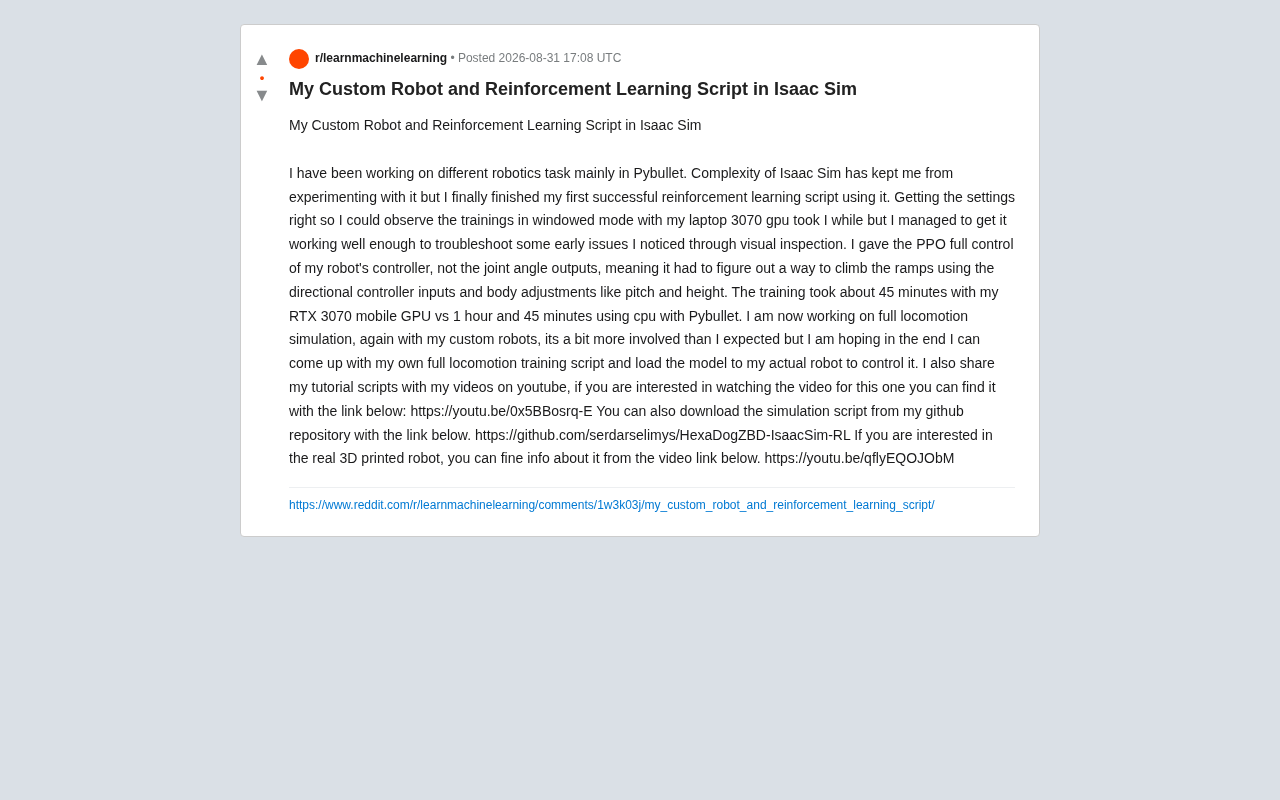
Migrating from PyBullet to Isaac Sim: A Hands-On Guide to Reinforcement Learning with Custom Robots
A complete guide to migrating from PyBullet to Isaac Sim for custom robot RL training, covering PPO hierarchical control, GPU acceleration benchmarks, and sim-to-real deployment.

HRConvert2: A Self-Hosted File Conversion Server with Self-Healing, Self-Installing, One-Click Deployment
HRConvert2 v3.8.4 is an open-source self-hosted file conversion server with Docker support, featuring self-installing, self-healing, and resource-aware capabilities for private file conversion.
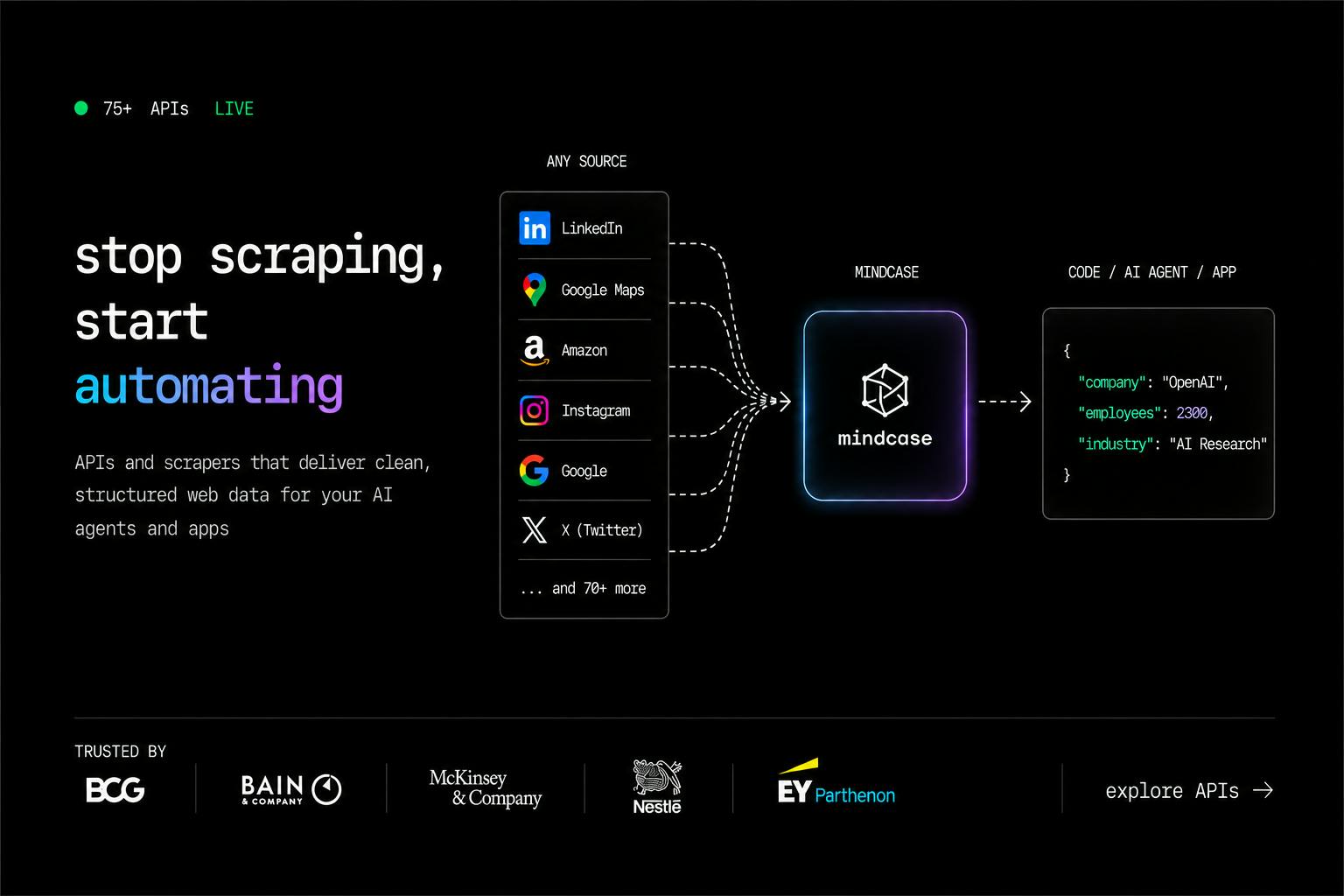
Mindcase: An API Tool for Extracting Structured Data from Any Webpage in Minutes
Mindcase is a web data extraction tool for developers and AI teams, offering ready-made data source APIs and custom API building to turn complex web scraping into simple API calls.