A New Paradigm for Artificial Life: Using Foundation Models to Explore Possible Life Forms

Foundation models screen 260,000 simulation rules to find the narrow "island" where emergent complexity arises.
Artificial life researcher Akarsh Kumar proposes parameterizing an entire rule space of 260,000 possible simulations and using foundation models to automatically identify which produce interesting emergent phenomena — replacing manual inspection. The key finding: complexity-generating rules cluster tightly in a small "island of solutions," while most rules yield either dead stillness or random noise. Emergent behaviors range from primordial-soup cells to predator-prey dynamics to alien creatures, mirroring real-world evolutionary trajectories. The core contribution is methodological: combining parameterized search with foundation model evaluation offers a scalable paradigm for discovering emergent complexity at scale.
What Is "Possible Life"?
The field of artificial life research has a philosophically rich motto: "Life as it could be, rather than life as it is." Researcher Akarsh Kumar used this as his starting point in an interview, revisiting an age-old yet fascinating question — how does complexity emerge from the simplest of rules?
The most iconic example is Conway's Game of Life. Its setup is almost primitively simple: a two-dimensional grid where each cell has only two states — alive or dead, on or off, nothing more. Yet when you let these rules play out, you witness staggering complexity. Gliders, oscillators, self-replicating structures — all of these seemingly intricate "life-like" behaviors emerge entirely from a handful of unremarkable rules.
This is the central appeal of artificial life research: why can such a trivial world give rise to such rich phenomena?
Conway's Game of Life was invented by mathematician John Horton Conway in 1970. Its core rules are just four: a live cell with fewer than two live neighbors dies (loneliness); one with two or three survives; one with more than three dies (overcrowding); and a dead cell with exactly three live neighbors becomes alive (reproduction). This rule set is "Turing complete" in computational theory — meaning any computational process can theoretically be simulated within the Game of Life's grid, including another instance of the Game of Life itself. This property has made it an iconic model for studying emergent complexity and has laid the methodological foundation for artificial life research: complex behavior does not require complex initial design — only sufficiently simple, locally interacting rules.
Why Do Some Rules Produce Complexity While Others Produce Only Noise?
Kumar raises a thought-provoking observation: given that both systems are "running physical rules," why do some produce astonishing emergent phenomena while others generate nothing but meaningless random noise?
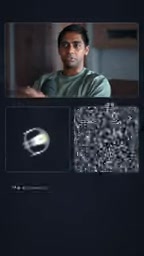
This question cuts to the heart of complex systems research. Two structurally similar rule systems can yield wildly different outputs — one giving rise to stable, self-organizing patterns, the other collapsing into chaos. Understanding this divide means understanding the boundary conditions for emergent complexity. In other words, within the vast space of all possible "physical rules," where exactly do the rules capable of nurturing life-like complexity actually live?
The traditional approach has been for researchers to hand-design a specific simulation rule and then observe its behavior. But this one-at-a-time method is highly inefficient and struggles to answer the above question in any systematic way.
Complex systems researcher Christopher Langton proposed the famous "Edge of Chaos" hypothesis in the 1980s: systems possess a narrow phase-transition zone between complete order (fixed points) and complete chaos (random noise), and rules situated in this zone are most likely to produce persistent, meaningful complex structures. He quantified this position using the parameter λ (lambda) — very low λ values correspond to dead stability, very high values to random disorder, while intermediate values correspond to a "critical state" that tends to yield the highest information-processing dynamics. The "island of solutions" Kumar's research identifies is structurally highly consistent with this hypothesis, and can be viewed as a systematic empirical validation of the Edge of Chaos theory across a much larger rule space.
Using Foundation Models to Evaluate Simulation Outputs
The new approach Kumar describes makes a key conceptual shift: rather than hard-coding a single simulation, the idea is to parameterize the entire simulation space — organizing thousands of possible rules into a continuous or discrete parameter space and systematically traversing them.
The truly clever step lies in the evaluation phase: feeding simulation outputs into a foundation model and letting the model judge "what happened" and which results are interesting.
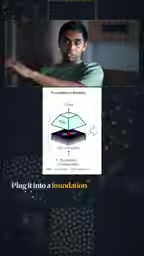
In effect, this uses the foundation model's perceptual and semantic understanding to replace the tedious manual inspection that researchers previously had to perform one result at a time. Kumar describes this goal-setting with a vivid analogy: "I just want a cat — give me any cat." This loose, flexible objective is exactly the kind of thing a foundation model's generalized understanding of concepts like "cat" can handle, without needing a precise definition of what counts as a cat.
A Foundation Model refers to a general-purpose model pre-trained on large-scale data that can support a wide range of downstream tasks — prominent examples include the GPT series of language models and multimodal models such as CLIP and GPT-4V. Their key advantage is that through pre-training, they accumulate rich conceptual representations, enabling semantic-level understanding and classification of images or textual descriptions without needing task-specific evaluation criteria to be redefined from scratch. Using them to filter simulation outputs essentially converts fuzzy human intuitions about concepts like "interesting," "complex," or "life-like" into computable scoring signals. Compared to traditional approaches that require manually engineered fitness functions to assess simulation quality, foundation models offer a "zero-shot" or "few-shot" open-ended evaluation capability, dramatically lowering the barrier to exploring new types of complex systems.
The "Island of Solutions" in Rule Space
The most tangible result of this approach is a panoramic map of the rule space. Kumar describes how they charted the distribution of all 260,000 rules.

The results reveal a striking structure: within the vast ocean of possible rules, there exists a small "island of solutions" where all the coolest, most interesting simulations are concentrated. This means that rules capable of producing rich emergent phenomena are not evenly distributed — they are highly clustered in a narrow region of the parameter space.
This finding carries profound implications for understanding the origins of complexity. It suggests that life-like complexity may require quite specific "physical conditions," while most rule combinations are either too inert or too chaotic.
From Primordial Soup to Alien Creatures
Kumar is fascinated by the diversity of phenomena these simulations reveal. On this island of solutions, emergent behaviors span an enormous range: from cells floating in a "primordial soup," to dynamic predator-prey interactions, to wandering "alien creatures."
He specifically notes that this evolutionary arc bears a striking resemblance to the trajectory of life in our own universe — from simple chemical structures, to rudimentary ecological interactions, to complex biological behaviors. This analogy bridging artificial simulation and the real cosmos is what makes artificial life research so captivating: perhaps the emergence of life is not a coincidence, but an inevitable tendency of complex systems under the right conditions.
"Primordial Soup" is a classic concept in origin-of-life research, independently proposed by Alexander Oparin and J.B.S. Haldane in the 1920s. It refers to the chemically rich oceanic environment of early Earth — abundant in organic molecules — believed to be the cradle in which self-replicating molecules and primitive cells arose. The 1953 Miller-Urey Experiment, which simulated early atmospheric conditions in the laboratory and successfully synthesized amino acids, provided crucial experimental support for this hypothesis. Kumar's observation in his simulations of an evolutionary transition from a "primordial soup state" to predator-prey dynamics parallels the structural shift in origin-of-life research from chemical evolution to Darwinian biological evolution — suggesting that this evolutionary pathway may be a universal tendency of complex systems under specific parameter conditions, rather than a historical accident unique to life on Earth.
Conclusion: Methodological Implications
What deserves the most attention in this work is not just the fascinating simulation imagery, but the methodological shift it represents. Combining parameterized simulation space exploration with foundation model evaluation offers a scalable new path for investigating complex systems. Researchers are no longer limited by the human bandwidth required to inspect results one by one — instead, AI takes on the role of filtering for "interesting phenomena."
This paradigm holds broad implications for artificial life and scientific discovery more generally: when the search space is too vast for humans to enumerate exhaustively, using a model with general-purpose understanding as the "eyes" of exploration may be precisely the key to unlocking new discoveries.
Related articles

CSS Anchor Positioning: A New UI Positioning Approach Without JavaScript
A deep dive into CSS Anchor Positioning: from anchor-name and position-anchor to the anchor() function, position-area shorthand, position-try-fallbacks, anchor-size, and upcoming anchor queries.

New AI Chart Interaction: Continuous Follow-up Questions and Visualization in Conversation
Explore a new AI interaction method for continuously generating charts in conversation. Use the /visualize command to ask follow-up questions and visualize answers in the same chat window, improving data analysis efficiency.

Cursor Merges Into X Subscription: Paid Plans Share Unified Usage Pool, Grok Model Coding Usage Doubled
Cursor joins The X Subscription with a unified usage pool and doubled Grok coding quota. Third-party models shift to API pricing. Existing users can keep or migrate plans.