A Nostalgic Twist on Rate Limits: Turning Claude and Codex Throttling Into AIM Away Messages
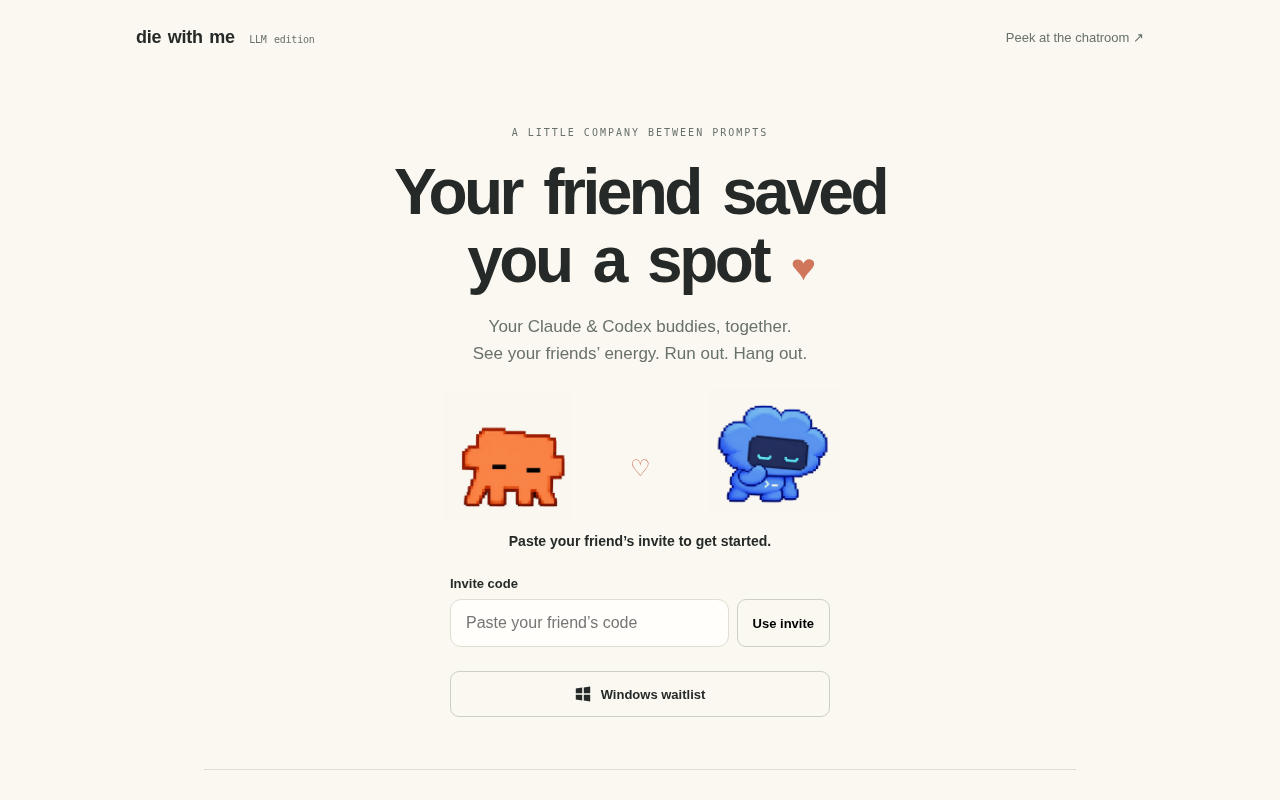
"Die With Me" reimagines AI rate limit waits as nostalgic AIM away messages with humor and charm.
"Die With Me" is a lightweight creative project on Hacker News that replaces the cold error messages shown when AI coding tools like Claude and Codex hit rate limits with humorous away messages styled after 2000s-era AIM. It resonates on two levels: AIM away messages are a shared memory for a generation of internet users, and frequent rate limit interruptions have become one of the most common friction points in AI-assisted development. Without solving any technical problem, the project reframes a negative waiting experience as a nostalgic, darkly humorous moment — offering a case study in micro-interaction design and a reminder that AI tools still have room to grow in caring for users at the edges.
A Small Project That Turns AI Rate Limits Into a Nostalgia Trip
On Hacker News's Show HN section, a project called "Die With Me" has sparked some interesting discussion. The concept is simple, yet it hits a resonant chord for developers across two generations: it wraps the rate limit states of AI coding tools like Claude and Codex in the form of classic AIM (AOL Instant Messenger) away messages.
For anyone who used instant messaging software back in the day, AIM's away messages are a piece of internet history — when you stepped away from your computer, you'd set a status message that your contacts would automatically see when they messaged you. This project transplants that interaction into the moment an AI tool hits its rate limit: instead of a cold, sterile error message when your quota runs out and you're waiting for a cooldown, your screen shows an away message in classic AIM style.
AIM (AOL Instant Messenger) was launched by America Online in 1997 and became one of the most widely used instant messaging platforms in North America and beyond during the early 2000s, with over 100 million registered users at its peak. One of its signature features was the "Away Message" — a customizable snippet of text that would automatically display to anyone who messaged you while you were away from your keyboard. These messages often had a strong personal flair, ranging from song lyrics and mood snippets to absurdist humor, and formed a distinctive culture of self-expression in the early internet era. AIM officially shut down in 2017, but for developers who lived through that period, it carries a kind of collective memory — a time when social networking hadn't yet been taken over by algorithms, and the web felt more spontaneous and human.
Why This Idea Resonates
As AI coding assistants like Claude and Codex have become part of everyday development workflows, rate limits have gone from occasional nuisances to high-frequency experiences. Heavy users in particular frequently hit the rate limit wall at critical moments, forcing them to stop and wait.
The clever part of this project is how it emotionally reframes a "negative experience." What would normally be a frustrating wait gets repackaged as something humorous and nostalgic. The project name "Die With Me" carries its own dark humor — referencing the moment your AI credits are "exhausted," while also nodding to the slightly tongue-in-cheek style of early internet expression.
From a product design perspective, this is a classic micro-interaction optimization. It solves no technical performance problems, yet by improving the user's emotional state during a wait, it transforms a pain point into a memorable moment. This idea of "making boring waits interesting" shows up in many successful products.
The Real Developer Pain Point It Reflects
While this is a lightweight fun project (receiving 8 upvotes and 11 comments on Hacker News — a small-scale discussion), it indirectly reflects a real issue in today's AI-assisted coding ecosystem: rate limiting is becoming one of the core friction points affecting developer experience.
As AI coding tools have shifted from "novelty" to "essential productivity infrastructure," users' expectations for stable availability have grown significantly. Frequent rate limits don't just interrupt workflow — they erode trust in the tool itself. Projects like "Die With Me" are essentially the community's creative way of venting about and diffusing this frustration.
For AI tool vendors, this is also a signal worth paying attention to: simply raising rate limit thresholds is only treating the symptom. Providing friendlier, more informative feedback experiences when limits are triggered is equally part of a product's competitive edge.
Rate limiting is the technical mechanism API providers use to control how frequently users can make calls, typically measured in terms of requests per minute/hour/day or maximum token consumption. The free tiers or lower-paid tiers of AI coding assistants like Claude and Codex often have relatively strict rate limiting policies, and heavy use over short periods frequently triggers them. Once triggered, users typically have to wait anywhere from a few minutes to several hours before access is restored, with nothing to show for it but a standardized error message. For developers who have deeply embedded AI tools into their coding workflows, this kind of interruption is especially jarring — it tends to hit at high-pressure moments like debugging critical logic or racing against a deadline, directly breaking flow state, and it's one of the most consistently reported pain points in current AI tool usage.
Product Lessons From a Small Project
Small Show HN projects like this often look unassuming on the surface, yet frequently contain valuable product insights. "Die With Me" reminds us:
- There's room for experience design everywhere — even error pages and loading states can become vehicles for brand expression and user connection.
- Repurposing nostalgic elements is a high-return, low-cost emotional lever. Design language like AIM away messages can instantly trigger memories in a specific generation.
- Treating pain points with humor generates more sharing and discussion than straightforward complaints ever could.
Of course, as a conceptual fun project, its practical utility is limited — it exists more as a piece of community cultural expression and creative demonstration. But the questions it raises about AI tool user experience are worth serious consideration by everyone working in this space.
Conclusion
"Die With Me" takes one of the most common moments of frustration in AI-assisted coding — the rate limit — and lightly transforms it into a small experience with nostalgic warmth. It probably won't become a breakout tool, but the product philosophy it represents — "caring about user emotions in the details" — is precisely what many AI tools currently lack. As technical competition intensifies, whoever does better in these overlooked edge-case experiences may be the one who wins more users' hearts.
Related articles
Using Claude Code for Free in China: A Complete Guide to Connecting Free Domestic Models
A step-by-step guide for China-based users to run Claude Code for free by connecting Meituan's open-source LongCat model API — no paid subscription needed.
Getting Started with Claude Code: A Beginner's Guide to AI-Powered Coding
Claude Code is a locally-run AI coding agent that reads your entire project and auto-debugs code. Compare it with Copilot, Cursor, TRAE, and Codex to see why it leads the pack.
14K Stars Open-Source Desktop App cc-haha: 5 AI Agents That Divide and Conquer on Their Own
cc-haha, the open-source Claude Code desktop app with 14K Stars, adds Agent Teams: 5 AI agents autonomously divide tasks, with a 99% cache hit rate on 40M tokens.