A Pause at a Poster Booth: How a Chance Encounter at a Top Conference Changed a Career
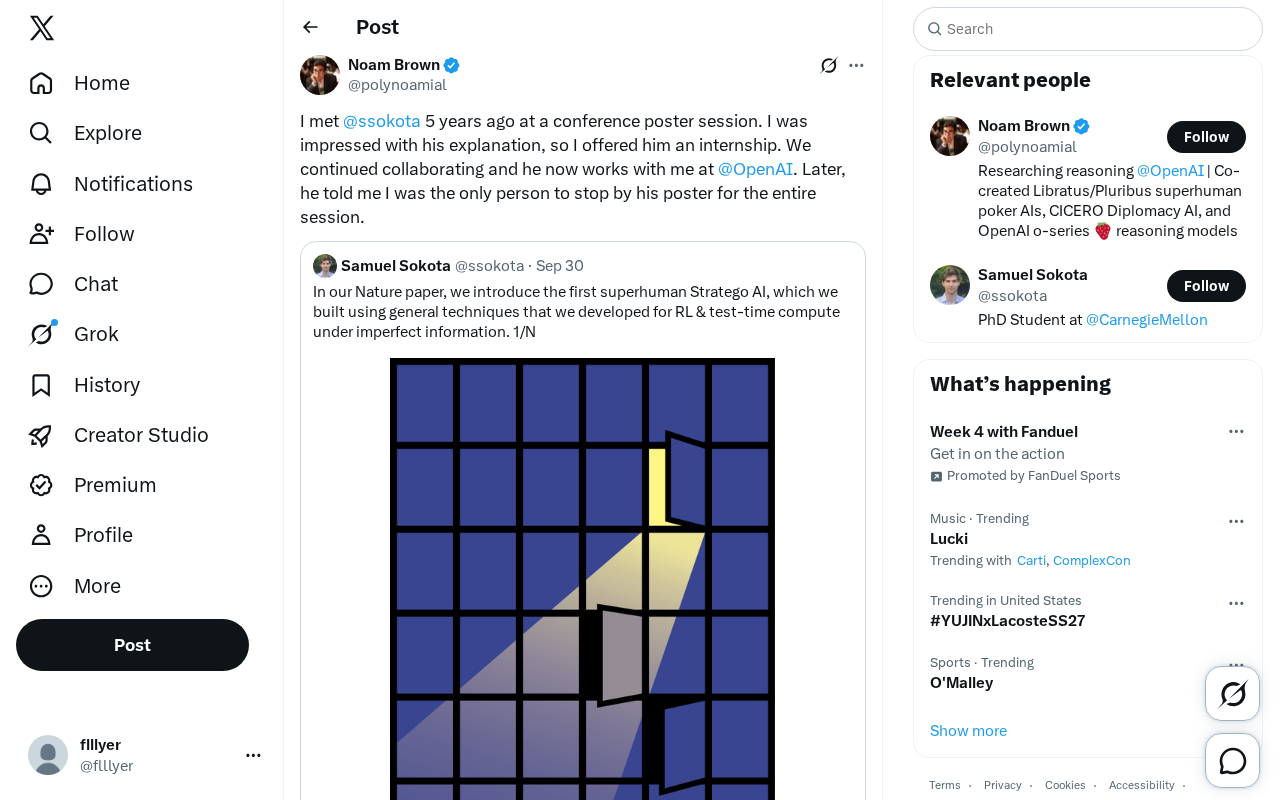
A single pause at a conference poster booth sparked a collaboration that led all the way to OpenAI.
An OpenAI researcher recounts how five years ago he was the only person to stop at his future colleague ssokota's poster booth — and offered an internship on the spot after being impressed by the presentation. The story exposes the harsh reality of top AI conferences like NeurIPS and ICML, where hundreds of booths compete for scarce attention. It draws three key lessons: clear communication is essential to being seen; a quiet booth doesn't diminish your work's value; and for senior researchers, simply choosing to stop can meaningfully shape someone else's career.
The Story Behind a Tweet
A researcher at OpenAI shared a deeply moving experience on social media: five years ago, at the poster session of an academic conference, he happened to stop by the booth of someone who would later become his colleague — ssokota. Struck by the clarity of ssokota's presentation, he offered an internship on the spot. The two went on to collaborate for years, and today ssokota works alongside him at OpenAI.
The real twist came in a detail ssokota shared afterward: throughout the entire poster session, he had been the only person who stopped and walked up to the booth.
This brief post unexpectedly shone a light on a side of academic career development that often goes unnoticed: opportunities tend to emerge from moments that seem, at the time, entirely unremarkable.
The Real Ecology of Academic Conference Poster Sessions
For those unfamiliar with academia, a poster session is a core component of top conferences in machine learning and AI — venues like NeurIPS, ICML, and ICLR. Researchers condense their work into a large printed poster, stand at their booth, and wait for attendees to come by for discussion and questions.
In theory, it's an efficient space for the collision of ideas. In practice, it can be brutal. At large conferences featuring thousands of papers and hundreds of simultaneous booths, many researchers find themselves staring at an empty aisle. Audience attention gravitates toward star papers, prominent labs, and trending topics, while a great deal of solid, under-the-radar work goes completely unseen.
ssokota's experience is a perfect snapshot of this dynamic: one person stopped by during the entire session. That's not a verdict on the quality of the research — it's a reflection of how attention gets distributed in an environment saturated with information.
NeurIPS, ICML, and ICLR are widely recognized as the premier academic conferences in machine learning and AI. NeurIPS alone has in recent years received over ten thousand submissions per cycle, with acceptances often numbering in the thousands. During poster sessions, all accepted papers are presented simultaneously as physical displays, with hundreds or even over a thousand booths packed into the venue at once. Even at three minutes per booth, a full walkthrough would take dozens of hours — practically impossible. This structural tension means attention becomes intensely concentrated on a handful of "star papers" — typically work from well-known labs or projects that have already been hyped on social media. For early-career researchers, a quiet booth is closer to the default than the exception, which is exactly what makes ssokota's experience so widely relatable.
Why "Stopping" Matters So Much
What makes this story truly resonant is the decision to stop in the first place. In a conference environment dense with information and short on time, choosing to pause at an unfamiliar booth and genuinely listen to the full presentation is, in itself, a rare quality.
This researcher wasn't swayed by how busy or prestigious the booth looked. He made his offer based on the substance of what he heard. That ability to evaluate people on the merit of their ideas rather than the glow of their credentials is precisely what distinguishes great mentors and talent scouts.
And the outcome speaks for itself: a spontaneous exchange became years of collaboration, ultimately bringing a talented researcher into one of the world's top AI institutions. The seed of that opportunity was planted in a conversation that lasted just a few minutes.
What This Means for Early-Career Researchers
This story carries several layers of practical meaning for young researchers navigating the academic path.
The ability to explain your work clearly is a core competency. The reason ssokota was able to seize the moment came down to a clear, compelling presentation. No matter how strong the research, if it can't be communicated effectively, it risks going unnoticed. Making complex work accessible is a skill worth practicing deliberately.
Don't let an empty booth demoralize you. Having only one person stop by an entire session is discouraging — it's easy to start questioning the value of your work. But as this story shows, sometimes one person is enough. The question is whether you're ready when that person shows up.
Opportunities are unpredictable, but preparation improves your odds. You can't control who walks past your booth, but you can make sure that when the moment arrives, you're in a position to make the most of it.
Zooming out, this story also raises a quiet structural question for conference organizers and the broader academic community: when a serious piece of research can go almost entirely unnoticed simply because of an inconvenient booth location, a poor time slot, or a lack of institutional backing, is that system of attention allocation actually fair? In recent years, some conferences have begun experimenting with improvements — introducing "spotlight" sessions to give promising papers additional visibility, or building apps that help attendees plan more systematic routes through the venue. But fundamentally changing this ecosystem will require the academic community as a whole to place greater value on the simple act of walking up to a stranger's booth.
Closing Thoughts
This tweet resonated with so many people because it touched on a simple but profound truth about how careers unfold: major turning points often begin with small, seemingly accidental interactions. In the intensely competitive world of AI research, technical ability clearly matters — but so do real human connections, and those rare moments when someone chooses to stop for you.
For everyone who finds themselves in this world — whether you're a researcher waiting to be discovered, or a senior scholar moving through a sea of booths — this story is a gentle reminder: next time, it might be worth lingering a little longer.
Related articles

When Did Paid Childcare Become the Norm? Working Mothers and the Evolution of Childcare
When did paid childcare become the norm? This article traces the evolution from the rise of childcare centers in the 1970s–80s and the 1990s linking of federal subsidies to work requirements, to declining stigma and rising costs, and explores advocates' 25-year effort to catch up with other countries on childcare and paid parental leave.

Red Flags for Product-Market Fit: A Practical Guide from Top VCs and the Superhuman Founder
Investors from Iconiq and Sapphire Ventures and Superhuman founder Rahul Vohra share PMF red flags and practical methods, including the 40% disappointment rule, retention curves, and acquisition costs.

What Task Should AI Agents Take Over Most? Heated Reddit Discussion
Reddit discussion: Which task do you most want AI agents to take over completely? Cross-app data migration, CRM updates, and report generation top the list, but insufficient reliability and the trust gap are the biggest obstacles to automation adoption.