When Did Paid Childcare Become the Norm? Working Mothers and the Evolution of Childcare

Paid childcare evolved from a private family matter into a social arrangement—stigma down, costs up.
The article traces paid childcare's evolution from unpaid family labor toward marketization and policy integration. In the 1970s–80s, rising female labor force participation and changing family structures drove significant growth in childcare center usage, seen as the starting point of normalization. In the 1990s, federal subsidies for low-income women were tied to work requirements, bringing childcare into welfare and employment policy. Over the past 15–20 years, stigma has declined markedly while costs have kept rising. For 25 years, advocates have pushed for public childcare and paid parental leave to catch up with other countries. When "whether to pay" is no longer the question, "can we afford it" and "how is the quality" become the new focus.
From Home to Market: The Evolution of Paid Childcare
"Have we always paid for childcare on a regular basis?" This seemingly simple question unravels a history intertwined with women's labor force participation, social welfare, and family models. In a recent YouTube video, several speakers discussed the normalization of paid childcare. They noted that although women have been in the labor market for quite some time, "paid childcare" as a widespread social arrangement is, in a sense, still a relatively recent phenomenon.

In the past, it was extremely common for mothers to stay at home to care for children—a family division of labor that persisted even into quite recent times. One speaker recalled that until the early 2000s, families using childcare services still faced considerable social stigma: "People were using childcare, but it was judged much more harshly than it is today."
The 1970s–80s: The Starting Point of Rising Childcare Center Usage
When asked when paid childcare began to become widespread, the video's answer pointed to the 1970s and 1980s. During this period, the use of childcare centers saw significant growth. This trend was closely tied to rising female labor force participation, changes in family structure, and urbanization.
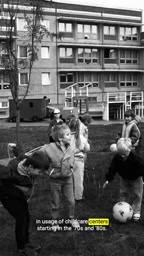
To add some detail, this growth did not happen overnight. Before the 1970s–80s, childcare was largely viewed as unpaid labor within the family, particularly the mother's responsibility. As more women entered the workforce, the family's need for alternative care became visible, and childcare centers gradually moved from a marginal option to a daily arrangement for more families.
Female labor force participation rate refers to the proportion of the female population aged 15 and over that is economically active (the sum of employed and unemployed persons) out of the total female population. It is a core indicator of women's economic participation. In the second half of the 20th century, with rising education levels, the expansion of the service sector, and the spread of contraceptive technology, female labor force participation rates climbed steadily in many countries. In the United States, for example, the female labor force participation rate was about 34% in 1950 and had reached nearly 58% by 1990. This change directly altered the division of caregiving labor within families: as mothers' time shifted from the home to the workplace, the unpaid childcare work formerly borne by families needed alternatives—and it was against this backdrop that childcare centers gradually moved from a marginal option toward widespread adoption.
The 1990s: Linking Federal Subsidies to Work Requirements
Entering the 1990s, a key policy turning point emerged. The video mentioned that the federal government began subsidizing low-income women and tied childcare support to work requirements. This meant that paid childcare was no longer merely an individual market behavior of families but began to be incorporated into the policy framework of social welfare and employment incentives.
The logic behind this policy shift was: if low-income women were to be encouraged to enter the labor market, their childcare burden had to be addressed. Childcare subsidies thus became one of the tools of "employment support" rather than purely child welfare. This also laid the groundwork for later debates over the public provision of childcare.
Work requirements are a conditional design in welfare policy, typically meaning that beneficiaries must meet certain hours of employment, job searching, or training to continue receiving cash assistance or childcare subsidies. The Personal Responsibility and Work Opportunity Reconciliation Act (PRWORA) passed in the United States in 1996 is a typical example of this approach: it linked welfare receipt to employment and paired it with increased childcare funding to support low-income mothers' employment. This "subsidies for employment" logic shifted childcare policy from purely child welfare to an employment incentive tool, and its effects and controversies—such as whether it truly improved family economic security or whether childcare quality was sacrificed—remain the focus of policy debate to this day.
Stigma Declining and Costs Rising: Two Intersecting Curves
One speaker in the video shared an interesting observation: "Costs are rising, stigma is falling." She admitted she was glad not to have to feel guilty or be judged by others for using childcare centers, as professional women did 15 or 20 years ago.

This shift in social attitudes is an important psychological foundation for the normalization of paid childcare. When childcare changes from a "last resort" to a "normal choice," the pressure structure families face when making childcare arrangements also changes. However, the dissolution of stigma has not been accompanied by a decline in costs—on the contrary, childcare expenses have continued to rise, becoming an economic burden for many families.

Advocates' 25 Years: Catching Up with Other Countries on Childcare and Parental Leave
The video pointed out that over the past 25 years, advocates have been working to push policy to catch up with the practices of other countries. These countries not only pay for childcare but also provide paid postnatal parental leave. By contrast, childcare support in many places remains primarily in the form of subsidies, with limited coverage and intensity.
The core demands of this advocacy can be summarized in two points: first, to treat childcare as public infrastructure rather than a purely private family matter; second, to recognize the continuity between parental leave and childcare services—from a baby's birth to entry into a childcare institution, families need a coherent support system rather than fragmented relief measures.
Paid parental leave refers to a leave system in which parents, after the birth or adoption of a child, retain their jobs and receive partial or full wages. Practices vary widely among Organisation for Economic Co-operation and Development (OECD) countries: Nordic countries typically offer parental leave of more than a year with high replacement rates, along with dedicated father quotas; while the United States is the only OECD country without national paid parental leave, guaranteeing only 12 weeks of unpaid leave through the Family and Medical Leave Act (FMLA). This gap is the context behind advocates' emphasis on a "coherent support system"—parental leave addresses care in a baby's early months, and childcare services take over in subsequent stages; neither can be missing.
The Deeper Meaning of the Normalization of Paid Childcare
Looking back at this evolution, the normalization of paid childcare was not caused by any single factor. Female labor force participation, policy subsidies, shifting social attitudes, and market supply together shaped this landscape. The discussion in the video reminds us that the current debate over childcare costs and quality is in fact a continuation of decades of social change.
When "whether to pay" is no longer the question, "can we afford it" and "how is the quality" have become the new focus. And that is precisely the question advocates will need to answer in the next 25 years.
One-line Summary
Paid childcare evolved from a private family matter into a social arrangement—stigma down, costs up.
Paragraph Summary
The article traces how paid childcare evolved from unpaid labor within the family toward marketization and policy integration. In the 1970s and 1980s, as female labor force participation rose and family structures changed, childcare center usage grew significantly, seen as the starting point of paid childcare's normalization. In the 1990s, the federal government tied childcare subsidies for low-income women to work requirements, bringing childcare into the policy framework of social welfare and employment incentives. Over the past 15 to 20 years, the social stigma of using childcare has declined markedly, but childcare costs have continued to rise, becoming an economic burden for families. Over the past 25 years, advocates have pushed for public childcare provision and paid parental leave, seeking to catch up with support systems in other countries. The article notes that when "whether to pay" is no longer the question, "can we afford it" and "how is the quality" become the new focus.
Related articles

LLaMA-Factory in Practice: A Complete No-Code Guide to Fine-Tuning Large Models
An introduction to LLaMA-Factory, the open-source fine-tuning tool: its 60.1K-star background, supported models and algorithms, local vs. cloud deployment, and CUDA setup steps.

Zeng Ming's Deep Retrospective: Why OpenAI May Not Be the Ultimate Winner — and Why the Corporate System Will Disappear
Zeng Ming's deep retrospective on the AI endgame: model companies are just infrastructure, OpenAI and Anthropic won't be the final winners; the next battle is the Agent entry point standard; the corporate system will disappear as AI restructures collaboration, and only mission-driven companies can survive the cycle.

OpenHands v1.28.0: OpenCode and PI Added as Built-in Agents, API Keys Requestable In-Conversation
OpenHands ships 5 releases in 21 days: v1.27.0 adds OpenCode and PI as built-in agents, v1.28.0 enables in-chat key requests. ACP integration, credential reuse, model list changes, and upgrade advice.