A Programmer's Guide to Large Language Models: The Complete Path from Prompts to Agents

A six-step roadmap for programmers to master LLMs, from prompts and RAG to Agents and fine-tuning.
This article lays out a complete six-step learning path for ordinary programmers entering the large model field: prompt engineering, API mastery, LangChain frameworks, RAG, Agents, and lightweight fine-tuning with deployment. It argues the AI application layer is the optimal entry point and explains how the programming paradigm is shifting from logic-oriented to goal-oriented.
For most ordinary programmers, entering the world of large language models often presents a dilemma: diving in from the underlying algorithms is too high a barrier—wrestling with the Transformer right from the start is a surefire way to get discouraged. Meanwhile, staying only at the Prompt level keeps your horizons too narrow, making it hard to build products of real value. Based on the hands-on roadmap shared by a tech expert with a Fudan University background, this article lays out a complete learning path from zero foundation to enterprise-level delivery, helping newcomers avoid unnecessary detours.
Why Starting at the AI Application Layer Is the Optimal Choice
Given the current state of the industry, the best entry point for ordinary programmers into the large language model space is neither algorithm research nor pure prompt-engineering tricks—it's the AI application layer. This positioning allows you to generate value quickly while gradually going deeper into the underlying technology.
The AI application layer refers to the development tier that sits on top of the underlying model capabilities, focused on integration, orchestration, and productization for specific business scenarios. From an industry division-of-labor perspective, the entire large model industry chain can be split into three layers: the foundation model layer at the bottom (dominated by leading players like OpenAI, Anthropic, Baidu, and Alibaba), the platform and tooling layer in the middle (API services, inference optimization, vector databases, etc.), and the application layer at the top. For ordinary programmers, the first two layers have extremely high competitive barriers, requiring vast computing resources and top-tier algorithm talent. Training costs at the foundation model layer can easily reach hundreds of millions of dollars—the training cost of GPT-4 is estimated by industry insiders to exceed $100 million, making it virtually impossible for non-leading institutions to participate. The middle platform layer has slightly lower barriers, but directions like vector databases and inference optimization have already attracted substantial capital, and the competitive landscape is becoming entrenched. The application layer, however, remains largely untapped due to its highly fragmented business scenarios and pronounced long-tail effect. Its core competitiveness lies in a deep understanding of business scenarios and the ability to deliver engineering solutions—precisely the strengths of programmers with some development experience.
Many people complain that the frameworks are immature and the models are flawed, but the fact that tools are still iterating doesn't mean we can't ship products. Even with limited model capabilities, as long as you scope out a specific business scenario, you can still create real value. This pragmatic mindset of "ship first, go deeper later" is precisely the core logic of the application-layer path. Product forms like Copilot and Agents are currently iterating rapidly, and tools are updated extremely fast, so learners need to stay in a state of continuous learning.

Breaking Down the Six-Step Progression Path
This roadmap goes from shallow to deep, divided into six stages. Beginners can simply advance through them in order.
Step 1: Prompt Engineering
The very first thing to do when getting started is to practice prompt engineering—in plain terms, learning "how to ask questions" to fully unleash the model's capabilities. This is the fundamental skill for interacting with large language models and the foundation for all subsequent application development.
Prompt engineering is a discipline that studies how to design and optimize input text to guide large language models toward producing desired outputs. Common techniques include zero-shot prompting, few-shot prompting, and Chain-of-Thought (CoT) prompting. Among these, CoT was formally introduced by Google in 2022, and its core idea is to have the model demonstrate its reasoning process step by step before giving an answer, rather than jumping straight to a conclusion. Notably, CoT has been shown to boost large models' accuracy on the GSM8K mathematical reasoning benchmark from under 20% to over 50%, fully demonstrating the enormous leverage that prompt design has in unlocking model capabilities. In addition, advanced techniques that have emerged in recent years—such as "System Prompt design," "role-play injection," and "output format constraints"—have become indispensable components of production-grade AI applications. In particular, structured output constraints (such as enforcing a JSON Schema format) are a key means of reducing post-processing errors and improving system stability in production environments. Mastering prompt engineering is not just a skill of "knowing how to use the model"—it's the gateway to understanding how the model "thinks." Only by knowing how the model understands and processes natural language can you make more accurate judgments in subsequent API calls and application development.
Step 2: Master Calling the Major Model APIs
After mastering the art of asking questions, the next step is to become proficient at calling the APIs of the major models and figure out the capability boundaries and usage limitations of different models. Only by truly understanding what a model can and cannot do can you make sound technical choices in later development.
Currently, the mainstream large model APIs on the market include OpenAI's GPT series, Anthropic's Claude series, Google's Gemini series, as well as domestic ones like Tongyi Qianwen, ERNIE Bot, and Zhipu GLM. Different models vary in context window length, multimodal capabilities, inference speed, pricing, and compliance. Being familiar with these differences is a prerequisite for making the right technical choices. For example, when handling ultra-long documents, you should prioritize models that support 128K or even longer contexts; for scenarios with strict data privacy requirements, you need to evaluate the feasibility of private deployment; and for high-concurrency, low-latency real-time interaction scenarios, the trade-off between inference speed and Token cost is equally critical. Understanding each model's "billing logic" (input/output Tokens billed separately) and "rate limits" (RPM/TPM caps) is also a necessary step on the road from personal experimentation to engineering deployment.
Step 3: Get Hands-On with Mainstream Development Frameworks
The third step is to learn mainstream AI application development frameworks like LangChain. Frameworks help you organically integrate capabilities such as Prompts, API calls, and external tools, allowing you to quickly build usable application prototypes.
LangChain is an AI application development framework open-sourced by Harrison Chase in 2022. Its core philosophy is to combine LLMs with external tools and data sources into complex workflows through "chained calls." It provides core abstractions such as Chain, Agent, Memory, and Tool, greatly reducing the complexity of AI application development. Currently, the LangChain ecosystem has expanded to include supporting tools like LangGraph (which supports directed-graph workflows, suitable for complex multi-step Agents) and LangSmith (an application monitoring and debugging platform), forming a relatively complete development-testing-monitoring loop. It is one of the most widely used frameworks in the AI application development field today. Besides LangChain, LlamaIndex (which focuses on data indexing and RAG scenarios, with deeper specialized capabilities in document parsing, chunking strategies, and retrieval optimization) and Microsoft's open-source Semantic Kernel (deeply integrated with the Azure ecosystem, suitable for enterprise-level mixed .NET/Python projects) are also mainstream options worth watching. When choosing a framework, it's advisable to prioritize community activity, compatibility with your target cloud platform, and the sustainability of long-term maintenance.
Steps 4 and 5: RAG and Agents—the Two Core Technologies
Once you've become proficient at the application layer, it's time to tackle the two core technologies.
RAG (Retrieval-Augmented Generation) is like attaching a dedicated knowledge base to the large model, solving the problems of its insufficient domain knowledge and outdated information. This is also currently the most widely implemented and mature technical direction for enterprises.
RAG was formally introduced by Meta AI in the 2020 paper "Retrieval-Augmented Generation for Knowledge-Intensive NLP Tasks." Its core process is: external documents are chunked, then converted into vectors via an Embedding model and stored in a vector database (such as Faiss, Chroma, Milvus, Weaviate, etc.). When a user asks a question, the most relevant document snippets are first retrieved from the vector database, then injected into the Prompt as context, and finally the model synthesizes an answer. This mechanism effectively addresses core pain points of large models such as knowledge cutoff dates, factual hallucination, and inability to access private data.
In engineering practice, the effectiveness bottleneck of RAG often lies not with the model itself, but with several key engineering details: the chunking strategy has a huge impact on retrieval quality, and fixed-size chunking, recursive character chunking, and semantic chunking each have their own applicable scenarios; hybrid search (combining vector similarity with BM25 keyword matching) often outperforms pure vector retrieval in practice; and reranker models (such as Cohere Rerank and BGE-Reranker) as a second-stage fine-ranking component can significantly improve the relevance of the final retrieved results. In addition, the choice of Embedding model (e.g., OpenAI's text-embedding-3-large vs. the domestic BGE series) is likewise a key differentiator between "usable" and "good to use." For enterprises, RAG requires no model retraining and has controllable costs, making it the best shortcut to quickly adapt a general-purpose large model into a "domain expert."

Agents represent the automated, advanced form of large models. By equipping the model with memory, planning, and perception capabilities, AI can autonomously complete an entire set of complex tasks, instead of passively answering questions one at a time.
The concept of Agents originates from classic AI research, but has been given entirely new meaning in the large model era. Modern LLM-based Agents use the large language model as the "brain," and through paradigms like ReAct (Reasoning + Acting) and Plan-and-Execute, allow the model to autonomously plan steps, call external tools (such as search engines, code executors, database APIs), and dynamically adjust strategies based on feedback returned by the tools. The memory system is another core module of an Agent, typically divided into three levels: short-term memory (current session context), long-term memory (historical interactions stored in a vector database), and procedural memory (skills solidified into tool-call logic).
What deserves special attention is the reliability challenge that Agent systems face in real-world deployment: even if the success rate of a single tool call is as high as 95%, the overall success rate after 10 chained calls drops to about 60% (0.95^10 ≈ 0.60). This requires engineers to introduce fault-tolerance mechanisms such as error retries, step rollbacks, and Human-in-the-loop intervention into Agent design, rather than blindly pursuing full automation. The emergence of open-source projects like AutoGPT, MetaGPT, and CrewAI also marks the shift of Multi-Agent Systems from concept to real engineering implementation, where task decomposition, role collaboration, and result verification are the core challenges of multi-Agent architecture design.
Step 6: Model Fine-Tuning and Engineering Deployment
Once you've mastered the application layer, then go tackle model fine-tuning. The key here is not to obsess over the complex Transformer principles right away, but to first understand the basic logic of fine-tuning and how to build datasets, starting with lightweight fine-tuning approaches like LoRA and QLoRA—which greatly lowers the difficulty of getting started.
LoRA (Low-Rank Adaptation) was proposed by Microsoft Research in 2021 and is currently the most mainstream lightweight fine-tuning approach for large models. Its core idea is: while freezing the full weights of the original model, it injects low-rank matrices (with rank r typically set to 4~64) alongside the attention layers of the Transformer, training only these newly added parameters—the parameter count is only about 0.1%1% of full fine-tuning, yet on the vast majority of downstream tasks it can achieve results close to full fine-tuning. QLoRA is a further upgrade of LoRA, proposed by the University of Washington in 2023. Through 4-bit NormalFloat quantization, it dramatically compresses the VRAM footprint of model weights, while introducing mechanisms such as Double Quantization and Paged Optimizers to suppress VRAM spikes during gradient updates, making it possible to fine-tune 7B13B-scale models for a domain on a single consumer-grade GPU (such as the RTX 4090 with 24GB of VRAM).
The historical significance of this technological breakthrough cannot be underestimated: before 2023, full fine-tuning of a 7B-parameter model required a GPU cluster of at least 8×A100 (80GB), with a total cost exceeding one million RMB; the arrival of QLoRA compressed this barrier down to a single RTX 4090 (about 15,000 RMB). This turning point of "democratizing compute" gave individual developers and small-to-medium enterprises the practical ability to customize their own domain-specific models for the first time, and it is an important technological prerequisite for the full-blown explosion of the large model application layer. The quality of fine-tuning data often matters more than the quantity—500 carefully annotated, high-quality instruction samples typically outperform 5,000 rough ones.
The final step is engineering deployment: model packaging, private deployment (common tools include inference frameworks like Ollama, vLLM, and TGI), hardware selection, online testing, and release. Only by reaching this step do you truly possess the ability to deliver enterprise-level projects.

In the Large Model Era, the Programming Paradigm Is Changing
Behind this technical roadmap lies a deeper transformation. Entering the large model era, it's not just the tech stack that has changed—even the programming paradigm and team division of labor are being fundamentally reshaped.
From "Logic-Oriented" to "Goal-Oriented"
When writing code traditionally, we have to design every piece of logic and every exception in advance, pursuing determinism and controllability. But interfacing with a large model is completely different—it's a fuzzy, unstructured intelligent component. Development today is shifting toward being "goal-oriented": we describe the goal we want to achieve, and the AI component handles the intermediate reasoning process. How to organically combine AI components with traditional systems is a new challenge that every developer must face.
This paradigm shift brings entirely new challenges at the engineering level: bugs in traditional software are deterministic—reproducible and traceable; whereas failures in LLM applications are often probabilistic—the same input may produce different outputs at different times, a phenomenon known as "non-deterministic output," which is difficult to eliminate entirely even by setting the model temperature to 0. This requires developers to build an entirely new testing and evaluation system (Evaluation/Evals), incorporating metrics such as "accuracy," "hallucination rate," "relevance score," and "answer faithfulness" into the continuous integration process, rather than relying on traditional unit testing frameworks. Tools like LangSmith, Promptfoo, and Ragas are specialized LLM evaluation platforms built precisely to solve this problem—they can automatically score model outputs and track performance regressions across versions, and are necessary infrastructure for LLM applications moving into production.
The Restructuring of Job Roles
At the same time, the division of labor between roles is being restructured. In the past, roles were specialized and siloed, but now product people need to understand technology and programmers need to thoroughly understand the business. What the industry is most starved for is the kind of full-stack developer who can go straight from business to the tech stack—someone who can both converse with business stakeholders to organize requirements and independently complete the entire chain from Prompt design and RAG setup to model fine-tuning and production deployment. Such "AI full-stack engineers" are far scarcer in the current market than traditional algorithm experts or front-end developers.
AI Is About Empowerment, Not Replacement
Many peers fret daily about whether large models will replace programmers. The sharer's view is clear: The core of AI is empowerment, not replacement.
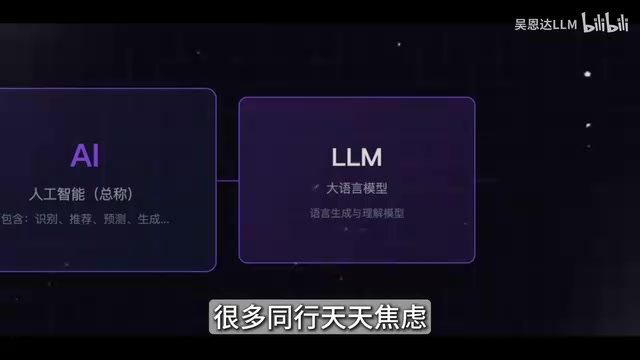
A few years ago, a company wanting to build an AI application had to spend heavily to assemble a professional algorithm team and train small models from scratch. Now, general-purpose large models are everywhere, and an ordinary programmer can build a usable AI application in a matter of days by doing integration and fine-tuning based on off-the-shelf models. Historically, every major technological paradigm shift—from assembly to high-level languages, from standalone machines to the internet, from PC to mobile—has never ultimately eliminated programmers. Instead, it liberated engineers from low-level repetitive labor and redirected them toward higher-value creative work. The large model era is no exception. For ordinary developers, this is an unprecedented window of opportunity to multiply engineering capability by AI capability and exponentially amplify one's personal value.
The tide of technology won't stop. Rather than passively chasing it or wearing yourself down with anxiety, it's better to proactively jump in and turn large models into a sharp tool in your own hands. This may well be the most rational and most valuable choice for programmers today.
Related articles

Should You Open Source Your Project? A Layered Open Source Strategy Using Project Replay as a Case Study
Should indie developers open source their projects? Using the game custom achievement tool Project Replay as a case study, this article analyzes the open source decision and offers a practical layered strategy.

130+ Open-Source Interactive Security Awareness Training: Reshaping Habit Formation Through 3D Office Scenarios
A project with 130+ free open-source interactive security awareness exercises using immersive 3D office scenarios to simulate phishing, vishing, MFA fatigue attacks and more, building employee security habits.

From Musk to Jefferson: Beware the Cognitive Trap of Cross-Domain Experts
Why do geniuses in one field often become overconfident in others? From Musk's controversial interview to Jefferson's blind spots, an exploration of cross-domain cognitive arrogance.