A Tribute to Atari 2600 Classics: The Technical Legacy of Retro Gaming
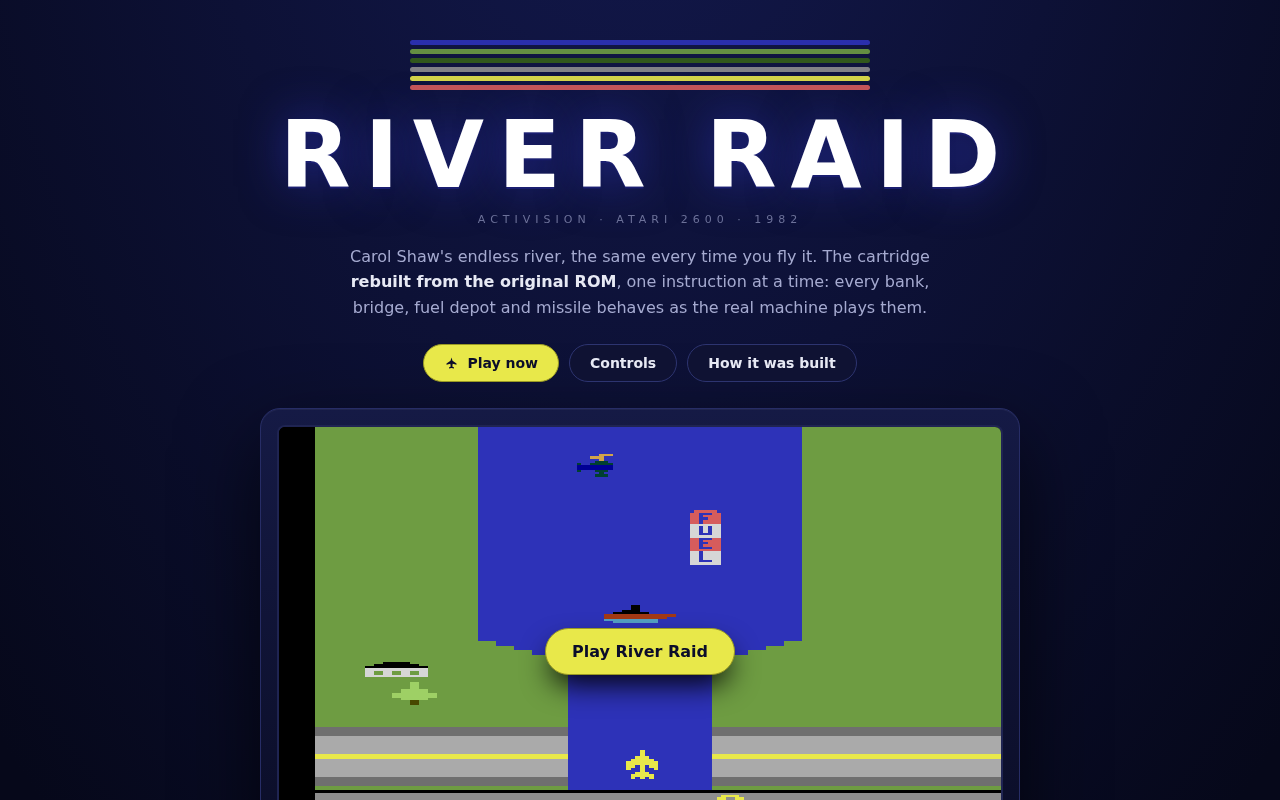
How the Atari 2600's extreme hardware constraints forged timeless engineering wisdom that still resonates in tech communities today.
Using a Hacker News tribute to an Atari 2600 classic as a starting point, this article revisits the legendary console's 128-byte RAM and TIA chip, focusing on the "racing the beam" technique that forced developers to synchronize CPU execution with the TV's physical scan line. This spirit of constraint-driven creativity keeps retro games perennially relevant in tech circles — studying their code remains one of the best ways to build intuition for low-level hardware and memory management. The article ultimately frames this look back at computing's origins as a form of digital cultural preservation, and a reminder that respect for resources and attention to user experience are the timeless foundations of great engineering.
A Tribute to the Atari 2600
The Atari 2600 holds an irreplaceable place in the history of video games. Born during the golden age of home consoles, this machine ran on remarkably limited hardware — yet it carried the childhood memories of an entire generation of players. A recent article shared on Hacker News paid tribute to one of its classic titles, sparking a broader discussion in the tech community about retro games and the engineering ingenuity behind them.
It's worth noting upfront that the original source material is fairly sparse — just a community-shared link — so what follows is largely contextual background and a broader exploration of why the Atari 2600 still matters.
Why the Atari 2600 Deserves Our Respect
By today's standards, the Atari 2600's hardware looks almost laughably minimal: just 128 bytes of RAM, a CPU clocking in at around 1.19 MHz, and a graphics chip called the TIA (Television Interface Adaptor). Developers had no framebuffer to work with. Instead, they had to calculate and output each line of video in real time as the TV's electron beam scanned across the screen line by line — a technique known as "racing the beam", and an essential skill for programmers of that era.
And yet, under these extreme constraints, developers produced a remarkable body of work. Action games, adventure games, puzzlers — all of them packed complete gameplay loops into just a few kilobytes of ROM space, serving as a textbook example of how constraints can drive creativity in software engineering.
How the TIA chip actually worked: The TIA had no dedicated video memory and couldn't store a full frame. Instead, as a CRT television's electron beam scanned each line, the CPU had an extremely narrow time window — roughly 76 clock cycles per scanline — to write color and sprite position data for that line in real time. Any delay in the CPU's calculations would cause misalignment or flickering on screen. This is exactly why it was called "racing the beam" — programmers had to synchronize their code's execution rhythm with the physical scan of the beam, down to the clock cycle.
This constraint spawned a wealth of clever tricks. Developers would deliberately trigger a horizontal blank (WSYNC) at specific scanlines to reset timing, or reuse the same sprite object in different screen regions within a single frame — effectively simulating more moving elements than the two hardware sprites the system officially supported. Games like Pitfall! and Space Invaders only achieved their smooth gameplay on such constrained hardware because of racing-the-beam programming.
Why Retro Games Still Captivate the Tech Community
Why would an article about a decades-old game get shared on a platform like Hacker News? Because the engineering behind these vintage titles is genuinely valuable. For many developers, studying Atari 2600 game code is one of the best ways to develop an intuitive understanding of low-level hardware, memory management, and performance optimization.
Modern high-level languages and abundant hardware resources mean programmers rarely have to sweat over every single byte. Looking back at an era when that was unavoidable tends to rekindle a sense of respect for computational resources — which is a big part of why retro game reverse engineering, emulator development, and fan remake projects continue to thrive in the open-source community.
The reverse engineering and emulator ecosystem is a key vehicle for this enduring fascination. The open-source emulator Stella has been continuously maintained since 1995, offering cycle-accurate hardware emulation and debugging tools that let researchers step through original ROMs instruction by instruction and observe TIA output line by line. Meanwhile, communities like AtariAge still have developers writing and selling brand-new cartridges for the 2600 — "homebrew" titles that sometimes even push the graphical envelope beyond what original commercial games achieved.
This ongoing creative activity around 40-year-old hardware is seen in tech circles as a kind of extreme programming dojo. Developers who've learned to manage game state within 128 bytes of RAM tend to develop an intuition for memory layout and cache efficiency that far exceeds their peers.
Relevance Beyond Nostalgia
Paying tribute to classic games isn't just an exercise in sentiment. These deep dives typically involve deconstructing original design decisions, reverse-engineering coding techniques, and sometimes rebuilding titles with modern toolchains. They're part of the broader effort to preserve digital cultural heritage — giving future generations a window into what the early game industry actually looked like.
From a wider perspective, this kind of excavation of technological origins offers an interesting counterpoint to today's AI and emerging tech frenzy: no matter how far technology advances, the fundamentals of great engineering — respect for resources and relentless refinement of user experience — remain constant.
Closing Thoughts
This Hacker News share may have been brief, but it touched a collective nerve in the tech community's memory of the classics. The games born under extreme constraints on the Atari 2600 continue to remind us that truly great design often comes from limitation, not abundance. For anyone who wants to understand the craft of early game engineering more deeply, this kind of tribute is a door well worth opening.
Related articles

OpenAI Codex CLI Practical Guide: The Open-Source AI Coding Agent in Your Terminal
OpenAI Codex CLI is an open-source AI coding agent that runs in your terminal. This guide covers its 2025 launch, 2026 desktop app, ChatGPT merger, and a three-step setup and workflow.

AI for Beginners Course Review: ChatGPT, Gemini, and AI Agents in Practice
A hands-on review of a complete beginner AI course covering ChatGPT, Gemini, Notebook LM, Manus, and DeepSeq, with 18,000-record dataset analysis, AI agent website building, and LLM principles and limits.

How Do AI Agents Autonomously Complete Complex Tasks? The ReAct Framework Explained
What's the core difference between an AI Agent and a chatbot? Using competitive research as an example, this article breaks down the ReAct framework's three-step loop of reasoning, acting, and observing, explaining how Agents autonomously decompose tasks, call tools, spot data gaps, and dynamically adjust plans to ultimately deliver complete results.