A World First in Australia: Delivery Riders to Receive Minimum Wage Guarantee
Australia pioneers the world's first minimum wage guarantee for gig delivery riders.
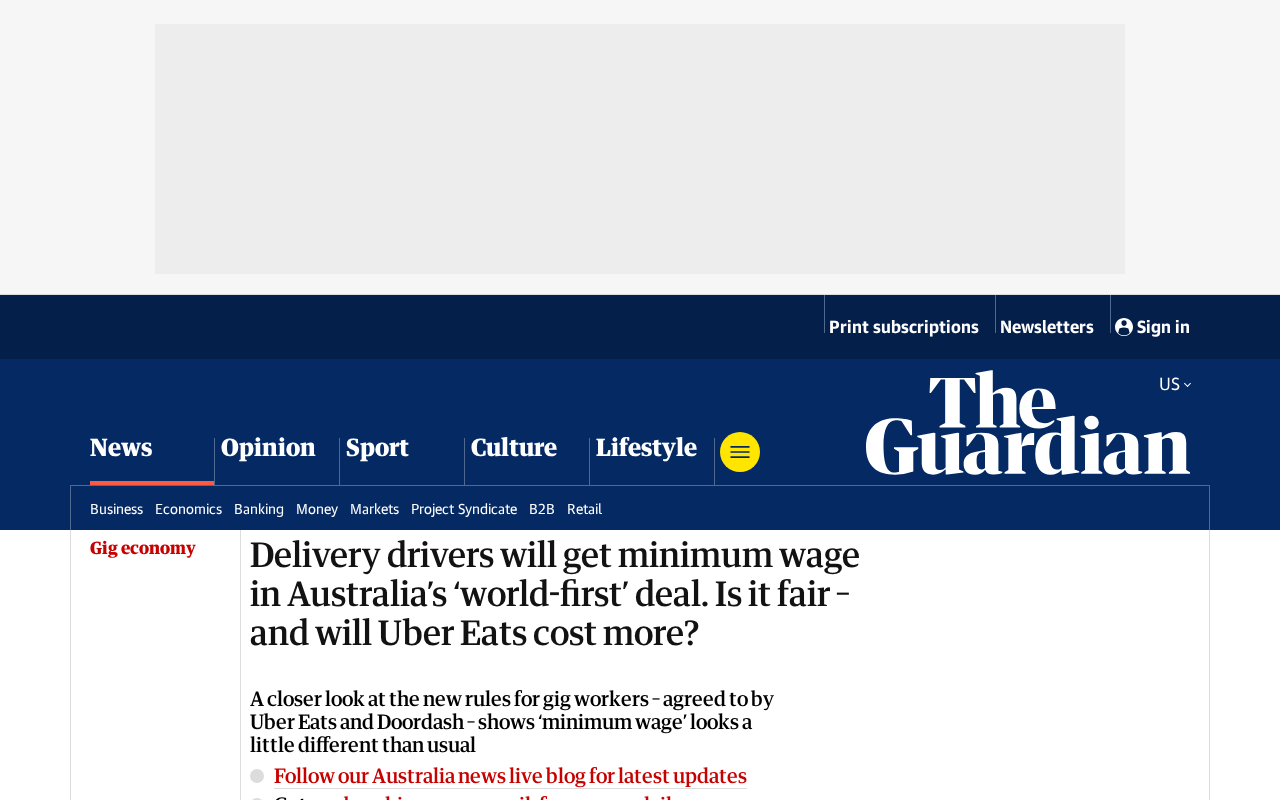
Australia has introduced a groundbreaking agreement providing food delivery drivers with minimum wage protections — a global first. Unlike reclassification approaches tried elsewhere, this policy preserves gig flexibility while guaranteeing a basic income floor. The article examines the agreement's core provisions, its impact on platforms and riders, and how it compares to regulatory efforts in the EU, UK, and US.
A Turning Point for the Gig Economy: Australia Leads the Way
As the platform economy booms worldwide, the issue of protecting the rights of gig workers — food delivery riders, ride-hailing drivers, and others — has become increasingly pressing. The concept of the Gig Economy emerged from the profound transformation of the labor market following the 2008 financial crisis, referring to an economic model characterized by short-term, on-demand, non-permanent employment relationships facilitated through digital platforms. The global gig economy has surpassed $500 billion in scale, encompassing platforms like Uber, DoorDash, and Deliveroo. These workers have long existed in a legal gray zone: they are neither full employees nor purely independent contractors. This ambiguous classification has allowed platform companies to avoid many responsibilities associated with traditional employment relationships, while workers bear the risks of income instability and a lack of basic protections.
The legal classification of workers matters enormously because, in most countries' labor law systems, "employee" status is a prerequisite for accessing minimum wage, paid leave, workers' compensation, unemployment insurance, and social security. "Independent contractors," on the other hand, are treated as self-employed individuals, and platforms bear none of these obligations toward them. Platform companies have widely adopted the contractor model, reducing labor costs by 20%–30%, but this also means that risk is systematically transferred onto individual workers.
Now, Australia has introduced an agreement hailed as a "world first" that will provide minimum wage guarantees for food delivery drivers. This initiative could become a significant milestone in global gig economy regulation and offers a valuable policy model for other countries and regions.
Core Agreement Details: How Minimum Wage Protects Rider Income
Under this agreement, food delivery drivers in Australia will receive minimum wage legal protections for the first time. This means that regardless of order volume or market fluctuations, riders will be guaranteed a basic income floor.
What makes this arrangement special is its attempt to forge a middle path between the two traditional classifications of "independent contractor" and "employee." Gig workers can retain the flexibility of their work schedules — the very reason many chose this line of work — while also enjoying the minimum income protections previously reserved for formal employees.
Why It's Called a "World First"
While some countries and regions have previously attempted to improve conditions for gig workers, most have taken the "reclassification" route — forcibly designating platform workers as employees. The most notable example was California's AB5 bill. Passed in 2019, it applied the so-called "ABC test" to determine whether a worker qualifies as an employee: (A) the worker is free from the control and direction of the hiring entity; (B) the worker performs work outside the usual course of the hiring entity's business; (C) the worker is customarily engaged in an independently established trade, occupation, or business of the same nature as the work performed. All three conditions must be met simultaneously; otherwise, the worker is classified as an employee. However, the bill triggered approximately $200 million in lobbying and PR spending by platform companies, ultimately leading to California's Proposition 22 in 2020, which effectively granted an exemption — allowing ride-hailing and delivery platforms to continue classifying drivers as independent contractors while requiring them to provide partial benefits. This back-and-forth process starkly exposed the limitations of the "binary classification" model when confronting new forms of labor relationships.
Australia's approach is more sophisticated: rather than simply changing workers' legal status, it directly layers minimum wage protections on top of the existing flexible employment framework. This "incremental reform" philosophy strikes a balance between protecting workers and keeping the industry operational, earning it the designation of "world first."
Far-Reaching Impact on the Gig Economy
Tangible Benefits for Delivery Riders
For riders who depend on platform work for their livelihood, the minimum wage guarantee is a major win. It can cushion severe income volatility, especially during periods of low order volume or harsh weather conditions, providing workers with a basic economic safety net.
More importantly, this policy acknowledges the value created by platform workers and directly addresses the structural problem of weak bargaining power under "algorithmic management." Algorithmic Management in the platform economy refers to the use of machine learning and data analytics systems to perform functions traditionally handled by human managers, including task assignment, performance evaluation, pricing adjustments, and workforce scheduling. In the food delivery context, algorithms determine which rider receives which order, how delivery routes are planned, and how much each delivery pays — while riders have virtually no transparency into or recourse against these decisions. Research shows that algorithmic systems create a "behavioral nudge" effect through "surge pricing" and "incentive schemes," guiding riders to work during times and at locations the platform needs, effectively forming a covert control relationship. Individual riders facing platforms with massive data and technological advantages suffer from severe information asymmetry, leaving them with extremely limited bargaining power — a disparity further compounded by the lack of collective bargaining rights.
Challenges and Opportunities for Delivery Platforms
For delivery platforms, this agreement means rising operational costs. Platforms will need to recalculate their pricing models, commission structures, and rider incentive mechanisms. Some companies may pass the increased costs on to consumers or merchants, driving up overall food delivery prices.
However, in the long run, a more standardized and sustainable labor market could yield positive outcomes:
- Higher rider retention rates
- More consistent service quality
- Better brand reputation and regulatory compliance
Global Gig Economy Regulatory Trends: A Comparison
Australia's initiative is, in fact, a microcosm of the broader global trend toward strengthened regulation of the platform economy. In recent years, several major economies have been exploring different approaches to protecting gig workers:
-
The EU is advancing the Platform Work Directive, which seeks to establish a presumption of employment mechanism. Proposed by the European Commission in December 2021, it represents the most systematic legislative attempt at platform worker protection to date. Its core mechanism is the "presumption of employment" — when a platform's control over a worker's work methods meets specific criteria, the law automatically presumes an employment relationship exists, shifting the burden of proof from the worker to the platform. After multiple rounds of negotiation, the directive received final approval in 2024 and is estimated to potentially affect the labor classification of approximately 5.5 million out of roughly 28 million platform workers across the EU. Additionally, the directive includes algorithmic transparency provisions requiring platforms to disclose the logic behind algorithmic decisions affecting working conditions and granting workers the right to challenge algorithmic decisions.
-
The UK, through the Supreme Court ruling in the Uber driver case, confirmed that certain platform drivers should enjoy worker rights. In February 2021, the UK Supreme Court ruled unanimously 7:0 in Uber BV v Aslam that Uber drivers should be classified as "workers" — a third legal category in UK labor law that sits between employees and independent contractors. The UK's tripartite classification system (employee/worker/self-employed) provided a unique legal framework for this. As "workers," Uber drivers are entitled to the national minimum wage, paid annual leave, and automatic pension enrollment, among other rights. The court specifically noted that labor relationships should not be judged solely by the written terms of a contract but should examine the actual degree of control in working arrangements. This ruling directly affected the rights of approximately 70,000 UK Uber drivers and provided case law precedent for rights claims by other platform workers.
-
The United States exhibits a fragmented regulatory stance across federal and state levels.
The unique value of Australia's approach lies in offering a possible "third way" — one that avoids a binary choice between flexibility and protection.
Rebalancing Technological Progress and Labor Rights
Algorithm-driven platform economies have dramatically improved the efficiency of social resource allocation while creating vast flexible employment opportunities. The core competitive advantage of modern delivery and ride-hailing platforms lies in their real-time dispatch systems. In food delivery, for example, platforms typically employ multi-tiered optimization algorithms: demand forecasting models predict order peaks, operations research algorithms achieve optimal rider-order matching, route-planning algorithms generate delivery routes, and dynamic pricing systems adjust per-order compensation in real time based on supply and demand. These technologies enable platforms to make decisions in milliseconds that previously required entire human dispatch teams.
But technological progress should not come at the expense of workers' fundamental rights.
Yet the pace of institutional evolution lags far behind technological iteration. Most countries' labor law frameworks are still built on industrial-era employment models, making them ill-equipped to address algorithm-driven forms of labor control. Australia's "world first" agreement reminds us that in an era of increasingly prevalent automated dispatch and algorithmic order assignment, institutional design must evolve in step with technological development. The significance of this approach is that it sidesteps the traditional debate over identity classification and directly addresses the specific problem workers face — income uncertainty — with an institutionalized solution, reflecting a "problem-oriented" rather than "concept-oriented" legislative philosophy. How to ensure that the benefits of the platform economy are shared more equitably among all participants will be a challenge that policymakers worldwide continue to face in the years ahead.
Whether this agreement will truly be implemented effectively and whether it can become a replicable international model remains to be seen. But one thing is certain: it has already charted a noteworthy new direction in the governance of the gig economy.
Key Takeaways
Related articles

DeepSeek Open-Sources Its First Vision Model, Dramatically Lowering the Bar for Multimodal Agents
DeepSeek open-sources V-Flash-Vision-XP, its first vision model rivaling top closed-source models; Alibaba launches multi-agent video creation; sub-$400 bipedal robot goes open-source.

ReactOS 0.4.16 Released: Graphical Installer, 3D Hardware Acceleration, and Broader Hardware Support
ReactOS 0.4.16 ships with a new graphical installer, real hardware GPU 3D acceleration, and broader hardware compatibility for this Windows NT-compatible open-source OS.

Getting Started with Vibe Coding: Build Your First Project with AI from Scratch
Learn what Vibe Coding is and how to build your first project with AI tools like Cursor, Claude Code, and Codex — plus advance into Agent development and LangChain.