Acoustic Fire Extinguishers: How Sound Puts Out Flames — Principles, Advantages, and Limitations
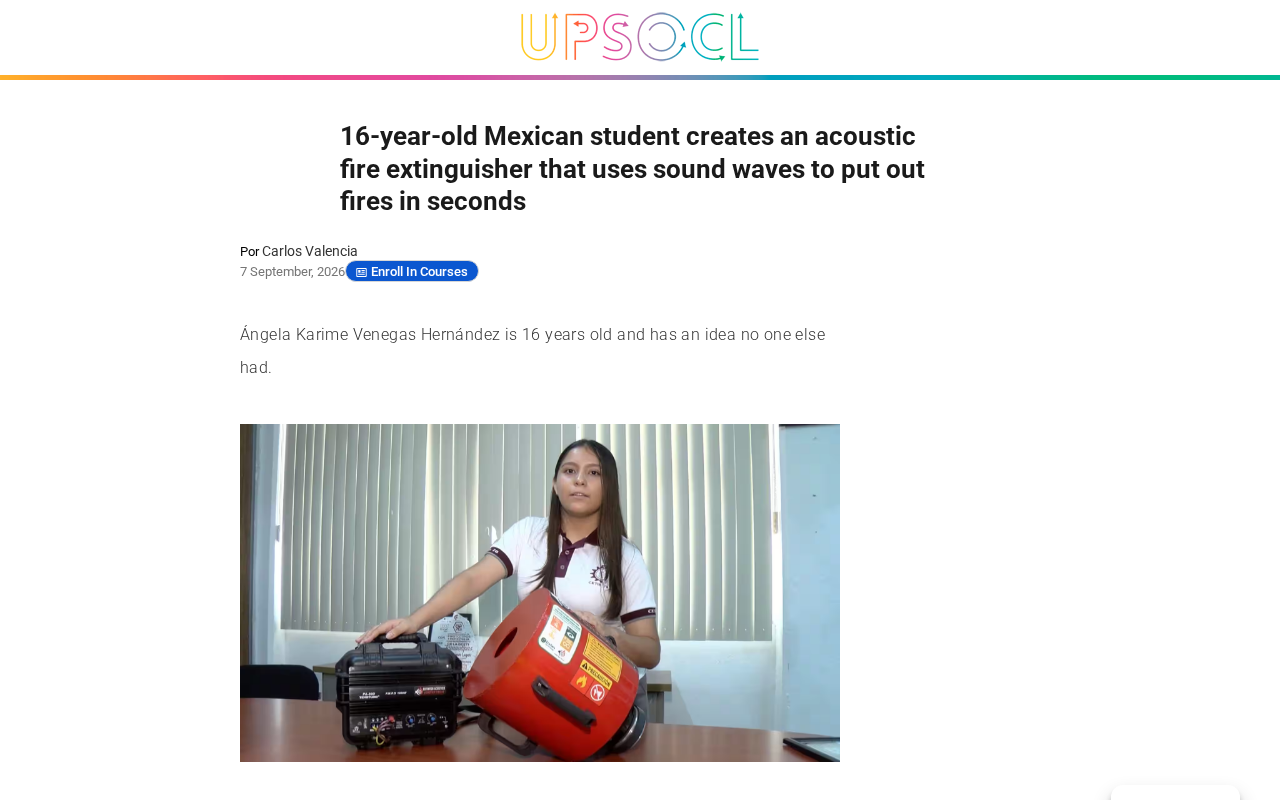
A 16-year-old Mexican student built a sound-wave fire extinguisher — promising, but reignition and scalability remain key hurdles.
A 16-year-old Mexican student developed an acoustic fire extinguisher that uses 30–60 Hz low-frequency sound waves to disrupt the flame boundary layer and cut off oxygen supply. The principle isn't new — DARPA demonstrated it in 2012 and George Mason University students built a similar device in 2015 — but the teen's contribution lies in engineering execution. Key advantages include no chemical residue and reusability; key drawbacks include the inability to cool fuel (risking reignition), exponentially higher energy needs for large fires, and ineffectiveness against deep smoldering. The technology is best suited as a supplementary tool in data centers, spacecraft, and similar niche environments.
A 16-Year-Old's Innovative Breakthrough
Recently, news about a young Mexican inventor sparked lively debate on Hacker News, earning 272 upvotes and 89 comments. A 16-year-old Mexican student reportedly developed an acoustic fire extinguisher — one that relies not on traditional dry chemicals, water, or carbon dioxide, but on sound waves to extinguish flames within seconds.
This invention has once again turned public attention toward the concept of "using sound to fight fire" — a seemingly counterintuitive idea with a solid physical foundation. For readers who closely follow tech innovation, this is more than an inspiring story; it's an opportunity to take a fresh, critical look at the feasibility and limitations of acoustic fire suppression.

How Does Acoustic Fire Suppression Actually Work?
The Fire Triangle and How Sound Waves Intervene
Sustained combustion requires three essential elements: fuel, oxygen, and heat — the so-called "fire triangle." The core principle behind acoustic fire extinguishers is disrupting the contact between oxygen and fuel.
Low-frequency sound waves (typically in the 30–60 Hz range) generate high-intensity oscillations in air pressure. When directed at a flame, these waves create periodic air displacement that "pushes" oxygen away from the combustion zone while dispersing the flame's boundary layer, temporarily breaking down the mixing of fuel vapor and oxygen. When the flame is deprived of sufficient oxygen, combustion can no longer be sustained.
Acoustic Fire Suppression Is Not a New Concept
Worth noting: this is not the first time someone has explored acoustic fire suppression. As far back as 2015, two engineering students at George Mason University — Seth Robertson and Viet Tran — developed a handheld acoustic fire extinguisher that used low-frequency sound waves to extinguish small flames, attracting widespread attention at the time. DARPA demonstrated related acoustic fire suppression experiments even earlier, in 2012.
The Mexican teenager's contribution therefore lies more in engineering execution and localized innovation than in a fundamentally new principle. This point was noted by several technically knowledgeable users in the Hacker News comment thread.
Advantages and Real-World Limitations of Acoustic Fire Suppression
Potential Advantages
Acoustic fire suppression technology holds several clear attractions:
- No residual contamination: Unlike dry powder or foam extinguishers, acoustic suppression leaves no chemical residue to clean up — making it especially suitable for sensitive electronics, laboratories, and similar environments.
- Reusability: The device is essentially a sound wave generator that consumes no extinguishing medium and can theoretically operate continuously.
- Non-toxic and environmentally friendly: No chemical substances are released, making it safer for people and the environment.
Unavoidable Technical Limitations
However, the Hacker News community also offered a sober assessment of the technology's practical bottlenecks:
Difficult to scale up. Acoustic suppression works impressively on small flames in lab demonstrations, but extinguishing real building fires or large-scale blazes would require exponentially more acoustic energy — far beyond what current devices can deliver across a large fire area.
No cooling effect. Sound waves can interrupt active combustion but cannot reduce the temperature of the fuel itself. This means that once the sound stops, any fuel still at high temperature is very likely to reignite — a critical disadvantage compared to water or foam suppressants.
Ineffective against deep smoldering in solid materials. For solid combustibles like wood or fabric undergoing deep-seated smoldering, sound waves cannot penetrate and disrupt the internal combustion process.
Practical Use Cases for Acoustic Fire Extinguishers
Based on various discussions, acoustic fire suppression is currently best suited as a supplementary tool in specific scenarios rather than a general-purpose firefighting solution. Examples include:
- Data centers and server rooms: Environments extremely sensitive to chemical contamination, where acoustic suppression avoids secondary damage;
- Early-stage kitchen fires: Rapid suppression of small grease fires, with simple operation and no risk of splattering hot oil;
- Spacecraft and microgravity environments: Traditional fire suppressants disperse poorly in weightless conditions, giving acoustic suppression a unique edge — one reason NASA has previously shown interest in this technology.
For this 16-year-old, the real value of the invention may not lie in immediately disrupting the fire suppression industry, but in demonstrating the ability of a young generation to translate fundamental physics principles into engineering practice. It reminds us that many major innovations begin with re-engineering and contextualizing existing concepts.
Conclusion
The acoustic fire extinguisher story continues to captivate because it combines scientific elegance with perceptual contrast — using the invisible power of sound to combat the very tangible force of fire. While large-scale practical deployment remains a distant goal, as the work of a teenage student, it stands as a vivid demonstration of STEM education and the spirit of youth innovation.
For those in the tech industry, this is also a worthwhile case study: when evaluating an innovation, it's important to both acknowledge the engineering effort involved and maintain a clear-eyed view of its technical boundaries. Real progress, more often than not, comes from an honest understanding of limitations — and the persistent drive to overcome them.
Related articles
Open-Source Python SDK: Measuring AI Agent Reliability with SRE Principles
Agent Reliability is an open-source Python SDK that applies SRE's SLO and error budget concepts to AI Agent evaluation, with PASS/FAIL/UNKNOWN states, CI assertions, and zero forced dependencies.
MiniMax RefMod: A Complete Guide to Training-Free Reusable Identity Workflows
MiniMax RefMod offers training-free reusable identity workflows for image, video, and audio generation. Includes Runpod template and tutorial for quick setup.

Invalid Source Material Notice
The source material provided lacks substantive information and is unrelated to AI/tech topics, making it impossible to produce a complete professional article.