After Maduro's Arrest, Where Does Venezuela Go From Here?
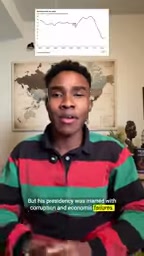
After Maduro's arrest, Venezuela faces a power vacuum, no election date, and a geopolitical fight over oil.
The article traces Maduro's path from Chávez's handpicked successor to prisoner: an oil crash shrank Venezuela's economy by about three-quarters, U.S. narco-terrorism charges followed in 2020, and a disputed 2024 election eroded his legitimacy. U.S. forces captured him in January 2026, with trial set for 2027. Nearly a year on, no new election date is set and the power vacuum persists, while control of the world's largest oil reserves becomes a geopolitical flashpoint.
After Maduro's Arrest, Where Does Venezuela Go From Here?
From Heir Apparent to Prisoner: Maduro's Political Trajectory
According to Khalil Green, host of Vox's program Khalil Explains, former Venezuelan President Nicolás Maduro remains held in a Brooklyn jail and is scheduled to stand trial in New York next year. The news marks a dramatic turn in the fate of a leader who once controlled one of South America's most important oil-producing nations.
Maduro's political career is inextricably tied to his predecessor, Hugo Chávez. In 2013, Chávez personally selected Maduro as his successor, propelling him into the presidency. Yet that tenure was dogged by corruption allegations and economic mismanagement. When international oil prices collapsed in 2014, Venezuela's economy shrank by roughly three-quarters over the following seven years. The economic collapse triggered multiple waves of protests, which the Maduro government met with force—and since 2015, nearly 8 million Venezuelans have left their homeland.
Chavismo is a key concept for understanding contemporary Venezuelan politics. After taking power in 1999, Hugo Chávez pursued "21st-century socialism," funding large-scale social programs (such as the "Bolivarian Missions") with oil revenue while gradually centralizing executive power and weakening the opposition. Before his death from cancer in 2013, Chávez designated Maduro as his successor—but Maduro lacked Chávez's personal charisma and his bonds with the military and the public, and his legitimacy was questioned from the outset. The core contradiction of Chavismo is this: a redistribution model heavily dependent on oil revenue sustained popular support when prices were high, but became untenable once prices crashed, while the concentration of power disabled mechanisms for policy correction. Maduro's predicament is essentially a continuation of the structural crisis of that model.
U.S. Charges and Electoral Dispute
In 2020, U.S. prosecutors brought "narco-terrorism" and drug trafficking charges against Maduro, laying the legal groundwork for the later capture. In 2024, Maduro declared victory in the presidential election, but tally sheets collected by the opposition showed he had in fact lost. The dispute over the election results further eroded his legitimacy.
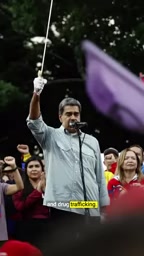
Starting in 2025, the U.S. military began striking vessels in the Caribbean and Pacific alleged to be linked to Venezuelan drug trafficking, killing more than 200 people. The UN human rights chief stated that these strikes violated international law.
Narco-terrorism is a specific combination of charges in U.S. judicial practice, referring to criminal conduct that links drug trafficking with terrorist activity. The U.S. Department of Justice brought this charge against Maduro in 2020, with the core allegation that senior officials in his government cooperated with organizations such as the Revolutionary Armed Forces of Colombia (FARC) to use Venezuela as a cocaine transit corridor. The political significance of the charge outweighs its legal significance: it allowed the United States to exercise criminal jurisdiction over a sitting head of state and provided the legal framework for the subsequent capture. Under international law, heads of state generally enjoy immunity; the United States' refusal to recognize the legitimacy of Maduro's 2024 election was precisely a way to circumvent this obstacle. The threshold for establishing the charge and its evidentiary standards face significant challenges in cross-border evidence-gathering scenarios.
Capture and Trial: Key Milestones in 2026
On January 3, 2026, U.S. forces seized Maduro and his wife, Cilia Flores, in Caracas and transferred them to New York to face charges. Both pleaded not guilty, and a federal judge set the trial date for June 14, 2027.
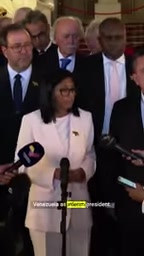
After Maduro's arrest, former Vice President Delcy Rodríguez assumed power as interim president. Yet according to Khalil Green's observations, nearly a year after Maduro's capture, Venezuela has still not set a new election date.
Head-of-state immunity is a customary-law principle in international law rooted in the idea of sovereign equality, typically granting sitting heads of state, heads of government, and foreign ministers criminal and civil immunity in foreign courts. However, the principle has important exceptions: first, immunity applies only during tenure and ceases upon leaving office; second, if a state does not recognize someone's status as head of state, it may argue that immunity does not apply. The legal path the United States took against Maduro is precisely the latter—by denying the legitimacy of the 2024 election, it cast him as a "de facto drug cartel leader" rather than a legitimate president. This approach is highly controversial in international legal scholarship, because unilaterally denying another state's head of state status could set a dangerous precedent and undermine the stability of the sovereign immunity system.
The Unresolved Power Vacuum and the Oil Game
The central question in Venezuela today is who holds power. The interim government's delay in setting an election timetable means the political transition lacks a clear path. At the same time, Venezuela holds globally significant oil reserves, and who will control these resources has become the focus of geopolitical maneuvering. At the end of the program, Khalil Green posed a question to viewers: Who do you think should control Venezuela's oil?
From a broader perspective, the Maduro case involves multiple interlocking dimensions: the cross-border exercise of U.S. judicial jurisdiction, international-law controversies over military strikes, and the institutional reconstruction challenges facing an oil-producing country after the departure of a strongman. Venezuela's future direction depends not only on the outcome of the trial in a New York courtroom, but also on whether the country's various factions can reach consensus on elections and the distribution of power.
(This article is based on content from Vox's Khalil Explains.)
Venezuela's oil resources are the largest proven reserves in the world—about 300 billion barrels according to OPEC data, surpassing Saudi Arabia. However, these reserves consist mainly of heavy crude, which is costly to extract and refine and requires substantial capital and technological investment. After Chávez nationalized the Orinoco heavy oil belt projects in 2007, international companies such as ExxonMobil and ConocoPhillips withdrew, widening the technology and funding gaps. Combined with U.S. oil sanctions imposed since 2019, Venezuela's output fell from a peak of 3 million barrels per day to less than 1 million. Who controls these resources matters not only for Venezuela's fiscal reconstruction but also for the supply-demand dynamics of the global heavy crude market and the balance of geopolitical influence among China, Russia, and the United States in Latin America.
One-line Summary
After Maduro's arrest, Venezuela faces a power vacuum, no election date, and a geopolitical fight over oil.
Paragraph Summary
The article traces former Venezuelan President Maduro's political trajectory from Chávez's handpicked successor to prisoner: after taking office in 2013, an oil price crash shrank the economy by about three-quarters and drove nearly 8 million people abroad; in 2020 he was charged by the U.S. with narco-terrorism, and the disputed 2024 election eroded his legitimacy; in January 2026 U.S. forces captured him in Caracas, with trial set for June 2027. After his arrest, Vice President Rodríguez became interim president, but nearly a year later no new election date has been set, and the power vacuum persists. The article notes that Venezuela's future depends on the trial's outcome and whether domestic factions can agree on elections and power-sharing, while control of the world's largest oil reserves has become the focus of geopolitical competition.
Related articles
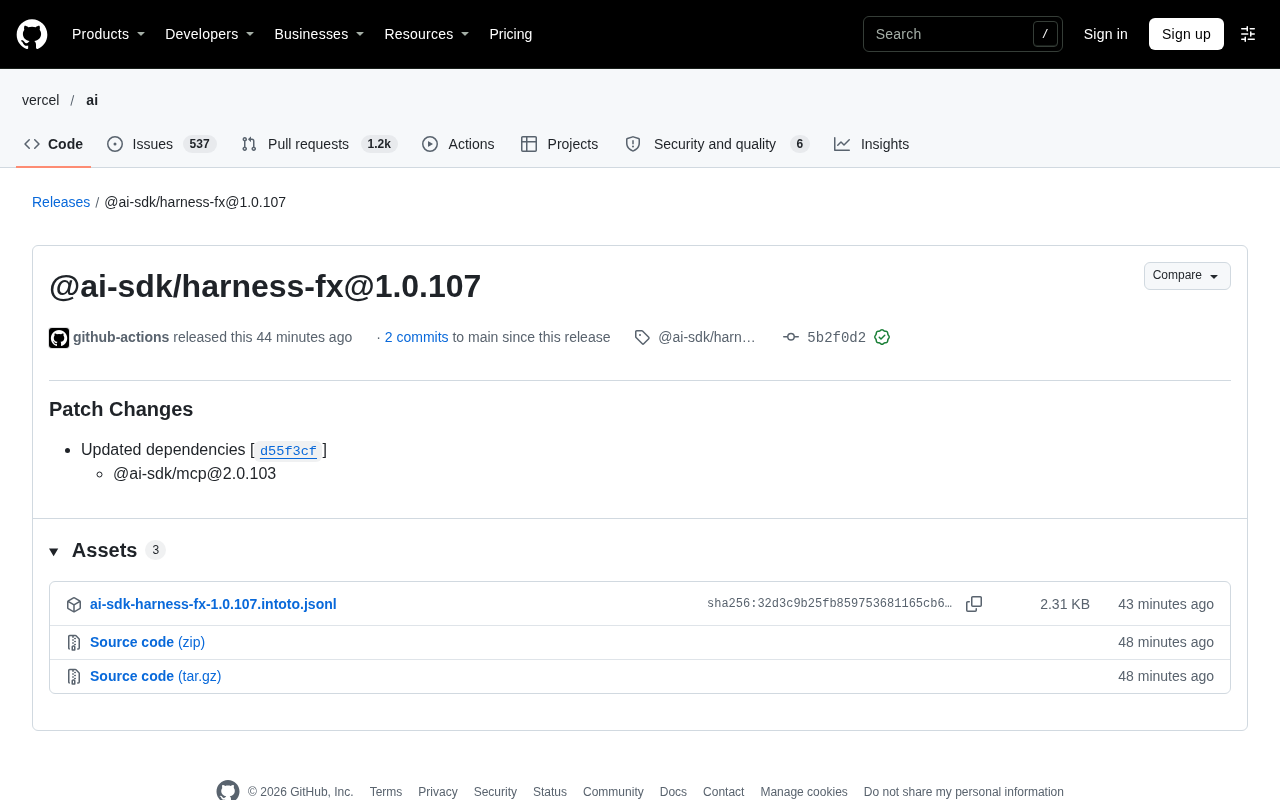
@ai-sdk/harness-fx 1.0.107 Released: MCP Dependency Upgrade, Patch Update
@ai-sdk/harness-fx 1.0.107 released, updating dependency @ai-sdk/mcp to 2.0.103. Learn about this patch update, its impact on AI SDK developers, and upgrade advice.

What Happened to Silicon Valley? O'Reilly Long-Form Piece Sparks Heated Debate on Hacker News
O'Reilly Radar's "What Happened to Silicon Valley?" earned 302 points and 153 comments on Hacker News, sparking debate on the valley's innovation ecosystem and culture.

The Birds of GTA 6: Audubon Explores Vice City's Wild Ecology
Audubon magazine publishes a GTA 6 bird field guide, comparing Vice City and Leonida's virtual ecology with real Florida avian communities. The article sparked discussion on Hacker News about ecological accuracy in game environment design and educational potential.