After the Midterms, Will Big Tech Pivot to Courting the Democrats?

After the midterms, big tech is forced to pivot from being close to the White House to courting the Democrats, but image repair faces multiple tests from states, localities, and the market.
The midterm elections reshaped the U.S. political landscape and rapidly depreciated the government-business relationships big tech had built around the White House over the previous two years, forcing them to try to establish ties with the Democratic Party. The article notes that this shift is not merely a PR adjustment but a signal of a more complex regulatory environment: federal legislation may stall, state and local antitrust, privacy, and content moderation actions will become more active, and investors are increasingly pricing in regulatory risk. Meanwhile, the Democratic Party is not unified in its attitude toward tech giants, and whether tech companies can find stable supporters remains uncertain. It concludes that if they only change faces in political donations and lobbying without substantive changes in product design, data privacy, and market competition behavior, image repair is unlikely to work, and challenges outweigh opportunities.
Big Tech's Political Pivot: From the Front Row of the White House to the "Hot Seat"
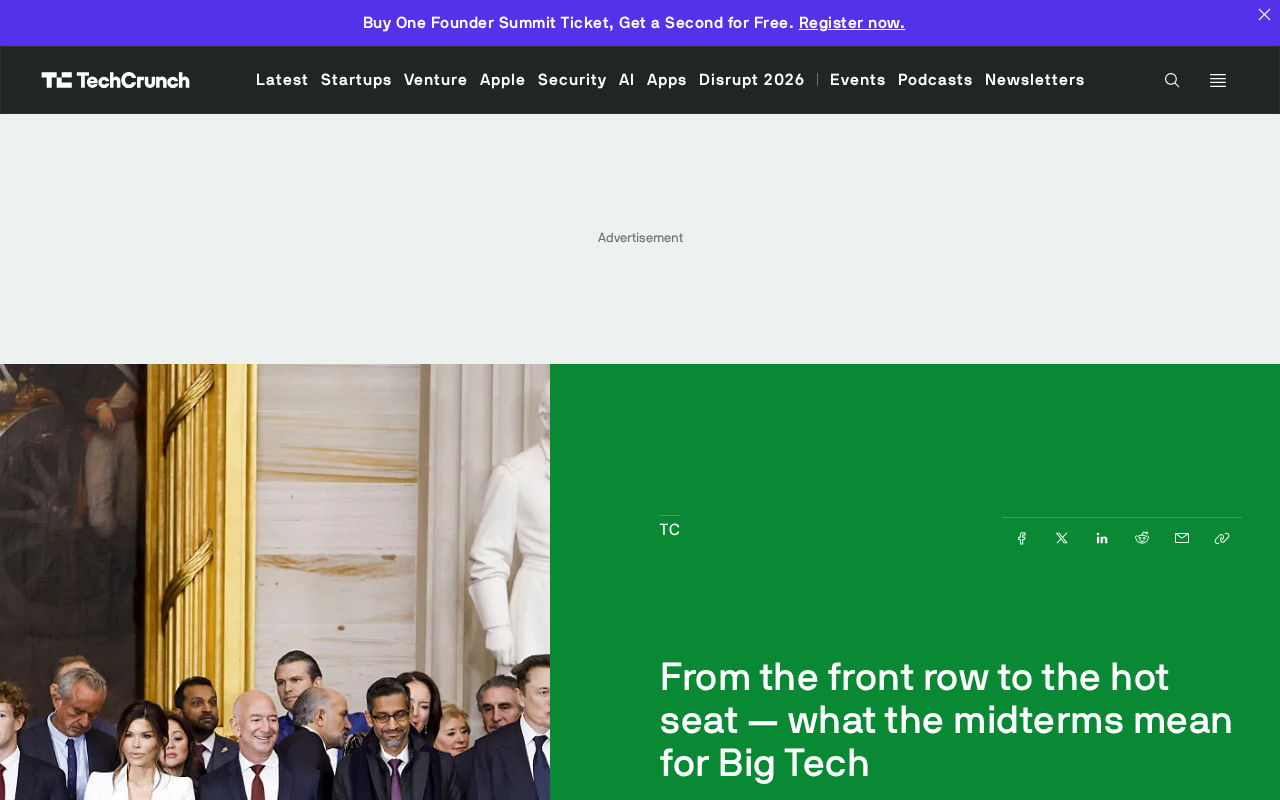
Over the past two years, large technology companies seemed to have found a comfortable way of dealing with Washington: staying close to the White House, influencing policy, and enjoying a relatively relaxed regulatory atmosphere. But the midterm elections changed the political landscape, and these companies suddenly found that they needed to rebuild their relationships with the Democratic Party. According to the original report, big tech companies are trying to "make friends with the Democrats," and the central question is whether this image repair can withstand multiple pressures from state governments, local communities, and the market.
This is not a simple public relations adjustment. The shift in political winds means that tech giants will face a more complex regulatory environment, and the government-business relationships they built over the past two years may no longer be enough.
Why Are the Midterms So Critical?
Midterm elections are often seen as a referendum on the incumbent administration, and they also reshape the balance of power in Congress. For the tech industry, the election results directly affect the legislative agenda and the intensity of regulation. The original article points out that big tech companies "spent two years cozying up to the White House," but after the election "suddenly tried to make friends with the Democrats." This abrupt turn shows that they realize their previous strategy may no longer work under the new political configuration.
The deeper problem is that the challenges facing tech companies go far beyond Washington. State legislatures, local communities, and financial markets are all exerting their own influence. The original article explicitly mentions that the "upcoming actions" of these forces may make tech companies' image repair efforts fragile.
Midterm Elections refer to the congressional elections held in the middle of a U.S. president's term (that is, in November of the second year after the president takes office). All 435 seats in the House of Representatives and about one-third of the Senate seats are up for re-election, and most governorships and state legislative seats also change hands at the same time. Because the president is not on the ballot, voters often treat the midterms as a "referendum" on the incumbent president's performance, and the ruling party typically loses congressional seats in midterm elections (a phenomenon known as the "midterm curse"). For the U.S. tech industry, the key impact of the midterms is that control of Congress may change hands, fundamentally altering the legislative agenda, committee chairmanships, and regulatory priorities. The lobbying and relationship networks that tech companies had built around the White House often depreciate quickly once the power structure in Congress changes, so they must place new bets on the side that may come to power. This is the institutional background behind the "abrupt turn" in political strategy described in the article.
Three Major Obstacles to Image Repair
Regulatory Action at the State and Local Levels
The antitrust, privacy protection, and content moderation pressures that tech giants face at the state level have not disappeared because of the midterms. On the contrary, local communities' dissatisfaction with tech companies may be more concrete and direct. The original article emphasizes that actions by states and local communities are the key variable determining whether tech companies' image repair can succeed.
Under American federalism, state governments have independent legislative and enforcement powers, and they often lead the way in tech regulation areas such as antitrust, consumer privacy, and content governance. For example, California's Consumer Privacy Act (CCPA/CPRA) gives residents the right to access and delete their data and includes a private right of action; Colorado, Virginia, and other states have also successively passed comprehensive privacy legislation; state attorneys general can bring antitrust or consumer protection lawsuits against tech companies, with influence no less than that of federal agencies. At the local level, city councils can impose licensing and restrictions on platforms' content moderation, data collection, or businesses such as ride-hailing and short-term rentals. Compared with federal legislation, state and local regulation is closer to voters, moves faster, and is harder to neutralize through unified lobbying in Washington. This is precisely why tech companies' image repair faces structural resistance at the state and local levels.
Market Pressure: Investors No Longer Look Only at Growth
Market expectations for tech companies are changing. Investors are increasingly focused on regulatory risk and compliance costs, not just user growth and revenue. This pressure, combined with the political pivot, makes it difficult for tech companies to resolve the crisis through simple public relations tactics.
Tech companies have long enjoyed a valuation logic centered on user growth and revenue growth, but regulatory risk is now being incorporated into investors' pricing models. Rising compliance costs directly squeeze profit margins, antitrust litigation may bring fines, business breakups, or blocked mergers and acquisitions, and new privacy rules may weaken targeted advertising, a core business model. Large institutional investors and ESG funds are increasingly focused on corporate governance, data ethics, and transparency in political lobbying, and proxy advisors are also pressing on related shareholder proposals. Once regulatory uncertainty rises, the market often reflects risk through valuation discounts, higher financing costs, and tighter capital allocation. This pressure, combined with the political pivot at the congressional level, makes it difficult for tech companies to resolve the crisis solely through public relations or lobbying; they must make substantive adjustments to their business models and compliance structures.
Uncertainty About the Democratic Party's Attitude
Tech companies are trying to build relationships with the Democratic Party, but the party's attitudes toward tech giants are not unified. Some factions advocate stricter regulation, while others focus more on jobs and innovation. Whether tech companies can successfully "make friends" depends on whether they can find stable supporters within the party.
Industry Impact: A More Complex Regulatory Environment
The political landscape after the midterms means that the tech industry will enter a more fragmented regulatory environment. Legislation at the federal level may stall, while action at the state and local levels will become more active. For tech companies, this means higher compliance costs and greater operational complexity.
At the same time, tech companies' political donations and lobbying strategies also need to be adjusted. The alignment toward the White House over the past two years may no longer be effective, and they need to reallocate resources and seek a balance between the two parties.
Future Outlook: Can Image Repair Work?
The open question in the original article is worth pondering: can tech companies' image repair withstand the tests from states, localities, and the market? Based on the information available so far, the challenges outweigh the opportunities. Tech companies need to do more than make political donations and lobby; they need to make substantive changes in product design, data privacy, and market competition behavior.
If they merely put on a new face without addressing the root problems, then the political pivot after the midterms may be only a temporary respite rather than a long-term solution.
One-line Summary
After the midterms, big tech companies are forced to shift from being close to the White House to courting the Democrats, but image repair faces multiple tests from states, localities, and the market.
Paragraph Summary
The midterm elections reshaped the U.S. political landscape and also rapidly depreciated the government-business relationships that large tech companies had built around the White House over the previous two years, forcing them to try instead to establish ties with the Democratic Party. The article points out that this shift is not merely a public relations adjustment but a signal of a more complex regulatory environment: federal legislation may stall, antitrust, privacy, and content moderation actions at the state and local levels will become more active, and investors are increasingly pricing in regulatory risk. At the same time, the Democratic Party is not unified in its attitude toward tech giants, and it remains questionable whether tech companies can find stable supporters. The conclusion argues that if they merely change faces in political donations and lobbying without making substantive changes in product design, data privacy, and market competition behavior, image repair is unlikely to succeed, and the challenges outweigh the opportunities.
Related articles
 Tech Frontiers
Google Omni 1.2 Flash: 15-Second AI Video at Just $0.07 per Second
Google DeepMind releases Gemini Omni 1.2 Flash: 15-second video, 720p at $0.07/sec (30% cheaper), multi-turn editing without regeneration, draft upscaling to 4K.
 Tech Frontiers
No AI Ghostwriting: Writer's Quarter Reinvents Novel Writing with a Visual Workbench
The Writer's Quarter is an AI-free novel writing and planning tool that unifies character building, story planning, and manuscript writing in one visual workbench. This article analyzes its positioning, target users, and differentiated value amid the rise of AI writing tools.
 Tech Frontiers
Fleeep: A Unified Inspiration Collection Notes App for Creatives
Fleeep is a notes app for creatives that unifies screenshots, bookmarks, saved posts, and inspiration into one calm, cross-device, offline-capable space. This article analyzes its positioning, differentiation, and target users.