Agent Development in Practice: Layered Architecture, LLM Tool Integration, and a Full Breakdown of Dify Enterprise Agents

Using a 177-episode video as a thread, maps Agent development's five-layer architecture and enterprise deployment key points.
Based on a 177-episode Bilibili Agent development interview video, the article distills a systematic learning framework: interview focus has shifted to system design, with knowledge divided into five layers—model API, framework, development problems, scenario, and enterprise-level—each with distinct failure modes and cost structures. It covers vendor documentation and MCP specification changes, framework lifecycle selection, tool calling across eight directions, scenario questions about where to intercept, and enterprise requirements for persistence, idempotency, and observability, plus a structure-based learning method and three common mistakes.
Title
Agent Development in Practice: Layered Architecture, LLM Tool Integration, and a Full Breakdown of Dify Enterprise Agents
Meta Description
From the LLM vendor layer to enterprise deployment, this article systematically maps out Agent development's layered architecture, tool-calling development, and Dify agent practices, analyzing 2026 interview focus areas and cost governance priorities to help developers build an updatable knowledge structure.
Article Content
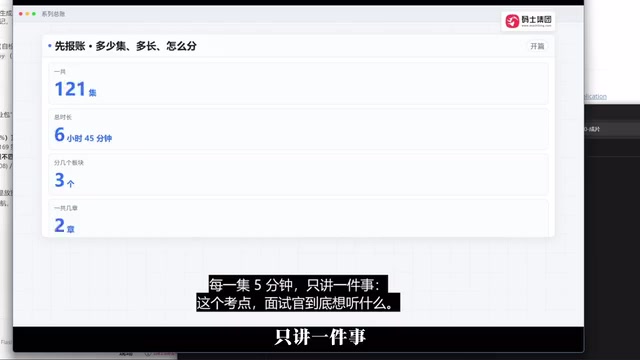
Agent development is moving from proof of concept to enterprise deployment, but most developers are still stuck at the stage of "can call an API but can't build a system." A Bilibili creator recently released a 177-episode, 14-hour-45-minute Agent development interview question series that offers a rare systematic learning framework—not prediction of specific questions, but a clear explanation of a category of problems. Drawing on that video's content and current technology trends, this article maps out the key threads of Agent development, from layered architecture and tool development to enterprise-level practice.
Why Agent Development Requires Layered Thinking
According to the Bilibili creator's analysis in the video, the focus of Agent development interviews has clearly shifted toward system design capability. In 2026 interviews, enterprise-level and security-related questions account for a significantly higher share, and preparing only RAG or a single framework is no longer enough. The video divides the entire knowledge system into five sections: LLMs and the vendor layer, the framework layer, problems in development, scenario questions, and enterprise-level. This layering is not ordered by difficulty but follows the interview process—the first round asks about models and APIs, the second about frameworks and development, the third gives a scenario to design for, and finally enterprise-level and cost are discussed.
This order reveals a core logic: Agent development is not "pick a framework and then write prompts," but a layer-by-layer decision process from the model API layer down to the business scenario layer. Each layer has its own failure modes and cost structure, and mixing them up when answering is simply wrong.
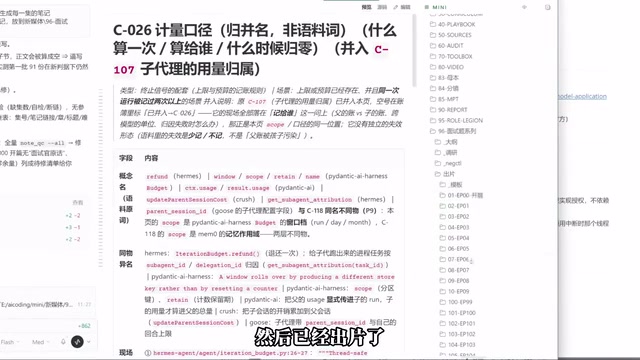
LLMs and the Vendor Layer: The Overlooked Cost Details
This layer has changed the most in 2026. According to the video, vendor documentation has seen widespread domain changes, the MCP specification has been updated to the July 28 version, connection mode has changed to stateless, and those who prepared based on older versions will answer with fields that have already been deleted. The most frequently probed topic is money: what unit caching is priced by, which column thinking content is recorded in, and how many times over different thinking levels differ for the same task. All of this is written in the documentation, but each vendor writes it differently, and mixing them up leads to errors.
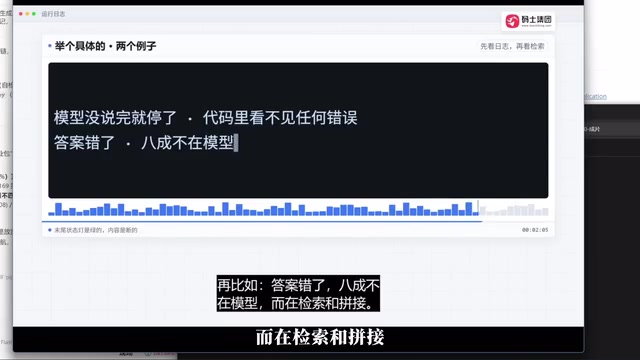
For developers, this means integrating an LLM is not as simple as "filling in an API key." Token billing, context caching, and reasoning level selection each directly affect system cost and response quality. The video mentions a specific phenomenon: the model stops before finishing, and no error is visible in the code—the root cause of such problems often lies in the vendor layer's stop reason field, and without familiarity with API details there is no way to troubleshoot.
Context Caching is a mechanism introduced by major LLM vendors to reduce billing for repeated context: when the prefix of a request heavily overlaps with recent requests, the cached portion is billed at a discounted rate. Pricing units vary widely across vendors—some by token count, some by cache storage duration, some distinguishing write and read prices—which is exactly why the original text says "what unit caching is priced by" needs to be checked vendor by vendor.
Reasoning Effort refers to the depth level of internal thinking a model performs before generating output, typically divided into low, medium, and high. The higher the level, the more thinking tokens the model consumes, and latency and cost rise multiplicatively. Some vendors store thinking content separately in a specific field of the response structure (such as reasoning_content), billing it separately from the final answer, which is also the source of the question "which column thinking content is recorded in."
Finish Reason (finish_reason / stop_reason) is a metadata field in the model response indicating why generation ended: normal completion, hitting the max_tokens limit, triggering content filtering, or a tool call request, etc. When the model "stops before finishing" without an error, the value of this field is often length truncation, and troubleshooting requires consulting the API documentation.
Framework Layer: The Test Point Is Not "Can You Use It"
LangGraph, LangChain, LlamaIndex, AutoGen, CrewAI, Agents SDK, MCP—the test point at the framework layer is not whether you can call them, but whether you can clearly explain "when the card fails." According to the video, the official AutoGen repository has been marked as in maintenance mode, and official guidance recommends migrating new projects to other approaches. This means selection decisions must consider a framework's lifecycle status, not just its feature list.
Another fixed test point is memory layering: how many layers different frameworks divide memory into, who handles persistence, and who handles trimming. Failing to answer this shows you have only called APIs, not built a system.
MCP (Model Context Protocol) is a model context protocol proposed and open-sourced by Anthropic to standardize how LLMs connect to external tools and data sources. It decouples tool providers (Server) from callers (Client), enabling the same set of tools to be reused across different models and frameworks. The original text mentions that the MCP specification was updated to the July 28 version and changed connection mode to stateless, meaning early implementations designed around stateful sessions need to adjust handshake and lifecycle management logic.
Memory layering refers to how Agent systems typically divide memory into layers such as short-term conversation buffers, long-term vector storage, and structured fact bases, with different frameworks assigning different responsibilities for "who writes, who retrieves, who trims." Understanding this layering is an important benchmark for judging whether a developer has actually built a system, because memory persistence and trimming strategies directly determine context length, cost, and answer consistency.
Tool Development and Calling: The Main Battleground Across Eight Directions
Problems in development are summarized into eight directions: context, memory, tool calling, termination, hallucination, evaluation, cost, and concurrency. The video points out that wrong answers are 80% not the model's fault but the fault of retrieval and stitching; the same feature might cost three times someone else's bill—cache hit rate, time to first token, and per-loop cost all need to be broken down into numbers you can calculate.
Tool calling (function calling / tool use) is the core capability that distinguishes an Agent from an ordinary chatbot, but as tools multiply, multi-tenancy, multi-process, and sub-agent programmatic invocation create permission and measurement-standard problems. The video's view is direct: once sub-agents or multi-tenancy are involved, you must first define the standards before discussing limits.
Function Calling / Tool Use is the mechanism by which a model outputs a structured call request based on user intent (tool name plus parameter JSON), which an external program executes and then returns the result to the model to continue reasoning. It is the foundation of autonomous Agent action, but it also brings permission boundary problems: the model can only see tool descriptions and parameter schemas, and cannot perceive backend multi-tenant isolation rules.
Sub-agent refers to a subordinate Agent derived from a main Agent and responsible for a subset of tasks. When sub-agents programmatically call tools, permission inheritance and quota standards easily get out of control—whether the main agent's tenant identity is passed through and whether sub-agents can access other tenants' data beyond their authority must be clarified at the design stage. The original text's emphasis on "first define the standards before discussing limits" precisely means unifying permission and metering standards first, then discussing concurrency and call volume limits.
Dify and Enterprise Agents: What Scenario Questions Really Test
Scenario questions don't ask whether you understand; they ask where you would refuse. The video gives a typical example: letting the model modify data in natural language, you must first answer at which layer you would stop it. How to resume a long task that breaks halfway and how to ensure work isn't repeated test the reentrancy criteria for each step, not a vague "add a retry."
The enterprise-level section involves persistence, idempotency, observability, tenancy and permissions, injection and privilege escalation, compliance cost governance, canary releases and rollbacks, and evaluation gates. According to the video, cost governance is not filler for interviews—a medium-sized intelligent customer service system's monthly API fees can equal a developer's salary, and interviews will ask how you reduce costs without sacrificing quality. This is exactly where the value of enterprise agent platforms like Dify lies: productizing infrastructure capabilities such as persistence, permissions, and observability so teams can focus on scenario logic. But platforms cannot replace architectural judgment; which layer intercepts and which step is idempotent still need to be clearly explained by the developer.
Idempotency means that executing the same operation multiple times has the same effect as executing it once. In Agent long tasks, resuming from checkpoints and retries can both cause repeated calls to external tools (such as duplicate orders or duplicate messages), so each step needs reentrancy criteria, such as deduplication keys based on task IDs or state machine checks.
Observability in enterprise Agents typically includes call chain tracing, token and cost metering, tool call logs, and failure attribution. It is not only an operations requirement but also the data foundation for cost governance and evaluation gates. Canary releases and rollbacks require that an Agent's prompts, tool versions, and model versions can be independently released and reverted, avoiding a full-scale failure from a single change.
Learning Method: Remember by Structure, Not by Rote Questions
The video creator repeatedly emphasizes one methodology: viewing by sheet, you remember the structure; viewing by episode, you remember a single sentence. He suggests that absolute beginners start with the first four chapters of the LLM layer, those with project experience go directly to the framework layer and development problems layer, and that enterprise-level and scenario questions are the main interview battleground. On the day before an interview, only watch the last two episodes of each sheet—those are the hardest follow-up questions.
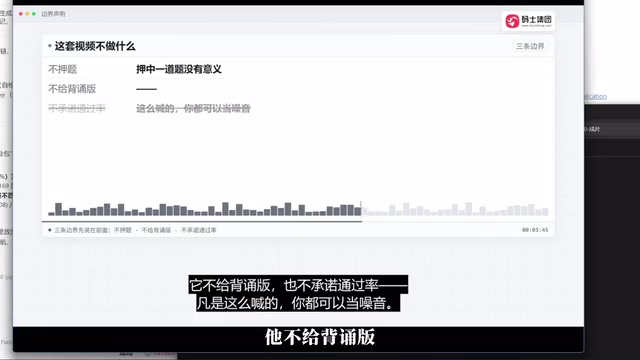
Three typical mistakes are worth guarding against: memorizing concepts but not fields, so you can't answer the stop reason when asked about truncation; preparing only RAG and missing a large area of enterprise-level and security topics; memorizing a fixed answer while official documentation has changed many places this year. Each episode of the video ends with three questions: what pitfalls have you encountered, how do you prove it works, and what is the cost of this setup.
For developers who want a systematic introduction, the reference value of this material lies in its sourcing approach—prioritizing official documentation, official specifications, and official repositories, and clearly marking questions for which official sources cannot be obtained. In an era of rapid Agent technology iteration, what matters more than memorizing a particular answer is building a knowledge structure that can update itself.
One-line Summary
Using a 177-episode video as a thread, this article maps out the five-layer architecture of Agent development and key enterprise deployment points.
Paragraph Summary
Based on a 177-episode Bilibili Agent development interview question video, this article distills a systematic learning framework for Agent development. The core view is that interview focus has shifted to system design, and the knowledge system should be divided into five layers: model API layer, framework layer, development problems layer, scenario layer, and enterprise-level, each with its own failure modes and cost structure. The article details cost-detail follow-ups caused by changes in vendor documentation and the MCP specification, lifecycle considerations in framework selection, the main battleground status of tool calling across eight directions, and how scenario questions test "at which layer to intercept" and enterprise-level requirements for persistence, idempotency, and observability. Finally, it offers a learning method of remembering by structure rather than rote questions, along with three typical mistakes.
Related articles

Amphibious Transforming Drone: Beyond 100x Power Savings, What Are the Real Needs?
Is the amphibious transforming drone just a gimmick? Starting from the 100x power difference of the M4 Morphobot, explore real application scenarios and thesis topic ideas, analyzing boundary conditions where pure drones and pure ground robots both fail.

Warhound Raises $200 Million: Genetically Engineered "War Dogs" Paired with Anduril Gear
Warhound raises $200M, backed by Ben Lamm and Palmer Luckey, to genetically engineer dogs for military and law enforcement use and equip them with Anduril gear. This article analyzes its technology direction, funding logic, and ethical controversy.

Claude API Comes to Google Cloud: IAM Integration and SDK Access Guide
Anthropic hosts the full Claude API on Google Cloud with IAM-controlled permissions and unified billing. This guide covers the Vertex AI and Anthropic-hosted entry points, IAM role configuration, and SDK access.