Agent Inbox: An Open-Source Unified Inbox Built for AI Agents
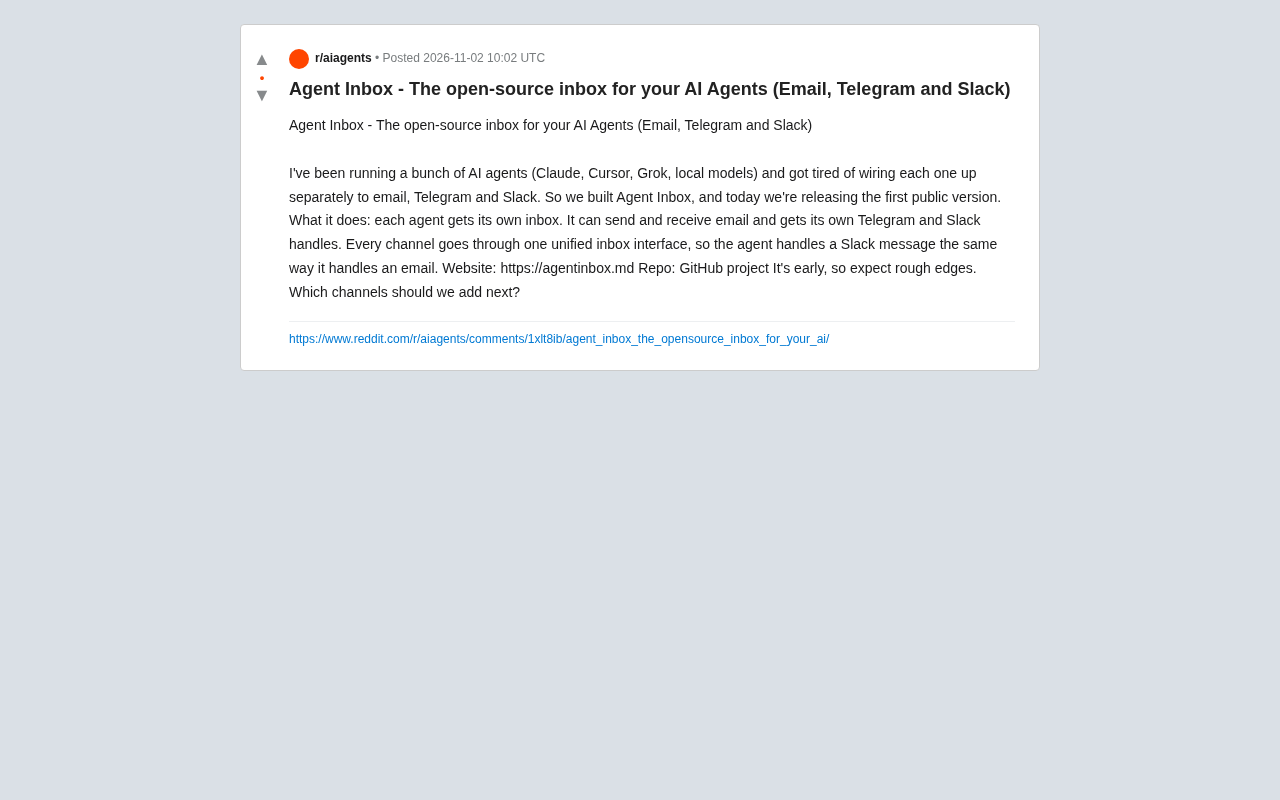
Open-source Agent Inbox gives each AI agent a unified inbox for email, Telegram, and Slack with a single integration.
Agent Inbox is an early-stage open-source project that solves the pain of repeatedly integrating external channels in multi-agent systems. Each agent gets its own inbox plus dedicated Telegram and Slack handles, with all messages converging in one interface so agents handle email, Telegram, and Slack the same way. Developers integrate once to enable cross-platform messaging, greatly reducing complexity for automated workflows.
When managing multiple AI agents, the most tedious part is often not the models themselves but getting them to communicate with the outside world. Each agent needs its own integration with email, Telegram, and Slack, and the repetitive configuration work is exhausting. Recently, an open-source project called Agent Inbox set out to solve this pain point—giving every agent a unified inbox.
Why do agents need their own inbox?
When developers run multiple agents at once—Claude, Cursor, Grok, and local models—connecting each agent to external channels is a separate engineering effort every time. Email requires SMTP/IMAP configuration, Telegram requires a Bot Token, and Slack requires app permissions—all repetitive and error-prone work. The core idea behind Agent Inbox is to abstract a unified inbox interface so that agents use the same logic whether they're handling a Slack message or an email. That means developers only need to integrate once for their agents to send and receive messages across multiple channels.
SMTP (Simple Mail Transfer Protocol) and IMAP (Internet Message Access Protocol) are the two foundational protocols of email systems. SMTP handles "sending"—pushing messages from a client to a mail server, or relaying them between servers. IMAP handles "receiving" and synchronization: clients use it to read mail on the server while keeping read status, folders, and other state consistent. Setting up a working email channel typically requires a server address, port, encryption method (TLS/SSL), and an account password or app-specific password, plus handling spam filtering and sender domain verification (SPF/DKIM). Repeating this setup for every agent is not only time-consuming but also prone to send/receive failures from misconfigured parameters. Agent Inbox wraps these protocol details behind a unified inbox precisely to offload this engineering cost from each individual agent.
Core features: one interface, multiple channels
According to the project's release notes, Agent Inbox assigns each agent its own inbox. Agents can send and receive email and get dedicated Telegram and Slack handles. Messages from all channels converge into a unified inbox interface, and agents handle messages from different channels the same way. This design reduces the complexity of agent-to-outside communication and is especially well suited to automated workflows that require cross-platform collaboration.
The project is still in its early stages, and the developer openly acknowledges that "rough edges" are inevitable. But being open source means the community can contribute improvements and extend channel support to fit their own needs.
A Telegram Bot Token is an access credential for Telegram's official Bot API, generated after creating a bot via BotFather in the form "number:string". Holding that token lets you call interfaces such as send message and receive updates (long polling or webhook), so it is equivalent to the bot's identity and permissions—if leaked, someone else can impersonate the bot to send and receive messages. On the Slack side, the App and OAuth permission model applies: developers must create an app in the Slack API backend, request fine-grained scopes such as chat:write and channels:history, and install it into a workspace to obtain a Bot Token or user token before they can read and write to specified channels. The two differ markedly in authentication, message model, and rate limits, which is precisely why a multi-channel routing layer needs abstraction.
Multiple perspectives and community feedback
Agent Inbox's launch sparked discussion on Reddit, where the developer actively asked "which channels should be added next." Judging by the community response, the need for a unified communication layer is real—especially among developers using multiple agents at once. Still, some pointed out that the early version may need more polishing around stability and security, such as secure configuration of email protocols and fine-grained control of Slack permissions. This feedback aligns with the developer's expectation of "rough edges" and shows that the project is still in a phase of rapid iteration.
In system architecture, a "unified communication layer" typically refers to an abstraction sitting between business logic and external channels: it exposes a consistent send/receive interface upward and adapts to each channel's protocol and authentication differences downward. Its value lies in decoupling—agents only care about "receiving a message" or "sending a message" without needing to know whether it came from Slack or email. This kind of design is common in notification gateways and message middleware. But the abstraction layer also brings new challenges: message semantics are not equivalent across channels (email has subjects and threads, Slack has channels and threaded replies), so a unified model may lose channel-specific information; meanwhile, a centralized inbox becomes a single point of failure and a permission boundary, requiring extra design around message deduplication, idempotent processing, and access control.
How to get started
Agent Inbox provides an official website (agentinbox.md) and a GitHub repository. Developers can clone the repository and follow the documentation to configure agents and channels. Because the project is open source, you can inspect the code directly, file issues, or contribute PRs. For teams wanting to try it, it's best to start with a single channel (such as Telegram), verify the basic send/receive flow, and then expand to email and Slack.
Future directions and open questions
The developer is openly soliciting suggestions for the next channel, which hints at an open roadmap. Potential candidates include Discord, WhatsApp, and WeCom. At the same time, as the number of agents grows, how to manage inbox access permissions, how to avoid duplicate message processing, and how to ensure communication security are all issues that will need ongoing attention. Whether Agent Inbox can become the standard layer for agent communication depends on how quickly the community ecosystem develops.
For developers building multi-agent systems, Agent Inbox offers a starting point worth watching. It reduces repetitive integration work and lets teams focus more on improving the capabilities of the agents themselves.
One-line Summary
Open-source project Agent Inbox gives each AI agent a unified inbox so it can send and receive email, Telegram, and Slack messages after a single integration.
Paragraph Summary
Agent Inbox is an early-stage open-source project aimed at the pain point of repeatedly integrating external channels in multi-agent systems. It assigns each AI agent its own inbox and dedicated Telegram and Slack handles, with messages from all channels converging in a unified interface so agents process messages from email, Telegram, and Slack with the same logic. Developers only need to integrate the unified interface once for agents to exchange messages across platforms, significantly reducing integration complexity—ideal for automated workflows that require cross-platform collaboration. Since its launch on Reddit, the project has sparked discussion, with the developer openly soliciting the next supported channel. The community's need for a unified communication layer is real, but they also note that stability, secure email configuration, and fine-grained Slack permission control still need polishing.
Related articles

Multi-Agent Collaborative Development: Task Card-Driven Practices for Medium-to-Large AI Projects
A Bilibili creator shares a task card-driven, PM-orchestrated multi-Agent collaboration model with local-first repository state, so any Agent tool can take over a project anytime.
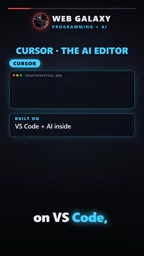
Cursor vs Copilot vs Claude Code: How Laravel Developers Should Choose
Compare Cursor, GitHub Copilot, and Claude Code for Laravel development: an AI-first editor, a plugin for existing editors, and a terminal agent for multi-file tasks and testing — plus workflow-based recommendations.
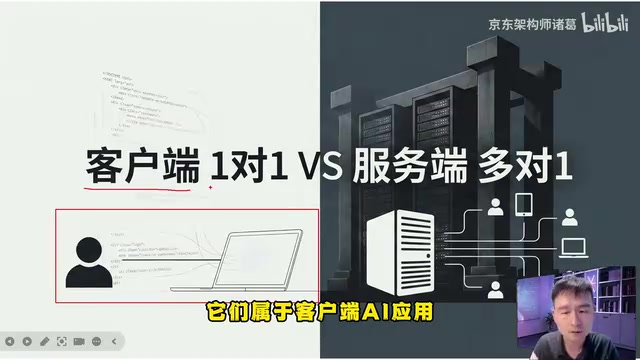
AgentScope Java Edition: A Practical Guide to Enterprise-Level Agent Frameworks
An in-depth analysis of Alibaba's AgentScope Java enterprise agent framework: contrasting client-side AI and server-side AI, explaining Java's natural advantages in high concurrency and distributed state management, and outlining a complete learning path from core principles to multi-agent collaboration.