AgentTrust: Adding Zero Trust and Human Approval to AI Agents

AgentTrust brings zero trust and human approval into the AI agent runtime to intercept high-risk actions.
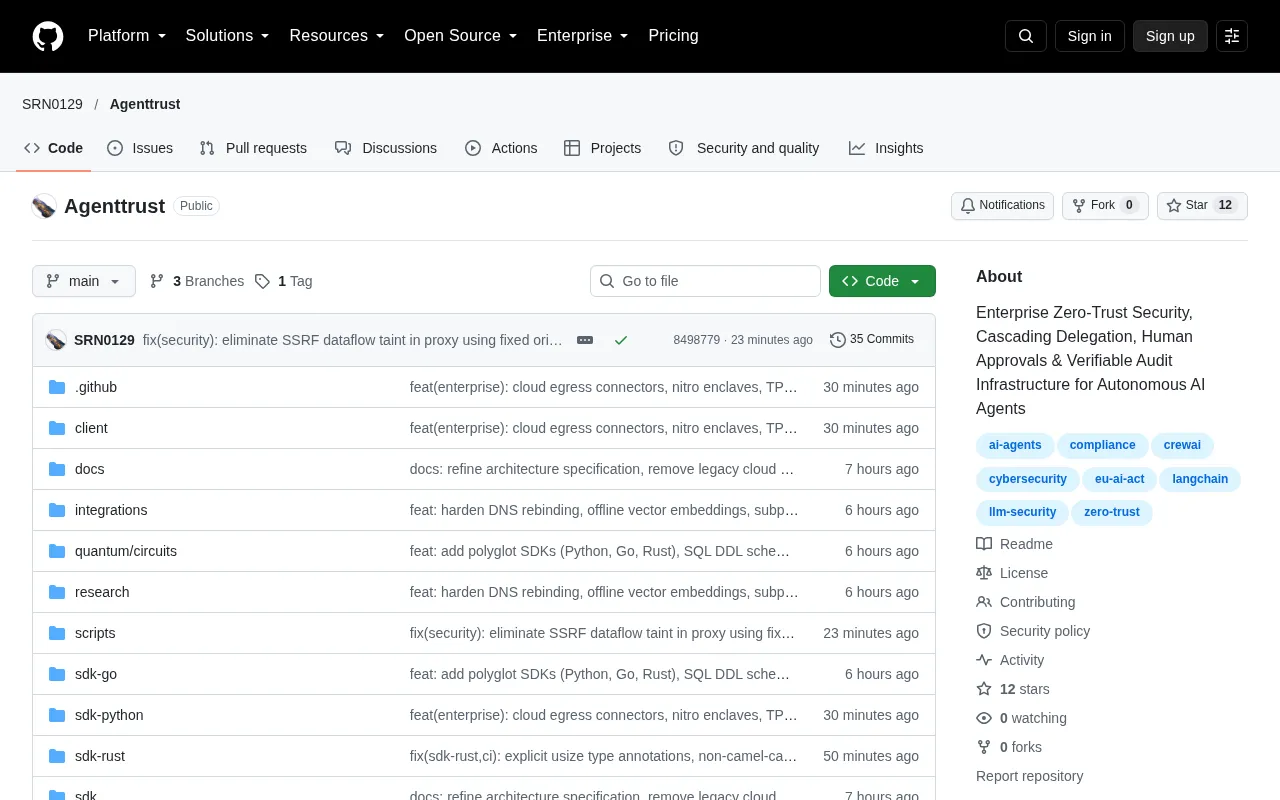
AgentTrust is an AI agent runtime security tool unveiled on Hacker News. Its core idea is to apply zero-trust principles to every tool call of autonomous agents. Through action-level permission checks, human approval gates for high-risk operations, and structured audit logs, it brings AI agent write operations within an interceptable and traceable security boundary. Unlike observability-focused tools such as LangSmith and AgentOps, AgentTrust positions itself as an agent firewall, emphasizing interception over observation. The article notes its high integration costs, the potential slowdown from approval steps, and that key details like agent credential management remain unaddressed. It is suitable for teams already running agents with write permissions in production.
When AI agents start autonomously calling APIs, operating databases, and executing transactions, the question facing enterprises is no longer just "is the model accurate?" but "should we let it do this?" AgentTrust, newly unveiled on Hacker News, targets exactly this gap: using a zero-trust architecture and human approval gates to bring every action of an AI agent within an auditable, interceptable security boundary.
Why do AI agents need zero trust?
Traditional AI security discussions mostly center on model alignment, prompt injection, and output filtering, but these approaches assume the agent is still "within the human-supervised loop." The working pattern of an autonomous agent is: receive a goal → plan steps → call tools → execute actions. Once the tool layer has write permissions (sending emails, changing configurations, transferring funds), the agent may perform high-risk operations due to hallucination, malicious prompt manipulation, or context contamination.
The core principle of zero trust—never trust, always verify—fits this scenario perfectly. AgentTrust treats every agent as a potentially untrusted entity, mandating identity verification, permission checks, and human confirmation before executing sensitive actions. Unlike traditional RBAC, it does not rely on the static assumption that "the agent is already authorized" but dynamically evaluates every call.
Key differences of zero-trust architecture in AI agent scenarios
Traditional zero-trust models (such as BeyondCorp) target "user + device" entities, with the core assumption that user identity is relatively stable and devices can be registered and managed. But AI agents have three unique properties: ephemeral identity (a single task may spawn multiple temporary agent instances), non-deterministic behavior (the planning path may differ under the same goal), and susceptibility to context manipulation (prompt injection can alter their decisions). Therefore, when migrating zero trust to agent scenarios, the policy granularity must be refined from "session-level" to "action-level"—each tool call needs independent evaluation rather than being passed solely based on the authorization state at agent startup. This also explains why AgentTrust emphasizes that "each call carries identity and intent labels." The introduction of intent labels is essentially an interpretability verification of the agent's plan, filling the gap where traditional zero trust only verifies identity but not purpose.
How are zero trust and human approval implemented?
AgentTrust's mechanism can be broken down into three layers:
Action-level permission checks. Each tool call by the agent carries identity and intent labels, and the system judges whether the action is within the allowed range based on preset policies. Requests that exceed the boundary are not silently executed but enter a pending-approval queue.
Human approval gates. For high-risk operations (such as deleting data, making external payments, or modifying production environments), AgentTrust requires human-in-the-loop confirmation. Approval records are bound to the agent's reasoning chain, making it easy to trace afterward "why it did this."
Auditing and traceability. All agent behavior is recorded as structured logs, searchable by session, by action type, and by risk level. This provides compliance teams with an operational record of AI agents.
This design approach aligns closely with the pain points of current enterprise AI governance: most teams can explain which models they use, but cannot explain what actions the agent actually performed in the past 24 hours.
Integration of human approval gates with existing workflow engines
For the human approval step to truly take hold, it cannot rely on a standalone approval interface but must be embedded into the enterprise's existing ticketing or approval workflow systems (such as ServiceNow, Jira Service Management, Feishu Approval, etc.). If AgentTrust only provides a self-built approval queue, it will fragment from the enterprise's compliance processes, leading to scattered approval records and a broken audit chain. The ideal design is to push the agent's pending actions as standard tickets to existing systems, return approval results to the agent runtime via callbacks, and write the ticket ID back to the agent audit log, forming a closed-loop record of "action—approval—execution." This depth of integration often affects deployment timelines more than policy customization, and it is an engineering detail that should be a key focus when evaluating such tools.
Differences from existing solutions and limitations
There are already some AI observability tools on the market (such as LangSmith and AgentOps) that focus on tracing and debugging, while AgentTrust places its emphasis on "interception" rather than "observation." It is closer to an agent runtime firewall than a debugging panel. The cost of this positioning is integration overhead: policies need to be customized per business scenario, and the human approval step may slow down automated processes.
In addition, zero-trust architecture places higher demands on agent identity management—agents are not users, and how to issue short-term credentials to agents and how to prevent credentials from being stolen via prompt injection are details not yet elaborated in the brief Show HN description. Whether the open-source community can form reusable templates around approval policies will determine how quickly it gets adopted.
Technical challenges of agent identity credential management
Issuing short-term credentials to AI agents faces a structural contradiction: credentials need to be read by the agent at runtime, but the agent's context window is also an attack surface for prompt injection. If credentials are injected as environment variables, the agent may be induced to write them into logs or send them externally; if they are issued on demand through a separate key service, the bootstrapping problem of "how the agent proves it is itself" must be solved. Directions currently being explored in the industry include: binding credentials to specific tool-call sessions rather than agent instances, inserting a credential broker layer between the agent and tools to isolate keys, and using capability tokens to limit the scope and validity period of a single call. None of these approaches are mature yet. To some extent, AgentTrust's approval gate can serve as the last line of interception after a credential leak, but it cannot replace the security design of the credentials themselves.
Who should pay attention
If your team is already running AI agents in production and the agents have any write permissions, AgentTrust is worth adding to your evaluation list. For teams still in the experimental stage, you can start by borrowing from its audit log design approach to lay the groundwork for future permission governance. The security boundary of AI agents will ultimately not be unilaterally defined by model vendors; it needs runtime control layers like this to fill the gap.
One-line Summary
AgentTrust brings zero trust and human approval into the AI agent runtime to intercept high-risk actions.
Paragraph Summary
AgentTrust is an AI agent runtime security tool unveiled on Hacker News, whose core idea is to apply zero-trust principles to every tool call of autonomous agents. Through three layers—action-level permission checks, human approval gates for high-risk operations, and structured audit logs—it brings the write operations of AI agents within an interceptable and traceable security boundary. Unlike tools such as LangSmith and AgentOps that focus on observation and debugging, AgentTrust positions itself as an agent firewall, with an emphasis on interception rather than observation. The article notes that its integration costs are relatively high, the approval step may slow down automated processes, and key details such as agent identity credential management (short-term credential issuance and preventing theft via prompt injection) have not yet been elaborated. It is suitable for evaluation by teams already running agents with write permissions in production.
Related articles
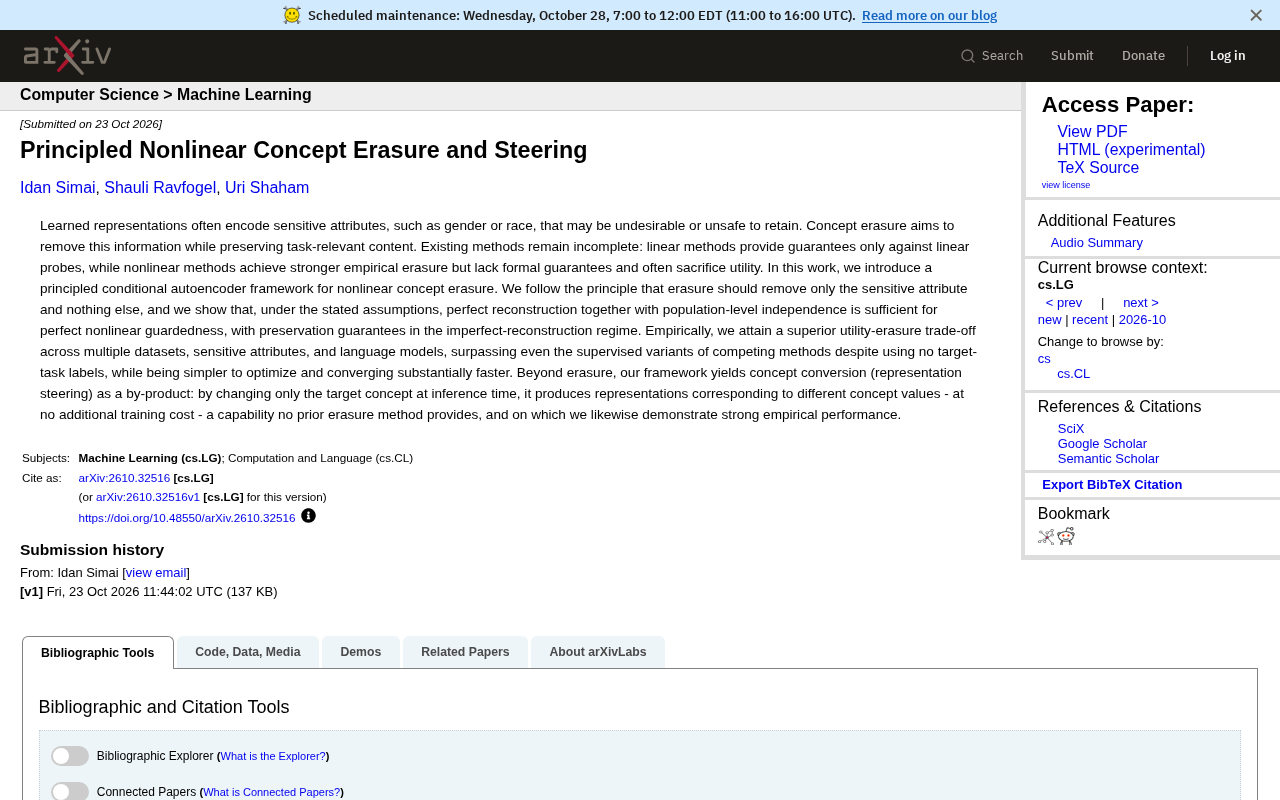
New Framework for Nonlinear Concept Erasure: Conditional Autoencoder Enables Precise Erasure and Steering
This paper proposes a conditional autoencoder framework that provides formal guarantees for nonlinear concept erasure, achieving a better utility-erasure trade-off without target-task labels and unlocking representation steering with faster convergence.

Serbia's Election Shake-Up: Vučić Concedes Defeat as Student Movement Makes History
Serbian President Vučić concedes defeat in the snap parliamentary election as a student-led opposition camp wins a historic victory. Analysis of the student movement's rise, the geopolitical impact, and Serbia's political future.

Pseudo-Labels as Rewards, Not Targets: How GRPO Improves Semi-Supervised ASR Robustness
New research proposes using pseudo-labels as GRPO reward references instead of SFT targets, achieving 29.3%–56.2% relative WER improvement in banking, reducing error transfer rate from near 100% to 27%, validated across multiple models, domains, and languages.