AI Agent Approval Workflows: How to Handle Edits and Retries
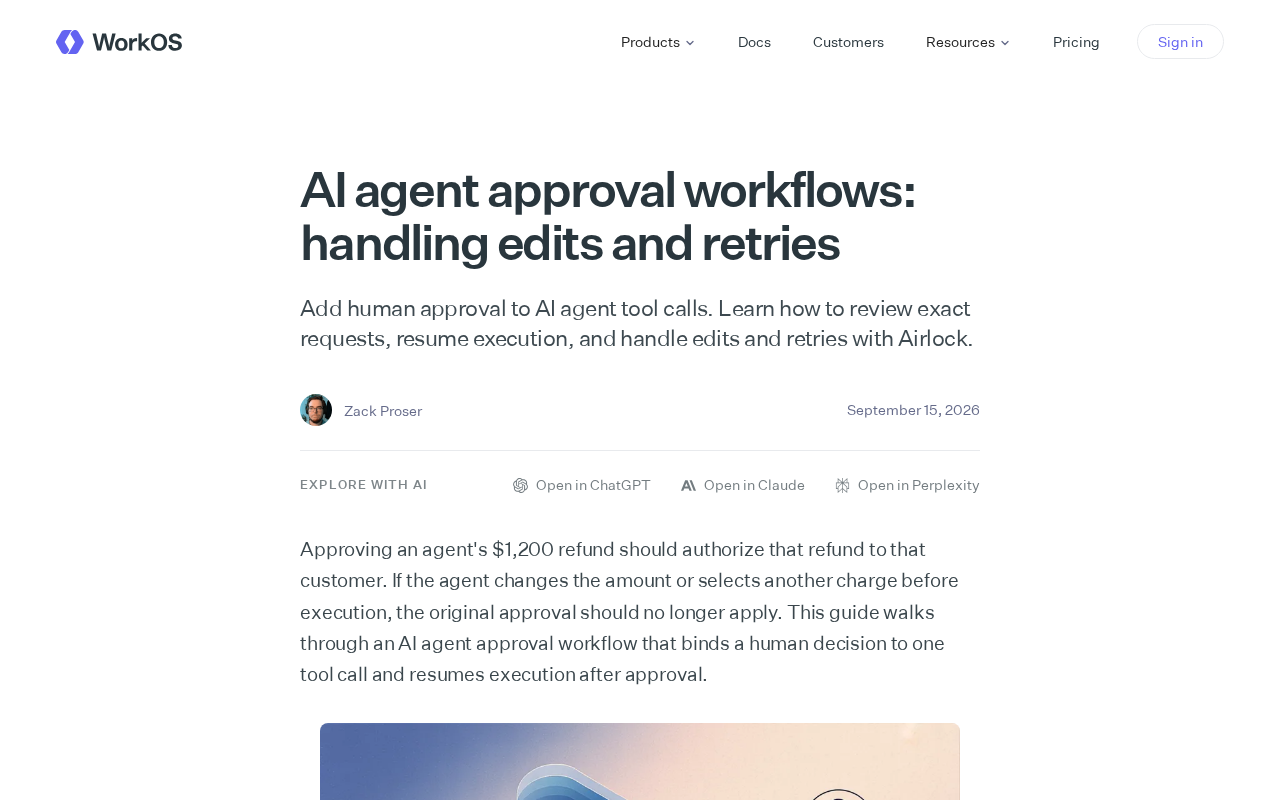
Airlock adds human approval checkpoints to AI agent workflows, enabling edits, retries, and safe production deployment.
As AI agents gain the ability to call real tools and execute external actions, balancing efficiency with safety becomes critical. This article examines Airlock's approval workflow mechanism, covering the core value of human-in-the-loop in agent production deployments: pausing before sensitive operations, having humans review exact request details, then resuming execution. The key insight is moving beyond a simple approve/reject model — reviewers can edit request parameters before approving, and a retry system distinguishes transient failures from logic errors to keep execution chains resilient.
Why AI Agents Need Human Approval
When AI agents can autonomously invoke tools and execute actions, a critical question emerges: who ensures those actions are actually trustworthy? In production environments, letting an agent make unconstrained API calls, modify databases, or send external requests carries obvious risks. A single erroneous tool call can corrupt data, trigger unexpected charges, or kick off irreversible operations.
Human-in-the-loop (HITL) exists precisely to address this. The core idea: pause execution before an agent initiates a sensitive operation, hand the specific request to a human reviewer, and only resume once it's been confirmed. This mechanism is especially critical in high-stakes domains like finance, healthcare, and infrastructure operations — it lets you combine the efficiency of automation with the reliability of human judgment.
Human-in-the-loop isn't a new invention from the agent era — it's a classic concept from automation and control theory, originally applied to safety-critical systems like aviation and nuclear power. In the machine learning context, it once referred primarily to humans annotating data as part of a training feedback loop. In agent workflows, the concept has been redefined as "runtime intervention" — inserting human judgment during the inference and execution phases, not just at training time. This distinction matters enormously: HITL at training time affects a model's generalization ability, while HITL at execution time directly determines whether a specific action gets greenlit. As LLM-powered agents gain the ability to call real APIs, read and write databases, and interact with external systems, execution-time HITL has shifted from a nice-to-have to a hard requirement for production deployment.
How Airlock's Approval Workflow Works
Airlock provides a complete solution for adding human approval checkpoints to an AI agent's tool calls. Its design centers on three core capabilities: reviewing exact requests, resuming execution, and handling edits and retries.
Reviewing Exact Requests
Approval is only meaningful when it's transparent. Airlock lets reviewers see the exact request content the agent is about to execute — including the specific tool being called, the parameters being passed, the target endpoint, and all other relevant details. This is crucial: vague approval is no approval at all. Human review only carries real weight when the reviewer can see the raw specifics of "what the agent is actually about to do."
Resuming Execution
Once a request is approved, the workflow needs to continue seamlessly from the point it was paused. Airlock supports resuming agent execution after human confirmation — meaning the entire workflow operates as a "pause-and-continue" model rather than a disruptive "stop-and-restart." For long-chain, multi-step agent tasks, this ability to preserve state is fundamental to usability.
Achieving "pause-and-resume" rather than "stop-and-restart" technically depends on persistent storage of the agent's execution state. When executing multi-step tasks, an agent typically maintains a context window that records completed tool call results, intermediate reasoning steps, and task objectives. If that state is lost when an approval is triggered and the agent is forced to start over, the result is not just inefficiency — re-executing already-completed steps can cause side effects like sending duplicate messages or triggering duplicate charges. A mature approval system needs to serialize and persistently store agent state (typically via a database or message queue), then deserialize and return it to the agent after approval is granted. This is why state management capability is often considered a core dimension for evaluating agent framework maturity.
Edits and Retries: Critical Steps Beyond Approval
Human approval shouldn't be a simple binary approve/reject choice. In real-world scenarios, reviewers frequently encounter requests that are "right in principle but need some adjustment in the details." This is exactly where edit capability adds value.
Handling Edits
Airlock allows reviewers to directly modify request content before approving it. For example, if an agent generates a database update statement with too broad a scope, the reviewer can narrow its impact and then approve it — without sending it back for the agent to regenerate. This "review-and-revise" capability dramatically reduces the friction of human-AI collaboration, and avoids the inefficient cycle of repeatedly scrapping and restarting over minor issues.
Handling Retries
When operations fail due to external factors — network timeouts, target service unavailability — a retry mechanism ensures the workflow has resilience. Sound retry handling requires distinguishing between "transient failures worth retrying" and "logic errors that shouldn't be repeated," because blind retries can amplify problems rather than resolve them. Bringing retry management under the unified oversight of the approval workflow makes the entire execution chain more robust in the face of uncertainty.
The Practical Significance of These Mechanisms
As agent applications move from demos to production, the importance of the control plane is being recognized anew. Early agent development focused on "can it complete the task?" The central challenge of production deployment has shifted to "how do we complete the task safely, controllably, and with a full audit trail?"
Approval workflows are fundamentally about drawing a boundary between agent autonomy and ultimate human control. They deliver several concrete benefits: first, risk isolation — sensitive operations must pass human review; second, auditability — every approval and edit can be logged; third, incremental trust — teams can start by requiring mandatory approval for high-risk operations, then gradually relax those requirements as confidence builds.
For developers building agent systems, features like edits and retries — which might seem peripheral — are often what determine whether a system can operate reliably in the real world. They answer not "can the agent do it?" but "when the agent gets it wrong, can we correct course gracefully?" — and that distinction is precisely what separates production-grade systems from toy demos.
The concept of a control plane is borrowed from network engineering: in software-defined networking (SDN), the control plane is responsible for setting forwarding policy, separated from the data plane that actually handles traffic. Applied to agent systems, the data plane is the runtime where the agent executes tasks, while the control plane is the governance layer managing permissions, approval policies, logging, and access control. Separating the two means that even as agent capabilities expand, control plane policies can evolve and tighten independently, without touching the agent's own logic. This architectural layering is the core paradigm shift driving agent systems from monolithic "one prompt runs everything" designs toward governable, auditable enterprise applications.
Summary
Introducing human approval workflows for AI agents is a necessary step on the path to production deployment. The mechanism Airlock demonstrates — reviewing exact requests, resuming execution, and handling edits and retries — offers a framework worth studying. It reminds us that truly reliable automation isn't about eliminating human involvement; it's about embedding human judgment precisely where it's needed most.
Related articles

AI Agent Developer Job Hunt Guide: Four Hard Standards to Clear Before You Apply
A practical guide for landing AI Agent developer roles: four measurable standards — project runs, problems debuggable, solution explainable, interviews survivable.
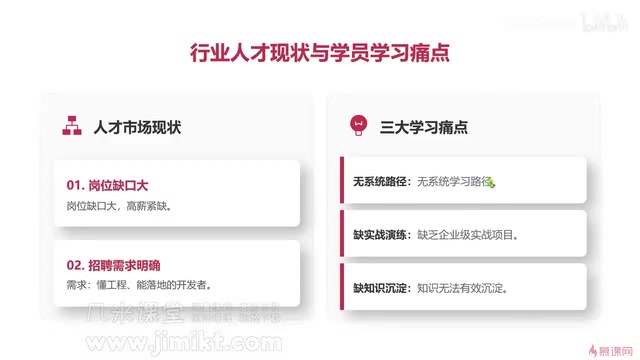
Multi-Agent Development Guide: From Monolithic AI to Team Collaboration in Practice
A beginner's guide to multi-agent development covering core advantages, common learning pain points, enterprise tech stacks, and engineering methodology for AI developers.

Agent Skill Routing: Retrieval vs. LLM vs. Two-Stage Architecture Compared
Retrieval or LLM for Agent skill routing? Compare coarse-filter vs. fine-select architectures on latency, accuracy, and cost — with 4 key production considerations.