AI Agent Beginner's Guide: The Essential Difference Between Agents and Chatbots

A clear breakdown of chatbots vs. Agents vs. platforms, with the 3 core components and 3 product types explained.
This article cuts through the confusion around AI agent terminology by clearly distinguishing chatbots, Agent-building platforms, and true Agents. It explains that an Agent's power lies in autonomously completing full tasks via three core components — a brain (LLM), memory (task tracking), and tools (execution capabilities) — with tool-calling being the definitive differentiator. The article also categorizes today's agent products into specialized, general-purpose, and platform-built types, recommending beginners start with mature general-purpose Agents for the lowest barrier to experiencing AI-driven productivity.
A lot of people still haven't figured this out: what's the actual difference between the "Agent," "intelligent agent," and "chatbot" terms everyone keeps throwing around? As agent-based products explode in popularity, getting these concepts straight is the first step to using AI effectively. This article untangles the three most commonly confused categories — from definitions to underlying principles to product types — so you can ride this AI agent wave with confidence.
Chatbots, Building Platforms, and Agents Are Not the Same Thing
The AI you chat with day-to-day is a chatbot — it is not an Agent. The platforms you use to build intelligent agents are also not Agents themselves. A true Agent is an autonomous entity that can independently run tasks and get real work done.
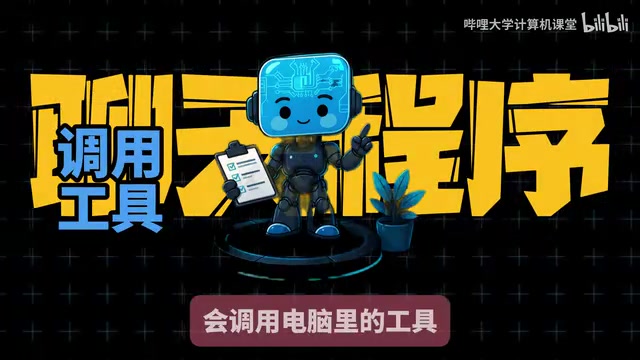
Put simply, an Agent is an intelligent system that actually does things. It's not a program that just goes back and forth in conversation with you — it's an application that can invoke tools on your computer and independently complete entire complex workflows.
Here's the clearest example to illustrate the difference. Say you want to create a PowerPoint presentation from a pile of materials. If you use a regular conversational AI (like Doubao or DeepSeekAd), you'd have to upload files one by one, wait for it to generate output on a server, and follow along manually every step of the way. An Agent works differently — you just hand it the requirement, and it reads your files, recognizes the formats, and builds the PowerPoint directly on your local machine. When it's done, it proactively notifies you, and can even review the content for accuracy on its own.
One-line summary: Products like Doubao and DeepSeek act more like your "AI consultant" — you ask, it answers, it delivers output. An Agent is your "AI employee" — it rolls up its sleeves and gets the job done for you.

How Agents Work Independently: Three Core Components
An Agent's ability to complete tasks autonomously relies on three essential components: a brain, memory, and tools.
Brain: The Decision-Making Core
This is the large language model we're all familiar with — Doubao, DeepSeek, and others can all serve as an Agent's brain. It's responsible for understanding your requirements, breaking tasks into steps, and deciding what to do at each stage. It's the command center of the entire intelligent agent. Without a brain, there's no understanding or planning — and no Agent.
Memory: The Task Anchor
An Agent remembers every requirement you set at the beginning and tracks in real time which step of the task it's on, so it never "drifts off course mid-execution." This memory capability is what allows it to keep pushing forward until the entire job is fully complete.
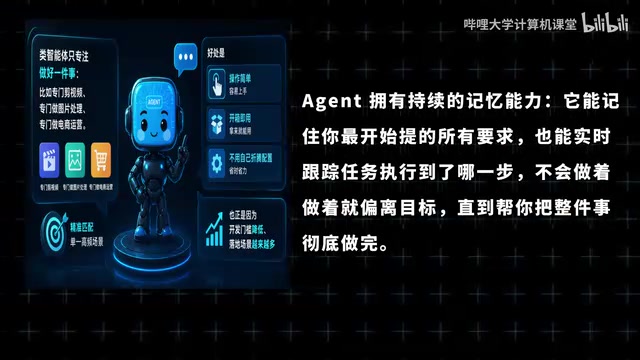
Agent memory typically operates at two levels: short-term memory (the context window) and long-term memory (external storage). Short-term memory refers to the conversation history the model can "see" in a single session — it's limited by token count and gets consumed faster as tasks grow more complex. Long-term memory relies on external storage mechanisms like vector databases to persistently save key information, which the Agent can retrieve across tasks and sessions. For complex tasks involving large volumes of documents or multi-turn collaboration, the strength of long-term memory directly determines whether an Agent will "go off track" or "forget its goal" — making it one of the key metrics for evaluating an Agent product's maturity.
Tools: The Operational Core
This is the most fundamental difference between an Agent and ordinary conversational AI. An Agent can invoke all kinds of tools and software on a computer, just like a human would: browsing the web for information, managing local files, editing Excel spreadsheets and PowerPoint presentations, writing code, and even running programs.
Look at it this way: AI without tools can only talk about doing things. An Agent with tools can actually go do them. This explains why "the ability to call tools" is repeatedly emphasized as the defining line between an Agent and everything else.
The underlying mechanism for tool invocation is known as "Function Calling" or "Tool Use." The large language model itself doesn't directly operate the computer — instead, it outputs a structured instruction (typically in JSON format) that an external execution layer parses and uses to actually call the corresponding API or program. This means an Agent's capability ceiling is determined by which tools it has been authorized to use — the richer the toolset, the broader the range of tasks it can complete. Common tool categories today include: web search and browsing, local file read/write, code execution sandboxes, third-party API calls (such as calendar, email, and e-commerce platforms), and computer vision (screenshot recognition). It's this closed loop of "perceive → decide → execute" that sets Agents apart from conversational models that can only output text.
Three Types of Agent Products — Which One Should You Choose?
As agent-based products continue to multiply, they can be broadly grouped into three categories. Regular users can pick based on their needs.
Type 1: Specialized Agents
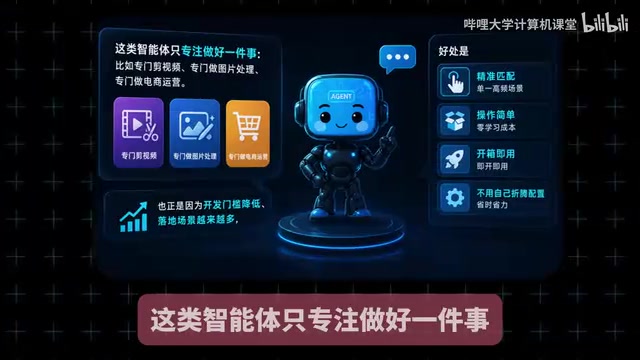
These agents focus on doing one thing extremely well — dedicated video editing, image processing, or e-commerce operations, for example. The advantage is precise fit for a single high-frequency use case: simple to use, ready out of the box, no configuration required. As the development barrier has lowered, this category has seen an explosion of real-world deployments.
Type 2: General-Purpose Agents
Most of these are mature products from major tech companies, such as various desktop-based Agents. They have broader capabilities and aren't limited to a single task, making them ideal for users who want one tool that covers multiple needs.
Type 3: Platform-Built Agents
This category is generated by agent-building platforms. They typically follow fixed workflows with AI stepping in at key nodes to assist with processing. These are largely enterprise-customized products built around specific business processes, and are geared more toward professional teams and scenario-specific deployments.
The core concept behind platform-built agents is the "Workflow" — breaking a complex task down into a series of fixed steps, where each step can be handled by rules, scripts, or AI models independently. Representative platforms include Coze, Dify, and n8n, all of which offer visual flow-editing interfaces so that non-developers can build automated pipelines by dragging and dropping nodes. Unlike general-purpose Agents where "AI autonomously plans its own path," workflow platforms operate on more deterministic, controllable, and debuggable logic — which is why they're preferred by enterprise users, especially for stable, fixed-process business scenarios like automated customer service replies, data report generation, and content moderation pipelines.
Advice for Beginners
For everyday users who want to boost productivity with AI right away, general-purpose Agents are the right starting point. They're mature, easy to use, and broad in coverage — no development or configuration skills required to experience what it feels like to have an "AI employee" handling work on your behalf.
Once you understand the difference between chatbots, building platforms, and Agents — and grasp the underlying logic of "brain, memory, and tools" — you'll be able to quickly judge which tools are actually right for you in an increasingly crowded agent marketplace.
Related articles

Chain of Thought Isn't Just for AI: How Humans Can Use CoT to Improve Thinking Quality
Chain of Thought isn't just a prompt trick for large models. Starting from a Hacker News discussion, this article analyzes why CoT works for human thinking too, breaks down actionable ways to transfer it, and highlights the key differences between human CoT and machine CoT.
Cloudflare Teams Up with OpenAI: Closi…
Cloudflare Teams Up with OpenAI: Closing the Loop from Vulnerability Discovery to Defense with AI
Cloudflare uses OpenAI Daybreak to investigate security vulnerabilities and generate reviewable remediation plans, while developers use Codex to boost coding efficiency and quality.

Orca Multi-Agent Orchestration in Practice: A Guide to Parallel Collaboration with Claude and Codex
Orca is Stable AI's free open-source agent workbench supporting 34 agents like Claude Code and Codex in parallel. Learn its Git worktree isolation, multi-model orchestration, and mobile management.