AI Agent Builder: A Complete Hands-On Guide from Zero to Enterprise-Grade Delivery

How the AI Agent Builder role opens a low-barrier path into the intelligent agent field.
AI Agents are becoming the core form for deploying large models. This article analyzes the emerging AI Agent Builder profession, highlighting the deployment gap in SMEs, and provides a complete closed-loop path from foundational understanding to hands-on delivery—while soberly examining both the opportunities and the hype.
Why AI Agents Are the True Core of the Large Model Era
As the hype around large models continues to grow, many people are still stuck at the stage of "how to write a good prompt," while overlooking a more critical trend: AI Agents are the core form for deploying large models in the real world.
Prompts can only solve single-point problems, whereas Agents can autonomously plan, invoke tools, and execute multi-step tasks—truly upgrading the capabilities of large models from "conversation" to "getting work done."
What is an AI Agent? An AI Agent is an intelligent system that can autonomously perceive its environment, formulate plans, and execute multi-step tasks. Unlike a simple large model conversation, an Agent architecture typically comprises four core components: a Planning module, a Memory module, Tool Use, and Action execution. Its underlying logic uses the large model as the "brain," employing frameworks such as ReAct (Reasoning + Acting) to let the model iterate in a loop between reasoning and acting until the target task is completed.
A Deeper Look at the ReAct Framework: ReAct was formally introduced by Google Research in 2022. Its core idea is to have the large model continuously cycle through three phases: "Thought → Action → Observation." Unlike approaches that rely purely on Chain-of-Thought reasoning, ReAct tightly couples the model's internal reasoning process with external tool invocation—the model can dynamically adjust its next action strategy based on real-time results returned by search engines, code interpreters, or databases, rather than generating an answer in one shot within a closed environment. This mechanism achieves significantly higher accuracy than pure reasoning approaches on tasks that require querying real-time information, performing calculations, or interacting with external APIs. It is precisely this closed-loop "perceive—think—act" capability that enables Agents to handle complex multi-step business scenarios, from customer service automation and data analysis to code generation and workflow approvals.
According to analyses from relevant technical communities, this may well give rise to an entirely new profession—the AI Agent Builder. The logic behind this prediction is not complicated: large model capabilities are already strong enough, but the enterprise-side ability to deploy them lags severely, creating a massive gap between supply and demand.

In other words, the model itself is no longer the bottleneck. How to integrate models into real business scenarios is the scarcest capability today.
The Deployment Gap in SMEs Is Exactly the Entry Opportunity for Ordinary People
Why does this wave of opportunity belong specifically to ordinary people? The answer lies in the real pain points of small and medium-sized enterprises (SMEs).
Bosses Understand the Need but Can't Connect It
"Bosses all know AI can boost efficiency, but when it comes to actually deploying it into their business, nine out of ten are lost—they simply can't connect it." This statement captures the essence of the problem. Most SME owners can sense AI's value but lack the technical teams to implement it. What they truly need is not an algorithm scientist who trains models from scratch, but an AI Agent Builder who can "stitch" off-the-shelf large model capabilities into their own business workflows.

The Entry Barrier Is Lower Than You Think
Many assume that building Agents requires a deep programming background, but that's not the case. Thanks to the mature low-code/no-code Agent platforms and open-source frameworks that have emerged in recent years, entering at low or even zero cost has become a reality.
The Technical Evolution Behind Low-Code/No-Code Platforms: The rise of Low-Code/No-Code platforms can be traced back to the enterprise digital transformation wave of the 2010s. Its core philosophy is to lower the barrier to software development through visual interfaces and pre-built components. In the Agent domain, this philosophy is extended further: platforms encapsulate complex engineering details—such as prompt templates, tool-invocation logic, memory management, and multi-step workflow orchestration—into draggable functional modules. Users don't need to understand underlying API calls; they simply connect nodes and configure parameters on a visual canvas to define the Agent's complete behavioral logic. This introduction of an abstraction layer enables business personnel without a software engineering background to build agents that meet real needs, dramatically compressing the delivery cycle from requirement identification to a usable product.
An Overview of Mainstream Agent-Building Tools: A range of Agent-building tools aimed at non-technical users has emerged, each with its own focus. Dify offers a visual LLM application development platform that supports on-premises private deployment, making it suitable for enterprises sensitive about data security. Coze, launched by ByteDance, comes with a rich plugin ecosystem and is well-suited for quickly building conversational Agents. LangChain is currently the most mainstream open-source Agent framework—highly flexible but requiring some Python background. AutoGen, open-sourced by Microsoft Research, is designed specifically for multi-Agent collaboration scenarios. Through visual workflow orchestration, pre-built tool integrations, and template marketplaces, these platforms allow ordinary users to build fully functional agents without deep programming knowledge.
This is precisely why the point is emphasized: you don't need a deep technical foundation—ordinary people can also break into this field. For those looking to change careers or add income streams, this is a window of opportunity with a moderate barrier, genuine demand, and not yet fully saturated competition.
From Zero to Delivery: The Complete Hands-On Path for Building AI Agents
A truly valuable learning path should not stop at the conceptual level but should focus on engineering practices that can be deployed and delivered.

A Complete Closed Loop Is the Core Competitiveness
From a beginner's perspective, the biggest obstacle to learning Agents is not any single skill, but the lack of a complete path "from zero foundation to independent delivery." Below is a validated complete closed loop for building AI Agents:
- Foundational Understanding: Understand how Agents work, and grasp core components such as planning, memory, and tool invocation.
- Tool Selection: Choose the right Agent-building platform or framework to lower the entry barrier.
- Hands-On Building: Follow real projects to build an agent that actually runs.
- Client Delivery: Package the results into an enterprise-ready AI solution.
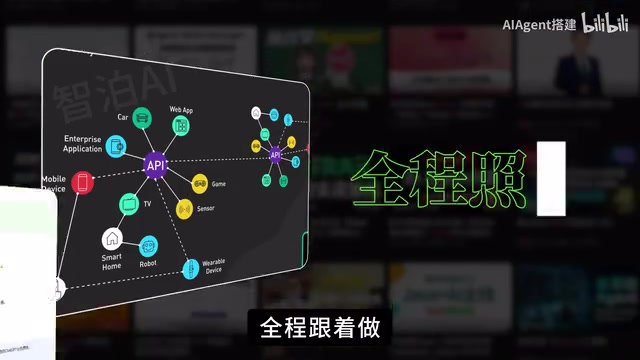
Learning by Doing Beats Pure Theory
AI Agents are a typical engineering-practice skill; simply studying theory yields little. Only by repeatedly refining through real projects can you develop deliverable capabilities. Accompanying hands-on projects and operation documentation essentially minimize the learning cost, helping beginners quickly cross the "zero to one" threshold.
A Sober View: Opportunity and Bubble Coexist
As learners, we also need to maintain rational judgment. The narrative of a "new profession windfall" often carries a marketing spin and deserves a balanced perspective.
The affirmative side: AI Agents are indeed an important direction for deploying large models. The digital transformation needs of SMEs are real, and mastering Agent-building skills holds practical value for personal career development.
The cautionary side: The AI Agent Builder is not yet a mature, standardized profession. The depth of market demand and willingness to pay still need verification. Promises of "building a deliverable product in a short time" must also be assessed against the actual complexity of the business.
The Real Complexity of Enterprise-Grade Agent Deployment: Deploying Agents in real enterprise scenarios is far more complex than a demo. The core challenges typically span several dimensions: Data security and privacy compliance—an enterprise's core business data often cannot be casually uploaded to public cloud models, requiring on-premises deployment solutions. System integration difficulty—enterprise information systems have evolved over decades and often form a complex technology stack composed of heterogeneous systems such as ERP (Enterprise Resource Planning), CRM (Customer Relationship Management), and OA (Office Automation). These systems differ in data formats, interface protocols, and permission structures, so integrating an Agent requires substantial custom API adaptation work. Stability and fault-tolerant design—when a link in a multi-step task chain encounters an interface timeout, data anomaly, or model hallucination (i.e., output that appears plausible but is actually incorrect), the system needs robust rollback, retry, and human-intervention mechanisms. Multi-Agent collaboration and orchestration—complex business processes often require multiple specialized Agents working in coordination, and the state synchronization and task distribution among them is itself a delicate engineering problem. These deeper challenges are precisely the true source of the long-term market value of the "AI Agent Builder"—versatile talent capable of systematically solving enterprise-grade deployment problems remains extremely scarce in the market.
Therefore, rather than treating it as a "shortcut to riches," it's better to view it as a skill upgrade worth investing in for the long term. Solidly mastering the principles and engineering practices of Agents—whether or not it becomes an independent profession in the future—will continue to appreciate in value in the AI era.
Conclusion: Taking Action Is More Valuable Than Watching from the Sidelines
AI Agents are at a critical juncture, transitioning from concept to large-scale deployment. For ordinary people, the real opportunity lies not in chasing concepts, but in calmly mastering the complete capability chain from zero to delivery. When most people are still watching from the sidelines, those who take action first often get the first taste of this wave's dividends.
Key Takeaways
Related articles

The Truth Behind Codex 'Build a Website in 5 Minutes': AI Isn't Creating Sites—It's Helping You Copy Them
Exposing the truth behind viral Codex 5-minute website videos: creators aren't building original sites with AI—they're copying shared prompts or scraping others' work. Learn AI coding tools' real limits.

Getting Started with AI Agent Development: A Complete Guide from Concept to Practice
A comprehensive guide to AI Agent architecture and development, covering automated marketing, intelligent customer service, and investment analysis scenarios with single and multi-agent collaboration.

The Truth Behind Codex 'Build a Website in 5 Minutes': AI Isn't Creating Sites — It's Helping You Copy Them
Exposing the truth behind viral Codex 5-minute website videos: creators aren't building original sites with AI — they're copying shared prompts or scraping others' work.