AI Agent Cross-Project Context Management: Practical Lessons from the HN Community

HN discussion reveals practical approaches and security baselines for AI agent context isolation across client projects.
Based on a Hacker News discussion, this article outlines how developers keep AI agent context isolated across client projects while reusing shared knowledge. It covers project-level isolation, dynamic context injection, tools like Cursor rules and AGENTS.md, vector database memory, and key challenges such as context window limits and tool fragmentation.
Introduction
When developers use AI coding assistants across multiple client projects simultaneously, a thorny question emerges: how can an AI agent keep context isolated between different projects while still efficiently reusing knowledge? An "Ask HN" post on Hacker News sparked a lively discussion with 17 comments. Although the original post had only 16 points, the topic hits the core pain point of current AI-assisted development—context management.
Based on that discussion and common community practices, this article outlines several mainstream approaches and key considerations.
Why Context Management Matters So Much
An AI agent's context window is the boundary of its capability. In a single project, developers typically build context through system prompts, project documentation, and codebase indexing. But across client projects, the problem becomes complicated: different clients may have different tech stacks, business logic, and even coding styles, and if the AI agent confuses this information, the consequences range from irrelevant suggestions to leaking sensitive data.
In the Hacker News comments, multiple developers emphasized that context isolation is not just an efficiency issue—it is a security baseline. Especially for consultancies or freelancers, client A's architectural decisions should never appear in a conversation with client B.
Context window refers to the upper limit on the total number of tokens a large language model can receive and process in a single inference, including the input prompt and the model-generated output. Current mainstream models have context windows ranging from tens of thousands to hundreds of thousands of tokens. Content beyond the window is truncated or cannot be processed, so developers must carefully choose which information to put into the context. For a codebase, even a medium-sized project's entire source code, documentation, and configuration can easily exceed the window limit, which makes retrieval-augmented generation (RAG) a necessary approach: first split the codebase and build a vector index, then retrieve the most relevant fragments based on the current task and inject them into the context, rather than cramming everything in at once. Understanding the hard boundary of the context window is a prerequisite for designing cross-project context management solutions.
Mainstream Approaches: Layered Configuration and Project-Level Isolation
Approach 1: A Separate Agent Instance for Each Project
The most direct method is to create an independent AI agent configuration for each client project. Some commenters mentioned using features like Cursor's "project rules," or maintaining a dedicated system prompt file for each repository. This way, when switching to a different project, the agent's default behavior changes accordingly.
The advantage of this approach is simplicity and clarity; the disadvantage is duplicated configuration and difficulty sharing common knowledge (such as company coding standards) across projects.
Approach 2: Dynamic Context Injection
A more flexible approach is to maintain a central knowledge base and dynamically inject relevant context based on the current project. For example, specify the current project identifier via environment variables or configuration files, and have the agent load the corresponding project documentation and code snippets at startup. Some developers in the comments shared that they use scripts to automatically read a .ai-context file in the project root at the start of a session and use its contents as a pre-prompt.
This approach requires some engineering investment but balances isolation and reuse.
System prompt is the instructional text injected into the model before a conversation begins, used to set the agent's role, behavioral guidelines, and default constraints. In project-level isolation approaches, the system prompt file is usually stored in plain text or Markdown format at the repository root, and the agent reads it at each startup and treats it as the highest-priority context. Convention files like .ai-context are essentially a practice of configuration as code: codifying project-specific tech stack descriptions, coding standards, and prohibitions into version control, so that everyone on the team and all AI tools read the same source of truth. The benefit is that context evolves alongside the code, can be reviewed, and can be rolled back, avoiding tacit knowledge passed by word of mouth or scattered across personal notes.
Tools and Workflow Practices
Leveraging Project Management Features of Existing AI Coding Tools
Many AI coding tools already have built-in project-level context management. For example, Cursor supports placing rule files in the project root, and GitHub Copilot allows guiding behavior through comments and configuration files. In the HN discussion, a user mentioned putting AGENTS.md or similar files under version control as the standard entry point for project context.
Session Management and Memory Persistence
For scenarios requiring long-term dialogue, session management becomes critical. Some developers use clients that support multiple sessions and pin a dedicated session thread for each client project. Others rely on external memory tools (such as vector databases) to store project-specific interaction history and retrieve and inject it when needed.
You may not have noticed, but someone in the comments warned: memory persistence requires caution to avoid mixing memories from different projects. It is recommended to set up an independent memory namespace for each project.
Vector databases play the role of a retrieval layer in AI memory scenarios: they convert text fragments into high-dimensional vectors and build approximate nearest-neighbor indexes, enabling the agent to recall historical interactions or project knowledge based on semantic similarity rather than exact keyword matching. A memory namespace is a logically isolated partition within the same vector store; each project uses an independent namespace, and retrieval is restricted to the corresponding partition, fundamentally preventing cross-project contamination. Some tools also support attaching metadata (such as project ID, timestamp, and sensitivity level) when writing memories, so filtering can be done during retrieval. The trade-off is that vector retrieval carries the risk of imprecise recall, and memory content accumulates and expands over time, so regular cleanup and tiered storage are necessary operational work to maintain system health.
Key Challenges and Community Consensus
Despite the variety of approaches, the discussion revealed several unresolved difficulties:
- Context window limits: Even with project isolation, a single project's codebase may exceed the model's context, requiring effective retrieval strategies.
- Configuration maintenance cost: As projects multiply, manually maintaining each project's context configuration becomes burdensome.
- Tool fragmentation: Different AI tools vary in their support for context management, and there is no unified standard.
The community consensus tends toward: start simple and evolve as needed. Initially, establish basic rule files for each project, and introduce automated injection or memory systems as pain points emerge.
Conclusion
There is no silver bullet for AI agent context management across client projects, but through project-level isolation, dynamic injection, and prudent memory management, developers can find a balance between efficiency and security. Although the Hacker News discussion was small in scale, it genuinely reflects the practical confusion in current AI-assisted development. As the AI toolchain matures, this area is expected to see more standardized solutions.
One-line Summary
HN discussion reveals practical approaches and security baselines for AI agent context isolation across client projects.
Paragraph Summary
Based on a Hacker News discussion about AI agent context management across client projects, the article outlines the core problem developers face: how to keep context isolated between multiple client projects while reusing common knowledge. It points out that context isolation is not just an efficiency issue but a security baseline for preventing client data leaks. Mainstream approaches include creating an independent agent instance for each project (such as project rule files) and maintaining a central knowledge base with dynamic injection of project context (such as reading .ai-context files). At the tool level, Cursor's project rules, AGENTS.md version control, multi-session management, and vector database memory persistence are all common practices. The article also summarizes three major challenges—context window limits, configuration maintenance costs, and tool fragmentation—and the community consensus is to "start simple and evolve as needed."
Related articles
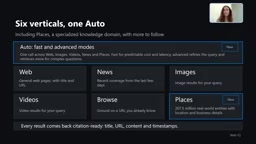
Microsoft WebIQ: Verifiable Real-Time Web Grounding for AI Agents
Microsoft WebIQ gives AI Agents real-time, citable web grounding across web, news, images, videos, and Places—164ms P95 latency, 50% fewer tokens, Scopes source control, and MCP integration.
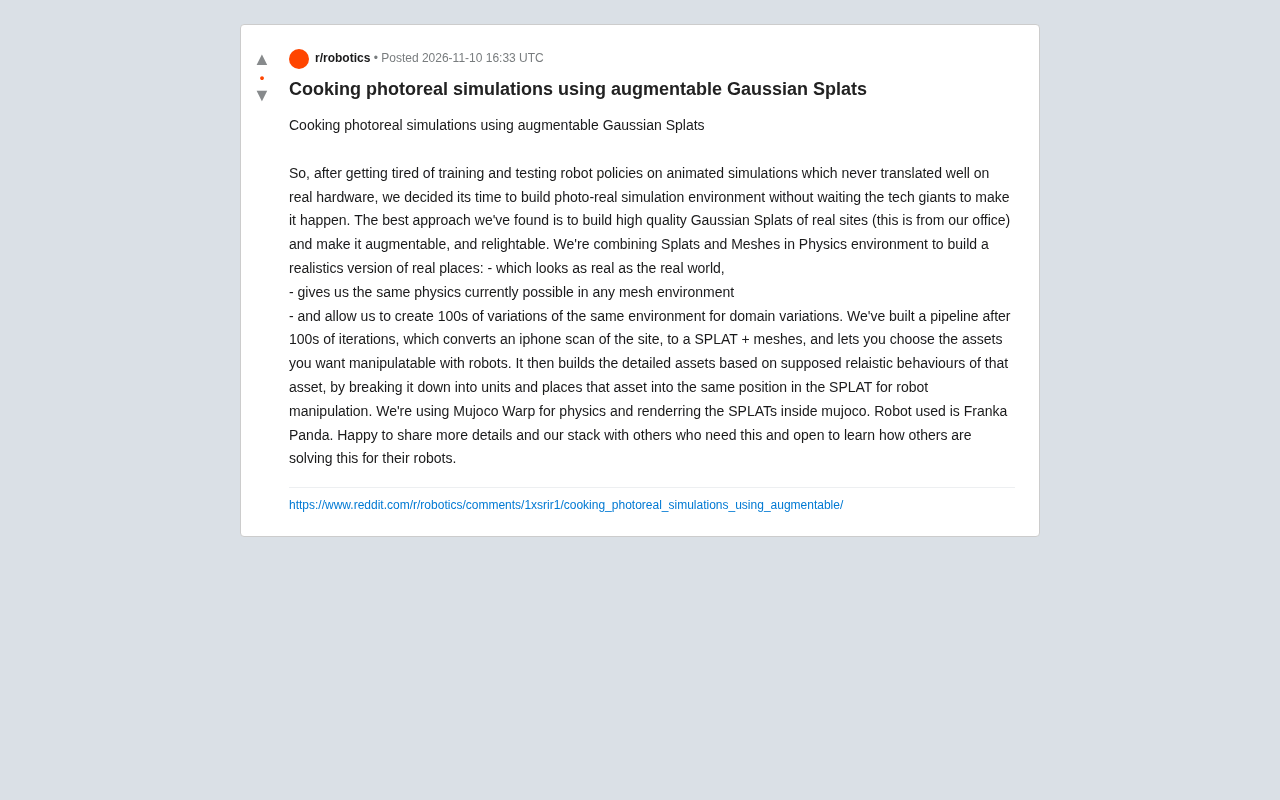
Augmentable Gaussian Splatting: Building Photorealistic Simulation Environments for Robot Training
Team combines Gaussian Splatting with meshes to build photorealistic robot simulation environments, integrating MuJoCo Warp physics and Franka Panda for augmentable, relightable real-site simulation.

Gemini 4 Carbon Released: The Leap from Gemini 3 to Gemini 4 in Under a Year
Google releases Gemini 4 Carbon, less than a year after Gemini 3. In the official demo, Carbon reverse-engineered the Theme Park binary, added a new DeepMind-themed ride, and ported it to the web in one shot.