Gemini 4 Carbon Released: The Leap from Gemini 3 to Gemini 4 in Under a Year
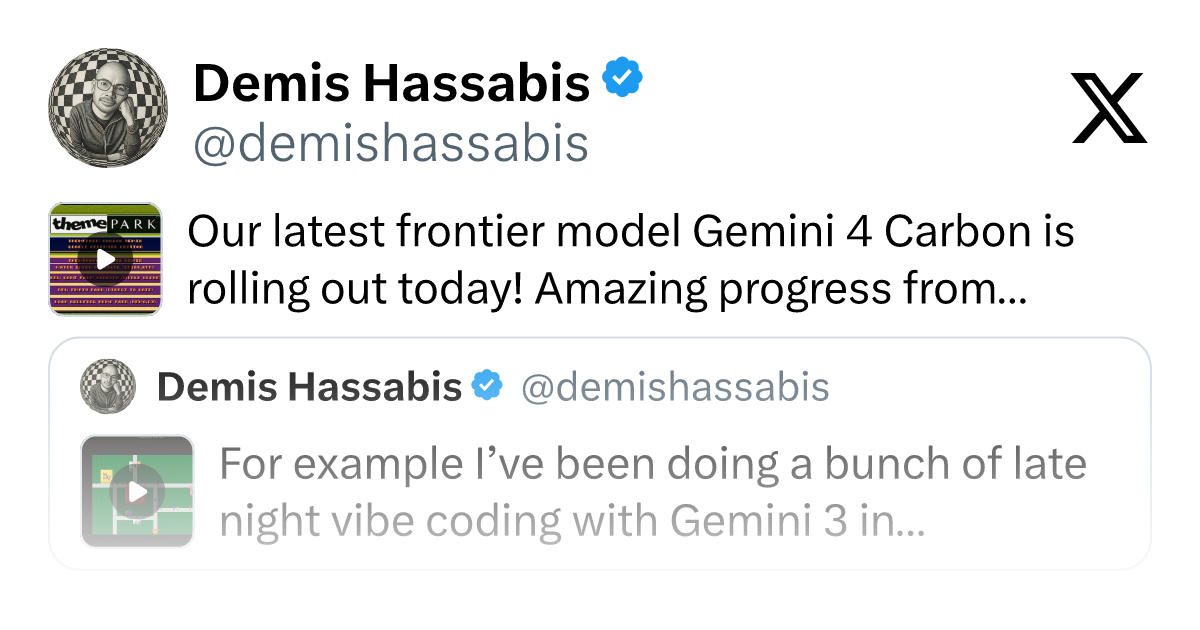
Google releases Gemini 4 Carbon, demoing one-shot binary reverse engineering, creative modification, and web porting.
Google officially released its latest frontier model, Gemini 4 Carbon, less than a year after Gemini 3. The announcement tweet revealed no benchmarks or parameters, instead showcasing capability through a demo: Carbon reverse-engineered the poster's original Theme Park binary, added a DeepMind-themed new ride, and ported it to the web platform in one shot. This chain covers binary understanding, creative modification, and cross-platform re-implementation, pointing to improved coherence on long-chain, multi-step engineering tasks. The article also notes that Carbon uses a standalone codename rather than a numeric suffix, hinting at a substantive change in architecture or training methodology. However, no technical report, model card, benchmark data, or availability channels exist yet, and a single hard-to-reproduce demo warrants cautious capability judgment; future attention should focus on official disclosures and third-party evaluations.
Gemini 4 Carbon Is Here: From Gemini 3 to Gemini 4 in Under a Year
Google has officially released its latest frontier model, Gemini 4 Carbon. According to the official tweet, it has been less than a year since Gemini 3 launched — an iteration speed the team calls "astonishing progress."
Rather than piling on benchmark scores or parameter counts, the announcement tweet demonstrates capability through a concrete example: Carbon reverse-engineered the poster's original Theme Park binary, added a new DeepMind-themed amusement ride, and ported it to the web platform in one shot. The poster admitted it was "a bit hard to believe."
What this demo reveals is more intuitive than any leaderboard — the model is no longer just answering questions, but can understand an existing, closed binary program, make creative modifications within it, and then re-implement it across platforms. This involves reverse analysis, code understanding, creative generation, and cross-stack migration, among other steps.
From Gemini 3 to Gemini 4: Evolution in Under a Year
The time span emphasized in the tweet is "less than a year." For frontier models, this pace means the gap between capability generations is being dramatically compressed. The transition from Gemini 3 to Gemini 4 is not a minor version update — it skips the intermediate number entirely and appears with Carbon as the new codename.
This naming approach itself is noteworthy: Carbon does not use a numeric suffix but instead adopts a standalone codename, hinting that this may represent a substantive change in architecture or training methodology rather than mere scaling.
However, official information disclosed so far is very limited — no technical report, model card, or benchmark data has been made public. All capability descriptions come from this single announcement tweet and the demo case within it.
What the Reverse Engineering Demo Means
Reverse-engineering the Theme Park binary, adding new facilities, and porting it to the web — this chain covers multiple high-difficulty tasks:
- Binary understanding: The model needs to parse a compiled artifact without source code, inferring the original logic and data structures.
- Creative modification: Adding new DeepMind-themed elements on top of understanding, rather than simply replicating.
- Cross-platform porting: Rewriting an originally local program into a web version that runs in the browser.
"One shot" is the key phrase in the tweet. If this description is accurate, it indicates that Carbon has significantly improved coherence and planning ability on long-chain, multi-step tasks, rather than only being able to complete isolated code snippets.
For developers, if such capabilities are stable and reproducible, they would directly transform workflows such as legacy system migration and old software modernization.
Binary reverse engineering refers to reconstructing program logic, data structures, and algorithms by analyzing compiled executables without source code. Traditionally, this requires disassemblers (such as IDA Pro, Ghidra) and debuggers, performed manually by engineers with knowledge of assembly language and low-level systems — time-consuming and highly experience-dependent. The difficulty in having large models directly process binary artifacts lies in: compiled code loses variable names, type information, and comments; control flow may be reordered by optimizers; and boilerplate code generated by the compiler must be distinguished from business logic. Research already exists on having models assist with disassembly fragment interpretation or function naming, but completing the end-to-end "understand—modify—re-implement" loop remains frontier work. Therefore, if this demo is reproducible, its significance lies in whether the model can maintain long-horizon reasoning on low-level representations lacking high-level semantic cues.
One shot in the context of model evaluation typically means producing a usable result in a single generation without multi-round correction, retries, or manual patching. It is fundamentally different from "sample multiple times and pick the best" (pass@k): the latter measures the upper bound of model capability, while the former measures the reliability of single delivery. In real engineering scenarios, reliability is often more important than peak capability, because repeated retries and manual corrections offset the efficiency gains from automation. To judge whether a one-shot claim is credible, three things typically need to be examined: whether the complete prompt and initial input are disclosed, whether the model is allowed to call tools or execute code for feedback during generation, and whether the output underwent any manual adjustment.
Information Gaps and Points to Verify
What needs to be viewed soberly is that this tweet is essentially a release teaser. It does not specify:
- Carbon's context window, modality support, pricing, and availability channels;
- Whether the reverse engineering demo involved manual corrections or multiple attempts;
- The model's performance on standard benchmarks.
Before official technical details and third-party evaluations emerge, judgment on Gemini 4 Carbon's capabilities should remain cautious. A single demo has limited persuasiveness, especially when it involves hard-to-reproduce descriptions like "one shot."
Impact on the Industry
If the Gemini 4 series continues this pace, competition among frontier models will concentrate more on agentic workflows and real engineering tasks rather than pure text Q&A. Tasks like reverse engineering, code migration, and cross-platform re-implementation are precisely the touchstones for measuring whether models can truly replace some engineering work.
What's worth watching next is whether Google will publish a complete model card and benchmark data in the near term, and whether developers can actually call Carbon to reproduce similar demos.
(This article is based on the official announcement tweet; more details await official disclosure.)
Related articles
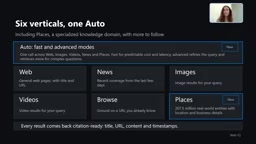
Microsoft WebIQ: Verifiable Real-Time Web Grounding for AI Agents
Microsoft WebIQ gives AI Agents real-time, citable web grounding across web, news, images, videos, and Places—164ms P95 latency, 50% fewer tokens, Scopes source control, and MCP integration.
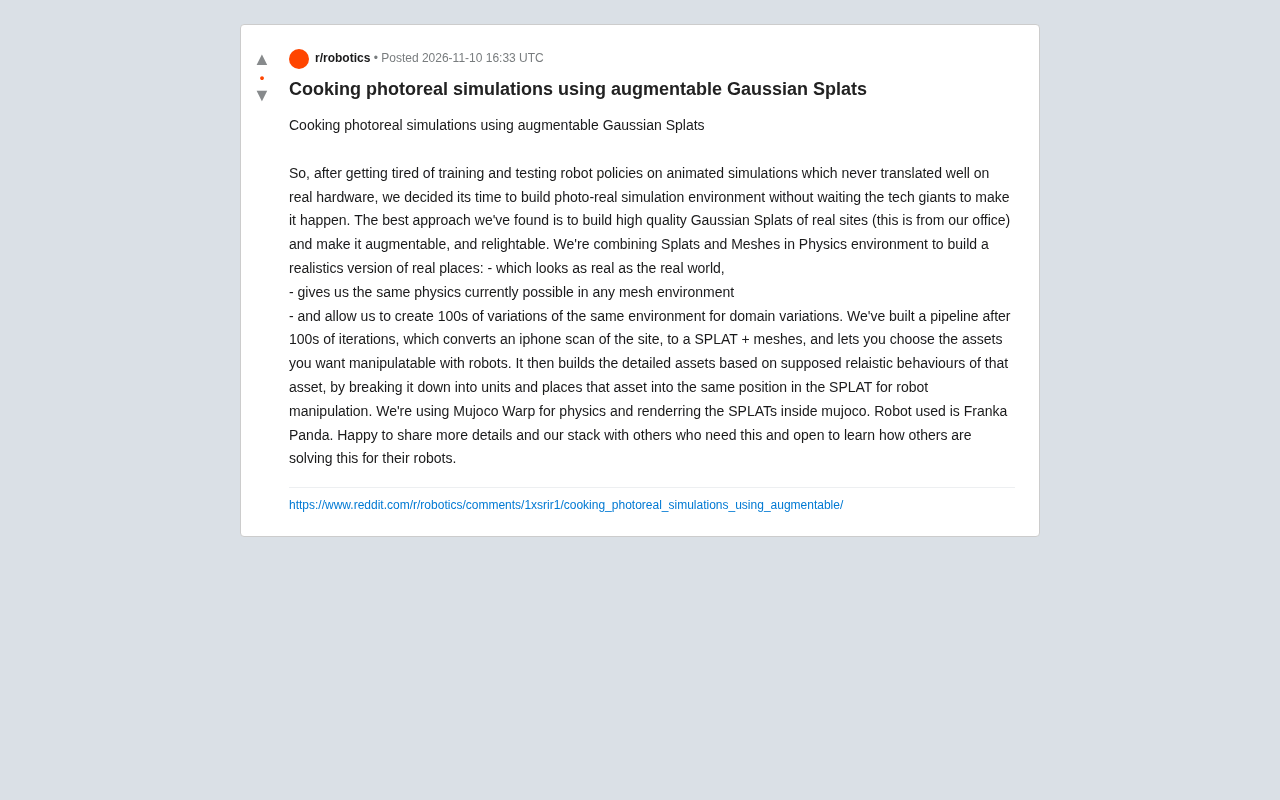
Augmentable Gaussian Splatting: Building Photorealistic Simulation Environments for Robot Training
Team combines Gaussian Splatting with meshes to build photorealistic robot simulation environments, integrating MuJoCo Warp physics and Franka Panda for augmentable, relightable real-site simulation.
Anthropic Launches AI Office Suite, Making Another Move in the Enterprise Market
Anthropic launches an AI office suite, expanding from coding tools to an enterprise office platform. This article analyzes its product strategy, competitive landscape, and significance for enterprise users.