Microsoft WebIQ: Verifiable Real-Time Web Grounding for AI Agents
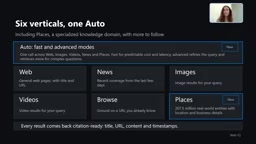
Microsoft WebIQ gives Agents fresh, citable passage-level grounding APIs balancing quality, latency, and cost.
The article introduces Microsoft WebIQ, an external real-world knowledge grounding API suite for AI Agents. It solves the problem of Agent knowledge stopping at the training cutoff and outdated information being amplified across multi-step loops. WebIQ offers six grounding methods—web, news, images, videos, URL browsing, and Places—orchestrated by Auto with Fast and Advanced modes. Test data shows it outperforms the next-best solution on grounding satisfaction, P95 latency, and token efficiency. Passage-level retrieval delivers only the most relevant evidence snippets; Scopes restrict sources by URL, domain, site, and path; publisher control and per-item citations meet enterprise trust requirements. Integration supports REST API and hosted MCP Server, now available to all Azure customers.
AI Agent capabilities are expanding rapidly, but a fundamental contradiction persists: Agents can only reason based on what they "know," and their knowledge often stops at the training data cutoff. When market prices shift, regulations update, or new products launch, an Agent lacking real-time grounding will give a confident, well-formatted, but outdated answer—and most dangerously, that answer sounds flawless.
In a recent technical presentation, Microsoft systematically introduced WebIQ, an AI-native grounding API suite designed for the Agent era. The problem it solves is clear: ensure every step of an Agent's reasoning is built on fresh, citable, verifiable external evidence.
Why Agents Need Grounding More Than Chatbots
When an ungrounded model faces a question like "What's the latest Surface laptop and what changed?" it typically confidently names an older model—no source, no date, no way to verify. For a chatbot, that's an embarrassing answer; for an Agent, the problem is magnified far more.
An Agent doesn't answer a single question; it runs a multi-step loop: look up a fact, make a decision based on that fact, execute the next action, complete the task. If the first step yields an outdated version number or price, the error propagates down the chain, and the Agent still reports "task complete." A single outdated price or a regulation changed last month is enough to quietly derail the entire task chain.
This is exactly why Agents need grounding that is "fresh, citable, and fast enough"—it must be embeddable into every step of the loop, not called occasionally.
Grounding in AI refers to anchoring model generation and reasoning to external verifiable information sources, rather than relying solely on static knowledge memorized in parameters. Common approaches include retrieval-augmented generation (RAG), tool calling, and search APIs. The core value of grounding is reducing hallucinations, improving factual accuracy, and making outputs traceable. For Agents, grounding is not just "supplementing knowledge" but an input validation step in the decision chain—the facts behind every action must come from currently verifiable external evidence, otherwise errors are amplified across multi-step loops.
What WebIQ Is: Six Grounding Entry Points Plus a Unified Orchestration Layer
WebIQ is a member of Microsoft's IQ family. Other IQ layers bring in organizational knowledge; WebIQ is the external real-world knowledge layer, built on Bing's nearly two decades of search and retrieval experience and running at global scale.
It offers six grounding methods: general web search, news from recent days, images, videos, browsing and parsing of existing URLs, and Places—a specialized knowledge domain. According to the presentation, WebIQ Places covers 207.5 million real-world entities with structured information, location and business details, with more verticals to come.
On top of these capabilities sits Auto—WebIQ's unified entry point. Developers make a single call, and WebIQ automatically orchestrates the appropriate sources and assembles cited evidence. Auto offers two modes: Fast mode performs a single cost-controlled retrieval, suited for interactive Agents needing predictable latency and cost; Advanced mode evaluates results, rewrites queries, and continues retrieving supplementary information, aimed at complex research questions requiring multi-round deep dives. Switching is just a field change.
There are two integration paths with identical capabilities: the REST API supports copying curl, Python, JavaScript, C#, Java, Go, and Ruby code directly from the playground; the hosted MCP Server plugs into any Agent framework supporting MCP. WebIQ is now generally available to all Azure customers.
MCP (Model Context Protocol) is an open protocol for AI applications to connect to external tools and data sources in a standardized way. A hosted MCP Server means the service provider has already encapsulated the protocol interface, so Agent frameworks only need to integrate per the MCP spec to call WebIQ's grounding capabilities—no need to handle authentication, request formats, or result parsing themselves. This matches direct REST API calls in capability; the difference lies in integration cost and framework compatibility—for Agent frameworks already supporting MCP, integration is nearly plug-and-play.
Performance Data: The Triple Trade-off of Quality, Latency, and Token Efficiency
Microsoft's comparative tests used matched configurations across services. On grounding satisfaction, WebIQ scored 79.05 versus 75.7 for the next-best solution. On latency, P95 was 164 milliseconds—nearly 2.5 times faster than the next best. On token efficiency, it used 50% fewer tokens than the next best while achieving equivalent grounding quality.
These three metrics are tightly interrelated, not independent. Latency accumulates step by step in Agent loops: if a task makes five grounding calls, every millisecond saved is multiplied fivefold. Fewer tokens means lower per-call cost, and at production scale this difference compounds rapidly.
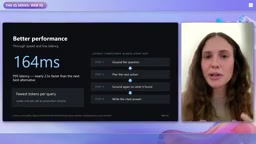
A key mechanism behind the quality improvement is passage-level retrieval. When content format is set to passage, each result returns the title, source URL, the passage most relevant to the question, and the crawl time. The model receives focused, directly citable context rather than a context window flooded with entire pages. The same page with a different question returns different passages.
Passage-level retrieval contrasts with traditional whole-page retrieval: the latter returns complete web pages or large text blocks, easily filling the context window with irrelevant content; the former first splits pages into semantic passages, then recalls the most relevant passages for a specific question. Benefits include more focused context, lower token consumption, more precise citations, and easier judgment by the model on whether evidence is sufficient. Passage-level retrieval essentially moves part of "context engineering" forward into the retrieval layer.
Scopes: Narrowing an Agent's Grounding to Trusted Sources
Not every scenario needs the open web. WebIQ Scopes lets developers and enterprise administrators include or exclude by URL, domain, site, and path: include documentation sites the team trusts, or exclude an archived page the Agent shouldn't cite. The API and result format are unchanged—only the boundaries shift.
The value comes in three layers: policies can be enforced consistently across all Agents; evidence comes from selected sources, improving answer relevance and credibility; and in scenarios where source selection is most sensitive, control returns to the enterprise.
Enterprise-Grade Trust: Source Transparency and Publisher Control
WebIQ follows publisher control in how it accesses content, including applicable robots directives, TXDX directives, and other publisher signals recognized by Microsoft. Every result carries citations, so users can verify where information comes from and trace back to the original page.
The demo showed an Agent powered by Azure OpenAI models with WebIQ integrated as a tool, analyzing the U.S. energy market. The Agent not only outputs answers but also displays the complete activity steps and cited sources—every conclusion is clickable for source verification. This pattern applies equally to financial research, media trend monitoring, regulatory monitoring, and helpdesk Agents.
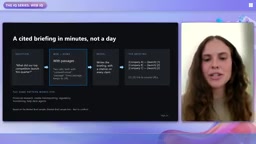
A competitive intelligence Agent example illustrates this further: faced with "What has our main competitor launched?" the Agent makes two WebIQ calls (web search and news search, both with passage content format), gets the passages most relevant to the question rather than whole pages, each passage retaining its source URL, and the model rewrites a briefing based on these passages with every claim cited. What once took an analyst a day of searching, reading, and copying links becomes a process the Agent runs automatically every morning.
P95 latency means that 95% of all requests complete within that time, with the remaining 5% possibly slower. Compared to averages, P95 better reflects tail experience, especially important for Agent multi-step loops—a single slow grounding request drags down the entire task chain. Token efficiency measures the number of tokens needed to achieve equivalent output quality; fewer tokens means lower per-call cost and less context window usage, and at production scale cost differences are rapidly amplified by call volume.
Getting Started
The path is: deploy a WebIQ resource in the Azure portal, then go to the WebIQ platform to get an API key or bind Microsoft Entra ID, after which you can make your first call in the playground or terminal. Microsoft provides quickstart documentation on Microsoft Learn, and the code repository used in the demo was released alongside the presentation.
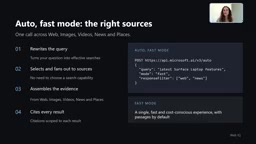
The presentation's summary can be condensed into one sentence: better evidence in, better answers out—and fast enough to ground and cite at every step of an Agent.
FAQ
What's the difference between WebIQ and a regular search API?
A regular search API returns a list of links; WebIQ returns passage-level evidence ready to feed into a model's context, with titles, source URLs, and crawl times, ranked for accuracy, freshness, and relevance rather than pure recall.
How should I choose between Fast and Advanced modes?
Fast suits interactive paths with predictable cost and latency; Advanced suits complex research questions needing multi-round retrieval. In practice many teams use both: Fast for interactive paths, Advanced for deep analysis.
How can enterprises restrict what Agents can access?
Through Scopes, set include and exclude rules by URL, domain, site, or path—the same policy can be enforced uniformly across all Agents.
One-line Summary
Microsoft WebIQ provides Agents with fresh, citable passage-level grounding APIs balancing quality, latency, and cost.
Paragraph Summary
The article introduces Microsoft WebIQ—an external real-world knowledge grounding API suite for AI Agents. It solves the problem of Agent knowledge stopping at the training cutoff and outdated information being amplified across multi-step loops. WebIQ offers six grounding methods—web, news, images, videos, URL browsing, and Places—orchestrated by Auto with Fast and Advanced modes. Test data shows it outperforms the next-best solution on grounding satisfaction, P95 latency, and token efficiency. Passage-level retrieval delivers only the most relevant evidence snippets; Scopes restrict sources by URL, domain, site, and path; publisher control and per-item citations meet enterprise trust requirements. Integration supports REST API and hosted MCP Server, now available to all Azure customers.
Related articles
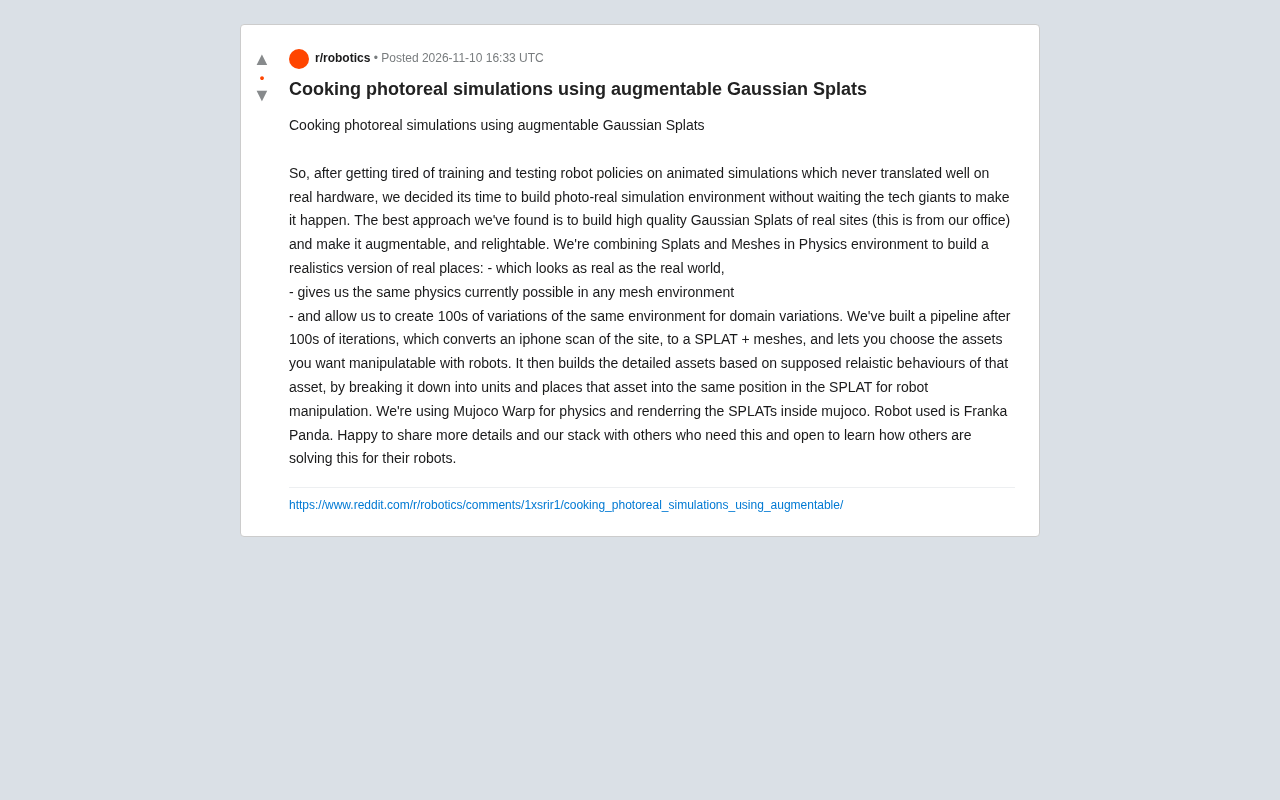
Augmentable Gaussian Splatting: Building Photorealistic Simulation Environments for Robot Training
Team combines Gaussian Splatting with meshes to build photorealistic robot simulation environments, integrating MuJoCo Warp physics and Franka Panda for augmentable, relightable real-site simulation.
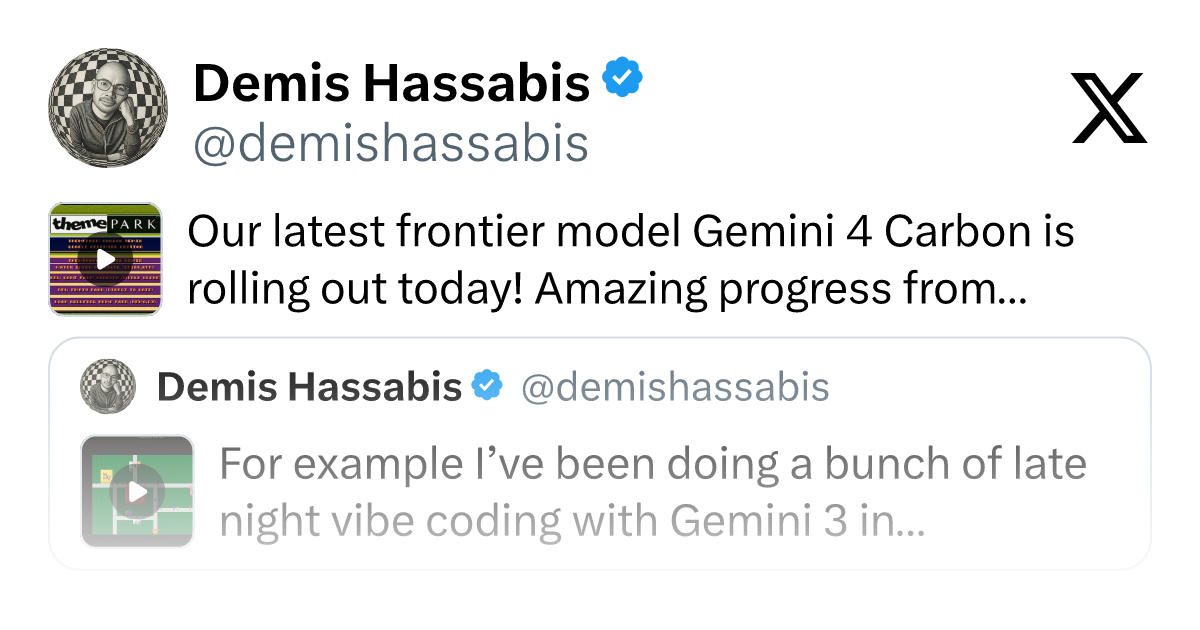
Gemini 4 Carbon Released: The Leap from Gemini 3 to Gemini 4 in Under a Year
Google releases Gemini 4 Carbon, less than a year after Gemini 3. In the official demo, Carbon reverse-engineered the Theme Park binary, added a new DeepMind-themed ride, and ported it to the web in one shot.
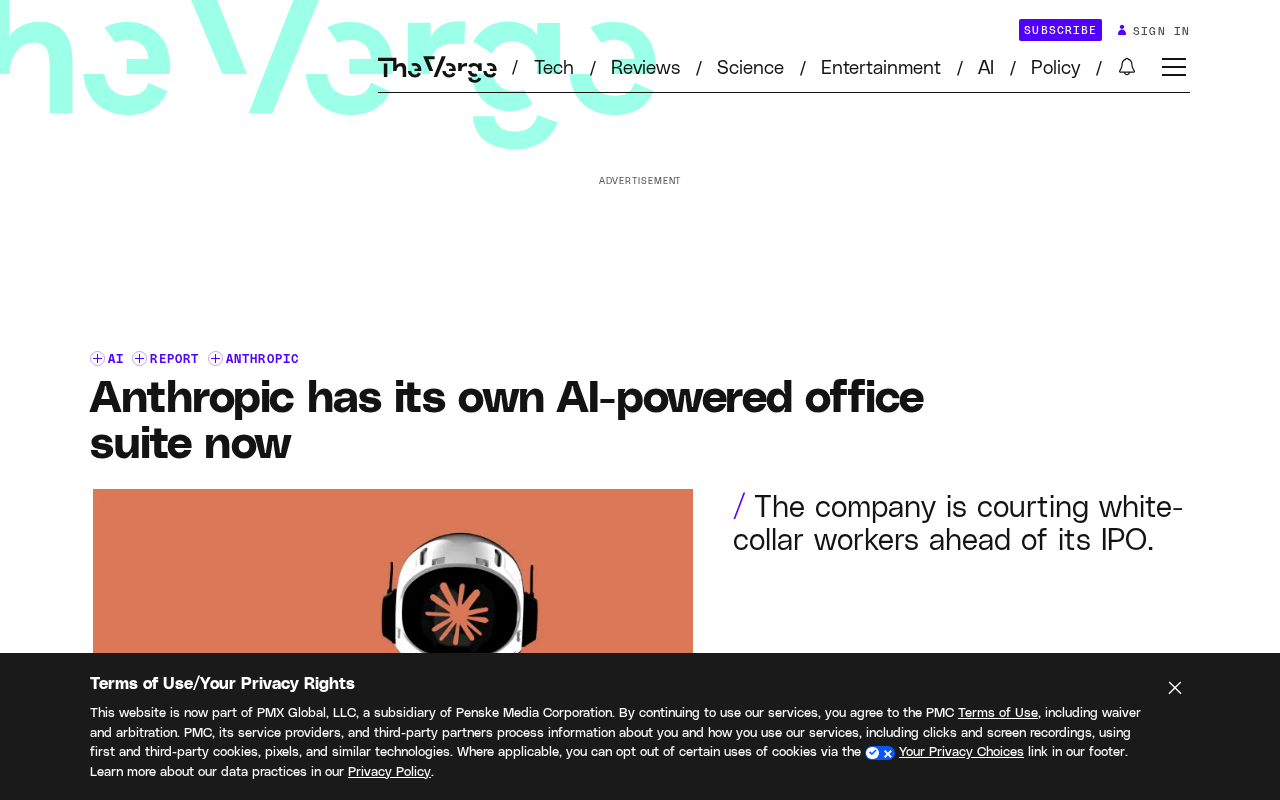
Anthropic Launches AI Office Suite, Making Another Move in the Enterprise Market
Anthropic launches an AI office suite, expanding from coding tools to an enterprise office platform. This article analyzes its product strategy, competitive landscape, and significance for enterprise users.