AI Agent Explained: From Core Concepts to Key Components

A beginner's guide to AI Agents: key concepts, core components, and the full AI evolution from ML to generative AI.
This article untangles the most commonly confused AI concepts: chatbots only converse, while Agents combine a brain (LLM), memory, and tools to autonomously complete complex tasks — acting as true "AI employees." It also traces AI's full development arc, from rule-based systems like Deep Blue, through machine learning (supervised, unsupervised, reinforcement), deep learning, and the 2017 Transformer breakthrough, to today's generative AI. The practical takeaway for everyday users: focus on applying large model capabilities — building private knowledge bases or developing Agents to replace repetitive work — rather than mastering the underlying theory.
Many people hear the terms Agent, intelligent agent, and chatbot every day but can't quite tell them apart. This article, based on Bilibili creator Jinze's introductory series on large language models, cuts through the most commonly confused concepts and traces the full evolution of AI — from rule-based systems to generative AI — making it the perfect starting point for complete beginners looking to ride the wave of intelligent agent applications.
Agent, Intelligent Agent, Chatbot: What's the Difference?
The core distinction between these three concepts can be summed up in one sentence: the AI you use for everyday conversation is a chatbot, not an Agent; the platform you use to build intelligent agents isn't an Agent either; a truly Agent is an autonomous entity that can independently run tasks and get real work done.
Put simply, an Agent is an intelligent entity with both reasoning ability and the capacity to act. It's not a program that just goes back and forth in conversation with you — it's an application that can invoke tools on your computer and independently complete complex, multi-step tasks.
Here's the clearest example: say you want to turn a pile of materials into a PowerPoint presentation. With a typical conversational AI (like Doubao or DeepSeek), you'd have to upload files one by one, wait for server-side processing, and follow every step manually. An Agent works differently — you simply hand it the requirement, and it reads your files, identifies their formats, builds the presentation directly on your local machine, notifies you when it's done, and can even check the content for errors on its own.
In short: products like Doubao and DeepSeek act more like your AI advisor — you ask, they answer. An Agent is more like an AI employee that actually rolls up its sleeves and does the work.
Why Agents Can Work Independently: Three Core Components
For an Agent to execute tasks autonomously, it needs three essential components: a brain, memory, and tools.
Brain: The Decision-Making Core
The brain is simply the large language model (LLM) we're all familiar with — Doubao, DeepSeek, and others can all serve as an Agent's brain. It's responsible for understanding requirements, breaking tasks into steps, and deciding what to do at each stage. It's the command center of the entire intelligent agent.
Memory: The Task Anchor
Memory keeps track of everything you specified from the beginning and monitors progress in real time, ensuring the Agent doesn't drift off course partway through — it stays on target until the entire job is done.
Tools: The Execution Layer
This is the most fundamental difference between an Agent and an ordinary conversational AI. An Agent can call upon various tools and software on your computer just like a real person: browsing the web for information, managing local files, editing Excel spreadsheets and PowerPoints, even writing and running code. An AI without tools can only talk about doing things; an Agent with tools can actually do them.
Three Categories of Intelligent Agents: Which One Should You Choose?
The landscape of intelligent agent products is growing fast. They generally fall into three categories, and you can choose based on your needs.
Specialized Agents: These focus on doing one thing exceptionally well — dedicated video editing, image processing, or e-commerce operations, for example. The advantage is a precise match to a single high-frequency use case: simple to use, ready out of the box, no configuration required.
General-Purpose Agents: These are mostly mature desktop products from major tech companies. For everyday users who want to boost productivity with AI right away, a general-purpose agent is the best starting point.
Platform-Built Agents: Generated by agent-building platforms, these typically follow fixed workflows and only bring AI in at key decision points. Most are custom-built by enterprises to fit their specific business processes.
Clearing Up the Basics: AI, Machine Learning, and Deep Learning
A lot of newcomers to AI wonder: what exactly is the relationship between artificial intelligence, large models, machine learning, deep learning, and generative AI? In reality, there's a very clear developmental progression connecting them all.
Artificial Intelligence (AI) is the field of research focused on giving computers and machines capabilities similar to human learning, understanding, reasoning, and action. It's not any single product — it's an entire technical domain spanning computer science, mathematics, statistics, linguistics, and even neuroscience.
People's views on AI vary widely, largely depending on the standard they set for "intelligence." If you're expecting the self-aware, independently thinking AI of science fiction — like Jarvis from Iron Man — we're not there yet. But if the standard is completing specific tasks and improving work efficiency, AI is already well capable of that. The most practical lens: focus on whether AI can solve real problems for you.
From Deep Blue to AlphaGo: Two Pivotal Moments in AI History
Two landmark events define AI's history. In 1997, IBM's Deep Blue defeated world chess champion Garry Kasparov. In 2016, AlphaGo defeated world Go champion Lee Sedol.
Deep Blue proved that in rule-defined domains, machines can surpass humans through sheer computational power. But its approach was completely different from today's large models — it relied primarily on search algorithms, pre-analyzing vast numbers of possible moves and selecting the best one using preset evaluation rules.
The problem is that many real-world tasks have no clear rules — writing an article, analyzing complex information, or recognizing whether an image contains a cat. These can't be solved by writing explicit rules, so AI moved into a new phase: machine learning.
Machine Learning: Teaching Machines to Learn from Data
The core idea of machine learning is: instead of telling machines all the answers, let them discover hidden patterns through large amounts of data. There are three classic learning approaches.
Supervised Learning: You provide the machine with labeled examples — like giving a student practice problems with answer keys. For instance, labeling images as "cat" or "dog" so the model learns the relationship between images and labels. Spam filtering and financial risk management both rely on this.
Unsupervised Learning: The machine finds patterns on its own, with no labeled data. Give it large amounts of user data (age, browsing habits, purchase history) and let the model discover which users belong to the same group. This approach is heavily used in large model training — for example, having a model predict missing words in text.
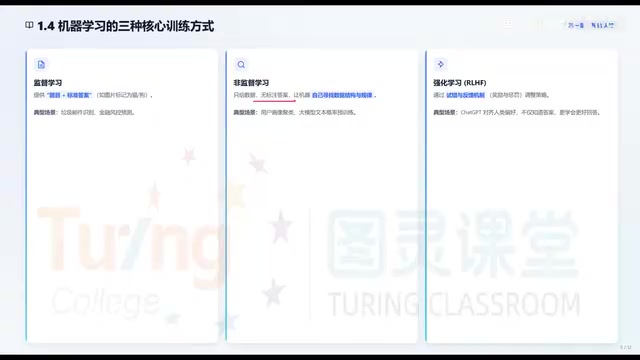
Reinforcement Learning: Behavior is shaped through trial, error, and feedback — similar to how a child learns to walk. The machine receives rewards or penalties after each action, gradually learning to behave in ways that better achieve its goal. After completing its foundational training, ChatGPT used RLHF (Reinforcement Learning from Human Feedback) to refine its response quality — teaching the model not just what to say, but how to say it better.
RLHF (Reinforcement Learning from Human Feedback) is the critical bridge between a base language model and a genuinely usable product. After pretraining, a large model may have absorbed vast knowledge, but its outputs can be verbose, off-topic, or even harmful. RLHF works by having human annotators rank multiple model responses, using those preference signals to train a "reward model," and then applying reinforcement learning to fine-tune the original LLM so its outputs better align with human expectations. ChatGPT's ability to converse in a natural, helpful way is largely a result of RLHF. This process also explains why products built on the same Transformer architecture can feel so different to use — the pretraining structure may be similar, but the alignment approach and training data quality are what truly separate the experiences.
Deep Learning and Transformer: The Technical Foundation of Large Models
As tasks grew more complex, traditional machine learning hit its limits, giving rise to deep learning. Its core technology is the neural network — a computational model inspired by the way neurons connect in the human brain. Information is processed through multiple layers: when recognizing an image, the first layer might learn edges and colors, the second layer shapes and structures, the third layer object composition. The word "deep" refers to the number of layers — more layers means richer, more nuanced representations.
In 2017, the Google team published the paper Attention is All You Need, introducing the Transformer architecture. The key problem it solved: enabling models to flexibly focus on the most important parts of their input — the attention mechanism.
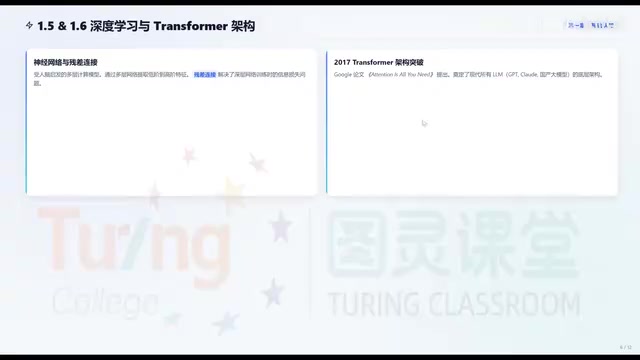
Consider the sentence: "Apple released a new phone, and it has been welcomed by many users." What does "it" refer to? Humans use context to figure this out instantly, but traditional computers treat it as just a character string. The attention mechanism allows the model to consider surrounding context when processing "it," building accurate semantic connections. Even more importantly, Transformer can handle massive amounts of long text, overcoming the tendency of traditional recurrent neural networks to "forget" earlier content. The GPT series, Claude, and most major Chinese large models are all built on the Transformer architecture or improved versions of it.
The Attention Mechanism works by assigning different "attention weights" to each position in an input sequence. Rather than reading text word by word in order, the model simultaneously scans all words and dynamically computes a relevance score between each word and the current position being processed. The higher the weight, the more the model relies on that word when generating output. This parallel computation dramatically speeds up training and allows models to maintain semantic coherence across very long passages. Another key design in Transformer is positional encoding, which compensates for the fact that the attention mechanism itself has no inherent sense of word order — it tells the model both "what this word means" and "where it appears in the sentence." Together, these two innovations make Transformer the backbone of modern large models.
Generative AI: From Classification to Creation
Tracing AI's development — from rules to machine learning, deep learning, and then Transformer — reveals a clear shift: earlier AI was mostly about classification and judgment (is this email spam? is this image a cat?), while generative AI's defining change is its ability to create something from nothing.
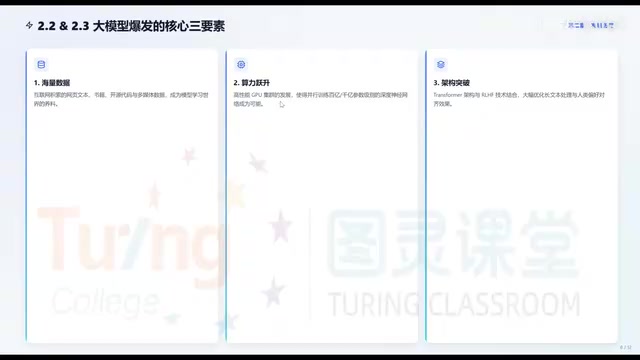
Previous AI answered "what is this thing?" Today's large models can, based on your requirements, create something new: articles, code, images, and more. Three forces drove the explosion of ChatGPT 3.5: the accumulation of data at scale, a leap in computing power (GPU clusters), and the architectural breakthrough of Transformer.
Generative AI's ability to "create from nothing" relies on a probabilistic prediction mechanism: at each step, the model computes a probability distribution over its entire vocabulary given the existing context, samples from that distribution to select the next word, and repeats until the content is complete. This is why you can ask the same question twice and get different answers — and why large models sometimes "confidently say something wrong." They're fundamentally making the highest-probability prediction, not retrieving a fixed fact. Parameter count is an important indicator of a large model's capability: parameters can be thought of as the "knowledge weights" the model learned during training. GPT-3 has 175 billion parameters; larger parameter counts generally mean stronger language understanding and generation ability, but also demand significantly more computing power and energy.
How Everyday Users Can Boost Productivity with Large Models
Mainstream large models each have their strengths: OpenAI's GPT series has the broadest reach, covering code generation, knowledge Q&A, and data analysis; Claude excels at long-document analysis and logical reasoning, making it a favorite among developers; Google's Gemini is a multimodal model that handles text, images, audio, and video. On the Chinese side, there's Alibaba's open-source Qwen (Tongyi Qianwen), Baidu's Wenxin series, and DeepSeek.
There's no single right answer when choosing a large model — it depends on your task, environment, and goals. For everyday learning and writing assistance, a general-purpose model works fine. For software development, Claude or Gemini are strong choices. Enterprise scenarios also require consideration of data security, private deployment, and cost control.
For most people, rather than digging into underlying principles, the more practical approach is to leverage the general capabilities of existing large models and apply them to concrete business scenarios — such as building a private knowledge base or developing intelligent agents to replace repetitive work. Just as most people don't study car engines after automobiles were invented; they learn how to drive.
Agents are widely considered one of the most important application forms of the coming years: they can understand goals, make plans, invoke tools, and execute tasks in an intelligent closed loop. Ask one to analyze your company's sales situation, and it can automatically pull the data, identify trends, generate a report, and offer recommendations — that is precisely the direction intelligent agents are heading.
Related articles
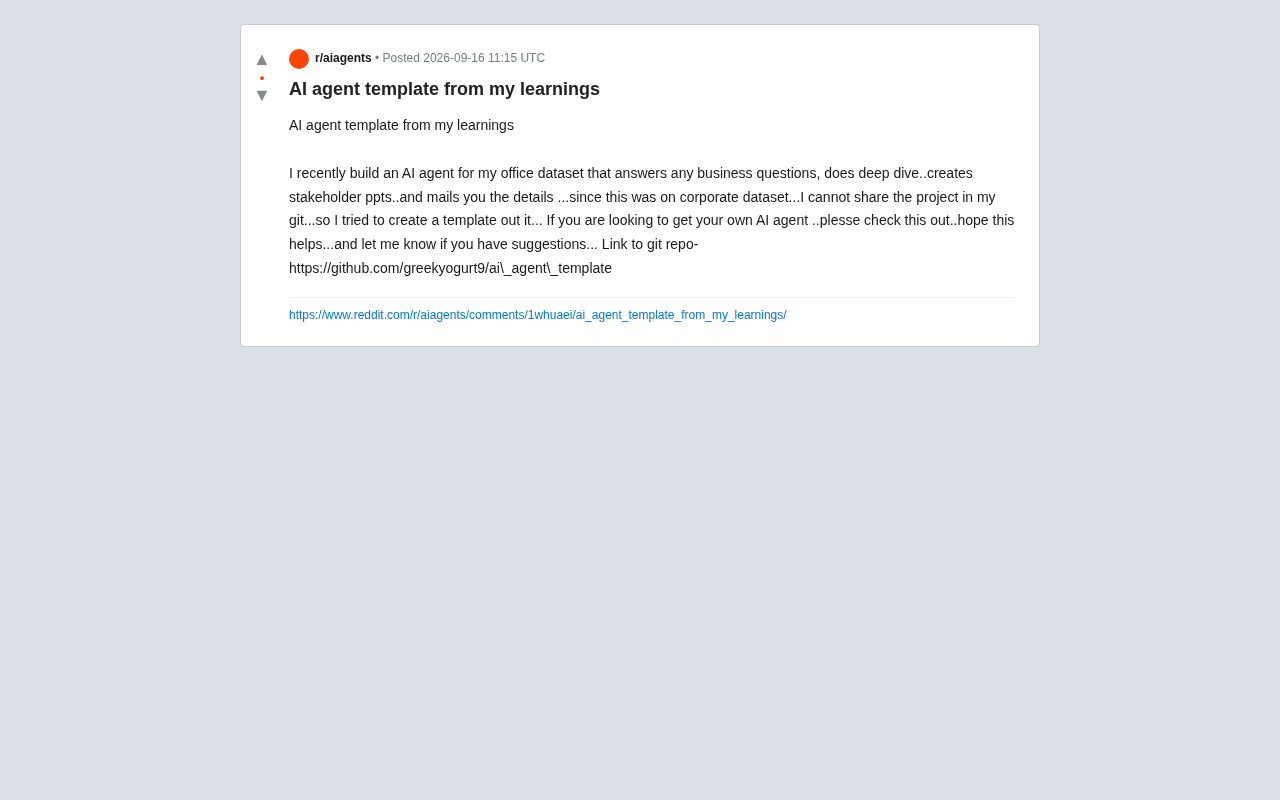
From Enterprise Practice to a Reusable Template: Lessons from Building an AI Agent
A developer shares an open-source AI Agent template built from an enterprise project, covering natural language data Q&A, analysis, auto-generated PPTs, and email distribution.

Nintendo's Open-World Design Evolution: Breaking Down Fire Emblem Fortune's Weave
Nintendo brings the open-world design philosophy of Breath of the Wild to Fire Emblem with the massive Switch 2 title Fortune's Weave. Here's what it means.
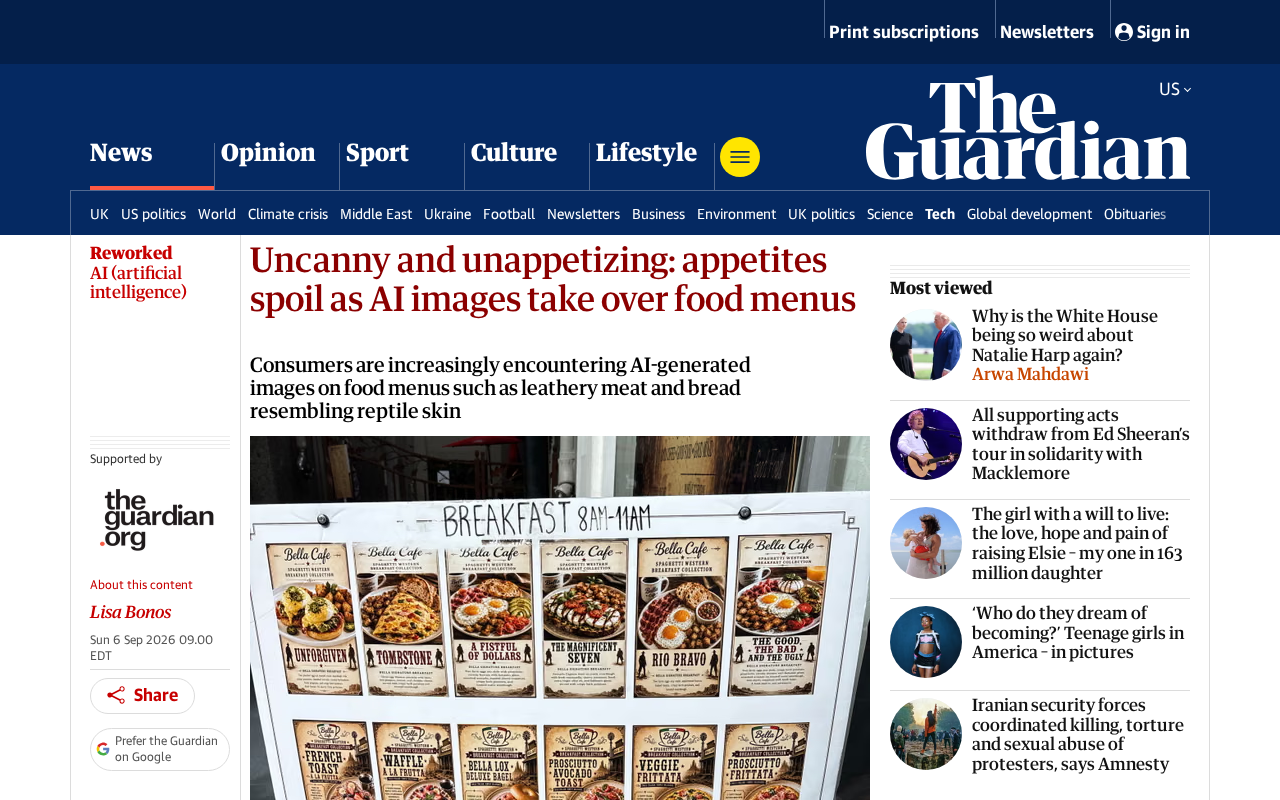
AI-Generated Food Photos Are Ruining Menus: How the Uncanny Valley Kills Appetite
AI-generated food images are flooding restaurant menus and delivery apps, but uncanny details kill appetite instead of sparking it. Here's why the uncanny valley effect hurts brands.