AI Agent Handles Full Video Editing Pipeline: Claude-Powered Open-Source Tools Challenge Adobe
AI Agent directly operates open-source editing software via MCP protocol, completing the full pipeline from script to final cut on a real timeline.
An AI Agent edited an entire video by directly operating a visual editing timeline rather than generating code — reading scripts, cutting footage, and drawing graphics in human-intervenable steps. Running on Filmcraft and Effectcraft, open-source reconstructions of Adobe apps, the real unlock is MCP protocol support, letting AI Agents command applications via standardized tools. The core value isn't "free Adobe alternative" but open source plus AI operability reshaping the creative process: Agent handles repetitive labor, humans handle judgment.
When AI Agents Truly Take Over Editing: A Fully Automated Pipeline from Script to Final Cut
The fact that an AI Agent edited an entire video isn't newsworthy on its own. What's new is how it works — not generating a pile of code for you to debug, but directly operating the editing timeline you're already familiar with.
According to the YouTube video Claude Video Editing: An AI Agent Edited This Whole Video, this Agent can autonomously read scripts, cut timelines, and draw every graphic element. The entire process runs within Filmcraft and Effectcraft — open-source reconstructions of Adobe's applications. Most critically: what humans see isn't code output, but a real editing timeline.
This eliminates the biggest trust barrier in AI editing. In the past, letting AI handle video meant either accepting a black-box output you couldn't intervene in, or wrestling with an incomprehensible pile of automation scripts. Here, every step the Agent completes appears on the timeline as a visual operation — if a cut point doesn't feel right, you simply drag and fix it manually.
The MCP Protocol Is the Real Unlock
Most people focus on the "free Adobe alternative" narrative, but the video's creator explicitly points out that this "misses the point." The real breakthrough lies in the AI Agent's operational capability.
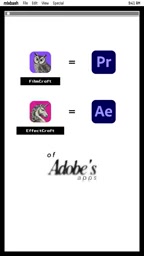
Both Filmcraft and Effectcraft support the MCP protocol — a plugin standard that AI Agents use to operate applications. Under this protocol framework, every editing action is encapsulated as a command: cut, move, draw, render — all callable by the Agent.
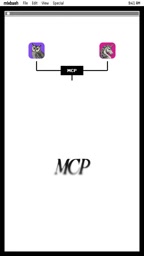
The significance of MCP runs deep. It means AI is no longer just a content generator, but a direct operator of application software. You don't have to write code yourself to bridge the gap between AI and editing software — the protocol has already built that bridge for you. For content creators, this lowers the barrier to automated workflows. For developers, open source means the entire chain is transparent — "nothing closed-source is stuck underneath your workflow."
MCP (Model Context Protocol) is an open standard introduced by Anthropic in late 2024, designed to provide a unified communication interface between AI models and external tools and data sources. You can think of it as the "USB-C port of the AI world" — before MCP, every time you wanted AI to operate an application, developers had to write custom integration code for that specific app (such as customized Function Calling wrappers), resulting in massive duplicated effort and a fragmented ecosystem. MCP defines three standardized primitives — "Tools," "Resources," and "Prompts" — allowing any application that supports the protocol to be called by AI Agents in a consistent way. In this case, Filmcraft and Effectcraft encapsulate editing actions like "cut," "move," "draw," and "render" as MCP tools. The Agent doesn't need to understand the application's internal implementation — it simply sends commands according to the protocol. This is exactly what "plugin standard" means: integrate once, reuse everywhere.
Open Source Plus AI — That's What Meaningful "Free" Looks Like
If it were merely a free Adobe alternative, it would just be a price war. But open source combined with AI Agent operational capability changes the creative process itself.

Traditional editing software's core competitiveness lies in feature depth and ecosystem lock-in. Filmcraft and Effectcraft chose a different path: open source ensures transparency, MCP ensures AI operability. The Agent handles scalable, repetitive editing labor; humans handle aesthetic judgment and final approval. This division of labor is more pragmatic than either extreme — "fully automated AI generation" or "purely manual editing."
The video's creator directs viewers to mixbash.com/craft at the end for a complete setup guide, demonstrating that this workflow is already reproducible — not just a lab demo.
Filmcraft and Effectcraft, as open-source reconstructions of Adobe applications, mean more than just "free." Open-source licenses (such as GPL, MIT, Apache) grant users the right to view, modify, and redistribute source code. This means any developer can audit every MCP command the Agent sends, adjust its behavioral logic, or even customize features for specific workflows. By contrast, closed-source commercial software's automation interfaces are typically constrained by vendor strategy — APIs may become paid, change, or suddenly shut down, leaving users' workflows vulnerable at any moment. Open-source reconstructions bind "AI operability" together with "code transparency," making the entire automation chain verifiable, portable, and maintainable long-term. This is the deeper meaning behind the creator's emphasis that "nothing closed-source is stuck underneath your workflow": creators don't have to worry about their automation assets being held hostage by any company's business decisions.
What This Means for Creators
This approach is still in its early stages. The Agent's capability boundaries, stability on complex projects, and precision in graphic drawing all remain to be validated. But it points to a clear direction: the combination of AI and creative tools shouldn't replace creators — it should free them from mechanical operations. The MCP protocol may become key infrastructure in this direction.
The critical difference between Agents and traditional automation scripts lies in decision-making capability. Traditional scripts execute preset rules (like "cut every 5 seconds"), while AI Agents can read script content, understand semantics, and autonomously decide where to cut and what graphics to draw. This capability relies on large language models' reasoning and tool-calling mechanisms: the Agent first parses the task objective, then decomposes it into a series of MCP commands, and after execution judges whether adjustments are needed based on returned results. However, this also introduces new uncertainty — the Agent may make decisions that don't align with the creator's intent. Therefore, the reasonable positioning at this stage is "co-pilot" rather than "autopilot": the Agent handles batch, repetitive, rule-clear operations; humans handle creative direction and key decisions. The workflow shown in the video is worth paying attention to precisely because it finds a currently viable balance between "automatable" and "intervenable."
One-line Summary
An AI Agent directly operates open-source editing software via the MCP protocol, completing the full pipeline from script to final cut on a real timeline.
Paragraph Summary
An AI Agent edited an entire video, and its breakthrough isn't generating code but directly operating a visual editing timeline — reading scripts, cutting footage, drawing graphics, with every step presented in a human-intervenable form. This pipeline runs on Filmcraft and Effectcraft, two open-source reconstructions of Adobe applications, and the real unlock is their MCP protocol support, which lets AI Agents directly operate applications through standardized commands rather than acting as content generators. The video's creator emphasizes that the core value isn't "free Adobe alternative" but the combination of open source and AI operational capability, changing the creative process itself: the Agent handles scalable, repetitive labor while humans handle aesthetic judgment and final approval. The workflow is already reproducible, but still early-stage, with capability boundaries and complex-project stability yet to be validated.
Related articles

WorkBuddy Agent in Action: From AI Q&A to Automated Office Work
WorkBuddy is Tencent's AI agent desktop workbench that reads local files, operates office software, executes multi-step tasks, and runs on schedules. This article explains its core features, key differences from traditional AI tools, and use cases.

Anthropic Research: LLMs Make Formal Software Verification at Scale Possible
Anthropic Frontier Red Team research shows LLMs can generate formal proofs at the RISC-V assembly level for over 100 real open-source libraries, covering 123 OSS-Fuzz libraries and 239 entry points, totaling about 180 million lines of Rocq proofs and finding hundreds of bugs. The article analyzes specification generation, the proof pipeline, trust boundaries, and cost reduction paths.

Prompt Engineering for Beginners: From Writing Prompts to Building AI Collaboration Skills
From the four functions of prompts to the six-step prompt engineering process, this article systematically covers core concepts, business value, and three layers of limitations to help beginners build a complete cognitive framework for prompt engineering.