AI Agent Learning Path: Mastering Intelligent Agent Development from 0 to 1

A complete AI Agent learning path from LLM basics to multi-agent collaboration.
This article maps out the full AI Agent knowledge landscape—covering LLM and prompt fundamentals, tool calling, RAG, LangChain frameworks, and multi-agent collaboration—and offers a clear step-by-step learning order plus practical advice to help you master intelligent agent development from 0 to 1.
Why Is Learning About Agents So Confusing?
Over the past couple of years, AI Agents have become the hottest career transition direction in tech circles, yet few people can truly explain and master the concept. According to observations from a Bilibili tutorial creator, many peers looking to pivot into agent development remain thoroughly confused even after consuming tons of fragmented content.
This predicament is extremely common: you scroll through piles of "useful" tips online—tool calling, LangChain, RAG, multi-agent collaboration—and learn plenty of scattered knowledge, but you can't piece it together into a coherent system. The result: you don't know where to start, where to specialize, and even less what kind of project you could build once you're done learning.
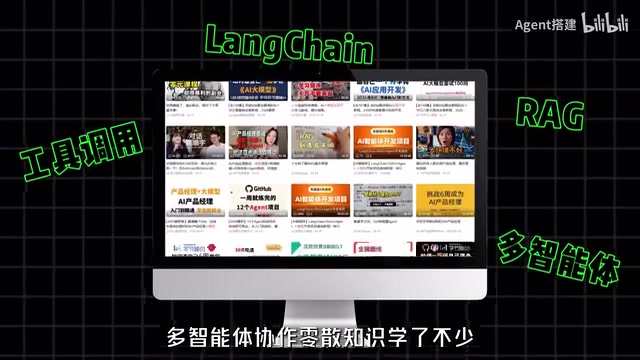
The root of the problem isn't a lack of content, but the absence of a clear main thread. Learning AI Agents requires connecting scattered knowledge points into a chain of capabilities—otherwise, the more you learn, the more lost you become.
A Full Breakdown of the Core AI Agent Capability Map
To systematically learn about Agents, you first need to clarify their knowledge map. A complete Agent capability system contains at least the following layers.

Foundation Layer: Large Models and Prompt Engineering
The bedrock of every Agent is the Large Language Model (LLM). An LLM is a neural network based on the Transformer architecture that, through pre-training on massive amounts of text data, learns the statistical patterns and knowledge representations of language. You need to understand the model's input-output mechanism, especially the limitation of the Context Window—the maximum number of tokens an LLM can "see" at once. Early GPT-3 had about 4K tokens, while modern models like Claude 3.5 can reach 200K tokens. The boundary of the context window directly affects an Agent's memory and reasoning ability: information beyond the window gets "forgotten," which is precisely why external memory mechanisms like RAG exist. Beyond understanding window limits, you also need to master how to stably guide model output through prompt engineering. This is the prerequisite for all higher-level capabilities and also the most easily overlooked part.
Tool Layer: Tool Calling and RAG
What makes Agents powerful is their ability to "take action." Tool Calling (Function Calling) is the key mechanism that gives LLMs the ability to act: when generating a response, the model can output a structured JSON instruction describing which function it wants to call and what parameters to pass; an external program captures this instruction, executes the real operation, and returns the result to the model. OpenAI standardized this capability as the Function Calling API in 2023, which has since become the de facto industry standard. With this mechanism, an Agent can check the weather, execute SQL queries, and call payment interfaces—truly evolving from a "language generator" into a "digital employee that gets work done."
Meanwhile, RAG (Retrieval-Augmented Generation) solves the problems of outdated model knowledge and hallucination. Proposed by Meta AI in 2020, RAG's core idea is: before the model generates an answer, it first retrieves relevant document fragments from an external knowledge base and injects them into the prompt as context, enabling the model to generate answers "backed by evidence." In practical engineering, knowledge base documents are chunked and converted into vector embeddings, stored in a vector database (such as Chroma, Pinecone, or Weaviate); queries retrieve the most relevant fragments via semantic similarity. This mechanism effectively alleviates two chronic issues of LLMs: outdated knowledge caused by the training data cutoff, and the hallucination problem where the model "confidently talks nonsense." These two are the true watershed in moving from a "chatbot" to an "Agent that gets work done."
Framework Layer: LangChain and Other Mainstream Development Frameworks
LangChain was released by Harrison Chase in October 2022, and its core design philosophy is "chain composition" (Chain)—stringing atomic capabilities like LLM calls, tool execution, memory management, and document retrieval into reusable pipelines, like Lego blocks. The framework provides standard abstraction layers such as Agent, Memory, Tool, and Chain, so developers don't need to implement scheduling logic from scratch. LlamaIndex, on the other hand, focuses more on data indexing and RAG scenarios; the two complement each other. These frameworks encapsulate the above capabilities into reusable components, helping developers quickly build Agent applications and dramatically improving development efficiency.
But note in particular: the framework's high level of abstraction also brings pain points such as debugging difficulty and rapid version iteration. LangChain's major architectural refactoring in 2023 (LCEL) once caused plenty of headaches for developers. Frameworks are just tools; understanding the underlying principles is the core—otherwise it's easy to fall into the trap of "knowing how to call the API but not understanding why." Once the framework upgrades or you hit an edge case, you'll be at a loss.
Advanced Layer: Multi-Agent Collaboration
A single Agent has limited capabilities. Multi-agent collaboration lets multiple specialized Agents divide labor and coordinate to complete more complex tasks. Multi-Agent collaboration typically follows several classic patterns: first, the Orchestrator-Worker pattern, where a planning Agent decomposes tasks and delegates them to specialized sub-Agents; second, the pipeline pattern, where multiple Agents process and pass results sequentially; third, the debate/verification pattern, where multiple Agents give independent judgments on the same problem and then cross-verify to improve accuracy. Frameworks like AutoGen (Microsoft), CrewAI, and MetaGPT are designed specifically for multi-Agent collaboration. Among them, MetaGPT introduces the metaphor of a software company's role division, including virtual roles such as product manager, architect, and engineer, demonstrating the enormous potential of multi-Agents on complex tasks. This is currently the most cutting-edge and imaginative direction in the Agent field.
From 0 to 1: Breaking Down the Systematic AI Agent Learning Path
Facing the capability map above, what beginners need most is a clear order and rhythm, rather than piling up all concepts at once.
We recommend proceeding in the following order:
- Build a solid LLM and Prompt foundation—First become proficient at conversing with the model and stably obtaining expected outputs, and understand core concepts like context window and temperature parameters;
- Master Tool Calling—Enable the model to call external capabilities, and understand the structure of JSON instructions and the scheduling logic;
- Practice RAG (Retrieval-Augmented Generation)—Build a knowledge assistant that can answer questions about private documents, and get hands-on configuring vector databases and embedding models;
- Get started with the LangChain development framework—Engineer and productize the above capabilities, while maintaining an understanding of the underlying principles;
- Challenge yourself with multi-agent collaboration projects—Try building complex Agent applications with clear divisions of labor, and experience collaboration patterns like orchestrator-worker.
Each step should use "being able to ship a small project" as the acceptance criterion, rather than staying at the level of watching videos and reading articles. Only by building a runnable demo can you truly internalize knowledge into capability.
Transitioning to an AI Agent Career: A Rational View and Practical Advice
Many learners are motivated by career changes, especially professionals in traditional technical roles.

For developers with a programming background, the barrier to transitioning into Agent development is relatively low. The focus is on filling in AI-related knowledge gaps—such as using vector databases, selecting embedding models, and the engineering practice of multi-Agent frameworks. For beginners with no foundation, it's necessary to first establish basic knowledge of programming and AI, then gradually advance.
What needs a rational perspective is that "finish learning and you can switch careers" is more of a motivational statement. Actual employment competitiveness depends on whether you can independently complete projects of real value. What recruiters value is not how many courses you've listened to, but your project experience and problem-solving ability.
Therefore, rather than pursuing the "most comprehensive and detailed" learning content, it's better to focus on a few core capabilities, master them deeply, and let your work speak for itself.
Final Thoughts
AI Agents are indeed a direction worth investing deeply in right now, but learning about them shouldn't be a fragmented pile-up of knowledge. The truly effective approach is to build a complete cognitive framework spanning from LLM fundamentals, RAG, and Tool Calling to multi-agent collaboration, and to validate each stage with hands-on projects.
By self-assessing against this system, you can clearly see what content you're still missing and which core capabilities you've overlooked, allowing you to precisely fill your gaps and avoid detours. This is the correct way to master AI Agents from 0 to 1.
Key Takeaways
Related articles
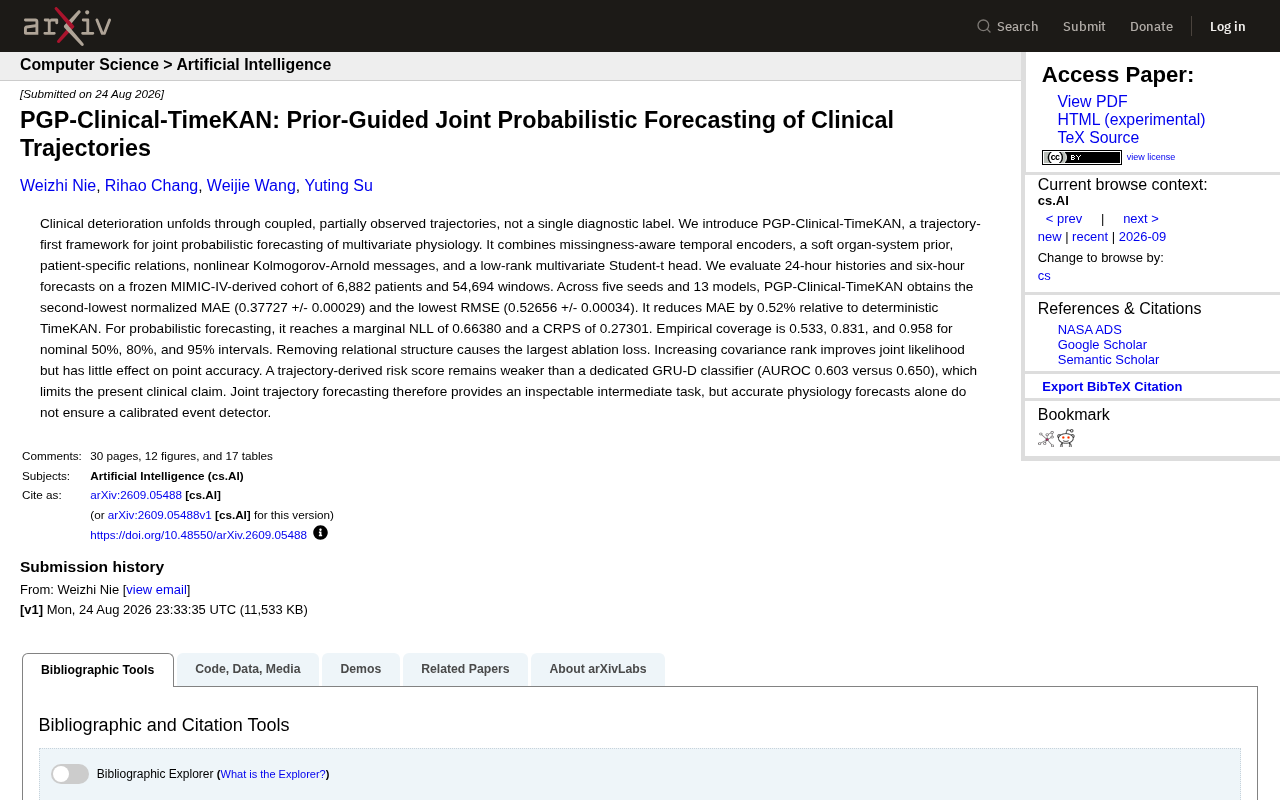
PGP-Clinical-TimeKAN: A Detailed Guide to the Multivariate Physiological Indicator Joint Prediction Framework
An in-depth analysis of the PGP-Clinical-TimeKAN framework for joint probabilistic prediction of multivariate physiological indicators, covering trajectory-first paradigm, KAN message passing, MIMIC-IV validation, and ablation studies.
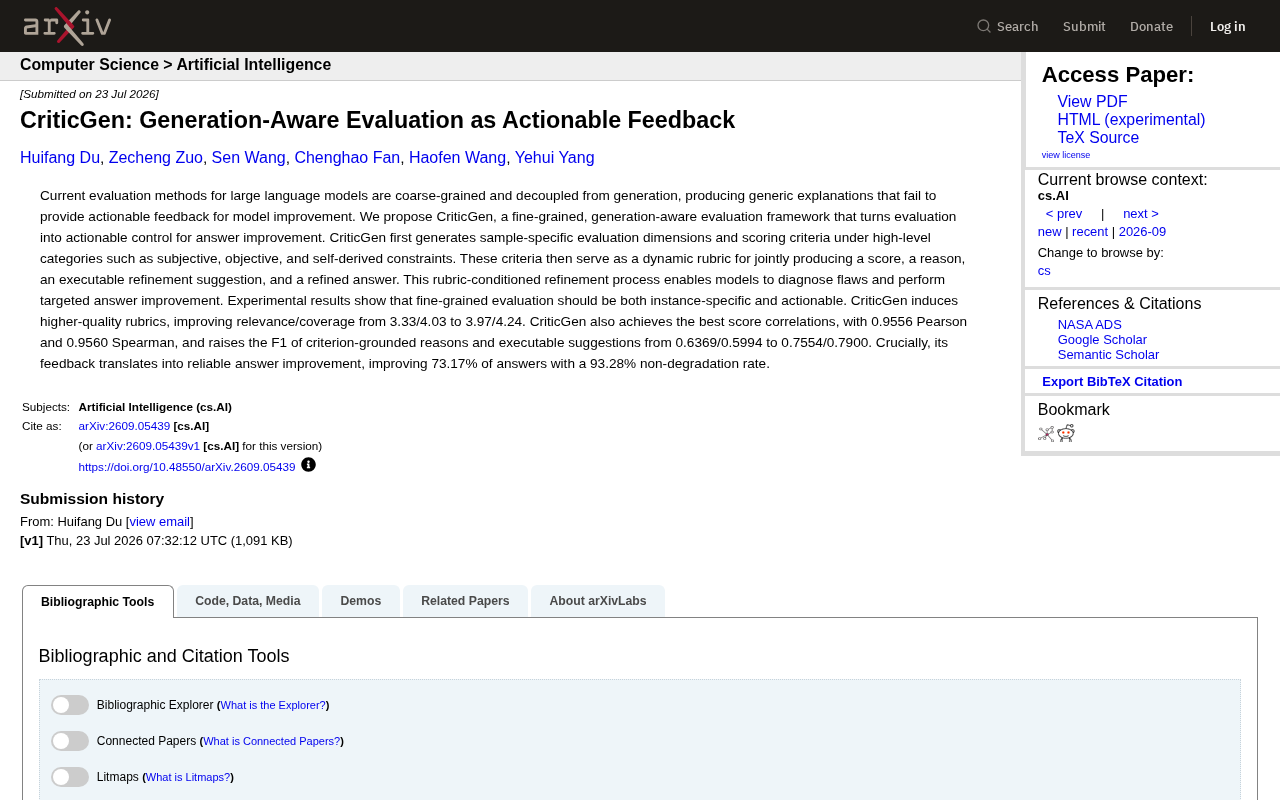
CriticGen: A New Framework That Transforms AI Evaluation into Actionable Improvement Feedback
CriticGen proposes a generation-aware evaluation framework that transforms AI assessment from passive scoring to an active optimization loop, achieving 73.17% answer improvement and 93.28% non-degradation rate.
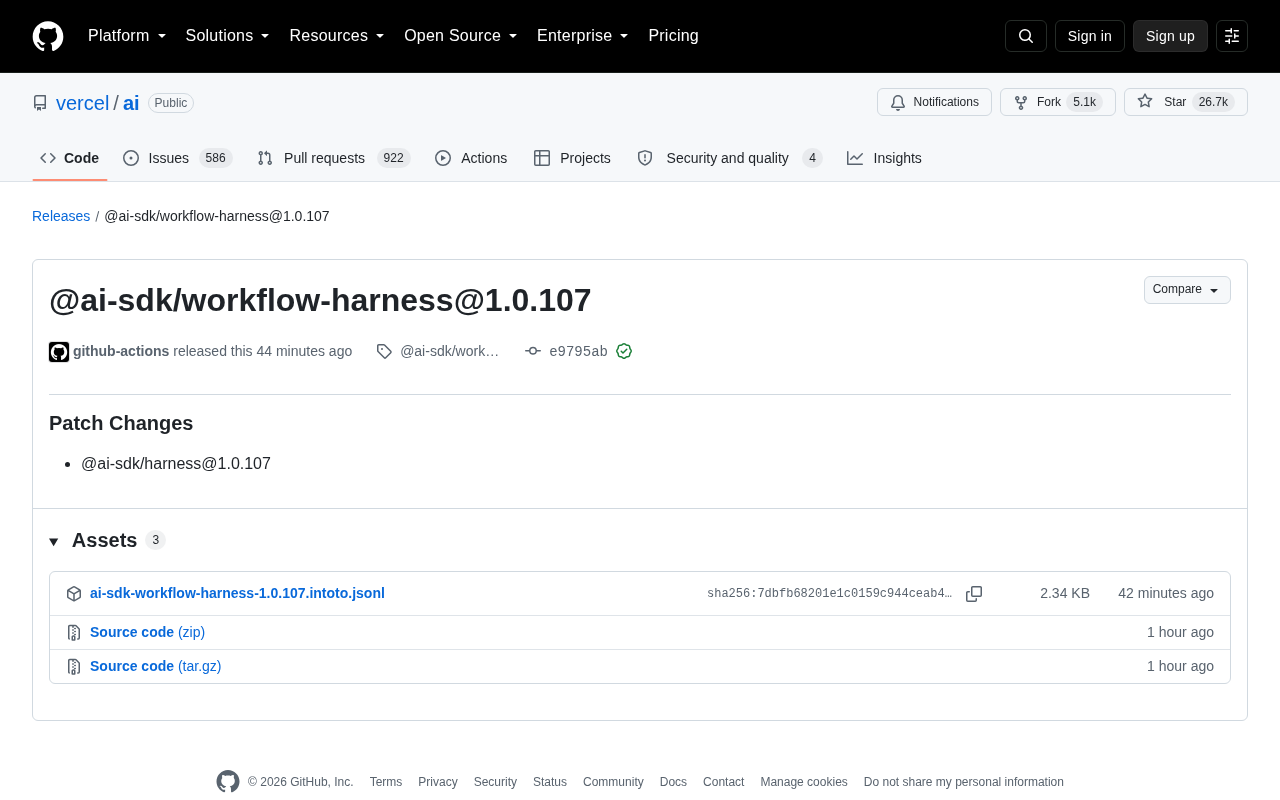
Vercel AI SDK workflow-harness Update Analysis
Deep analysis of Vercel AI SDK workflow-harness 1.0.107 update: architecture design, engineering practices, and developer value for building reliable AI apps.