AI Agent Learning Roadmap: A Four-Stage Guide for Complete Beginners
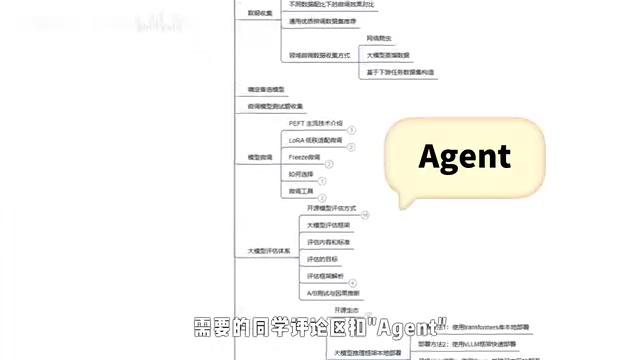
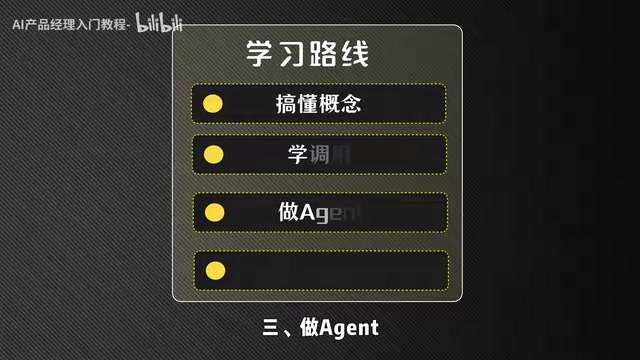
A clear four-stage roadmap for learning AI Agents from scratch, with resume-worthy projects at every step.
This article presents a four-stage AI Agent learning roadmap designed for complete beginners. Stage 1 builds conceptual foundations including Prompt engineering, Chain of Thought, memory, and tool-calling. Stage 2 shifts to hands-on practice with model deployment, Docker, and FastAPI. Stage 3 tackles core Agent technologies — RAG, task planning, memory management, and LoRA fine-tuning — using LangChain to build real projects. Stage 4 integrates everything and prepares learners for technical interviews. The roadmap's key value lies in solving the sequencing problem, ensuring every stage produces concrete, resume-worthy output.
Spending two months learning AI Agents and still struggling to make a basic API call — that's the honest reality for most beginners starting from scratch. Instead of getting lost in a sea of tutorials, the smarter move is to understand the right order of learning first. This four-stage roadmap, originally shared by a Bilibili content creator, breaks down the entire Agent learning journey into clear, progressive steps — each one producing a concrete project worth putting on your resume.
Stage 1: Understand the Core Concepts
Before diving into Agents, you need a solid grasp of the fundamentals behind large language models and Agent architecture. This stage isn't about writing code — it's about building a complete mental framework.
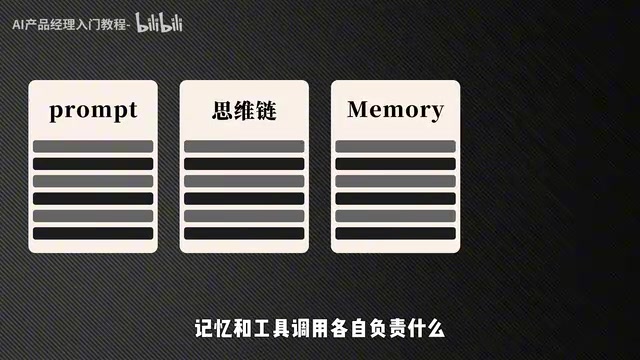
The concepts you need to internalize include: how to write effective Prompts, what Chain of Thought actually means, and what roles memory mechanisms and tool-calling each play. These ideas might seem scattered at first, but they form the foundation for understanding how Agents actually work.
Many beginners skip straight to frameworks, and end up building things they can't truly explain. Getting through this conceptual foundation first is what allows you to genuinely understand what an Agent is doing — it's not a simple chatbot, but an intelligent system capable of perception, planning, tool invocation, and contextual memory.
Stage 2: Learn Model Calling and Deployment
Once the concepts are clear, it's time to get hands-on. This stage focuses on advanced Prompt engineering, along with model calling and deployment.
The key technical skills here include: orchestrating multi-chain pipelines, making trade-offs between local and cloud deployment, understanding Docker containerization, and building interfaces and frontend pages with FastAPI. Put these skills together and you'll be able to independently build your own AI chat assistant.
Why learn deployment? Because Agents ultimately need to run in the real world. There's a huge difference between running a demo in a Notebook and actually deploying a service to the cloud for others to use. Mastering Docker and FastAPI means you have the engineering chops to turn ideas into usable products.
Docker is a containerization technology that packages an application along with all its dependencies into a portable "container," ensuring the code runs consistently across any environment — whether that's your local dev machine, a cloud server, or a colleague's laptop. For Agent projects, dependency version conflicts and complex environment setup are common pain points, and Docker solves all of that in one shot. FastAPI is a high-performance Python web framework built for rapid API development. It comes with interactive documentation out of the box (Swagger UI), making it ideal for wrapping AI model capabilities into interfaces that frontends or other services can call. Together, these two tools represent the go-to lightweight stack for production AI deployment today.
Stage 3: Actually Start Building Agents
This is the core of the entire roadmap — the critical leap from Agent as a "concept" to Agent as a working "application."
The technical modules to tackle in this stage are dense: RAG (Retrieval-Augmented Generation) knowledge bases, task planning and tool calling, memory management, and advanced fine-tuning techniques like LoRA. Master these, and combined with a framework like LangChain, you'll be able to build genuinely valuable, complete projects.
Typical project formats include: personal assistants, document analysis systems, and internet-connected search Agents. These aren't toy-level demos — they're applications with real-world use cases. RAG addresses the limitations of a model's knowledge cutoff and inability to access private data. Task planning enables the Agent to autonomously break down complex tasks. Memory management gives it the ability to hold a continuous conversation. All three combined is what a mature Agent actually looks like.
RAG (Retrieval-Augmented Generation) is one of the most important techniques in Agent development today and deserves special attention. Large language models have a training data cutoff date and can't directly access private enterprise documents — RAG was built to solve exactly these two problems. The basic idea: external documents are chunked and converted into vector embeddings, then stored in a vector database. When a user asks a question, the system first retrieves the most relevant text chunks from the database, then passes those chunks along with the question to the language model, which generates an answer grounded in the actual source material. This preserves the model's language understanding and generation capabilities while solving the timeliness and data privacy issues. Commonly used vector databases include Chroma, FAISS, and Pinecone. LangChain provides a full suite of ready-to-use RAG pipeline abstractions that significantly lower the barrier to entry.
LoRA (Low-Rank Adaptation) is a lightweight fine-tuning method. Unlike full fine-tuning, which updates all of a model's parameters, LoRA inserts two small matrices alongside the original weight matrices and only trains those, drastically reducing VRAM requirements — making fine-tuning feasible even on consumer-grade GPUs. It's commonly used to adapt general-purpose models to domain-specific styles or knowledge, and it's an essential skill for anyone moving into advanced Agent development.
Stage 4: Integrate Projects and Prepare for Interviews
The final step is pulling together the work from the first three stages into complete, polished projects — and getting ready for job interviews.
The real value of this stage is in being able to articulate what you've built. Agent role interviews consistently come back to projects: Why did you design the architecture this way? How did you optimize for better results? Which technical decisions shaped the final outcome? Being able to answer these questions fluently is the dividing line between "can use it" and "truly understands it."

Follow this sequence from start to finish, and every stage produces something concrete for your resume. The path from complete beginner to independently building projects, landing internships, and preparing for campus recruiting is clear and actionable.
Why This Roadmap Matters
The biggest value of this roadmap isn't how many technical topics it covers — it's that it solves the sequencing problem. The core struggle for beginners has never been a lack of resources. It's not knowing what to learn first versus what comes later, and losing huge amounts of time on the wrong things.
The four stages build on each other deliberately: first establish understanding, then develop engineering skills, then tackle core technical challenges, then integrate everything into a project. Each step has a clear deliverable, avoiding the frustrating trap of "learned a lot but can't build anything."
One important caveat: a roadmap like this provides structure and direction, but real progress still depends on putting in serious hands-on practice. RAG, LangChain, LoRA fine-tuning — these technologies are only truly mastered through repeated trial and error. A roadmap can save you from detours, but it can't replace actual coding time.
Related articles
Running 27B Models on 16GB VRAM: Local Video Generation with Qwen3 and MiniMax H3 Tested
Run 27B open-source models on 16GB VRAM: a ComfyUI workflow collection combining Qwen3 and MiniMax H3 for text-to-image, image editing, and local video generation.
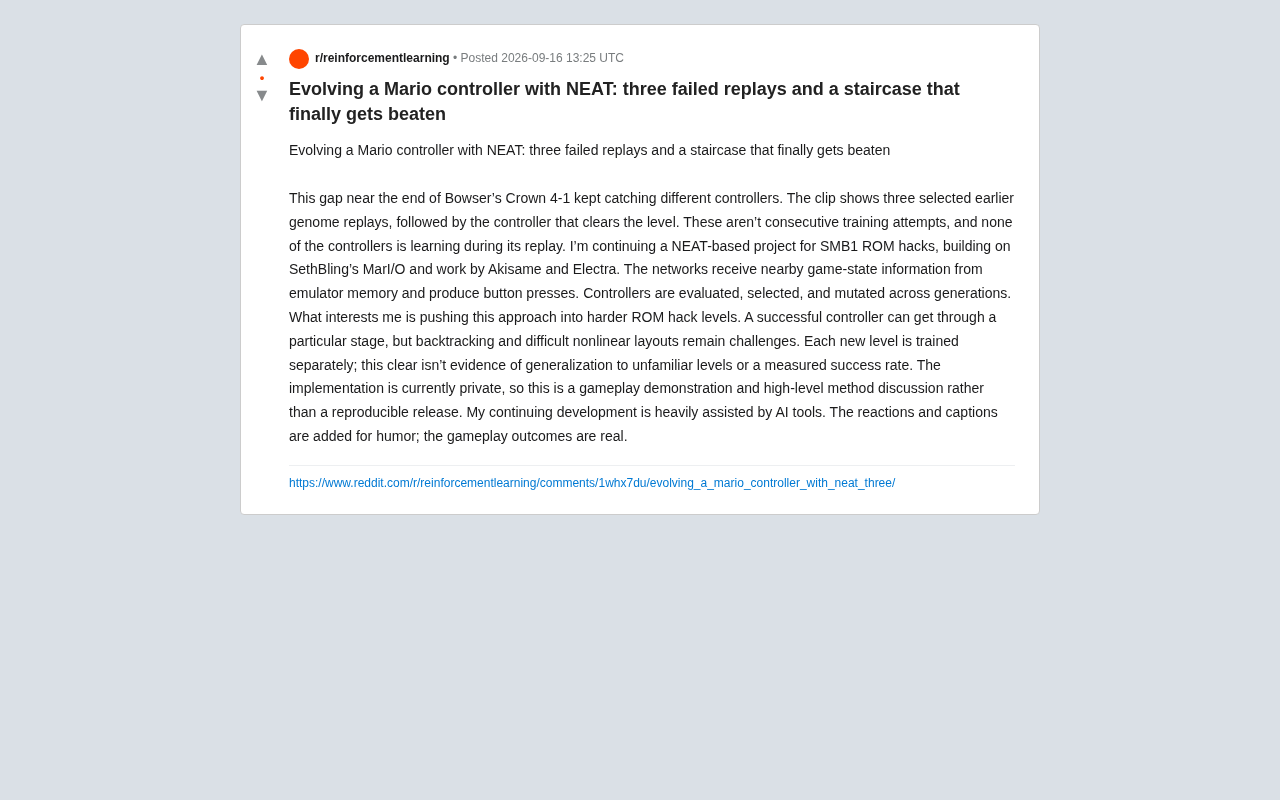
Training a Mario AI with NEAT Neuroevolution: An Evolutionary Experiment from Three Failures to Completion
A developer used NEAT neuroevolution to train a Mario AI controller that cleared a tricky ROM Hack level. Learn how NEAT works, its real challenges, and its limits.
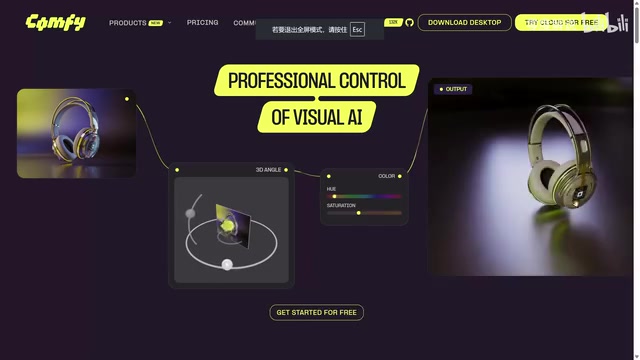
MiniMax Open-Source Video Model Local Deployment: Runs on 8GB VRAM with Impressive Speed
MiniMax's open-source AI video model runs locally on 8GB VRAM via ComfyUI. Full deployment guide: model paths, 5 workflow options, text-to-video & image-to-video results.