AI Agent Permission Management: Is Writing Roles Manually the New Hidden Tax?
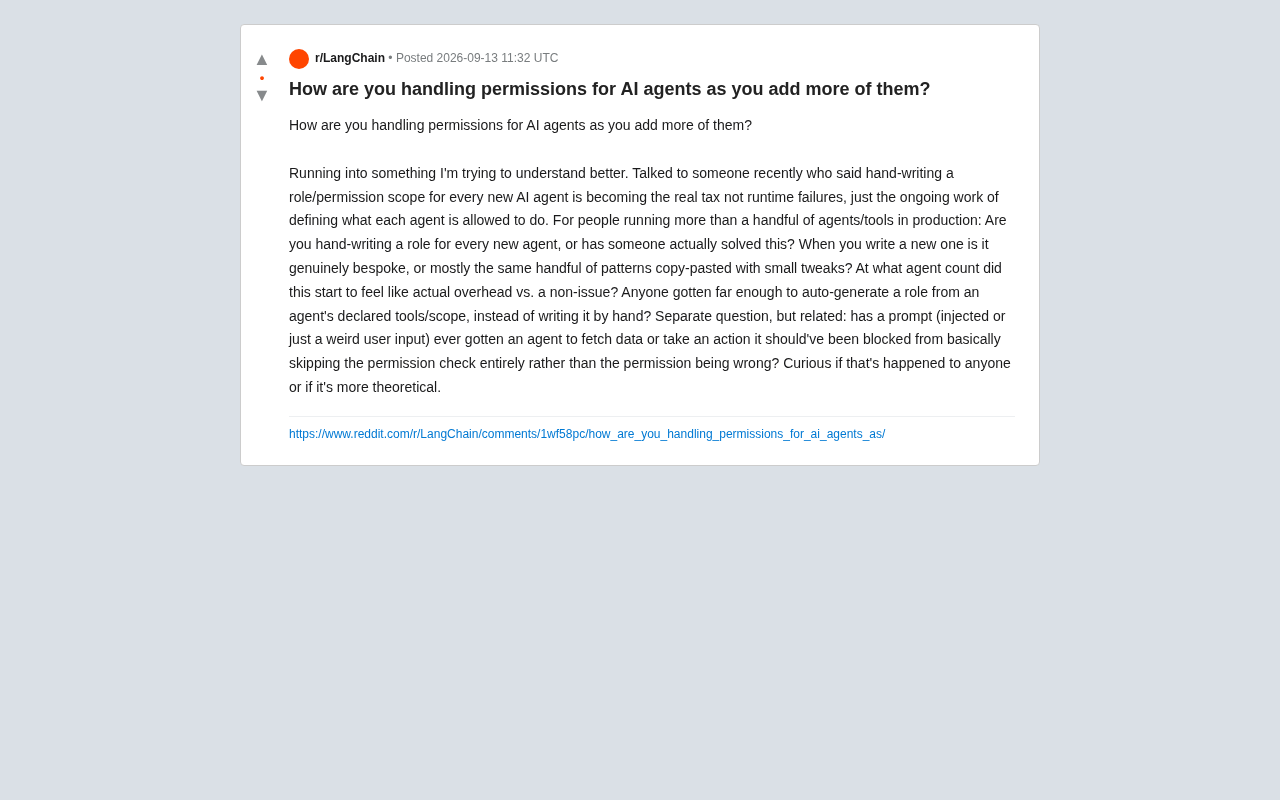
Scaling AI Agents surfaces two pain points: manual permission overhead and prompt injection bypassing access controls.
As AI Agents multiply in production environments, permission management is evolving from a trivial task into significant operational overhead. Two core tensions emerge: most Agents' permission needs fall into reusable patterns, making manual per-Agent configuration redundant busy-work — auto-deriving permissions from declared tools and scopes is a more mature path. More critically, LLM-driven Agents face an architectural risk where prompt injection can bypass permission checks entirely, rendering correct configuration useless. Teams are advised to build standardized permission pattern libraries early and enforce mandatory checks at the tool-call layer, independent of the model.
As AI Agent Numbers Grow, Permission Management Becomes an Invisible Cost
As enterprises deploy more and more AI Agents in production environments, a previously overlooked problem is coming to the surface: manually defining roles and permission scopes for each new Agent is becoming a persistent "hidden tax" that quietly drains resources.
This topic originated from a discussion on Reddit. A practitioner raised an observation that resonated with many engineering teams — the real burden isn't runtime failures, but the constant, manual work of defining "what each Agent is allowed to do." When you only have one or two Agents in your system, writing permission configurations is a trivial afterthought. But once the number of Agents crosses a certain threshold, this task transforms from a non-issue into genuine operational overhead.
Writing Permissions by Hand: Is It Really Unique Every Time?
A central question in the discussion was: when you write permission roles for a new Agent, is it truly customized each time — or are most cases just copy-pasting the same few patterns with minor tweaks?
This question cuts to the heart of the fundamental tension in permission management. In theory, each Agent should have a precisely scoped minimal permission set tailored to its specific function. In practice, however, most Agents' permission requirements tend to fall into a handful of reusable patterns — read-only data access, specific API calls, limited write operations, and so on. If the latter is the reality, then writing by hand means enormous redundant effort, which is exactly where automation has the easiest entry point.
The original poster went further to ask: has anyone actually reached the point of automatically generating roles based on an Agent's declared tools and scopes, rather than writing them manually one by one? This points toward a more mature approach to permission governance — shifting from human-defined permissions to automatically derived permissions driven by Agent capability declarations.
Where Is the Breaking Point?
Another practically insightful question raised in the discussion was: at what number of Agents does permission management start to genuinely feel like a burden?
This "breaking point" varies by team, but it serves as a reminder that permission architecture shouldn't be an afterthought that only gets addressed once pain appears. When a team is still in the single-digit Agent phase, building a scalable permission abstraction layer may seem like over-engineering — but once you scale up, the cost of lacking a unified pattern grows nonlinearly.
The Overlooked Security Risk: Bypassing Permission Checks
The second question raised in the discussion carries stronger security implications and deserves heightened vigilance: has anyone experienced a case where a prompt — whether injected or an unusual user input — caused an Agent to access data it shouldn't have, or execute an action it wasn't supposed to?
The critical distinction here is this: the problem isn't that permissions were configured incorrectly — it's that permission checks were bypassed entirely. The former is a configuration problem, solvable through more rigorous role definitions. The latter is an architectural vulnerability, meaning that even if your permissions are written correctly, malicious or anomalous inputs can still cause an Agent to circumvent that safeguard.
For Agent systems running in production, this "bypass" risk is particularly tricky. Traditional permission systems assume that the executing entity behaves deterministically. LLM-driven Agents, however, make dynamic decisions based on natural language input, and attack techniques like prompt injection can induce Agents to act outside the bounds of their authorization. The original poster admitted uncertainty about whether this had actually happened in practice or remained largely theoretical — which itself reveals a lack of accumulated real-world experience in this area.
Implications for Engineering Teams
While this discussion didn't arrive at definitive answers, it precisely outlined two real pain points in scaling AI Agent deployments.
First, the scalability of permission definition. As Agents grow from a handful to dozens or hundreds, the model of maintaining permissions manually will inevitably break down. Teams need to think ahead: can a standardized permission pattern library be established? Can permissions be automatically derived from an Agent's tool declarations? This isn't just an efficiency question — it's also key to reducing the probability of misconfiguration.
Second, the reliability of permission enforcement. In LLM-driven systems, permissions can't just be "configured correctly" — they must also be guaranteed to be "impossible to bypass." This requires enforcing mandatory permission checks at the tool-call layer of the Agent, rather than relying on the model itself to "follow the rules." Defending against privilege escalation caused by prompt injection should be a first-class citizen in Agent security design.
For teams building multi-Agent systems, the earlier these two concerns are factored into architectural decisions, the smaller the eventual cost will be.
Related articles
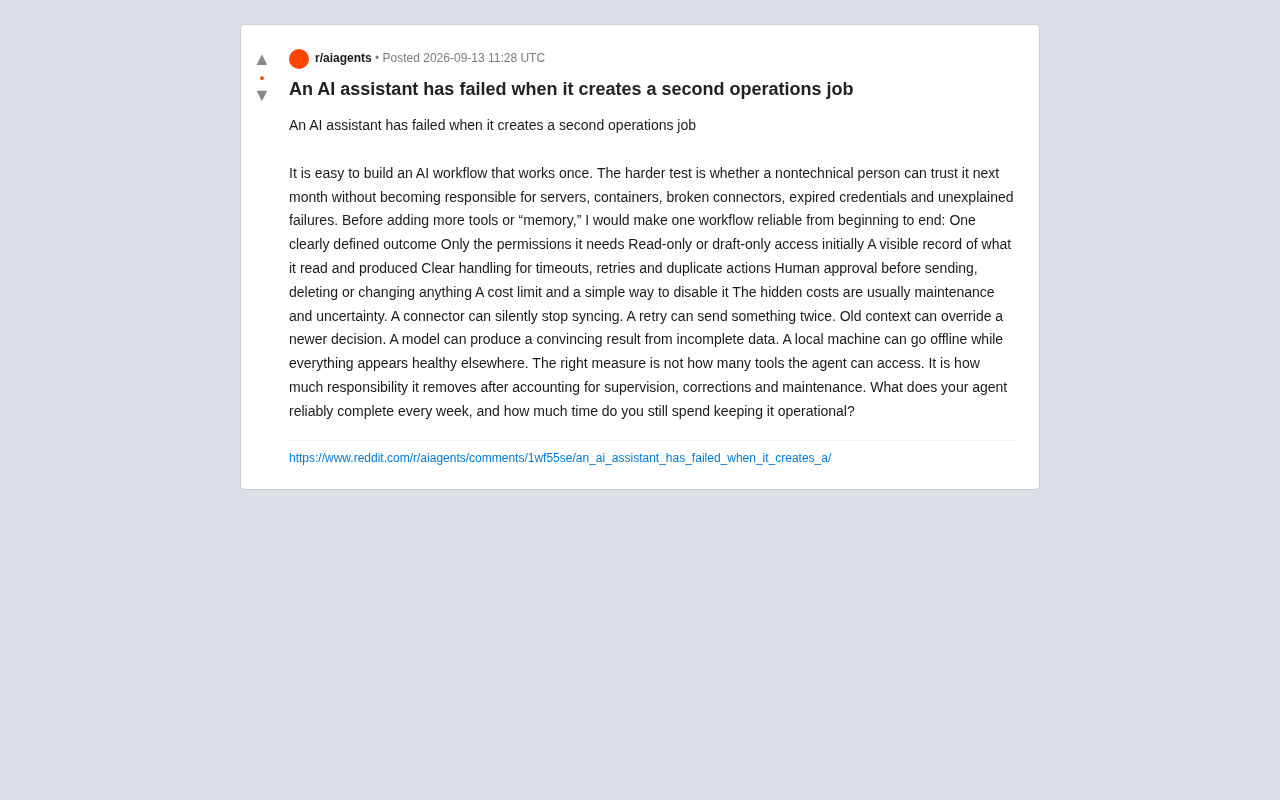
The True Failure of an AI Assistant: When It Creates a Second Operations Job
A Reddit user reframes how to judge AI assistants: they fail when they create a second ops job. Learn how to build end-to-end reliable workflows and measure Agent value by net benefit, not tool count.
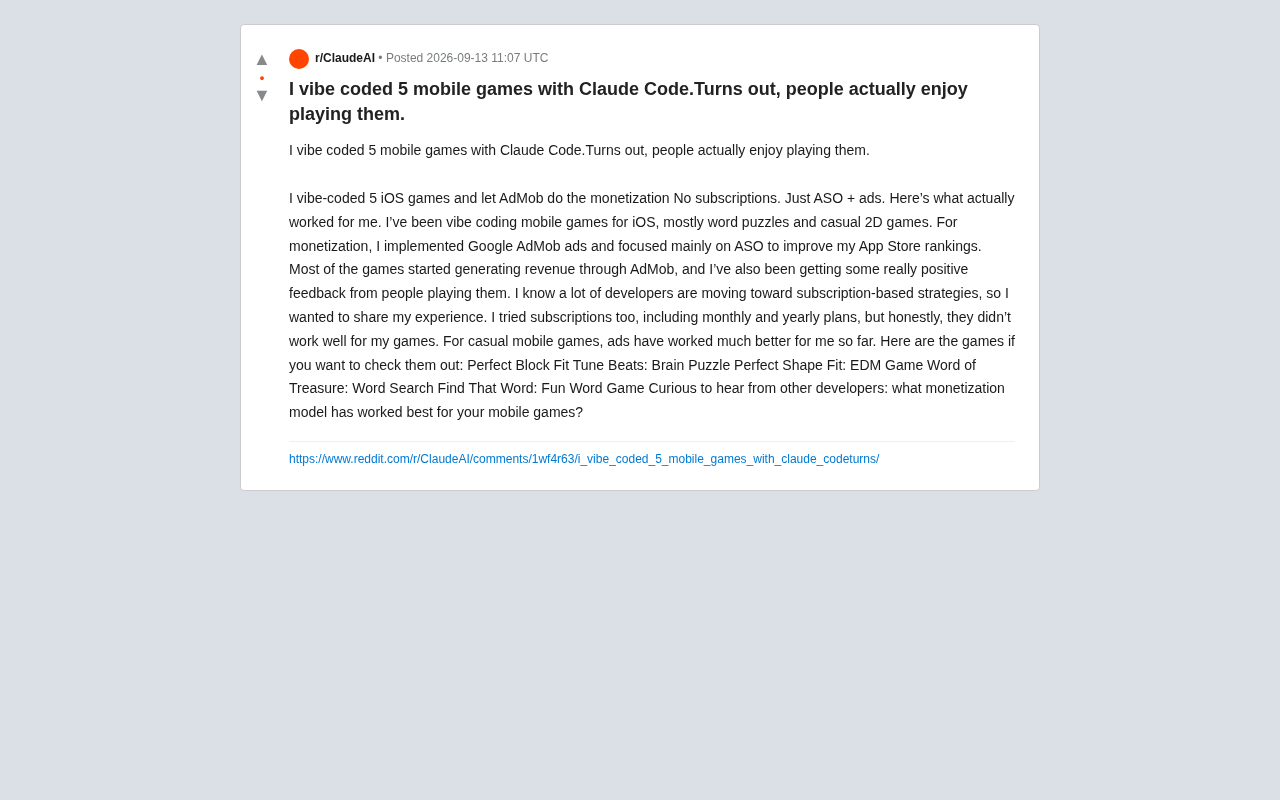
Vibe Coding 5 Mobile Games with Claude Code: Ad Monetization Beats Subscriptions
An indie dev built 5 iOS casual games with Claude Code vibe coding. His verdict: AdMob ads plus ASO optimization outperform subscriptions for casual games.

Your Car Is Selling Your Data: A Deep Dive into the Connected Vehicle Privacy Crisis
Modern connected cars continuously collect location, driving habits, and personal data, selling it to insurers and advertisers via data brokers. We break down how it works and what can be done.