The True Failure of an AI Assistant: When It Creates a Second Operations Job
An AI assistant fails when it creates more maintenance work than it saves.
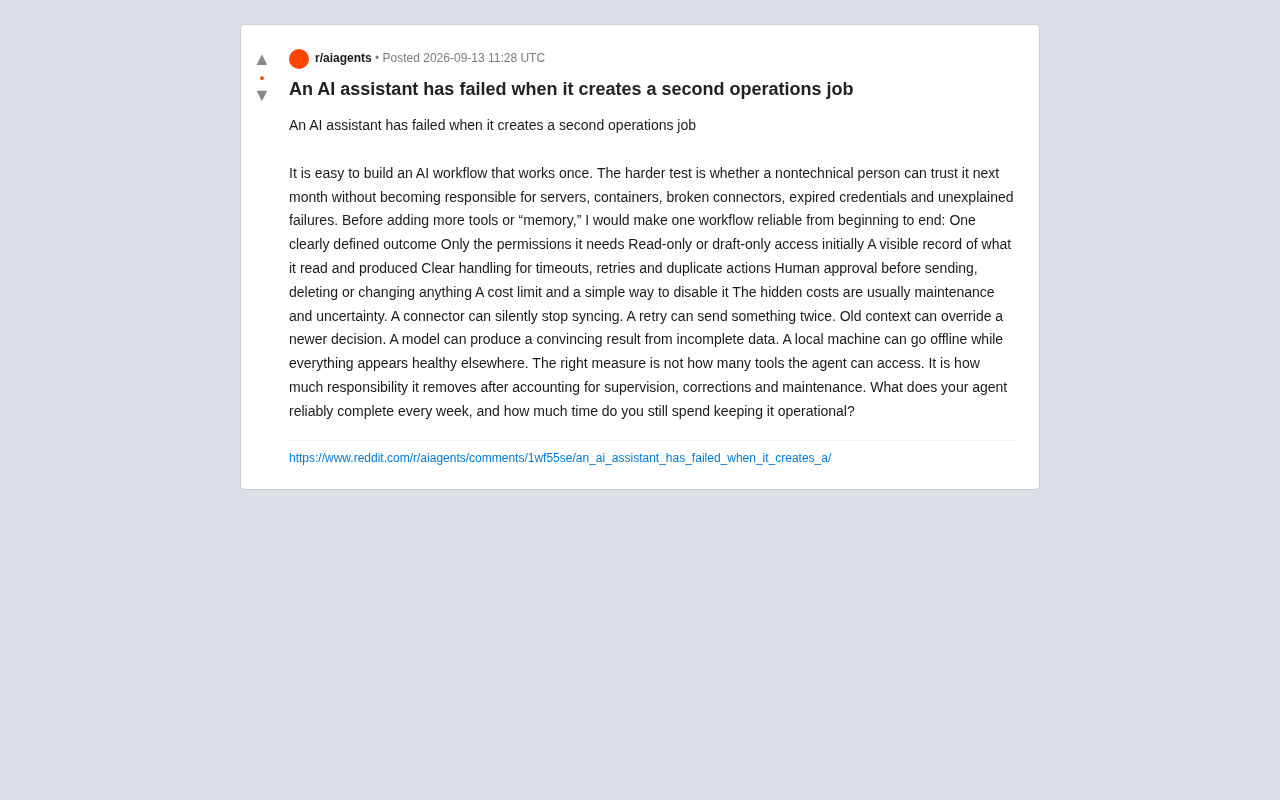
A Reddit user's sharp observation reframes AI Agent success: when an assistant creates a second operations job for you, it has already failed. The post argues that before stacking tools and memory capabilities, teams should make a single workflow end-to-end reliable using principles like minimum permissions, read-only access, human approval gates, and cost caps. Hidden failure modes — silent connector outages, duplicate retries, stale context overwriting new decisions — quietly drive up maintenance costs. The right measure of Agent value isn't tool count, but net responsibility removed after subtracting supervision and upkeep.
A Overlooked Benchmark
When judging whether an AI assistant is successful, people tend to measure it by how many tools it can connect to or how strong its memory capabilities are. But one Reddit user offered a strikingly different perspective: an AI assistant has already failed when it creates a second operations job for you.
This observation cuts straight to a blind spot in the current AI Agent hype. Building an AI workflow that runs successfully once isn't the hard part. The real challenge is whether a non-technical person can still trust it a month later — without inheriting responsibility for servers, containers, broken connectors, expired credentials, and mysterious failures.
In other words, if you built an AI assistant to save time, but now spend significant time babysitting it, fixing it, and validating its output — that assistant hasn't reduced your burden. It's added a new layer of operational overhead.
Make One Workflow End-to-End Reliable First
The original poster's advice is refreshingly pragmatic: before rushing to add more tools or so-called "memory," focus on making one workflow genuinely reliable from start to finish. They laid out a practical checklist worth borrowing:
- A clearly defined output goal
- Grant only the minimum permissions it needs
- Start with read-only or draft-only access
- Keep a visible log of what it reads and what it produces
- Have explicit handling for timeouts, retries, and duplicate operations
- Require human approval before anything is sent, deleted, or modified
- Set a cost cap and provide a simple kill switch
The core logic here is constraints before capabilities. Rather than giving an Agent broad autonomous permissions, first validate its reliability within a controlled scope. Read-only, draft mode, human approval, cost caps — each of these is a safety net for unpredictable failures.
Hidden Costs: Maintenance and Uncertainty
What truly causes an AI assistant to "create a second job" is often a set of hidden costs that are easy to overlook. The original post called out several classic failure modes that anyone deploying an Agent should keep in mind:
- Connectors can silently stop syncing without you ever knowing;
- A single retry can send the same content twice, causing duplicate actions;
- Stale context can overwrite newer decisions, causing behavioral regression;
- The model can produce a plausible-looking result based on incomplete data;
- Your local machine may have gone offline, yet everything else appears healthy.
What these failures share is that they don't surface as obvious errors — they lurk beneath the appearance of a system that seems to be running fine. That's precisely why maintenance costs run so high. You're not just fixing known issues; you're continuously investing effort to confirm the system is actually doing the right thing.
The Right Metric for Agent Value
From this analysis, the author proposes a more fundamental evaluation standard:
The right measure isn't how many tools an Agent can access — it's how much responsibility it actually removes from you, after accounting for the cost of supervision, correction, and maintenance.
This is a shift from capability-oriented thinking to net-benefit-oriented thinking. An Agent that connects to dozens of tools but demands constant attention may deliver far less net value than one that does a single thing reliably and can be left completely alone.
For teams and individuals evaluating or deploying AI workflows, this framework surfaces two questions worth asking right now:
- What tasks can your Agent reliably complete every week?
- How much time are you still spending just to keep it running?
If the answer to the second question stays stubbornly high, then no matter how "intelligent" the Agent appears, it hasn't yet created real value for you.
Implications for AI Agent Practice
At a moment when Agent tools and frameworks are multiplying rapidly, this discussion is a reminder to return to first principles. The promise of "automation" is to remove repetitive labor from human hands. But if the automation itself becomes a new job that requires constant attention, that promise has been broken.
Reliability, observability, controllability — these engineering properties may not be glamorous, but they are precisely what determines whether an AI assistant can be trusted over the long term. Before adding flashier capabilities to your Agent, making sure it won't become your second operations job might be the most valuable first step of all.
Related articles
AI Agent Permission Management: Is Writing Roles Manually the New Hidden Tax?
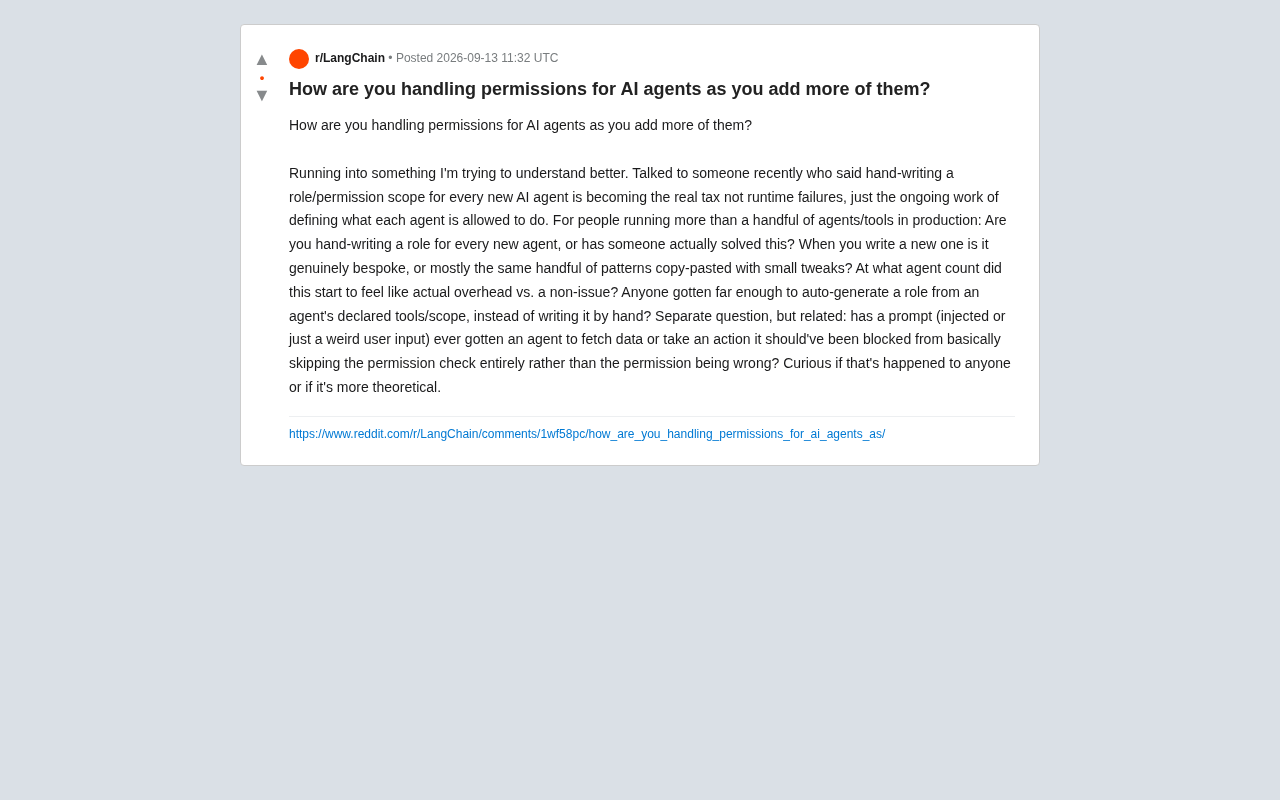
As AI Agent counts grow, manually defining permission roles is becoming a hidden operational burden. This article explores scalability challenges, auto-generated roles, and the security risk of prompt injection bypassing permission checks.
Vibe Coding 5 Mobile Games with Claude Code: Ad Monetization Beats Subscriptions
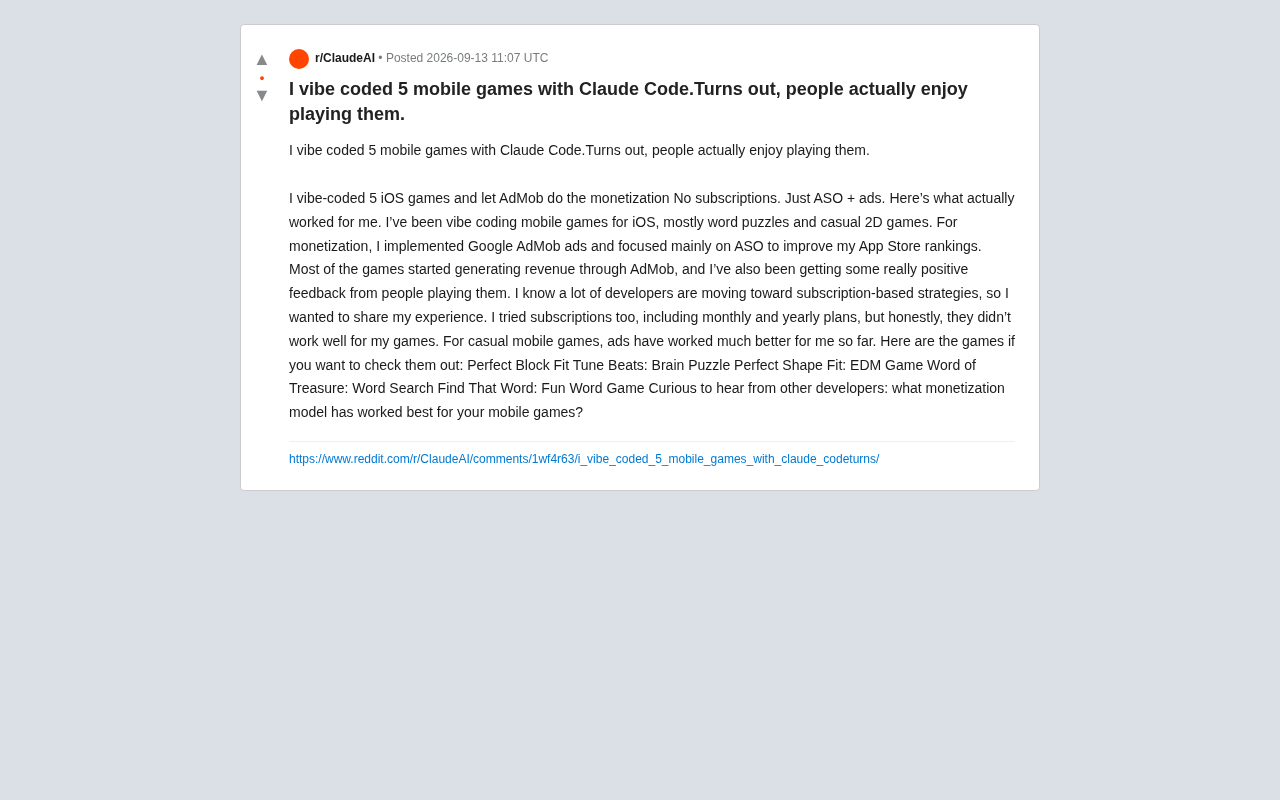
An indie dev built 5 iOS casual games with Claude Code vibe coding. His verdict: AdMob ads plus ASO optimization outperform subscriptions for casual games.

Your Car Is Selling Your Data: A Deep Dive into the Connected Vehicle Privacy Crisis
Modern connected cars continuously collect location, driving habits, and personal data, selling it to insurers and advertisers via data brokers. We break down how it works and what can be done.