AI Agent Session Chain Design: Keeping Sub-Task Permissions From Ever Exceeding Their Bounds

Agent child sessions should re-derive permissions at each hop and be bound to the root session's lifecycle to prevent escalation.
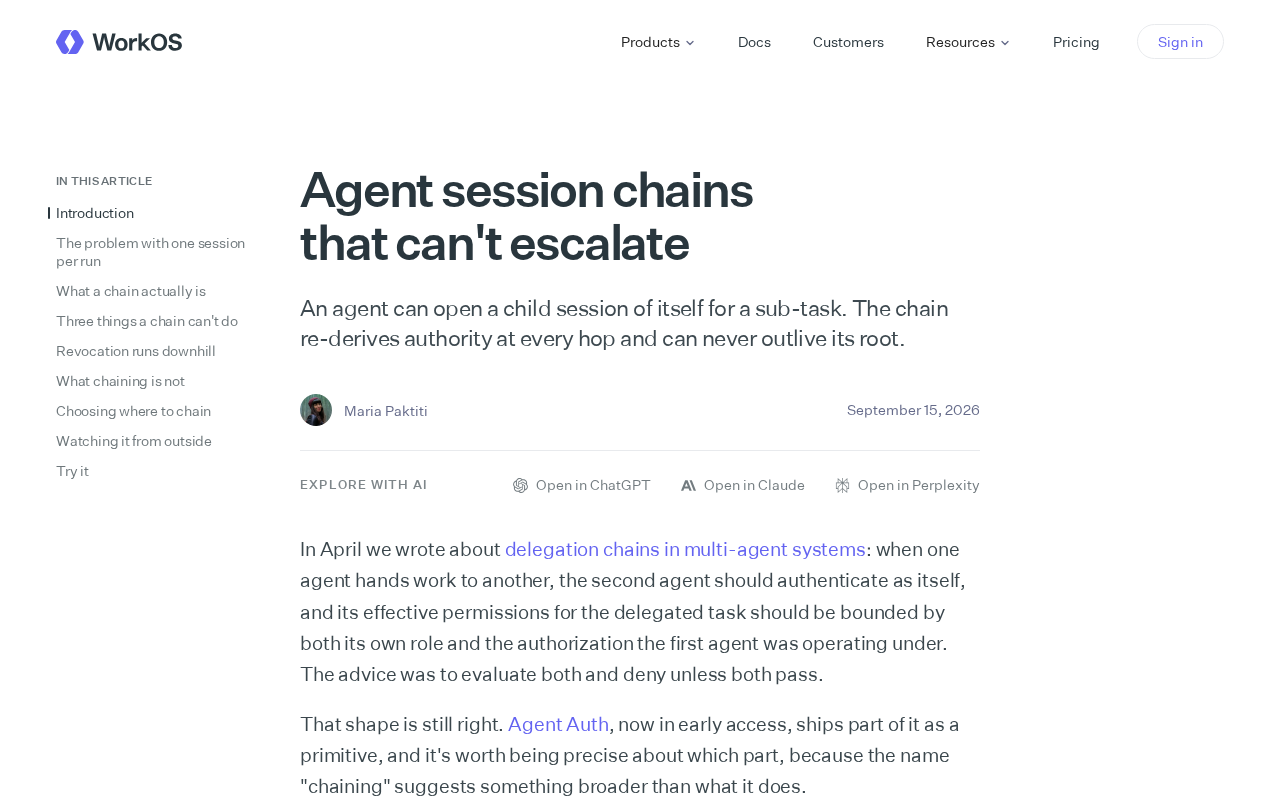
This article examines the security risks in multi-tier AI Agent collaboration and outlines a clean, strict session chain design: when spawning child sessions for sub-tasks, permissions must be re-derived at every hop rather than passed through, ensuring child sessions can never exceed parent permissions. The entire chain's lifecycle is bound to the root session, so child sessions cannot survive after the root is terminated. Together, these principles shift Agent security from after-the-fact monitoring to upfront architectural constraints.
The Core Problem: Security Risks in Agent Self-Derivation
When an AI Agent can open child sessions for sub-tasks, a critical security question emerges — can these derived session chains end up with more permissions than their parent? Can they outlive the parent session and keep executing operations after it ends?
A refined design principle addresses this directly: an Agent can open child sessions for sub-tasks, but the entire session chain re-derives authority at every hop and can never outlive its root session. These two constraints may sound simple, but they cut right to the heart of the trickiest security governance challenges in today's autonomous Agent systems.
Why Session Chains Must Be "Non-Escalating"
In multi-tier Agent collaboration, a primary Agent may break complex tasks into sub-tasks and spawn a child session to handle each one. Without strict permission constraints, two classic risks emerge.
The first is privilege escalation. Imagine a primary Agent that only has read access, yet inadvertently — or through manipulation — grants write access when spawning a child session. An attacker who crafts a malicious sub-task prompt could cause that child session to gain capabilities far beyond what was intended. This is especially dangerous as prompt injection attacks become increasingly common.
The second is authority persistence. If a child session can survive independently of its parent, then even after the root session has been terminated or revoked, leftover child sessions may continue accessing sensitive resources — creating hard-to-track "zombie permissions."
The solution presented here directly blocks both paths: re-deriving authority at every hop means a child session's permissions can only be a subset or equal set of the parent's — they can never be conjured from thin air. And the constraint that a chain can never outlive its root ensures that permission lifecycles are fully closed.
What "Re-Deriving Authority at Every Hop" Actually Means
"Re-deriving authority at every hop" is the core mechanism of this design. It doesn't simply pass the parent session's token down to the child. Instead, at each derivation step, the child session's permission boundary is recalculated based on the current context.
The value of this approach is that it turns permission constraints into a structural guarantee rather than a temporary safeguard that depends on runtime checks. No matter how deep the session chain goes, each layer's permissions are explicitly bounded by the layer above, mathematically ruling out any possibility of escalation. This is analogous to the capability model in operating systems, or the Principle of Least Privilege applied concretely to Agent architecture.
For developers building production-grade Agent systems, this means you can confidently let Agents recursively spawn sub-tasks without worrying that some deep child session will suddenly acquire dangerous capabilities. Security is underwritten by the architecture itself — not by layers of manual auditing.
The Capability Model is a classic concept in OS security. Unlike traditional access control lists (ACLs), it treats "permissions" as explicitly transferable but unforgeable tokens. Only a process that holds a capability token can perform the corresponding operation, and capabilities can only be passed from parent to child — a parent cannot grant a child capabilities it doesn't possess itself. This mathematically guarantees that permissions are monotonically non-increasing. The Principle of Least Privilege (PoLP) requires that any entity hold only the minimum set of permissions necessary to complete its current task at any given moment; excess permissions should be actively stripped rather than retained "just in case."
Applied together to an Agent session chain, every child session derivation becomes a permission reduction, not a copy: the child declares what it needs, the parent approves within its own permission scope, and any request exceeding the parent's authority is structurally blocked — no runtime manual review required.
Lifecycle Binding: The Root Session as the Boundary
The constraint that a chain "can never outlive its root session" addresses the temporal dimension of permissions.
In traditional async task systems, child processes or sub-tasks can often exist independently of their parent — something that creates serious traceability and revocability problems in Agent scenarios. Binding the entire session chain's lifecycle to the root session means that once the root is closed or revoked, all derived child sessions become invalid simultaneously.
This delivers two direct benefits: revocability — ops teams or security policies only need to terminate the root session to cleanly reclaim all permissions across the entire chain, with no need to track down individual child sessions; and auditability — all child sessions belong to the same root, forming a clear permission provenance tree where any anomalous operation can be traced back to a specific root session.
This lifecycle-binding design shares structural similarities with token hierarchies in modern identity and authentication systems. In OAuth 2.0, for example, revoking a refresh token should in theory invalidate all access tokens it issued — though in practice this propagation often relies on additional revocation list mechanisms.
Agent session chains take this logic further: the root session isn't just the "issuer" — it's the very condition for the chain's survival. No additional revocation propagation mechanism is needed because child sessions are architecturally tied to the fate of the root. This matters especially for enterprise deployments: when a service account or API key is revoked, every Agent task chain it initiated should become invalid immediately — not after each child session's token naturally expires.
Implications for Agent System Design
This concise set of principles provides a valuable paradigm for secure autonomous Agent architecture. As Agent capabilities grow stronger and the autonomous spawning of sub-tasks becomes more common, permission governance is shifting from "after-the-fact monitoring" toward "upfront constraints."
Making "non-escalating" and "non-escaping" built-in properties of the session chain lets Agent systems stay controllable while remaining flexible. For teams designing multi-Agent collaboration frameworks or tool-calling systems, these two constraints are worth enshrining as first-principle architectural requirements.
It's worth noting that the original material is quite concise — more of a conceptual skeleton than a complete blueprint. Actually implementing this requires significant engineering work around permission model definitions, token passing mechanisms, session state management, and more. But the direction it points to is already clear enough.
Background: Prompt Injection and Why It Makes This Matter
Prompt injection attacks involve an attacker embedding malicious instructions in external content — such as web pages, documents, or tool return values — to trick an Agent into executing unintended operations. In multi-tier Agent architectures, the damage from such attacks is significantly amplified. A child session deep in the chain may receive malicious prompts disguised as normal tasks from a compromised external data source, then attempt to invoke permissions it was never supposed to have.
In a single-turn conversation, the blast radius of a prompt injection is relatively contained. But in a session chain where permissions can accumulate rather than converge across layers, one successful injection could propagate across multiple hops and ultimately breach the permission boundary at some deep child session.
This is precisely one of the real-world motivations behind the "re-derive authority at every hop" mechanism: even if a middle node is compromised by an injection attack, any child sessions it spawns cannot obtain capabilities beyond that node's own permission scope — limiting the blast radius to a local area.
Related articles
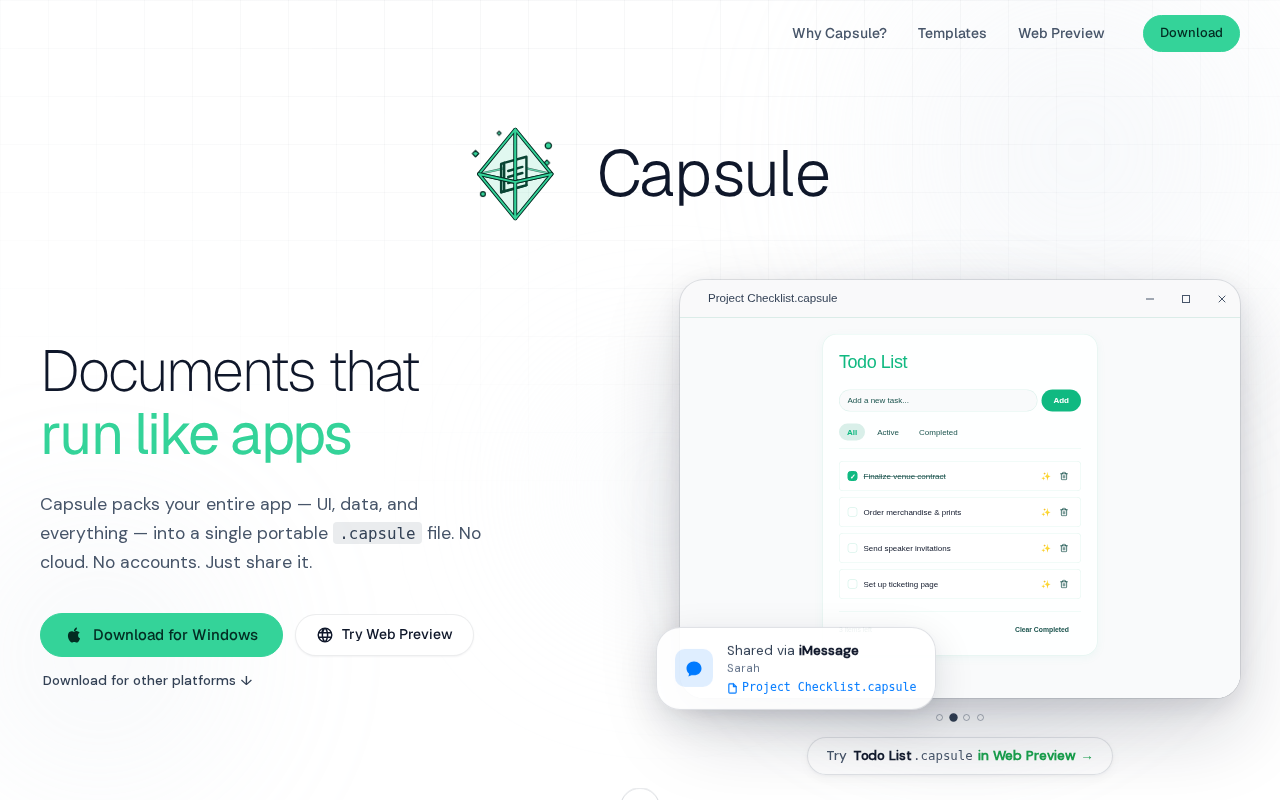
Capsule: Pack Web Apps and Data into a Single SQLite File
Capsule is a Rust/Tauri 2.0 tool that packs HTML web apps and data into a single SQLite file — privacy-first, local storage, portable sharing, with AI support.

DSH-SUBAGENT-UI Plugin: The Ultimate Sub-Agent Manager for DeepSeek Harness
DSH-SUBAGENT-UI is a DeepSeek Harness browser plugin offering sub-agent overview, search, local categorization, and completion snapshots — install with one command.
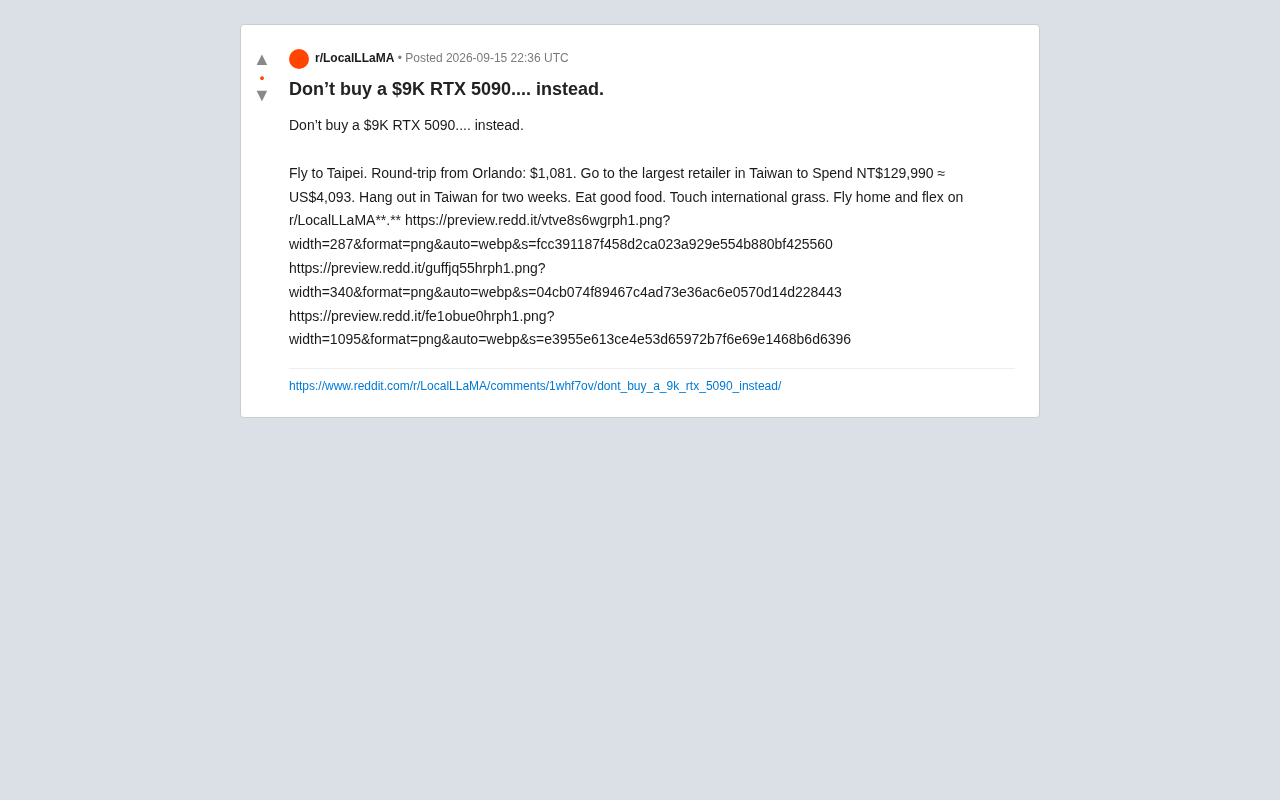
RTX 5090 Scalped for $9,000 in the US? Flying to Taipei to Buy One Might Actually Be Cheaper
RTX 5090 scalped for $9,000 in the US — a Reddit user did the math and found flying to Taipei to buy one is actually cheaper. A look at the real supply-demand crisis behind the joke.