AI Agents as Startup Team Members: A Preview of TechCrunch Disrupt 2026
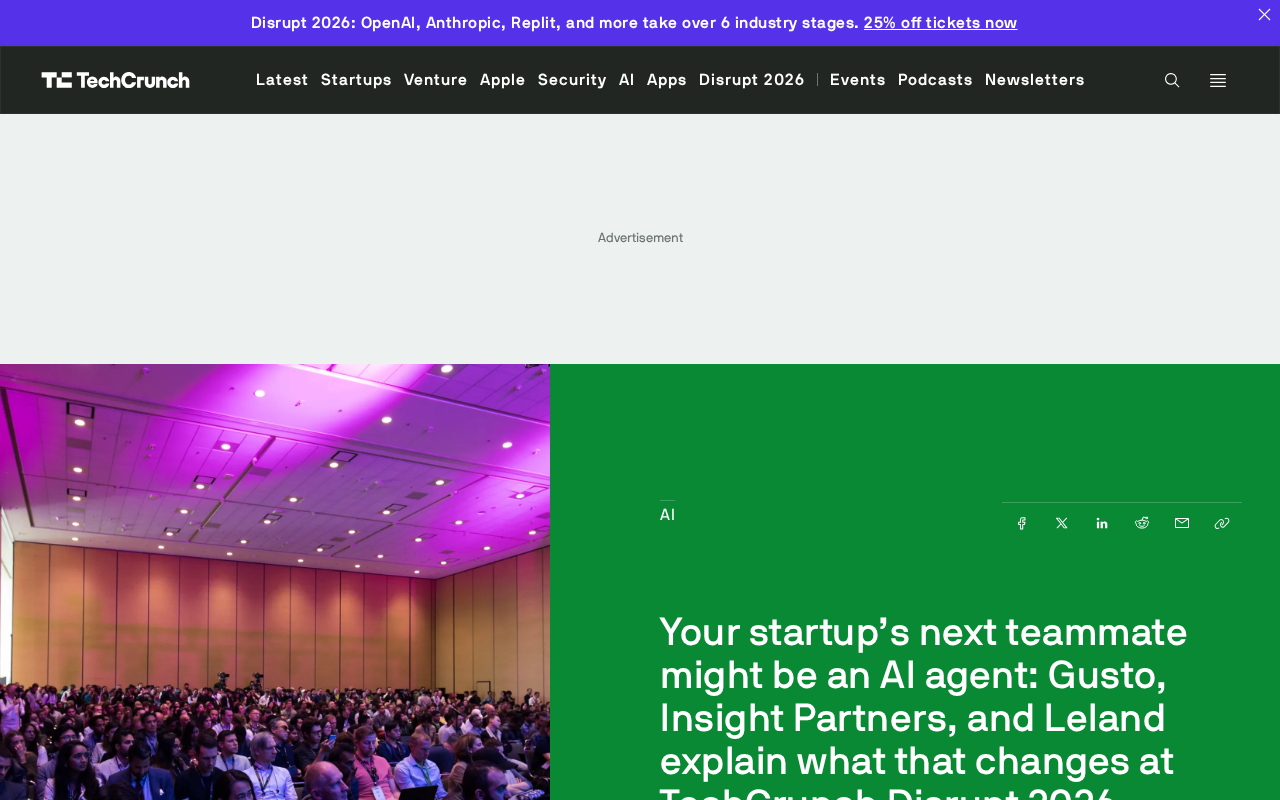
TechCrunch Disrupt 2026 tackles the speed, accountability, and culture challenges of integrating AI Agents into early-stage startup teams.
A growing number of early-stage startups are treating AI Agents as genuine team members rather than mere tools. TechCrunch Disrupt 2026 will bring together Gusto, Insight Partners, and Leland to discuss how to build human-AI teams without sacrificing speed, accountability, or company culture. While Agents enable small teams to punch above their weight, they also introduce new management challenges — from preventing unchecked errors to clarifying ownership of Agent outputs and preserving culture as non-human members multiply. The cross-industry makeup of the panel signals that human-AI collaboration has shifted from a technical question into an organizational one.
When AI Agents Join the Startup Team
The composition of startup teams is undergoing a subtle but profound shift. In the past, scaling up meant hiring, sending out offers, and building culture through human onboarding. Today, a growing number of early-stage companies are treating AI Agents as genuine team members — putting humans and intelligent agents to work side by side. TechCrunch Disrupt 2026 will explore this trend in a dedicated panel featuring representatives from Gusto, Insight Partners, and Leland, dissecting exactly what this new model of collaboration changes.
The core question driving the discussion is straightforward: how can early-stage companies build human-AI teams without sacrificing speed, accountability, or company culture? These three elements are precisely what startups are most vulnerable about — and most dependent on.
Why This Topic Deserves Attention
AI Agents are fundamentally different from traditional automation scripts or SaaS tools. They can autonomously execute multi-step tasks, invoke external tools, and make decisions within a defined scope. For resource-constrained startups, this means a single engineer, operations lead, or salesperson could potentially leverage an Agent to handle workloads that previously required an entire small team.
The three panelists bring highly representative perspectives. Gusto, as a payroll and HR platform serving small and medium-sized businesses, is directly tied to the question of how teams are built and managed. Insight Partners, an active growth-stage investment firm, holds extensive real-world data on team efficiency and scaling. Leland approaches the topic from the angle of talent development and career growth. The collision of these three viewpoints helps paint a complete picture of what human-AI collaboration actually looks like in practice.
From a technical standpoint, AI Agents differ fundamentally from the automation tools most enterprises have used until now. Traditional RPA (Robotic Process Automation) or scripting tools execute fixed workflows based on preset rules and break down the moment an exception arises. AI Agents, typically powered by large language models, can understand natural language instructions, call external APIs or databases, autonomously plan steps during task execution, and even reformulate strategies when they hit obstacles. Representative frameworks today include OpenAI's Function Calling, Anthropic's Claude Tool Use, and open-source options like LangChain and AutoGen. For startups, this means Agents don't need to be programmed line by line — founders or operations staff can describe goals in near-natural language, and the Agent handles the breakdown and execution. That's the fundamental reason it's called a "team member" rather than a "tool."
The Triple Test: Speed, Accountability, and Culture
Human-AI collaboration isn't all efficiency gains. When part of the work is handed off to Agents, founders must rethink several critical questions.
The Line Between Speed and Loss of Control
Agents can accelerate delivery — but they can also amplify errors rapidly when left unsupervised. Determining how to maintain necessary human checkpoints while still moving fast is the first design challenge every team must solve.
Making Accountability Tangible
When a decision is made by an Agent and leads to consequences, responsibility becomes murky. Startups need to establish clear rules around "who owns the Agent's output" — otherwise the accountability chain will break at the worst possible moment.
The accountability problem is equally worth watching on the legal and compliance front. Current terms of service from major AI providers explicitly state that responsibility for model outputs lies with the user (i.e., the company), not the model provider. This means that if an Agent makes a mistake in sensitive contexts — payroll calculations, contract drafting, or customer communication — legal liability still falls on the company using the Agent. In practice, some teams address this by implementing "human-in-the-loop" review gates and audit logs: every Agent output is timestamped, the triggering condition is recorded, and the responsible party is documented, allowing rapid root-cause analysis when issues arise. Building this kind of system isn't costly — yet it's consistently one of the things early-stage teams overlook most.
Can Culture Survive?
Company culture typically forms through everyday human interaction. As more non-human "members" appear on the team, founders need to redefine collaboration norms, communication styles, and even the sources of team identity.
What This Means for Founders in Practice
For founders currently building or expanding their teams, this discussion offers not vague futurism, but an actionable thinking framework. The real question isn't whether to bring AI Agents in — it's how to do so while holding the line on speed, accountability, and culture.
It's worth noting that the participants in this conversation aren't pure tech vendors. They span HR platforms, investment firms, and talent development — a signal that human-AI collaboration has already evolved from a technical question into an organizational and management one.
The panel will take place at TechCrunch Disrupt 2026. According to official information, registering before September 25 saves up to $200.
Summary
AI Agents are evolving from assistive tools into genuine team members, posing entirely new challenges to the organizational structure of early-stage startups. How well companies balance speed, accountability, and culture will determine whether human-AI collaboration becomes a force multiplier — or a breeding ground for hidden risk. This panel bringing together Gusto, Insight Partners, and Leland is well worth the attention of any founder focused on team building and practical AI adoption.
Related articles
The Open Source Dilemma: A Non-Autoregressive Architecture Pioneer Overshadowed by Frontier Labs
An indie developer claims a frontier lab repackaged his year-old open-source non-autoregressive RL architecture as a breakthrough. We compare PPO sequence embeddings vs. RLCD parallel sampling and examine open source attribution gaps.
AI Plans an Entire Vineyard: A Real-World Experiment with 100 Grapevines
A Spokane hobbyist let Muse AI plan his entire vineyard — variety, spacing, irrigation, even the logo. He planted 100 Cabernet Franc vines and is documenting everything publicly.
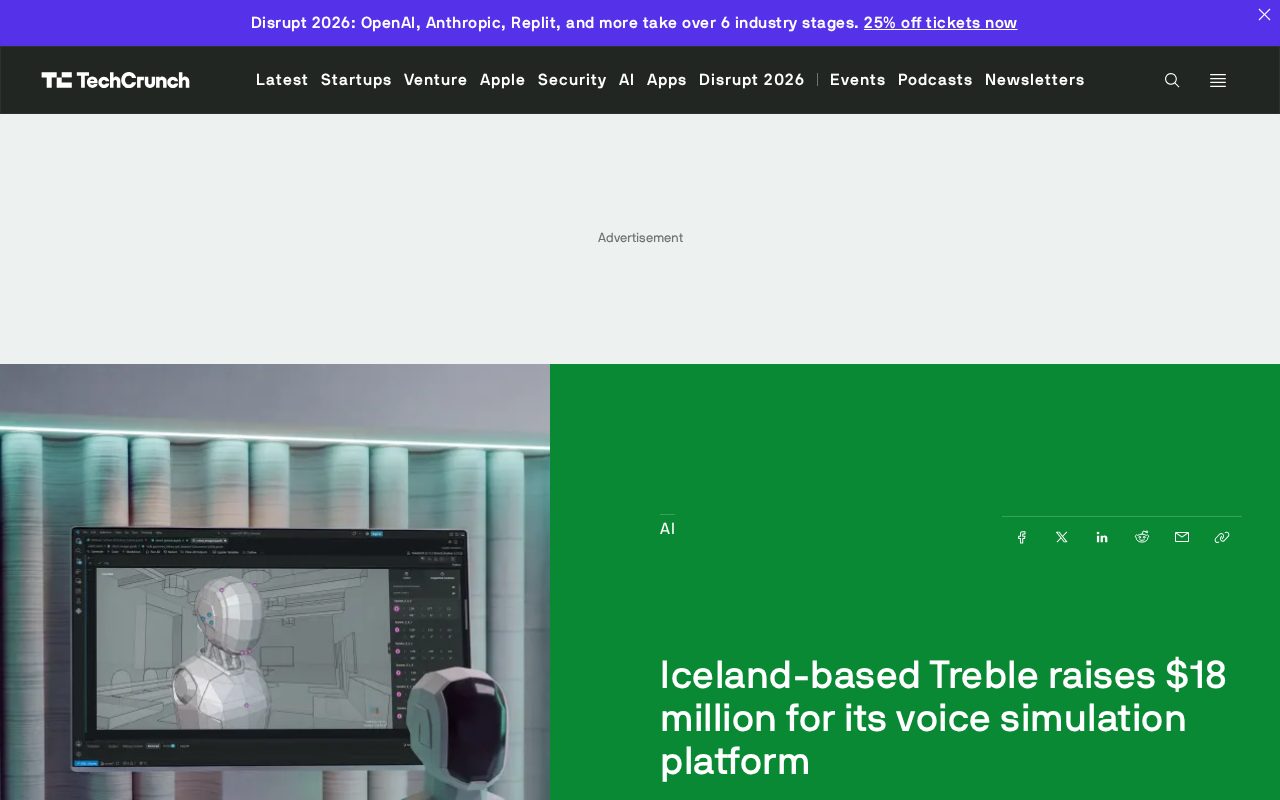
Iceland's Treble Raises $18M to Bet on Voice Simulation Platform
Iceland-based voice simulation company Treble raises $18M. Its platform serves voice AI developers, AI wearables, and robotics firms. A deep dive into the technology and what the funding signals.