AI Agents for Bug Bounty Hunting: How Intelligent Agents Are Disrupting the Classic 3-Step SRC Methodology

AI Agents are reshaping bug bounty hunting, making it accessible to beginners while multiplying expert output.
Traditional SRC bug hunting follows a three-step method — recon, traffic analysis, and report writing — that relies heavily on manual expertise and takes months to learn. AI Agents transform each stage: automating structured asset discovery, filtering false positives to surface real risks, and drafting reports. Critically, the tools that matter aren't chat AIs but true agents like Codex and Claude Code that can invoke tools, run commands, and execute multi-step tasks autonomously. One practitioner submitted over 14,000 vulnerabilities in a year using this approach, versus the typical few dozen achieved manually.
The era of purely manual vulnerability hunting is being reshaped. More and more high-output bug bounty hunters have already made AI their secret weapon. This article draws on hands-on SRC teaching content to break down the pain points of traditional vulnerability hunting, and explores how AI Agents are fundamentally changing the barrier to entry and overall efficiency.
The Classic 3-Step Bug Hunting Method: All Manual, Experience-Driven
Traditional vulnerability hunting follows a time-tested "universal three-step method."
Step one: Fully explore the target site — map out the functional structure, underlying tech stack, and data interfaces, covering core business flows like registration, login, payment, and refunds. Step two: Capture and analyze every request made during that exploration, identify parameters that could be risky, tamper with those parameters, and submit them to the target site to verify which vulnerabilities are real. Step three: Confirm the vulnerabilities and write a bug report — which must include four essential elements: the vulnerable URL, reproduction steps, a severity assessment, and remediation recommendations.
The problem is that all three steps are entirely human-driven, and efficiency is tightly coupled to hands-on experience: the more experience you have, the faster you move; the less you have, the slower. The entire process also requires manually operating a large number of security tools — Nmap, Telnet, NC, Burp Suite, and more — and many of the results those tools produce need to be validated by experience. For example, if a server has port 22 or 3306 open, is that a real vulnerability, a false positive, or simply an intentional configuration? All of that requires human judgment.
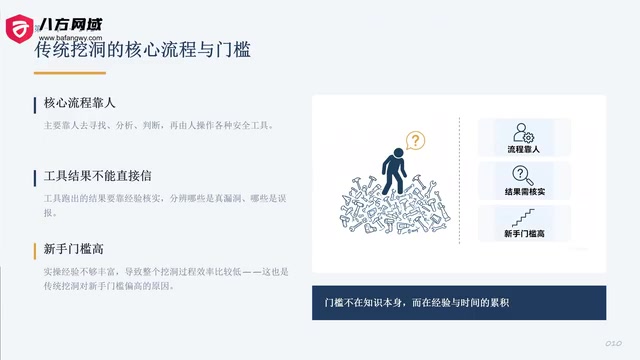
For newcomers, this workflow has a steep learning curve. What really holds people back usually isn't a lack of knowledge — it's the depth of accumulated experience and the sheer time investment required. Many people finish a course but can't get into an actual hunting rhythm, and this is exactly why.
Background: Bug bounty hunting (SRC vulnerability hunting) is a crowdsourced security testing model where companies or platforms invite external security researchers to find and report vulnerabilities. SRC (Security Response Center) refers to the vulnerability submission platforms run by major Chinese internet companies, where researchers can earn points or cash rewards for verified findings. Burp Suite is the most widely used traffic interception and analysis tool in this space — it captures HTTP/HTTPS requests between the browser and server, making it easy to tamper with parameters for testing. Nmap is used to scan a target host's open ports and services, helping researchers assess the attack surface. Port 22 corresponds to SSH (remote login), and port 3306 corresponds to MySQL — if either is unexpectedly exposed to the public internet, it often signals a potential unauthorized access risk. But sometimes this is an intentional ops configuration, and distinguishing between the two requires contextual judgment — a textbook example of why experience matters so much.
How the 3-Step Method Changes When AI Enters the Picture
Once AI is brought into the bug hunting workflow, every stage of the three-step method is meaningfully improved.
Step 1: Cleaner, More Structured Target Reconnaissance
Instead of manually browsing through a website page by page, you can let AI do the first pass. Backend web server architecture, frontend structure, authentication methods, database types and access patterns — AI can inventory all of this upfront. It can map out functional modules and routing entry points, annotate the business purpose and parameter patterns for each endpoint, and produce a structured asset inventory: which features map to which APIs, and how to test them. All you need to do is review, rather than starting from scratch.
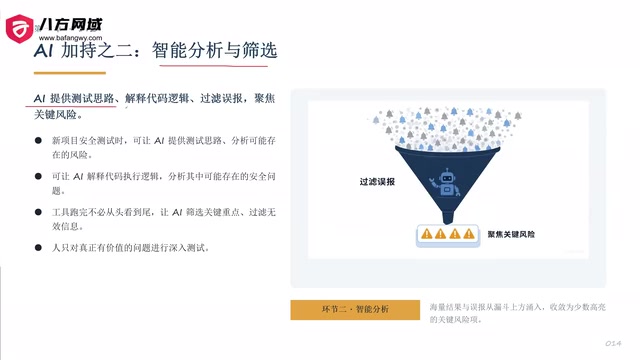
Step 2: Intelligent Analysis and False Positive Filtering
For the traffic capture, parameter tampering, and submission verification stage, AI can suggest testing approaches and even generate code — and when you encounter code you don't understand, you can ask it to explain. More importantly, it helps filter out false positives. Bug hunting tends to generate enormous volumes of results and noise. AI can eliminate most of that noise and focus your attention on genuine risks — classifying findings as critical, high, medium, or low severity, so you only go deep on what actually matters.
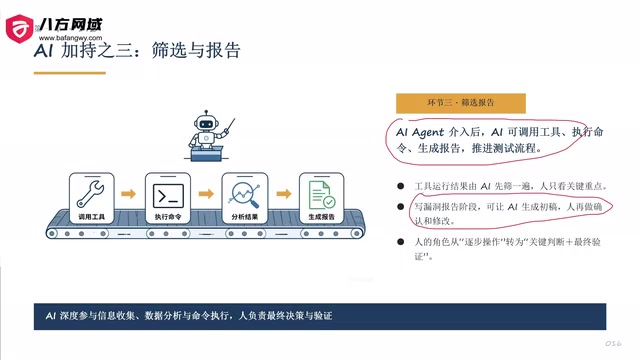
Step 3: Tool Execution and Report Generation
Kali Linux ships with a massive number of security tools, and expecting anyone to master all of them is unrealistic. AI can invoke tools, run commands, and generate reports — making everything from tool usage to result analysis to report writing significantly easier. After AI drafts a report based on the four required elements, human review is still essential: verify the reproduction URL, walk through the reproduction steps, confirm the severity level. This step cannot be skipped. If you hand the entire submission process over to AI, you risk getting flagged or blacklisted by the platform.
The Critical Distinction: "Chat AI" vs. "AI Agent"
This is the single most important point in this entire article. What actually works for bug hunting isn't a chat interface where you ask questions and get answers — it's an AI Agent that can execute tools, make sequential decisions, and break down and carry out the steps of a vulnerability hunt autonomously.
The agent-based tools mentioned include Codex, Claude (Code)-style tools, and some earlier open-source Agent frameworks. What they can do goes far beyond Q&A: reading and analyzing project source code, identifying security issues in implementation logic, executing reconnaissance or testing commands, and calling security tools to conduct penetration testing against a target.
In other words, bringing AI into the mix isn't about adding a chatbox — it's about introducing an execution entity that can genuinely participate in the workflow. Only this type of tool can lower the barrier in a field like cybersecurity — which is high-expertise, highly interdisciplinary, and notoriously steep in its learning curve — to a level where ordinary people can actually get started.
Background: The core distinction between an AI Agent and a standard large language model chat interface lies in tool-calling capability and multi-step planning and execution. Ordinary chat AI handles each conversation as an isolated one-shot exchange — it can't proactively invoke external programs or sustain progress on a task across turns. An Agent architecture, by contrast, allows the model to autonomously decompose a task into sub-steps within a single session, invoke terminal commands, read and write files, call APIs, and decide on the next action based on the output of the previous one — a loop of Reasoning + Acting (the ReAct pattern). Codex is OpenAI's code-execution Agent that can run code inside a sandbox and return results; Claude Code is Anthropic's terminal-integrated Agent for developers, capable of directly operating local files and the command line. In security testing scenarios, this closed-loop "perceive → decide → act" capability is what makes AI a genuine participant in the penetration testing workflow rather than just an advisor.
The Core Value of AI-Assisted Bug Hunting: Lower Barriers, Higher Throughput
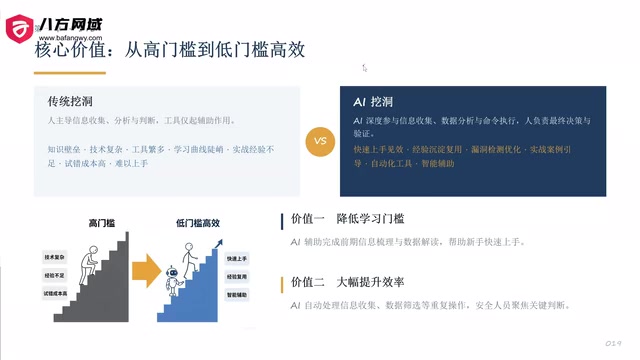
Traditional bug hunting is human-led, with tools playing a supporting role. Breaking through the knowledge barrier typically requires three to six months of study, and the high cost of trial and error from limited hands-on experience makes it genuinely hard to get started.
Once AI Agents are brought in, information gathering, data analysis, and command execution can all involve deep participation from the agent. The human's role narrows to just two responsibilities: making decisions and verifying results — confirming whether a vulnerability is real, then writing it up and submitting the report.
The efficiency gains are striking. Under the traditional approach, one person might submit a few dozen to a hundred vulnerabilities per year. With AI-assisted hunting, one practitioner submitted over 14,000 vulnerabilities in a single year. That order-of-magnitude difference is the direct result of AI Agent augmentation.
One misconception worth clearing up: AI-assisted bug hunting doesn't mean letting the agent replace the human entirely. The real value is in lowering the barrier and raising efficiency — turning what was once a grueling, experience-heavy, time-intensive process into something that can be executed consistently and sustainably. Human decision-making and final verification remain the irreplaceable last line of defense.
Related articles

How Big Can Stars Really Get? The Physical Limits of the Largest Stars
Red supergiants are the largest stars by volume, with radii up to 2,000 times the Sun, engulfing the inner solar system. But there is no precise upper limit on stellar size—models predict up to 15,000 solar radii. The most massive blue stars are far smaller than red supergiants—biggest and heaviest are two different things.

Apple HomeView Smart Display Full Feature Breakdown: Wall-Mount or Desktop, $299
Apple launches HomeView, a $299 smart display with wall-mount and desktop options, 12MP camera for facial recognition, smart home control, music playback, and recipe step-by-step cooking. Full breakdown of watch faces, apps, privacy, and cooking integration.

Where Did the Promised New Studio Go? Craft Computing Answers After Five Years
Craft Computing's host responds to viewer questions: the new studio promised five years ago was shelved as construction costs soared from $30,000 to $75,000, and was replaced by a 168-square-foot garage conversion.