AI Agents for Small Businesses: Transforming Customer Acquisition, Product Building, and Financial Management
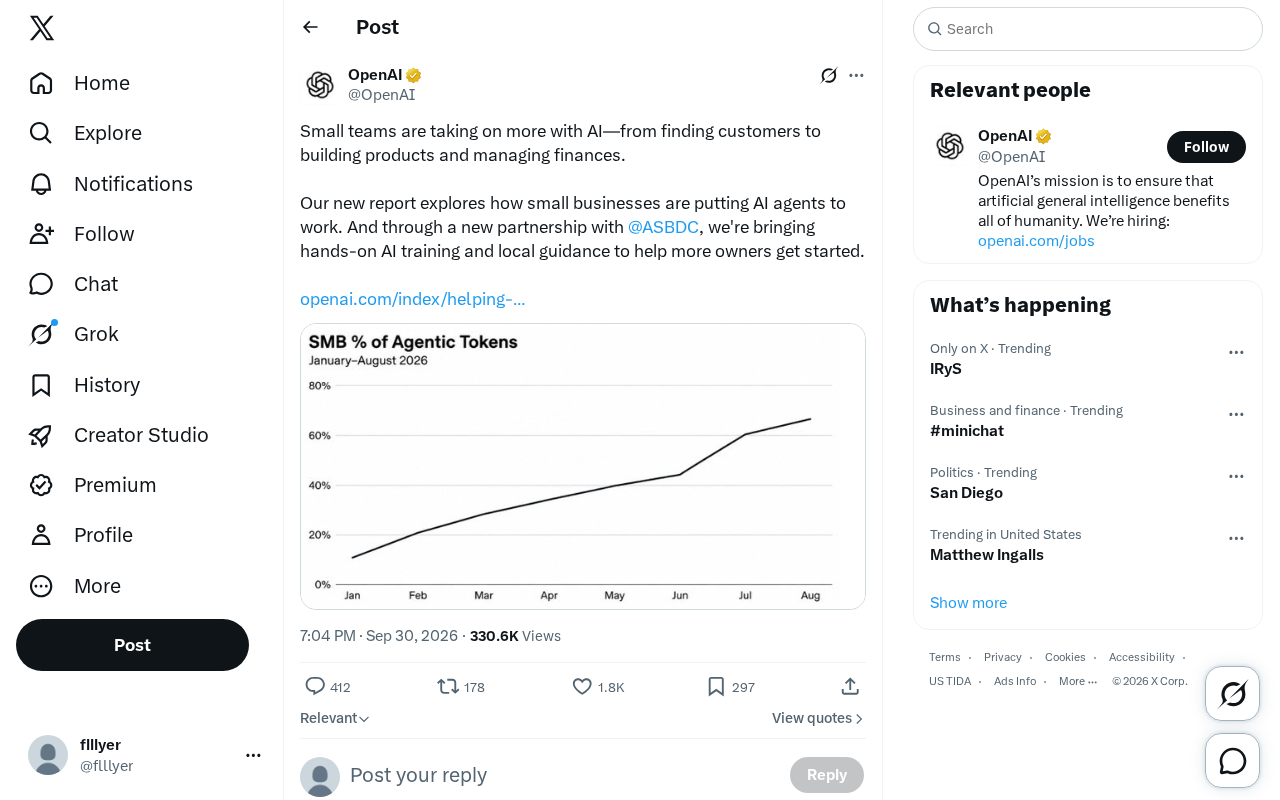
AI agents are helping small businesses handle customer acquisition, product building, and finance with leaner teams.
A growing number of small businesses are turning to AI agents to handle work that once required far more staff. A new report highlights three core use cases: automated customer acquisition and lead outreach, lower-barrier product development, and AI-assisted financial management for non-specialists. A partnership with America's Small Business Development Centers (ASBDC) aims to bridge the gap between knowing AI is useful and actually putting it to work through hands-on training and local guidance. While the potential for small businesses is real, the article cautions against taking promotional optimism at face value — outcomes still depend on tool maturity, data quality, and user willingness to learn.
Small Teams Are Doing More with AI
A tweet from a tech company has highlighted a quietly emerging trend: small businesses and lean teams are using AI to handle work that once required far more headcount — from finding customers and building products to managing finances. This is no longer the exclusive domain of large enterprises. As AI tools become more accessible, resource-constrained small businesses can now unlock operational capabilities that were previously out of reach.
The tweet references a new report focused specifically on how small businesses are putting AI agents to work in practice. Unlike the vague AI marketing talk that's become common, this report zeroes in on concrete use cases and tries to answer a critical question: for lean teams with tight budgets, what can AI actually do?
Three Core Use Cases for AI Agents
Based on the information shared in the tweet, small businesses are deploying AI agents across three key areas — areas that happen to cover the most fundamental and labor-intensive parts of running a business.
Customer Acquisition and Lead Discovery
Finding customers has always been one of the biggest headaches for small businesses. Without a dedicated marketing team or a real sales budget, most small business owners rely on word of mouth and scattered outreach efforts. AI agents make it possible to automate lead filtering, targeted outreach, and initial communications. Small teams can reach a much wider pool of potential customers at lower cost, freeing up limited human effort to focus on leads that are most likely to convert.
Product Building
In product development, AI tools are lowering the technical barrier to entry. Whether it's designing prototypes, generating content, or assisting with coding, AI enables small businesses without dedicated technical teams to move faster from idea to deliverable product. This means entrepreneurs can validate market demand in shorter cycles and reduce the cost of trial and error.
Financial Management
Finance is another area that traditionally demands specialized knowledge and significant time investment. AI agents can help process accounts, generate reports, and monitor cash flow — giving business owners without a financial background a clearer picture of their financial health. For small businesses that frequently stumble on financial management, this capability is particularly valuable.
What is an AI Agent? An AI agent is an AI system capable of autonomously perceiving its environment, making plans, and executing multi-step tasks. The key distinction from ordinary chatbots lies in its autonomy and ability to act. Traditional AI tools (like conversational ChatGPT) require users to provide instructions step by step. An AI agent, by contrast, can receive a high-level goal — such as "find 10 local potential customers and send initial outreach emails" — and then automatically break the task down, call external tools (search engines, CRM systems, email services, etc.), and execute continuously until the goal is achieved. This "set a goal and let it run" characteristic makes AI agents especially attractive to small teams with limited human resources. Leading AI agent frameworks today include AutoGPT and LangChain Agents, and major SaaS platforms are increasingly embedding agent capabilities into workflow tools to lower the barrier for non-technical users.
Beyond the Tools: Hands-On Training and Local Support
Notably, the tweet reveals more than just a research report — it also announces a meaningful partnership. Through a new collaboration with America's Small Business Development Centers (@ASBDC), the initiative will offer hands-on AI training and localized guidance to help more business owners take their first steps with AI.
This effort addresses a core pain point in AI adoption: many small business owners know AI is useful, but don't know where to start. Even the most powerful tool is hard to use in practice without accompanying training and guidance. Partnering with a small business service organization is precisely about bridging the gap between awareness and action — turning AI from an abstract concept into a practical capability within reach of every shop owner and entrepreneur.
About ASBDC: America's Small Business Development Centers (ASBDC) is a nonprofit network co-funded by the U.S. Small Business Administration (SBA), state governments, and universities. With more than 900 service locations nationwide, it provides free or low-cost consulting, training, and financing guidance to hundreds of thousands of small business owners every year. Its broad reach and local roots make it a critical channel for bringing new technologies to "mainstream small businesses." A partnership with ASBDC means AI training will reach the restaurant owners, retailers, and service providers who rarely follow tech media — not just the digitally-savvy startup crowd.
Why This Trend Matters
The wave of small business AI adoption reflects a broader shift: AI is percolating from tech giants and large enterprises down into the capillaries of the wider economy. Small businesses contribute enormously to employment and economic dynamism in any country, and efficiency gains from AI at this level carry outsized social value.
When a small team can use AI to accomplish what previously required three to five people, their competitiveness, survival rate, and room for growth all change accordingly. This ability to "do more with less" may be one of the key variables that narrows the gap between small businesses and large corporations in the years ahead.
That said, a dose of realism is warranted. The tweet itself comes from an official promotional context, and its description of AI capabilities skews optimistic. Real-world outcomes still depend on tool maturity, data quality, and the willingness of business owners to learn. The launch of a training partnership is itself an acknowledgment that a gap remains between the ideal of "out-of-the-box" AI and the reality on the ground.
Summary
From customer acquisition and product development to financial management, AI agents are reshaping how small businesses operate. And partnering with established organizations to provide hands-on training is the pragmatic move that helps turn this transformation into reality. For small teams with limited resources, now may be a good time to explore and experiment with AI tools — provided you find the right entry point for your business and take advantage of the training resources available to get up to speed.
Related articles

WorkBuddy Step-by-Step Tutorial: Get an Automated Workflow Running in Half an Hour
A step-by-step breakdown of the WorkBuddy automated workflow: why most people only use it as a chat app, how the 27-anchor course and 12 templates help beginners get up and running in half an hour, plus notes on usage boundaries.

The Truth About Free Claude Code: Three Legitimate Paths and One Scam
Is free Claude Code possible? We break down the real cost of Pro and Max (with exchange rates and taxes), how community free methods work and their privacy trade-offs, plus fake installers and phishing traps—and three legitimate free paths.
Codex Cloud Mode Explained: Environment Setup and Use Cases
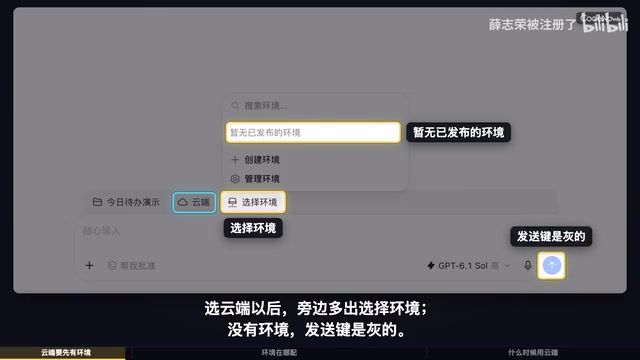
This article explains how Codex cloud mode works, environment setup steps, and use cases, including how to create environments, connect GitHub repositories, set scheduled tasks, and compare cloud vs. local mode.