AI and Data Centers Take Center Stage in U.S. Midterms: Vox Breaks Down Five Key Issues

Vox identifies five midterm flashpoints: Trump's slump, AI anxiety, Israel divisions, affordability, and election security.
Vox's political show *America, Actually* breaks down five issues defining the midterms. Trump's approval has hit an all-time low, with erosion coming from his own MAGA base over unmet economic promises. Democrats are split between progressives and moderates, with the Israel conflict and AIPAC money deepening the fault lines. "Affordability" has become the universal campaign buzzword, while AI and data centers have emerged as a rare cross-partisan concern — with candidates from both parties competing to play regulator. On election security, analysts point to separation of powers and the major questions doctrine as real barriers to executive interference, though Trump's sustained campaign to undermine trust in elections remains a distinct and serious risk.
Vox's political show America, Actually is approaching the midterm elections with a year's worth of on-the-ground reporting and audience questions, distilling them into five issues likely to define this election cycle. From deep shifts within both parties, to public anxiety over AI and data centers, to the most-asked-about question of all — election security — this "election prep guide" reflects the core tensions running through American politics right now.
Both Parties Have Changed Dramatically
The first key point the show raises: both parties look significantly different from the last presidential election. On the Republican side, the most important signal is that Trump's approval rating is "consistently declining." According to the latest NBC News poll, Trump's approval has hit an all-time low — and the drop is coming primarily from his own base. Only 41% of Republicans "strongly approve" of Trump's performance, down 11 points from spring; among self-identified MAGA Republicans, support fell from 71% to 62%.
Even Trump's allies are acknowledging trouble ahead. MAGA influencer CJ Pearson said bluntly in an interview: "We need to refocus the party conversation on domestic issues, or we're going to get crushed in November." The show's analysis points to the economy as the root cause — voters feel Trump has failed to deliver on his central promise of lowering the cost of living, with tariffs, rising gas prices, and the conflict with Iran all making things worse. The Epstein files have also recast Trump — from a wealthy outsider fighting elites to a card-carrying member of the insider club.
That said, an unpopular Trump is not a powerless one. He still holds decisive influence in Republican primaries, because the most loyal primary voters remain MAGA diehards, and that keeps congressional Republicans in line. On the Democratic side, the party is in something of a civil war, with progressives and moderate institutionalists clashing fiercely. The show argues this isn't just an ideological dispute — it's a fundamental repositioning around the question of who the Democratic Party is and who it actually fights for.
The Israel Issue Is Fracturing Voters
The second major issue is America's relationship with Israel. The topic has spread nationwide, especially after the U.S. was drawn into a conflict with Iran at the Israeli government's request, causing public opinion toward Israel to turn sharply cooler.
Within the Republican Party, Vice President JD Vance drew criticism for refusing to distance himself from Tucker Carlson. On the Democratic side, controversy has centered on Twitch streamer Hasan Piker, who told the show plainly that he wants to make the Democratic Party "more explicitly anti-war, anti-Israel," and predicted that "any candidate who is sympathetic to Israel will not be able to get through a Democratic primary in 2028." Progressive candidates have begun pushing a kind of "left-wing America First" argument — invest taxpayer money in domestic communities, not foreign wars.
This trend has generated backlash. The centrist think tank Third Way launched a campaign to marginalize figures like Piker, with its director comparing him to extremists and arguing that "the only way to beat MAGA is to offer an alternative, not to mirror its extremism." Audience members also raised pointed questions about the influence of AIPAC and other pro-Israel lobbying money. The show flags races like Angie Nixon in Florida, William Lawrence in Michigan, and Manny Rutinal in Colorado as tests of whether anti-Israel messaging plays in purple swing districts — or only resonates in deep-blue ones.
AIPAC (American Israel Public Affairs Committee) is one of the most influential foreign policy lobbying groups in the U.S., long active in pushing pro-Israel positions across both parties in Congress. Through its affiliated Super PAC, it has poured significant money into primaries to support or defeat specific candidates. In 2024, AIPAC was widely reported to have spent tens of millions of dollars to defeat multiple progressive incumbents in Democratic primaries — a move that dramatically boosted its negative image among progressive voters and turned "AIPAC money" into a concrete symbol of the party's internal battle. Critics see it as a case of outside capital interfering in intra-party democracy; supporters view it as legitimate political participation. This context helps explain why audiences are particularly sensitive to questions about lobbying money.
"Affordability" Becomes a Universal Language
The third major trend is the proliferation of the word "affordability." Since a candidate in the New York City mayoral race made it a signature issue, the term now appears in virtually every campaign ad.

Congressional Progressive Caucus Chair Greg Casar revealed what the word actually means in practice. He gave this example: "Your rent went up, and someone blames it on Venezuelan immigrants. But it's not 'woke culture' driving up your rent — it's Wall Street hedge funds." The line captures the progressive strategy of reframing economic anxiety — shifting blame away from immigrants and toward financial capital.
AI and Data Centers: The Central Anxiety of the Year
The fourth issue — and the one that carried the most weight throughout the show's year of reporting — is artificial intelligence. The show argues that voters' concerns about affordability and the economy are inseparable from a collective anxiety about the future of work in the age of AI. Voters understand that AI "changes everything," and they're frustrated with a political system they feel hasn't protected them.
At a town hall meeting in New Jersey about data centers, one resident shared this story: a woman came to look at a house with cash in hand, but walked away after learning the property was near a data center — because her child said, "Mom, I can't do it." Researcher Rachel Janfaza noted that for younger generations, affordability, jobs, and AI are inseparable concerns: "When you talk about the biggest issues affecting young people's lives, AI is at the center."
Notably, the AI issue is crossing party lines. In the Michigan Senate race, progressive Democrat Abdul El-Sayed recently shifted his tone, calling this a "break the glass moment" for AI development that requires an immediate pause to assess the impact — while his Republican opponent Mike Rogers has also called for a one-year moratorium on data centers. Both candidates are competing to be seen as the "AI regulator." In Texas, Governor Abbott — who had previously welcomed AI and data centers — has reversed course, saying data centers are "digging their own graves" and losing public support. All of this signals that attitudes toward AI are shifting among Democrats, Republicans, and independents alike.
Data centers are a major material source of AI anxiety. A large data center consumes enormous amounts of electricity — a mid-sized facility can use as much power annually as tens of thousands of homes — putting intense pressure on local power grids and driving up electricity bills. They also require vast amounts of water to cool servers, sparking competition over water access in drought-prone regions. And they employ relatively few people, creating far fewer local jobs than the land and resources they consume. These factors combined mean that data center projects — once welcomed by local governments as economic development opportunities — have generated fierce community backlash. States with high concentrations of data centers, including Texas, Virginia, and New Jersey, have already seen growing opposition. This tension — AI infrastructure landing in local communities — translates abstract debates about technological change into tangible, personal stakes for voters, which is why it resonates across party lines.
Election Security: The Question Audiences Care About Most
The fifth issue — and the topic that generated the most audience questions — is election security. People are worried about the effectiveness of democratic institutions, the role of the Supreme Court, and Trump's threats to declare a national emergency before the election. Vox politics editor Benji Sarlin addressed these concerns directly.

On redistricting, Sarlin acknowledged it's a messy, state-by-state process with deep court involvement. Litigation in Missouri, Virginia, and elsewhere has continued right up to the present. Estimates suggest Republicans could gain 10 to 12 seats through redistricting, reducing the overall number of competitive seats and potentially requiring Democrats to lead by 3 to 5 points in the national popular vote to win the House majority.
But most election forecasters still favor Democrats taking the House, for three reasons: Democrats currently lead by about 6.5 percentage points in national polls (per Nate Silver's latest average); Republicans hold a razor-thin majority; and if Democratic support reaches a high-water mark, some gerrymandered seats could flip precisely because the vote margin spills over — a scenario some Texas Republicans already fear, worried they can't hold every newly drawn seat. Sarlin's message: "If you're worried about the election being canceled, that's not what's happening. This is a competitive election, and your vote genuinely matters."

On worries about mail-in voting being suppressed or the Supreme Court tipping further toward Republicans, Sarlin noted that Trump's attempts to change election law through executive action are "still considered a relatively long shot." The reasons: the principle of separation of powers, court precedent on election interference, and the major questions doctrine — the idea that major policy changes require clear congressional authorization, not administrative workarounds. He urged viewers to distinguish between the "intimidation factor" and the "legal question": Trump's constant undermining of confidence in the election system is genuinely dangerous (it was a key factor in the Capitol attack), but it's somewhat separate from the legal question of whether your vote can actually be counted.
As for threats to declare a national emergency, deploy troops, or send ICE agents to polling places, Sarlin said real legal obstacles exist — the law prohibits federal military or armed personnel from entering polling sites unless responding to an urgent national security threat, and no deployment is currently planned. He used an analogy: it's like a serial intruder constantly trying to get into your house through windows, door handles, and chimneys — you're relieved you've reinforced your locks, but the relentless probing still wears you down. His conclusion: don't underestimate the threat. If Trump could overturn an election with a snap of his fingers, he would. But in practice it's extremely difficult, and the blowback could exceed any anticipated gain — election denial after 2020 is widely credited with costing Republicans two Georgia Senate seats.
Redistricting is the process by which state legislatures periodically redraw the boundaries of congressional and state legislative districts — typically following the decennial census. When the party in power deliberately engineers district shapes to maximize its own seats and weaken the opposition, that constitutes "gerrymandering" (named after an oddly shaped district drawn by Massachusetts Governor Elbridge Gerry in 1812). Common tactics include "packing" (concentrating the opposing party's voters into a few districts to "waste" their votes) and "cracking" (dispersing the opposing party's voters across multiple districts to dilute their influence).
The Major Questions Doctrine is a judicial review principle established by the U.S. Supreme Court in recent years. Its core logic: if an executive agency — or the president — tries to implement a policy with sweeping political and economic consequences by reinterpreting an existing statute, the courts will require clear congressional authorization; without it, the executive action is invalid. The doctrine was explicitly applied by the Supreme Court in West Virginia v. EPA (2022) and has since become an important tool for limiting executive overreach — and one reason analysts believe Trump would face serious difficulty unilaterally altering election rules through administrative means.
Related articles

LLM Application Development 101: Prompt Engineering, RAG, and Agent Concepts Explained
A complete guide to LLM application development: covering model basics, tokens, context windows, hallucination, RAG, Agents, prompt engineering, LangChain, and model selection strategies.

Getting Started with LangChain: The Core Framework for LLM Agent Development
LangChain is the core framework for LLM Agent development. This guide clarifies common misconceptions, maps the full tech stack from RAG to multi-agent systems, and outlines realistic career paths.
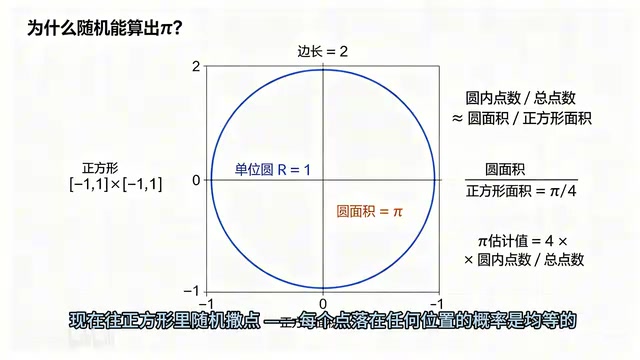
AI-Generated LabVIEW in One Click: A Complete Guide to Estimating Pi with Monte Carlo
Learn how the Monte Carlo method estimates Pi using random sampling, and see how AI tool VI Generator generates a complete LabVIEW demo program — including state machine architecture and performance optimization.