AI Art Cyber Ruins Red Monolith: Prompt Analysis and Dark Sci-Fi Aesthetic Breakdown

Breakdown of a dark sci-fi AI artwork featuring cyber ruins and a red monolith, with prompt engineering insights.
This article provides a deep analysis of an AI-generated concept artwork depicting dark futuristic city ruins dominated by a towering red illuminated monolith. It explores the aesthetic principles behind the piece, including the narrative tension between decay and the sublime, chiaroscuro lighting techniques, and color psychology. The article also examines prompt engineering strategies for creating atmospheric sci-fi concept art and explains why diffusion models excel at mood-driven imagery.
A Stunning AI-Generated Scene
Recently, an AI-generated artwork titled Dark Futuristic City Ruins Dominated by a Towering Red Illuminated Monolith has attracted attention on the Reddit community. This piece uses highly impactful visual language to merge the desolate aesthetics of cyberpunk with the grand narrative of post-apocalyptic wastelands, making it a noteworthy case study in recent AI art creation.
From the description, the core visual elements are clear: a dark-toned futuristic city in ruins, and a towering monolith illuminated by red light reaching into the sky. The "Monolith" as an image has deep roots in science fiction culture, most famously originating from the black monolith in Stanley Kubrick's 1968 classic 2001: A Space Odyssey. In the film, this smooth, geometrically perfect monolith represents the power of an unknown higher civilization, appearing at critical junctures in human evolution and hinting at cosmic intelligence beyond human comprehension. Since then, the Monolith has become a universal symbol of "transcendent existence" in sci-fi visual language, frequently appearing in games, films, and concept art. In the context of AI-generated imagery, this term precisely triggers the model's understanding of multiple semantic dimensions such as "grandeur, mystery, and non-human origin," thereby generating visual elements with narrative depth.
This composition carries strong symbolic meaning and also reflects the maturity of current Text-to-Image generation models in atmosphere creation. Text-to-Image generation models are deep learning systems that automatically generate corresponding images based on natural language descriptions. The current mainstream technical approach is based on Diffusion Models, whose core principle works as follows: first, through a forward diffusion process, Gaussian noise is progressively added to an image until it becomes pure noise; then a neural network is trained to learn the reverse denoising process. During the generation phase, the model starts from random noise and, combined with the semantic understanding of prompts from a text encoder (such as CLIP), gradually denoises to reconstruct an image matching the text description. Representative products include Stable Diffusion, Midjourney, and the DALL·E series. These models, trained on billions of image-text pairs, have developed excellent capabilities in composition understanding, style transfer, and atmosphere rendering.
Aesthetic Breakdown of Visual Elements
The Narrative Tension Between Ruins and Monolith
The work's theme revolves around two core images: "city ruins" and "red monolith." The ruins represent the decay of civilization and the erosion of time, while the towering illuminated monolith suggests some form of transcendent power—whether alien technology, artificial intelligence, or humanity's final monument.
This juxtaposition of "decay" and "the sublime" constitutes the most classic narrative tension in the cyber-wasteland genre. Cyberpunk, as a science fiction subgenre, originated in the 1980s from William Gibson's novel Neuromancer and Ridley Scott's film Blade Runner. Its core aesthetic characteristic is "High Tech, Low Life"—the coexistence of advanced technology and social decay at the bottom. Visually, this manifests as neon lights, wet streets, and the contrast between megacorporation buildings and slums. "Cyber-wasteland" is a fusion of cyberpunk and post-apocalyptic aesthetics, envisioning a ruined world after the collapse of high-tech civilization that retains cyberpunk's technological remnants while incorporating the desolation and survival instincts of wasteland themes.
Red as the dominant color tone conveys signals of danger and warning while imbuing the entire scene with a solemn yet oppressive sense of ritual. In color psychology, red is the color with the highest physiological arousal level, capable of accelerating heart rate and breathing frequency. This explains why post-apocalyptic concept art often uses red as its primary color—it directly stimulates tension and awe in viewers at the visual level.
The Use of Color and Lighting
The strong contrast between the dark background and red highlights is the most eye-catching technical treatment in this work. In AI painting, this "low-key tone plus single strong light source" approach effectively guides the viewer's gaze to the main subject while creating a mysterious, solitary atmosphere. This technique is known in traditional painting as "Chiaroscuro," popularized by Baroque painters such as Caravaggio. Its core lies in creating dramatic visual effects and spatial depth through extreme contrast between light and dark. The red illuminated monolith, as the sole high-brightness element, naturally becomes the visual focal point of the entire composition.
Insights for AI Art Creation
The Importance of Prompt Engineering
From this work's title alone, we can see that excellent AI-generated results often stem from precise and visually evocative prompts. "Dark," "Futuristic," "Ruins," "Towering," "Red Illuminated," "Monolith"—each keyword provides clear semantic guidance to the model, collectively shaping a unified visual style.
Prompt Engineering refers to the systematic method of carefully designing input text to guide AI models toward desired outputs. In the image generation domain, effective prompts typically contain multiple layers: Subject description, Setting, Lighting conditions, Color Palette, Composition, Style Reference, and technical parameters (such as resolution and rendering engine). Advanced techniques include weight adjustment (such as bracket weighting), negative prompts (excluding unwanted elements), and multi-step iterative optimization. Professional prompt engineers can significantly improve the quality and consistency of generated results through precise vocabulary selection and combination order—this has become one of the core skills of the AI creation era.
This reminds creators: to obtain high-quality AI artwork, you need to provide clear instructions across multiple dimensions including atmosphere (dark, futuristic), subject (monolith, ruins), lighting (illuminated), and color tone (red), rather than vague descriptions.
The Trending Popularity of Atmospheric Concept Art
Cyberpunk, post-apocalyptic wasteland, and dark sci-fi themes continue to trend in AI art communities. These works are popular partly because Diffusion Models excel at lighting rendering and atmospheric perspective, and partly because they reflect creators' preference for grand narratives and emotional expression.
The reason Diffusion Models perform exceptionally well in lighting and atmosphere creation is closely related to their training mechanisms and architectural design. The denoising process is essentially a progressive refinement from global to local, which naturally suits handling wide-range lighting distribution and tonal consistency. Additionally, models trained on massive amounts of high-quality photography and concept art have internalized the visual patterns of complex optical phenomena such as Volumetric Lighting, Atmospheric Perspective, and Global Illumination. By comparison, traditional 3D rendering requires manual setup of light source parameters and material properties, while diffusion models can automatically "extrapolate" physically plausible lighting effects through semantic understanding. The attention mechanism in the U-Net architecture also enables the model to capture long-range lighting correlations, ensuring overall illumination consistency across the image.
Compared to realistic portraits or product shots, atmospheric concept art has higher tolerance for detail precision, which better highlights AI's unique advantage in "mood creation." Specifically, errors like incorrect finger counts or facial asymmetry in portrait generation are immediately noticeable, while slight structural irregularities in architecture or minor texture deviations in ruins within concept art may instead be interpreted as "stylistic treatment" or "traces of time erosion." This natural tolerance space makes AI output in this domain more easily achievable at a professionally usable level.
Conclusion
This Dark Futuristic City Ruins with Red Monolith, while just one among many AI works in the Reddit community, exemplifies the current application potential of AI image generation in concept art. Through carefully designed prompts, creators can produce works with both visual impact and narrative depth at extremely low cost.
For content creators, game concept designers, and film/TV art professionals, these AI tools are gradually becoming powerful assistants for inspiring creativity and rapidly iterating visual concepts. In the gaming industry, the traditional concept art production workflow often requires senior artists several days to complete a single high-quality concept piece. With AI tools, designers can generate dozens of visually diverse directions within minutes, greatly accelerating the efficiency of early exploration phases. Major game companies like Ubisoft and Blizzard have already begun incorporating AI-generated images into the early brainstorming stages of concept design, although final deliverables still require manual refinement. As model capabilities continue to improve, AI's role in concept art creation will become increasingly important.
Related articles

Gaussian Process Bandit Optimization: Exploration Strategies and Inference Regret Guarantees
Cumulative regret guarantees in Bayesian optimization fail to reflect final recommendation quality. This article examines a new study that provides inference regret guarantees for Gaussian process bandit optimization through exploration query strategies and fill distance analysis, validated on hyperparameter optimization and control tasks.
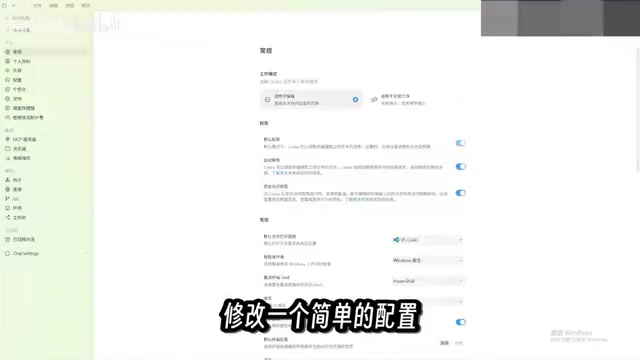
The Most Detailed Codex Guide on Bilibili: From Installation to Real-World Practice
The most detailed Codex guide on Bilibili: from app store installation to daily work mode configuration, with a real coffee shop project demonstrating file organization, data extraction, dashboard creation, and other practical tasks. Learn to use Plan Mode and desktop pets to leverage Codex efficiently.

Appearance Compensation in Volume Rendering: Why RGB Accuracy Cannot Guarantee Density Correctness
Volume rendering research reveals that volumetric data perfectly reproducing external RGB views may still contain density errors: appearance compensation can double central density and keep external rays unchanged even when L2 error exceeds 14.52%. Density recovery depends on appearance capacity, spatial resolution, and measurement design.