AI Ate Math: Why Are Mathematicians Panicking?

AI conquering math problems triggers mathematician anxiety; core crisis is loss of understanding and teaching gap.
*The New Yorker* writer Rivka Galchen discusses AI's impact on mathematics on a podcast, calling mathematicians a "sentinel species." AI chose math for its prestige and quick verification. From Erdős problems being solved to Terence Tao pausing his blog, reactions are divided: some cheer, others mourn. Galchen notes the real crisis is the loss of understanding and the teaching paradox—students who need to learn most are tempted to skip it. Some are optimistic, but she stresses redesigning institutions and education. Mathematics' struggle is a preview for all fields.
When Mathematicians Start Talking About AI
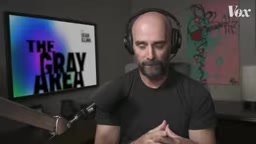
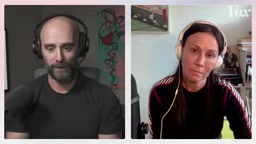
Mathematics has always been known for its calm and abstraction, but recently it has fallen into a rare collective anxiety. According to observations by The New Yorker writer Rivka Galchen on the podcast The Gray Area, mathematicians suddenly began passionately discussing their own field on social media—which is itself a signal. She likens mathematicians to a "sentinel species": the impact of AI on mathematics foreshadows a broader transformation.
Galchen's report The Year Math Changed Forever documents this upheaval. She tells host Sean Illing that AI companies choosing mathematics as a breakthrough point is no accident: mathematics carries extremely high prestige, proofs can be verified quickly, and it doesn't require the long testing cycles of new drugs or fusion devices. This makes mathematics an ideal testing ground for demonstrating AI capabilities.
From Paul Erdős to Terence Tao
Galchen chooses Paul Erdős as her narrative starting point. The Hungarian mathematician's lifestyle was almost legendary: he had no fixed home, barely slept or ate, donated all his money, wandered around carrying a plastic bag, and called colleagues in the middle of the night asking "is your brain open?" He built a mathematical community by posing problems, and these problems later unexpectedly became AI benchmarks.
Among the thousands of problems Erdős left behind, some remained unsolved for years. When AI companies began "solving" these problems one after another, the mathematical community's reaction shifted from initial dismissal to shock. Galchen notes that early AI couldn't even do simple arithmetic correctly, so mathematicians had reason to be unimpressed. But as AI successively conquered increasingly difficult Erdős problems, attitudes underwent a fundamental shift.
Terence Tao is widely regarded as one of the greatest living mathematicians. He had maintained a detailed mathematics blog for years, but in recent months the blog has nearly stopped—because he is busy thinking about a "meta-mathematics question": what should we do? Galchen says seeing Tao recently resume posting mathematical content brings a measure of comfort.
Paul Erdős (1913–1996) was one of the most legendary mathematicians of the 20th century, known for his extreme productivity and unique collaborative style. He published approximately 1,500 papers in his lifetime, co-authoring with over 500 collaborators—a network known in mathematics as the "Erdős number": those who co-authored a paper with Erdős have an Erdős number of 1, those who co-authored with his collaborators have 2, and so on. Erdős devoted his life to posing and solving "mathematical problems," often offering bounties ranging from tens to thousands of dollars to encourage colleagues to tackle difficult problems. After his death, these bounty problems became an informal yardstick for measuring mathematical progress. In recent years, AI systems have begun attempting to solve some of them, and this is shocking because the Erdős problem collection has long been regarded as a touchstone for human mathematical intuition and creativity, rather than a product of mechanical computation.
Mourning and Controversy: Contradiction in the Same Person
After AI solved famous theorems, the mathematical community's reaction was deeply divided. Some cheered it as "a beautiful moment for the entire community," allowing reverse-engineering to understand the solution; others described it as "someone spraying herbicide in the garden." Galchen reveals a fascinating fact: these two diametrically opposed comments came from the same person.
She says that in interviews and reading, the most frequent language was "mourning," "fear," and "anxiety." But curiosity and hope exist as well. Many mathematicians are rethinking: what exactly is the value of mathematics?
The Loss of Understanding: Something More Important Than Answers
Galchen believes the core of this crisis is not "AI solves problems better than humans" but "the understanding embedded in the problem-solving process is disappearing." She cites a metaphor: a naturalist can head straight for the summit, but true discoveries often come from accidental encounters during wandering. The joy and value of mathematics lie largely in that "wandering of the arrow"—there is a goal, but what is gained along the way matters just as much.
She distinguishes between "knowing the answer" and "understanding the answer": knowing the answer means being able to state what is true; understanding means being able to state why it is true, when it might not hold, and thus flexibly transfer to new situations. She uses the Pythagorean theorem as an example—memorizing the formula lets you solve problems, but drawing the figure gives you intuition.
Host Illing introduces Aristotle's distinction between techne (technical knowledge) and phronesis (practical wisdom): AI excels at the former but may weaken our ability to accumulate the latter through practice.
Techne and phronesis are two forms of knowledge distinguished by Aristotle in the Nicomachean Ethics. Techne (craft/technical knowledge) refers to knowledge that can be taught, codified into rules, and aimed at production—such as shipbuilding or medicine—characterized by "knowing how to do it" and being repeatably verifiable. Phronesis (practical wisdom), by contrast, is the ability to make appropriate judgments in specific situations; it cannot be directly taught through rules but can only be accumulated through long-term practice and reflection, and its core is "knowing why to do it this way" and "when to adapt." Illing introduces this distinction to show that AI excels at techne—it can efficiently execute formalizable, verifiable tasks; but phronesis depends on human trial-and-error and judgment in real experience. If people skip the practice process by relying on AI, the channel for accumulating phronesis is weakened. The mechanical verifiability of mathematical proofs makes mathematics a typical domain of techne, while mathematical understanding and problem selection are closer to phronesis.
The Teaching Crisis: Will the Next Generation Still Learn?
Galchen considers teaching to be "the most immediate crisis." Tao observes a paradox: precisely those students who most need to learn are more easily tempted by AI to skip the learning process. It's like having a hologram do your dance training for you—when it's time to actually perform on stage, you can't do anything.
The deeper problem lies in iteration. Current AI is trained on the essence of knowledge distilled by humanity over thousands of years, but if the next generation no longer undergoes mathematical training, they will be able neither to generate new problems nor to evaluate AI outputs. Galchen warns that AI will begin to "eat its own excrement"—training in a loop on data of declining quality.
Model collapse is a concept in AI research referring to the phenomenon where generative models, when repeatedly trained on data they themselves have generated, gradually degrade in output quality and lose diversity. Galchen's phrase "eating its own excrement" refers to this risk: current large models are trained on high-quality text and knowledge accumulated by humanity over millennia, but if the internet of the future is flooded with AI-generated content, and the next generation of humans no longer produces original knowledge because they skipped the learning process, models will lack fresh human data to learn from. The mathematical field is especially sensitive, because while verification of mathematical proofs can be automated, the posing of new problems and the selection of proof strategies still depend on human intuition. If human mathematical training shrinks, the "problem space" AI can learn from will also contract, forming a negative feedback loop in the knowledge ecosystem.
Reasons for Optimism: Mathematics Is Infinite
Not everyone is pessimistic. Mathematician Charlie Pfefferbin, in his 70s, instead believes AI may make mathematicians "braver and generate crazier ideas." If a path that once required a decade of exploration can be shortened to two days, people will be more willing to try high-risk directions. Mathematicians such as Brian Conrad also point out that the domain of mathematics is infinite and will not be exhausted.
Galchen herself admits she "always feels everything will turn out fine," which may be a psychological defense mechanism. But she emphasizes that in the short term, the mathematical community must redesign institutions, education methods, and honor distribution systems—these urgent issues take priority over "what wonderful mathematics AI can help us do."
Mathematics Is Just the First
Both Illing and Galchen agree: mathematics is the "sentinel species," and what has happened to mathematics is spreading to all fields. Galchen says that watching mathematicians be the first to wrestle with the dragon, we may be able to learn from their thought process—not by copying, but by observing.
She ultimately cites a hope: as "termites in the dark," we still have far too many things we haven't thought of.

Conclusion
This conversation doesn't provide definitive answers, but raises a key question: as AI becomes capable of completing more and more "thinking," do humans become freer, or do we lose the desire to think itself? The struggles of mathematicians may be a preview for all of us.
One-line Summary
AI conquering mathematical problems triggers collective anxiety among mathematicians; the core crisis is the loss of understanding and the teaching gap.
Paragraph Summary
The New Yorker writer Rivka Galchen discusses AI's impact on the mathematical community on a podcast, calling mathematicians a "sentinel species." AI companies chose mathematics as a breakthrough because of its high prestige and quickly verifiable proofs. From Erdős problems being successively solved by AI to Terence Tao pausing his blog to ponder "meta-mathematics questions," the mathematical community's reaction is divided: some cheer, others mourn. Galchen points out that the real crisis is not that AI solves problems better, but that the understanding embedded in the problem-solving process is disappearing, along with the teaching paradox—students who most need to learn are more easily tempted by AI to skip learning. Some mathematicians optimistically believe AI can liberate creativity, but Galchen emphasizes that in the short term, institutions, education, and honor systems must be redesigned. Mathematics' struggle is seen as a preview of what all fields will soon face.
Related articles
GPT 6.2 Astra Hands-On: Benchmark Failures and Highlights
Bilibili creator tests GPT 6.2 Astra on a new Benchmark via ModelGo, covering instruction following, SVG, liquid glass, watermark removal, and more.
Does AI Think Like the Human Brain? Inside Claude's Internal Mechanisms
New research shows AI models resemble the human brain in word prediction and meaning construction, but Anthropic's observations of Claude reveal AI self-explanations may be completely divorced from its actual computations.
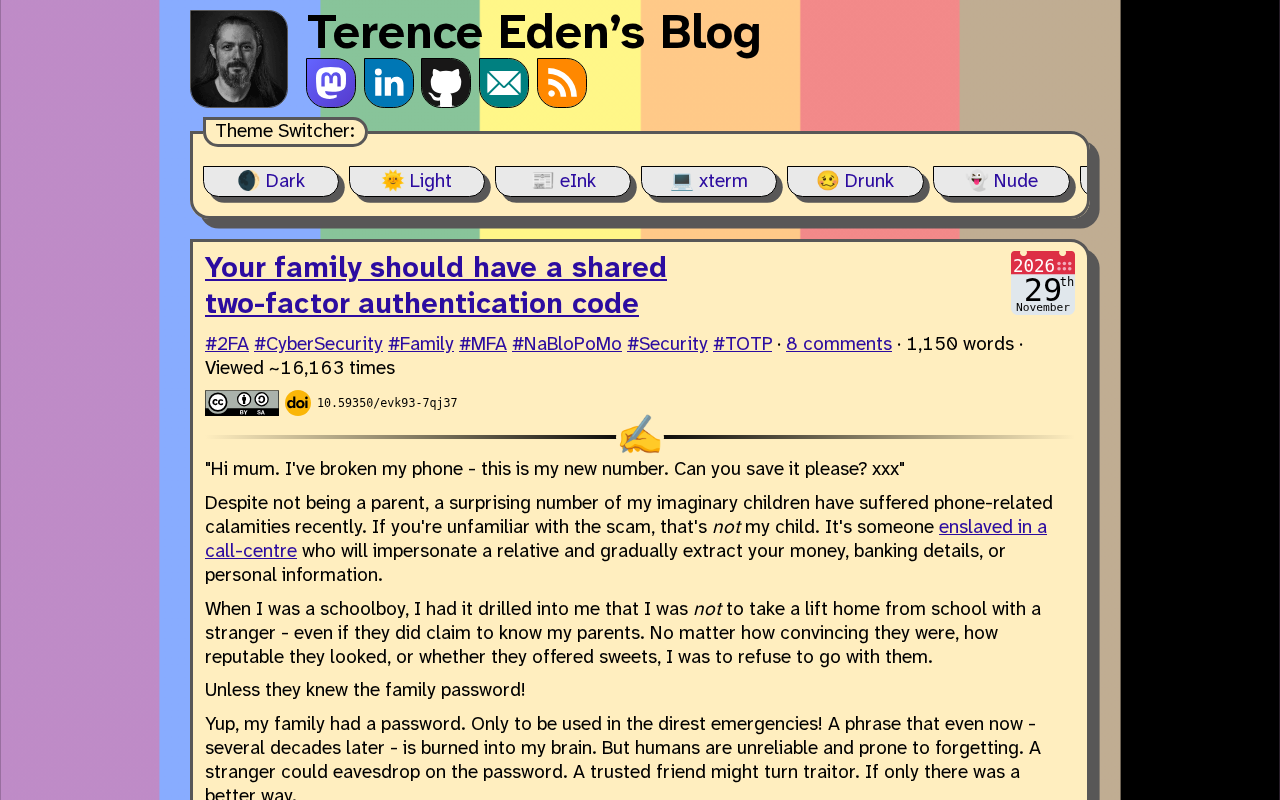
Family-Shared 2FA Codes: A New Balance Between Security and Convenience
Tech blogger Terence Eden proposes family-shared 2FA codes, sparking Hacker News debate. This article analyzes the convenience and security risks of shared two-factor authentication, explores the product design gap in family account management, and offers practical scenario-based advice.