GPT 6.2 Astra Hands-On: Benchmark Failures and Highlights
GPT 6.2 Astra performs steadily on a new Benchmark with some detail-design gripes, costing about $18.
A Bilibili creator evaluated GPT 6.2 Astra on their latest Benchmark using the cheaper ModelGo AI platform after OpenRoot removed WeChat/Alipay support. Running via an Agent with maxed-out thinking depth, the test covered instruction following, SVG generation, liquid glass effects, a perpetual calendar, a terminal input box, a space game, watermark removal, and box-finding—costing about $18 versus an estimated $20-30 on OpenRoot. The model performed steadily, shining in liquid glass and watermark removal, though details like a sudden bicycle U-turn, elliptical calendar highlights, an oversized terminal border, and missing solar terms left room for improvement.
Testing Background and Platform Choice
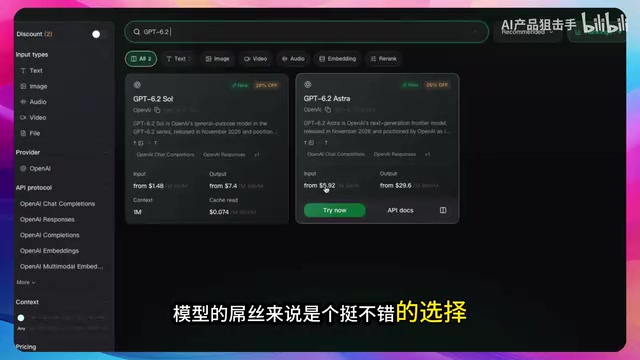
The Bilibili creator used their latest Benchmark to evaluate the overseas top-tier model GPT 6.2 Astra. Previously, this creator commonly used the OpenRoot platform to access models, but due to insufficient balance and OpenRoot's removal of WeChat and Alipay integration, they switched to the ModelGo AI platform this time. According to the creator, ModelGo is similar to OpenRoot, supporting calls to top models like Claude and GPT through a single API, and at lower prices. After comparison, the creator found that many models on ModelGo are considerably cheaper than on OpenRoot, making it a good choice for those who frequently evaluate large language models.
OpenRoot and ModelGo AI are both large language model API aggregators. The core value of such platforms is that developers don't need to separately apply for API Keys from OpenAI, Anthropic, Google, and other vendors and handle their respective billing and rate limits; instead, they call multiple models through a unified endpoint and API Key, with the platform handling routing and billing in the background. For evaluators who frequently do model comparisons, aggregator platforms can significantly reduce account management and top-up costs; their pricing is usually the official price plus a certain markup, so price differences between platforms can be quite noticeable. The removal of localized payment channels like WeChat and Alipay is a common practice adopted by some overseas aggregator platforms due to payment compliance or risk control costs, which directly affects convenience for domestic users.
Testing Methodology and Cost Notes
The test was conducted through an Agent, with thinking depth set to maximum. The creator worked through multiple tasks covering strongly-constrained instruction following, SVG generation, liquid glass effects, a watermark removal tool, visual recognition, and more. After the test, the creator showed the total cost, about 18 USD, and mentioned that testing on OpenRoot would probably cost twenty to thirty dollars.
The "Agent" mentioned here refers to an agentic evaluation approach: the model doesn't just generate code in a single question-and-answer exchange, but autonomously plans, writes files, executes commands, checks errors, and iteratively corrects within a runtime environment equipped with tool-calling capabilities, until it produces a runnable finished product. This approach is closer to real development scenarios than single-turn generation, and better exposes differences in multi-step reasoning, error recovery, and instruction following. "Setting thinking depth to maximum" corresponds to the reasoning effort / thinking budget parameter of reasoning models—raising this parameter causes the model to generate a longer internal chain of thought before answering, which typically improves accuracy on complex tasks but also significantly increases output token count, thereby driving up cost. This explains why a single multi-task evaluation can reach the teens-to-twenties dollar range.
Performance Analysis by Task
Strongly-Constrained Instruction Following Test
The first task required generating sentences satisfying multiple constraints. After checking, the creator found that all sentences ended with the corresponding number, other constraints were also satisfied, and the sentences were fluent with no obvious issues.
SVG Generation: Riding a Bicycle on Saturn's Rings
The second task required generating an SVG of riding a bicycle on Saturn's rings. The creator felt the style was obviously GPT-generated, similar to previous evaluations of their models. No issues were seen overall; the only problem was that the turn was a sudden U-turn rather than smooth.

SVG Generation: Compound Bow Archery
The third task required generating an SVG of compound bow archery. The creator judged the implementation basically impeccable, and the quiver-drawing process that trips up most models was handled perfectly. The only minor regret was that the relationship between the forearm and upper arm during the draw was a bit odd, possibly an angle issue.
Liquid Glass Effect and Browser Operating System
Task ten required implementing a beautiful liquid glass effect and a browser operating system. The creator said the liquid glass effect in this implementation was very pronounced and definitely a plus, very different from the frosted glass effects of many previously tested models, and remarked that top-tier models are top-tier models. However, in the popup in the upper right corner, the date highlight in the calendar was made an ellipse, which the creator considered not a good design.
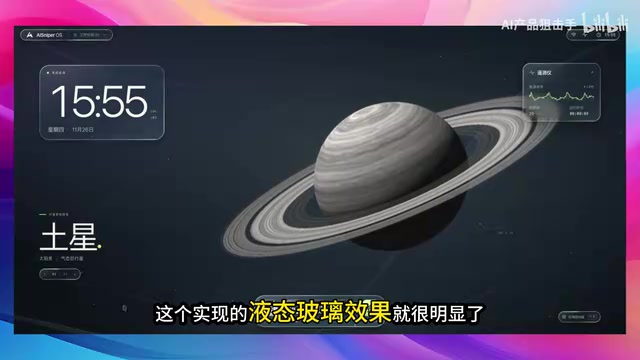
"Liquid Glass" is the interface design language Apple introduced with its new generation of systems at WWDC 2025, emphasizing translucent materials, real-time refraction, specular highlights, and deformation that flows with content, visually somewhere between frosted glass and real glass texture. In web front-end implementation, it typically requires combining backdrop-filter (blur and saturation adjustment), multi-layer translucent gradients, SVG or CSS filters for refractive displacement, and dynamic highlights based on mouse or scroll position. Compared to traditional frosted glass effects, liquid glass has higher demands on stacking contexts, blend modes, and performance overhead, so whether a credible liquid glass texture can be reproduced in front-end code is often used as a touchstone for a model's grasp of modern CSS capabilities.
Perpetual Calendar App and Terminal Input Box
The perpetual calendar app's UI and interactions were implemented quite well, but the creator pointed out that a perpetual calendar without solar terms is wrong—for example, Minor Snow on the 22nd didn't appear. Additionally, the terminal input box shouldn't have a border; the creator wondered why so many models like to put such a large border on it.
"Solar terms" in a perpetual calendar refer to the 24 solar terms, which are not arranged by fixed Gregorian dates but determined by the sun's apparent position on the ecliptic (every 15° of solar longitude corresponds to one solar term), so the Gregorian date of the same solar term fluctuates by about 1 day each year and requires specialized astronomical algorithms or lookup tables for accurate calculation. When generating perpetual-calendar-type applications, models often implement only the basic logic of Gregorian-lunar conversion while omitting peripheral data such as solar terms, heavenly stems and earthly branches, and auspicious/inauspicious activities—this is a typical case of "incomplete feature coverage" rather than a logic error. As for the terminal input box border issue, this involves UI design conventions: terminal emulators usually suggest the input area with a borderless solid-color background plus a cursor, and a thick border breaks this skeuomorphic consistency—which is why the creator complained about multiple models' "convergent aesthetics."
Finale: Space Design Game
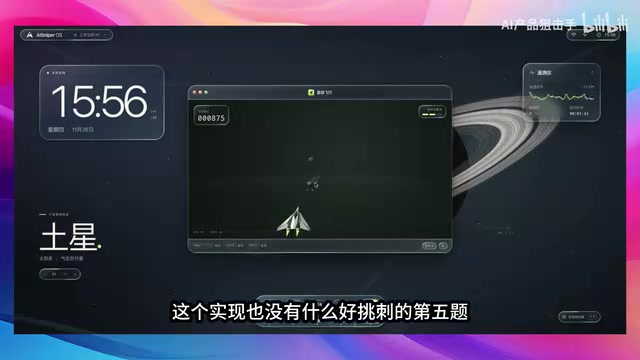
The space design game implementation also left little to criticize; the creator found no obvious issues.
One-Click Watermark Removal Tool Without Third-Party Libraries
Task five required implementing a one-click watermark removal tool without third-party libraries. The creator actually tried it out, and the effect was pretty good—basically removed cleanly, with no unnecessary changes to other text and image elements.
Deep Sea Carnage: Finding the 10 Boxes at Depth Buy Points
Task six required finding the 10 boxes at depth buy points; the model found 9, which the creator rated as steady performance. This task was similar to the previous version with no major changes, which was expected.
Cost and Value-for-Money Discussion
Finally, the creator showed the total cost, about 18 USD, which felt reasonable. Testing on OpenRoot would probably cost twenty to thirty dollars. The creator asked viewers: is it worth spending this money on such a test? And invited everyone to comment on the model's performance on the new Benchmark.
Summary
GPT 6.2 Astra performed steadily overall in this Benchmark, shining in tasks like the liquid glass effect and the watermark removal tool, but still has room for improvement in detail design (such as the calendar's elliptical highlight and the terminal input box border) and certain physical logic (the bicycle's sudden U-turn, arm relationships). Multiple tasks were near perfect scores, meeting expectations for a top-tier model.
One-line Summary
GPT 6.2 Astra performed steadily on the creator's new Benchmark, with some detail-design gripes, at a total cost of about 18 USD.
Paragraph Summary
The Bilibili creator used their latest Benchmark to evaluate the overseas top-tier model GPT 6.2 Astra. Due to insufficient OpenRoot balance and its removal of WeChat/Alipay integration, they switched to the cheaper ModelGo AI platform, completing multiple tasks via an Agent with thinking depth maxed out, at a total cost of about 18 USD—far below OpenRoot's estimated twenty to thirty dollars. Tests covered strongly-constrained instruction following, multiple SVG generations, liquid glass effect and browser OS, perpetual calendar and terminal input box, space design game, a no-third-party-library watermark removal tool, and Deep Sea Carnage box-finding. The model performed steadily overall, with the liquid glass effect and watermark removal tool rated as highlights, and the compound bow SVG near impeccable, though there's room for improvement in details like the bicycle's sudden U-turn, arm proportions, calendar elliptical highlight, oversized terminal input box border, and missing solar terms in the perpetual calendar; it got 9 out of 10 boxes in the final box-finding task, a steady performance.
Related articles

AI Ate Math: Why Are Mathematicians Panicking?
Rivka Galchen reveals on a podcast how AI is disrupting mathematics: from solving Erdős problems to collective anxiety, what does this crisis foreshadow for education and creativity?
Does AI Think Like the Human Brain? Inside Claude's Internal Mechanisms
New research shows AI models resemble the human brain in word prediction and meaning construction, but Anthropic's observations of Claude reveal AI self-explanations may be completely divorced from its actual computations.
Family-Shared 2FA Codes: A New Balance Between Security and Convenience
Tech blogger Terence Eden proposes family-shared 2FA codes, sparking Hacker News debate. This article analyzes the convenience and security risks of shared two-factor authentication, explores the product design gap in family account management, and offers practical scenario-based advice.