AI Bioweapons Report Divides Experts: Dire Warning or Overreaction?
A report on AI-enabled bioweapons risk splits experts, exposing the tension between innovation and safety in AI governance.
A report assessing AI's potential role in bioweapons development has drawn sharply opposing reactions: those sounding the alarm argue that LLMs could efficiently consolidate scattered dangerous knowledge, lowering the bar for bad actors; skeptics counter that real-world bottlenecks — sourcing materials, lab skills, evading oversight — remain the true barriers and that AI's threat is overstated. The debate resists easy resolution, largely because the sensitivity of biosecurity information creates inherent information asymmetry, and AI capability assessments are themselves highly variable depending on test design and context. The article argues that the pragmatic response is to establish routine, independent red-teaming mechanisms rather than retreating to either extreme.
AI Safety Debate Reignites: Why One Report Split the Experts
A new report examining whether artificial intelligence could enable bioweapons development has provoked sharply divided reactions among experts. Some describe its findings as "chilling," warning that large language models could lower the barrier to creating biological threats. Others dismiss it as a classic overreaction that exaggerates the real-world risks of current technology.
This kind of debate isn't new, but as large language model (LLM) capabilities continue to advance, the potential "dual-use" risks have once again moved to the center of AI governance discussions. Dual-use refers to technologies that can serve legitimate purposes — research, medicine, education — while also potentially being exploited by bad actors for dangerous ends.
Two Camps, Two Arguments
The Warning Side: AI Is Lowering the Bar for Dangerous Knowledge
Experts urging caution argue that the core risk of advanced AI systems isn't that they can "invent" novel bioweapons — it's that they could dramatically reduce the effort required to access and synthesize dangerous knowledge. Information that once required specialized training, lab experience, and extensive literature reviews to piece together might now be organized far more efficiently through a conversation with a model. This "democratization of capability" is a net positive in most contexts, but in the sensitive domain of biosecurity, it could become a serious liability.
The Skeptical Side: The Risk Is Overstated, and the Real Bottlenecks Are Physical
The other camp stresses that the genuine obstacles to creating bioweapons have never been purely informational. Sourcing materials, mastering hands-on laboratory techniques, evading oversight, achieving scale — these physical-world bottlenecks are far harder to overcome than simply "looking something up." Critics argue that framing AI as an accelerant for biological threats risks diverting attention from more realistic security concerns and could trigger unnecessary regulatory panic.
Why Reports Like This Rarely Yield Definitive Answers
The fundamental challenge in assessing bioweapons risk is that it involves highly sensitive information that cannot be publicly verified. Researchers can neither publish detailed "recipes" to demonstrate that the danger is real, nor allow outsiders to fully evaluate the reliability of their conclusions without risking disclosure. This information asymmetry means a report's persuasiveness depends heavily on readers' trust in the methodology and the authors' credibility.
There's also deep uncertainty in evaluating AI capabilities themselves. How a model performs in a controlled test doesn't necessarily reflect what a real-world attacker could accomplish in practice. Differences in test design, prompt construction, and model version can all produce wildly different results — and that's one of the deeper reasons expert opinion remains so divided.
Implications for AI Governance
Regardless of which side is closer to the truth, this debate highlights a core dilemma in AI safety governance: how to take reasonable precautions against low-probability but high-consequence risks without stifling technological progress. Overreacting risks excessive regulation and a chilling effect on innovation; underreacting could leave us flat-footed when a genuine threat materializes.
A pragmatic path forward may lie in building sustainable evaluation mechanisms — ones that bring together independent third parties, AI labs, and biosecurity experts to conduct routine red-teaming of models, and that impose targeted access restrictions on genuinely sensitive capabilities, rather than either stoking broad panic or dismissing the risks entirely.
More than providing answers, this divisive report raises a question that the AI era will have to keep confronting: when technological capabilities are evolving rapidly, what standards of evidence and risk tolerance should guide our decisions?
Note: This article is based on a discussion thread on Hacker News. The original source material is limited, and the specific data and conclusions of the report in question warrant further verification.
Related articles
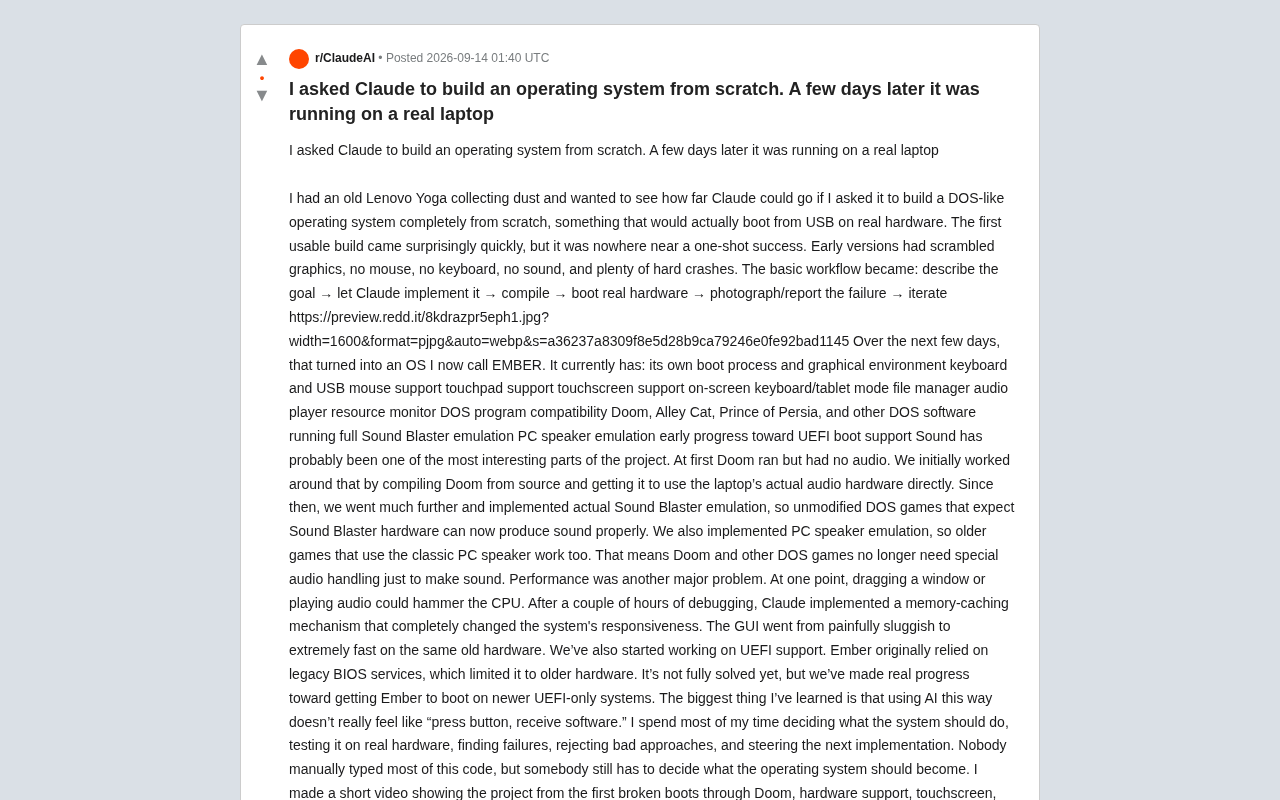
Building an Operating System from Scratch with Claude: How EMBER Ran on a Real Laptop
A developer built EMBER, a DOS-like OS, from scratch using Claude in just days. It runs Doom, emulates Sound Blaster audio, supports touchscreens, and boots on real hardware.
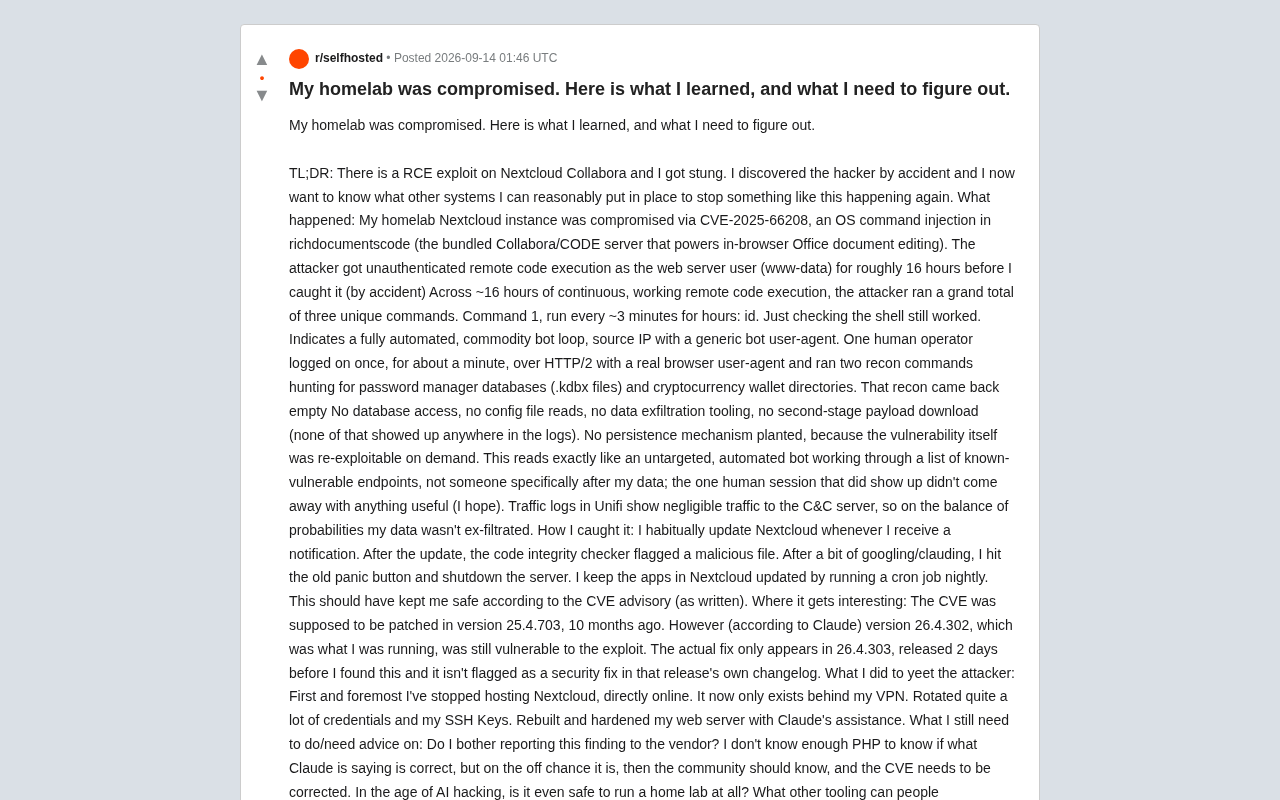
Homelab Compromised: A Nextcloud RCE Incident and Lessons for Home Server Security
A homelab user's Nextcloud instance was breached via CVE-2025-66208. The attacker lurked 16 hours while the official patch advisory was misleading. Key lessons for home server security.
How Far Away Are Home AI Robots? Technical Bottlenecks and Timeline Predictions
When will home AI robots reach ordinary households? We analyze core technical bottlenecks, timeline predictions, and the realistic path from single-function devices to general-purpose assistants.