AI Boosts Productivity but Creates Management Headache: Over Half of Managers Struggle to Evaluate Employee Output
Survey shows over half of managers feel AI makes evaluating employee performance harder.
AI is expected to boost productivity, but a new survey shows it currently looks more like a troublemaker for managers: over 50% say evaluating employee performance has become harder since their teams adopted AI. AI compresses traditional evaluation signals like time spent, process visibility, and skill proficiency, making "human contribution" hard to measure and blurring the line between high and low performers. Most organizations lack evaluation standards for AI-assisted work, forcing managers to apply old frameworks to new problems. Some teams are trying process documentation, AI usage disclosure, and results-oriented metrics, but no consensus has formed, and these practices risk employee resentment toward monitoring. The article concludes that AI's productivity dividend is real, but evaluation systems clearly lag behind, leaving management's efficiency gains promise in question.
AI is widely expected to boost productivity, but a new survey shows that for managers, it currently looks more like a troublemaker. More than 50% of managers say that after their teams adopted AI, evaluating employee performance has actually become more difficult.
The Flip Side of Efficiency Gains: Evaluation Systems Break Down
AI tools do shorten task completion times and lower the barrier to certain skills, but managers' frustration lies in this: when employees complete work with the help of AI, the "human contribution" of the output becomes hard to measure. A report, a piece of code, a design mockup—it might be human-led, or it might be AI-generated and then lightly tweaked by a person. The evaluation signals managers previously relied on—time spent, process visibility, skill proficiency—all fail once AI enters the picture.
More than half of the managers surveyed admit they are unsure how much of the work employees submit actually reflects individual ability. This uncertainty directly impacts performance management, promotion decisions, and team division of labor.
The Challenge of "Human Contribution" and Attributability
In organizational behavior research, the premise of performance evaluation is that output can be reliably attributed to a specific individual. AI-assisted work breaks this premise by essentially introducing "distortion in the proxy signal between output and individual ability": when the tool itself can significantly raise the floor of output, lower-ability individuals using AI may present surface results approaching those of higher-ability individuals, while the incremental contribution of higher-ability individuals is diluted by the tool effect. Academics typically call this the "attributability" problem—it's not that the output has changed, but that the chain mapping output back to the person has become unreliable. At the same time, AI-generated content often goes through multiple rounds of human-machine iteration, with process traces scattered across conversation records, generation logs, and manual edits. Traditional "process visibility" thus degrades from continuously observable to fragmented—or even non-retraceable—further amplifying evaluation uncertainty.
Why Managers Are More Anxious Than Employees
Employees care about whether AI can help them finish tasks faster; managers care about quality attribution and replicability of task completion. When AI makes outputs "look pretty much the same," distinguishing high from low performers becomes dramatically harder. The observation windows traditional evaluation relies on—who's working overtime, who's revising repeatedly, who's solving thorny problems—are compressed or even eliminated in AI-assisted workflows.
Another practical problem is that most organizations have yet to establish evaluation standards for AI-assisted work. Managers are forced to handle new problems within old frameworks, and anxiety grows accordingly.
"Signal" and "Noise" in Performance Evaluation
The observation windows managers rely on—overtime, repeated revisions, tackling difficult problems—are "signals" in evaluation theory: they correlate with true ability but are not ability itself; they are merely observable proxy indicators. Signals are effective because they are hard to fake at low cost. After AI enters the picture, the cost of producing these signals drops sharply—rapid generation and multi-version iteration become cheap—and signal distinctiveness is drowned out by noise. When signals are no longer scarce, managers' judgments can only rely more on hard-to-quantify output quality and contextual judgment—precisely the weakest link in old evaluation frameworks. This also explains why anxiety is concentrated on the management side: they bear the responsibility of converting fuzzy signals into decisions about promotions, division of labor, and resource allocation.
Short-Term Fixes and Long-Term Challenges
Some teams are beginning to try process documentation, AI usage disclosure, and using output quality rather than time spent as core metrics. But these practices have yet to form a consensus and can easily trigger employee resentment toward monitoring. For managers, the productivity dividend from AI is real, but the evaluation system's adaptation speed clearly lags behind the pace of tool adoption.
More than 50% of managers say evaluating employee work has become more difficult since adopting AI.
Until evaluation standards catch up, AI's promise of "efficiency gains" for management will likely remain questionable.
Governance Tensions in AI Usage Disclosure and Process Documentation
Process documentation and AI usage disclosure are essentially about rebuilding "auditability": leaving traceable records of every human-machine collaboration to restore the attribution chain needed for evaluation. But such practices have an inherent tension with employee privacy and psychological safety—when documentation is perceived as surveillance, employees may turn to avoidance behaviors, such as hiding AI usage or deliberately performing the process, which further distorts evaluation signals. Therefore, the key to short-term fixes is not whether to document, but the granularity, purpose, and manner of disclosure: documentation used to improve collaboration and calibrate standards has a very different effect on employee behavior than documentation used for reward-and-punishment ranking. This is also why related practices have yet to form organization-level consensus.
One-line Summary
Survey shows over half of managers believe AI makes evaluating employee performance more difficult.
Paragraph Summary
AI is expected to boost productivity, but a new survey shows that for managers it currently looks more like a troublemaker: more than 50% of managers say that after their teams adopted AI, evaluating employee performance has become harder. The reason is that AI compresses traditional evaluation signals such as time spent, process visibility, and skill proficiency; the "human contribution" in output is hard to measure, and the distinction between high and low performers diminishes. Most organizations have yet to establish evaluation standards for AI-assisted work, forcing managers to handle new problems within old frameworks. Some teams are trying process documentation, AI usage disclosure, and results-oriented metrics, but no consensus has formed, and these practices easily trigger employee resentment toward monitoring. The article concludes: AI's productivity dividend is real, but the evaluation system's adaptation clearly lags, and management's "efficiency gains" promise still warrants a question mark.
Related articles
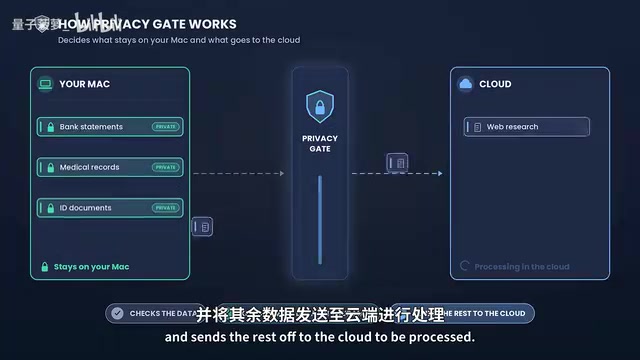
Perplexity Hybrid Compute Tested: Privacy Data Never Leaves the Mac
Perplexity Hybrid Compute tested: how PrivacyGate intercepts sensitive data, how local and cloud models divide work, model differences on 16GB vs 32GB Macs, and privacy protection in real scenarios like bank statements and medical records.

Big Fat Fish Roasts Mainstream LLMs at Home and Abroad: Doubao Takes the Crown, DeepSeek Tied for First
Bilibili creator Big Fat Fish roasts mainstream LLMs: Doubao tops for emotional value, DeepSeek ties first for open-source value, with ERNIE, Hailuo, Yuanbao, Kimi, Qwen, Kling, Claude, Gemini, and Grok each branded with a distinct persona.

How to Truly Test AI Agents Before Production? A Practical Testing and Monitoring Framework
BotGage founder Pramin Pradeep shares a three-step framework for testing AI Agents before production: Agent registration visibility, red teaming, and production observability — plus a real case cutting QA costs from $180K to $80K and an analysis of IT roles shifting to Agent supervisors.