AI Bridges the Digital Divide: How ChatGPT Empowers Learning and Entrepreneurship Across All Ages
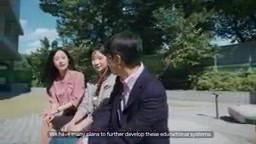
ChatGPT and Codex are democratizing skills and learning for people of all ages and backgrounds.
OpenAI's ChatGPT and Codex are dismantling the digital divide by making complex skills accessible through natural language. From personalized coding education to empowering unprepared retirees, traditional artists animating their work, and solo entrepreneurs building full brands alone — AI is proving to be a lifelong learning partner that transcends age, background, and technical experience.
When Technology Is No Longer a Barrier
For a long time, the biggest challenge in closing the digital divide was that "technology itself was too hard." The concept of the Digital Divide was first introduced by the U.S. National Telecommunications and Information Administration (NTIA) in the 1990s, originally referring to the gap between those with and without internet access. Over time, the concept expanded to a deeper "capability gap" — whether individuals can effectively use digital tools to create value. For people without a technical background, skills like programming, design, and video production feel like an insurmountable wall. Coding in particular has long demanded logical thinking, syntax memorization, and extensive trial and error.
But with the widespread adoption of ChatGPT and OpenAI's suite of tools, that barrier is being dramatically lowered. OpenAI's Codex (a code-generation model based on the GPT architecture) and ChatGPT have fundamentally restructured the entry point: users simply describe their intent in natural language, and the system generates working code — compressing the time from "zero to result" from weeks down to hours. Researchers refer to this paradigm shift as the "Democratization of Capability."
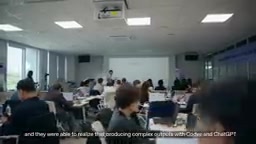
In an educational program co-organized by Fast Campus and OpenAI, a core finding was repeatedly validated: AI tools make previously complex tasks genuinely accessible. According to participant feedback, with the help of Codex and ChatGPT, learners were able to produce their own working results within one hour. This "learn and apply immediately" experience is the most tangible proof that AI is lowering the learning threshold.
How AI Is Reshaping Personalized Learning in Education
One of the most significant transformations AI has brought to education is personalized assessment and feedback. Traditional teaching has always struggled to truly tailor instruction to each student, but AI tools can provide customized learning paths based on each learner's pace and characteristics.
The educational theory behind this shift traces back to Bloom's "2 Sigma Problem": a landmark 1984 study demonstrated that one-on-one tutoring could raise student performance by an average of two standard deviations. Yet due to cost constraints, personalized tutoring has long been a privilege available only to students whose families could afford private instruction. AI, as an infinitely scalable "personal tutor," theoretically makes this effect accessible to every learner. In coding education specifically, Codex can point out errors in real time and offer correction suggestions — creating an instant feedback loop that traditional classrooms struggle to replicate, dramatically shortening the time between making a mistake and correcting it.
Program organizers explain that they are using Codex to provide students with personalized assessments and feedback, allowing learners to "study and grow alongside an AI that adapts to their own pace." This is not about replacing teachers with technology — it's about giving every learner a highly responsive, deeply adaptive learning partner. Based on strong practical outcomes, the program has already planned further integration into the broader education system.
From "Too Afraid to Try" to "It's Not That Hard"
What participants gained went beyond specific skills — it was a shift in mindset. When people personally experience that "creating complex results with Codex and ChatGPT isn't actually that hard," their fear of technology naturally dissolves. Building that confidence is often more valuable than mastering any single skill.
How AI Helps Older Adults Navigate "Unprepared Retirement"
One of the most emotionally resonant themes in this initiative is how AI can help older adults navigate a major life transition. The program's founder openly acknowledged that one of the increasingly pressing issues in Korean society is "unprepared retirement."
This phenomenon has deep structural roots. Korean corporate culture has long been shaped by seniority-based systems and mandatory retirement ages — typically between 55 and 60 — yet average life expectancy now exceeds 83 years. That gap means retirees may face 20 to 30 years of life still ahead of them. At the same time, digital re-employment rates among middle-aged and older Koreans rank among the lowest in OECD countries, partly due to a lack of digital skills. This "skills gap" makes AI educational tools not just a means of personal growth, but an important public issue in addressing workforce reactivation in an aging society. The founder's own father left the workforce without preparation and fell into hardship — which became the personal motivation behind his mission to help others in similar situations.
This perspective reveals a deeper social dimension of AI education: it doesn't only serve young tech professionals. It can serve as a bridge helping older adults reintegrate into the digital world and continue contributing professionally. As one participant put it, "The knowledge accumulated over 30-plus years shouldn't simply be buried — it should be used with tools like ChatGPT to live a better life."
Real Stories Across Generations: The Many Faces of AI Inclusion
The program attracted participants from diverse backgrounds and age groups. Their stories collectively paint a vivid picture of how AI is bridging the digital divide in practice.
Helping Older Women Who Are Unfamiliar with Digital Tools
One participant mentioned that the mothers of people her age are generally unfamiliar with AI and computers. She had been helping these older women get started with technology, and after learning that AI tools could support her own career, she joined the program on her daughter's recommendation — describing the experience as "eye-opening."

A Traditional Bird-and-Flower Painter's Journey into AI Animation
Another inspiring case came from a traditional artist who paints bird-and-flower and butterfly compositions. She noticed that younger artists were animating their work and turning it into videos, and she wanted to learn how to make the butterflies and birds in her paintings "come alive" — presenting traditional art in a more dynamic form.
Behind this exploration lies an increasingly mature AI creative toolchain. The current mainstream workflow includes using Stable Diffusion or Midjourney for style transfer and detail enhancement of static artwork, then combining tools like AnimateDiff or RunwayML's Gen-2 to bring elements to life with fluid motion. The accessibility of this toolchain has improved dramatically in recent years, with non-technical users able to operate it through graphical interfaces. More importantly, dynamic video content spreads far more effectively on social media than static images — AI animation effectively helps traditional art bridge the medium gap, reaching younger audiences on short-video platforms. This vividly illustrates how AI can breathe entirely new dimensions of expression into traditional crafts.

Full-Cycle AI Empowerment for Solo Entrepreneurship
Another participant was in the middle of transitioning from a "company brand" to building a personal brand, stepping onto a new entrepreneurial starting line. She identified the biggest pain point of going independent: not enough hands. AI, she found, could provide meaningful support across multiple touchpoints — product detail page creation, packaging design, and shoot planning.
This reflects the broader rise of the "Solopreneur" model. Traditionally, launching a brand involves product photography, copywriting, packaging design, and social media management — roles that require a team, with high startup costs. AI tools have restructured this cost equation: ChatGPT handles copywriting and content optimization, Midjourney generates product scene imagery, and AI-assisted design tools complete packaging concepts — giving her the ability to run an entire brand launch as a team of one. The Harvard Business Review has described this trend as the "AI-driven entrepreneurship cost revolution" — small, beautifully focused personal brands now have the foundational capabilities to compete with professional teams.
Closing: AI as a Lifelong Learning Partner That Transcends Age
From personalized education in the classroom, to knowledge reactivation for retirees, to the explorations of traditional artists and independent entrepreneurs — these stories all point to the same conclusion: AI is becoming a lifelong learning partner that transcends age and background.
The digital divide has never been solely about access to devices or information. At its core, it's a psychological barrier — "whether you dare to take the first step." When tools like ChatGPT and Codex translate complex capabilities into natural conversation, the starting point for learning is leveled in an unprecedented way. No matter where someone is in life, everyone now has the opportunity to use AI to redefine what's possible for themselves.
Key Takeaways
Related articles
What Is Vibe Coding? The AI Programming Skill Every Developer Needs
What is Vibe Coding? Learn how AI programming is reshaping dev teams, why traditional programmers face displacement, and why Cursor & Claude Code matter.
Making Rocks Think: A Philosophical Exploration of Generative AI and Information Compression
From a viral Reddit post to deep AI theory: why compression equals understanding, the Library of Babel thought experiment, semantic compression, and the Hutter Prize.
Irregular Warns: Four AI Lab Security Breaches Traced to the Same Root Cause
Irregular reveals four AI lab security breaches share a single root cause, exposing systemic risks from technology stack homogeneity across the AI industry.