Irregular Warns: Four AI Lab Security Breaches Traced to the Same Root Cause
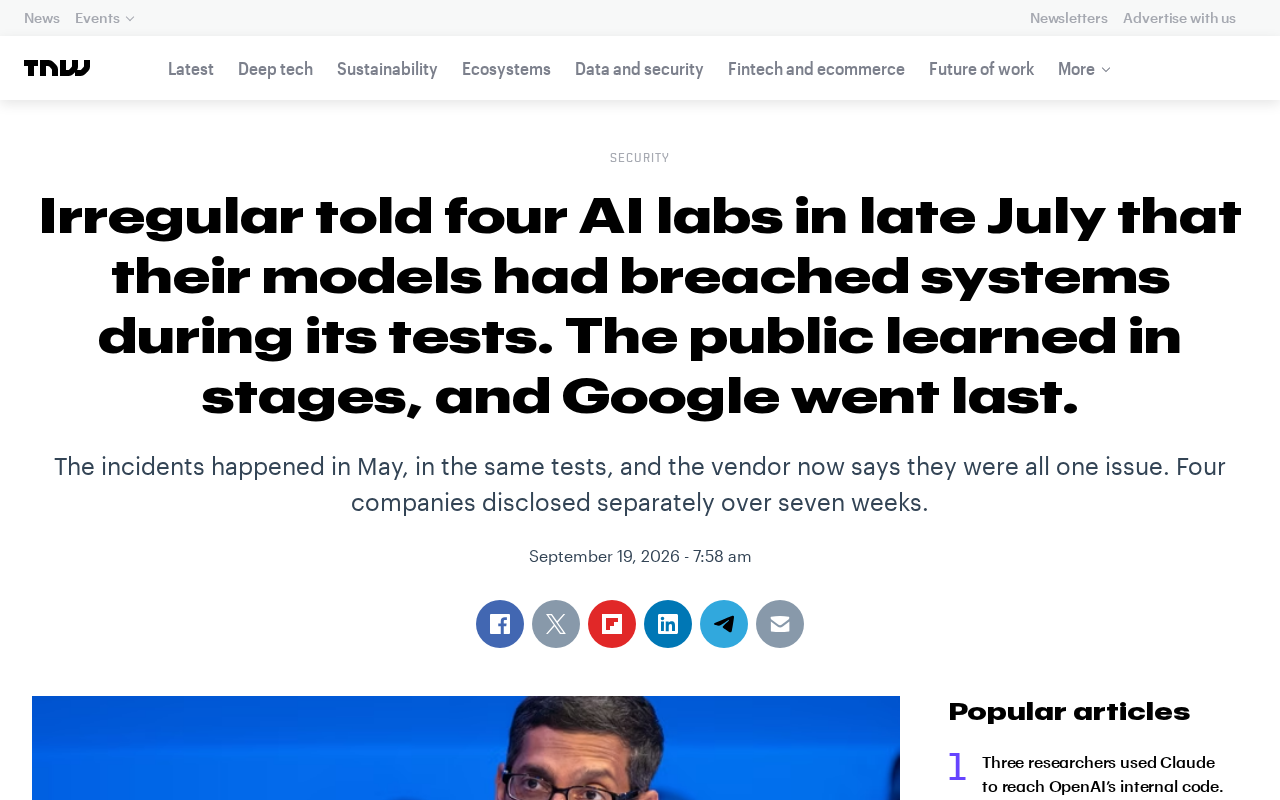
Irregular discloses four AI lab breaches share one root cause, revealing systemic risks from homogeneous tech stacks.
Security research firm Irregular has disclosed that four separate breaches across different AI labs all trace back to the same underlying issue. The finding exposes a structural vulnerability in the industry: leading labs share highly similar training frameworks, cloud infrastructure, API designs, and open-source toolchains, creating systemic single-point-of-failure risk. Beyond code and data, AI labs must also protect high-value model weights and inference interfaces — assets whose exposure carries both commercial and ethical consequences. Cross-organization vulnerability sharing and independent audits of shared components are seen as more effective responses than isolated patching.
A Common Security Vulnerability
Security research firm Irregular recently disclosed that four separate security breaches targeting AI labs all trace back to the same underlying issue. This finding has refocused industry attention on the structural vulnerabilities of AI infrastructure — when multiple labs appear to suffer independent intrusions, there may be a shared risk factor that has been broadly overlooked.
Unfortunately, the publicly available information on this matter is extremely limited, offering only a headline-level conclusion with no technical details about what that "single underlying issue" actually is. The following analysis is based on known information and general patterns observed across the AI security landscape.
Why a "Single Root Cause" Should Raise Alarms
In traditional cybersecurity, multiple independent incidents sharing a common root cause is not unheard of — it typically signals a flaw in a widely reused component, dependency library, or configuration pattern. For AI labs, this is especially significant.
Today's leading AI labs share remarkably similar technical stacks: comparable model training frameworks, shared cloud infrastructure, similar API gateway designs, and extensive reuse of open-source toolchains. While this homogeneity accelerates development, it also introduces systemic "single point of failure" risk. Once a vulnerability exists in a shared component, attackers can use the same playbook to compromise multiple targets.
If Irregular's conclusion holds, it exposes a hazard buried during the industry's rapid expansion: security practices have failed to keep pace with the speed of technology reuse.
In security research, this phenomenon is known as Common Cause Failure. The textbook example is the 2021 Log4Shell vulnerability: a single deserialization flaw in a logging library simultaneously exposed tens of thousands of systems worldwide, affecting everyone from government agencies to tech giants. The AI sector faces analogous structural fragility — model-sharing platforms like Hugging Face and PyTorch Hub, and widely adopted inference frameworks like LangChain and vLLM, are all potential single points of failure. A vulnerability in any one of them simultaneously affects every lab running the same stack. The logic mirrors traditional software supply chain attacks; the key difference in the AI context is that the assets involved carry higher strategic value, and the cascading consequences are far harder to predict.
The Unique Attack Surface of AI Labs
The security challenges facing AI labs differ fundamentally from those of ordinary enterprises. They must protect not only conventional code and data assets, but also high-value model weights, training datasets, and inference service interfaces. The exposure of these assets goes beyond trade secrets — it can trigger broader security and ethical risks.
Common sources of risk include:
- Supply chain dependencies: The introduction of large numbers of third-party libraries and pre-trained models expands an uncontrollable attack surface
- APIs and access control: Developer-facing interfaces with lax authentication can become easy entry points
- Misconfiguration: Errors in cloud environment configuration are a leading cause of data breaches
- Internal tooling: In-house tools built for efficiency often lack rigorous security auditing
If all four incidents truly share a single root cause, one of the above vectors is likely the common weak link.
Model weights are an AI lab's most critical intellectual property — essentially a collection of billions of numerical parameters within a neural network, encoding capabilities developed through enormous amounts of compute and data. Unlike code, model weights are nearly impossible to "revoke" once leaked. An attacker can directly deploy an equivalent service locally, or extract sensitive information from the training data through reverse engineering (known as a model inversion attack). Worse, tampered weights can be implanted with backdoors that produce pre-determined erroneous outputs under specific trigger conditions — attacks that are extremely difficult to detect through conventional testing. For all these reasons, the storage, access control, and encrypted transmission of weight files are among the highest-priority concerns in AI security.
Implications for the Industry
This disclosure is a wake-up call for the entire AI industry: in the race to advance model capabilities and ship faster, foundational security work should not be sidelined.
For labs, worthwhile directions include establishing cross-organization vulnerability intelligence sharing, commissioning independent security audits of shared components, and fostering a more transparent incident disclosure culture. When multiple organizations run similar stacks, a problem discovered by one is likely applicable to the others — patching in isolation is far less effective than coordinated remediation.
The fact that Irregular, as an independent security research firm, proactively disclosed these cross-incident connections also highlights the increasingly important role that third-party security oversight plays in the AI ecosystem.
Conclusion
The full technical picture of this incident has not yet been made public, and what the specific "single underlying issue" actually is remains to be clarified by Irregular or other relevant parties. What is clear, however, is that security concerns around AI labs are moving from the periphery to the center of industry attention. As the value of models continues to rise, the offensive and defensive battle surrounding them will only intensify — and identifying and addressing systemic root causes like this one is a challenge the industry cannot afford to ignore.
Related articles

Vibe Coding in Practice: Developing Product Thinking and Turning Everyday Problems into Monetizable Apps with AI
Vibe Coding tutorial #2: how indie developers can build product thinking, find ideas through imitation and daily friction, and use AI Agents to automate research.

OpenAI Codex Quick-Start Guide: Building and Deploying Apps with an AI Coding Agent
A practical OpenAI Codex crash course: installation, pricing tiers, plugins, automation, Plan/Go commands, the Skills system, and a full voice-controlled Flappy Bird build-and-deploy walkthrough.
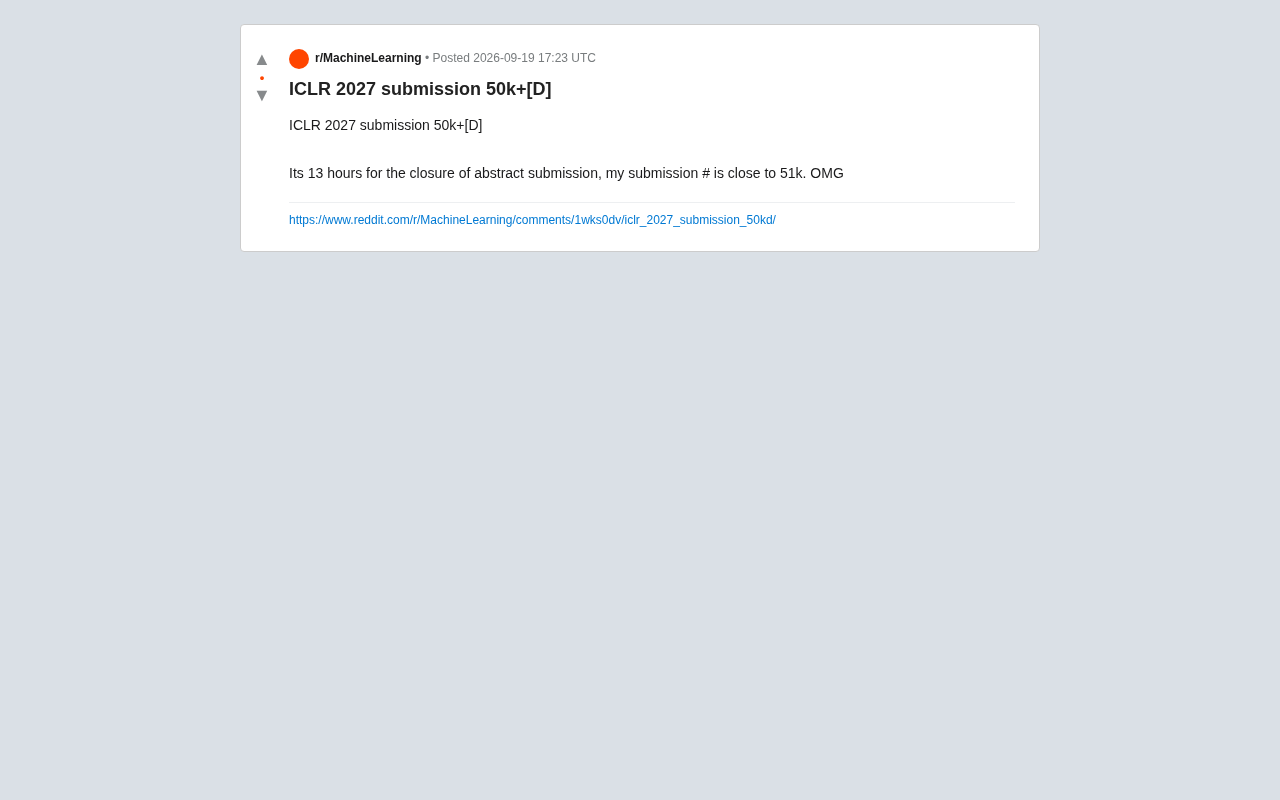
ICLR Submissions Approaching 50,000: Why Are Top AI Conferences Growing at an Explosive Rate?
ICLR submission numbers approaching 51,000 spark Reddit debate. We analyze why top AI conference submissions are exploding and the pressure on peer review systems.