AI Collaboration Through One Tweet: How Open Source Communities Shape Frontier Projects

Open-source AI frontier projects rely on large-scale collaboration, with invisible contributions and governance pressures coexisting.
A short tweet reflects the collaborative essence of open-source AI: from PyTorch and Hugging Face to flash-attention and vLLM, modern AI infrastructure is almost entirely the product of large-scale cross-institutional collaboration. The article outlines three typical forms of collaboration—dual-track synchronization of papers and code, division of labor between maintainers and contributors, and temporary cross-organizational alliances—and emphasizes that invisible contributions such as documentation, testing, and reproduction are often underestimated yet key to a project's survival. It also points out that collaboration faces real pressures including contribution attribution, maintainer burnout, and computing thresholds, which are driving new models such as foundation hosting, corporate sponsorship, and open core. For developers, integrating into a collaborative network and solving specific problems is often more leveraged than building wheels from scratch.
A short tweet, a string of project names, and the shared memory of hundreds of contributors — the progress map of open-source AI is often hidden in the "pride" of its participants.
What One Tweet Can Tell Us
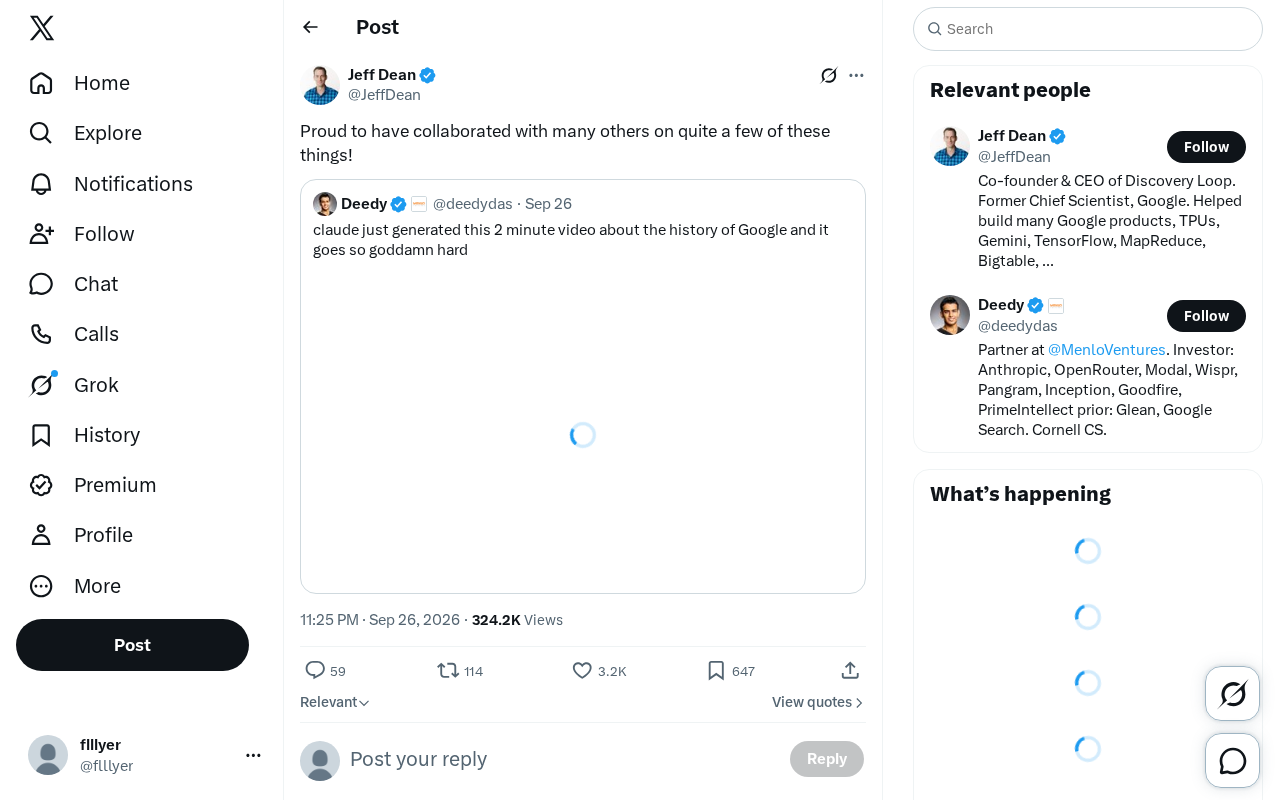
On X (formerly Twitter), a developer posted a short tweet: "Proud to have collaborated with many others on quite a few of these things!" The attached image was a list of projects or papers, with names crossed out or checked off, partially visible.
The tweet itself doesn't elaborate on technical details, but it reflects a phenomenon that more and more people are paying attention to: modern AI frontier projects are almost all products of large-scale collaboration. From PyTorch to Hugging Face Transformers, from flash-attention to vLLM, it's hard to find any "large model infrastructure" developed in a closed manner by a single person or single institution.
The author of this tweet didn't claim sole credit, but attributed the achievements to "many others." Behind this statement is an entire open-source collaboration mechanism at work.
How Collaboration Became the Default Mode for AI Infrastructure
Looking back at breakthroughs in the AI field in recent years, a pattern repeatedly emerges: the more foundational and general-purpose something is, the more it depends on cross-institutional collaboration.
- Training frameworks and operator libraries: Attention optimization libraries like flash-attention were initially initiated by a single researcher, but quickly absorbed PRs from different companies and universities. Its performance improvements are not the one-time result of a single team, but a relay spanning several years.
- Inference and serving layer: After projects like vLLM and TensorRT-LLM were open-sourced, community contributors drove the implementation and optimization of key features such as continuous batching and PagedAttention.
- Model and data toolchains: The reason the Hugging Face ecosystem became a de facto standard is precisely because countless developers contributed model cards, tokenizers, fine-tuning scripts, and evaluation benchmarks.
These projects share one thing in common: no single institution can cover all directions on its own. Computing power, data, engineering experience, and application scenarios are distributed across different organizations, and collaboration is no longer a "nice-to-have" but a "necessary condition."
flash-attention is a GPU attention computation optimization library that uses tiling and recomputation techniques to significantly reduce the memory read/write volume of Transformer attention, thereby achieving several-fold speedups in long-sequence scenarios. It was initially proposed by researchers such as Tri Dao, after which community contributors continuously added support for new GPU architectures, low-precision formats, and fused operators. vLLM, on the other hand, is a high-throughput engine for large model inference and serving. Its core innovation, PagedAttention, borrows the idea of virtual memory paging from operating systems, splitting the KV cache into dynamically allocatable blocks to significantly reduce memory fragmentation; continuous batching allows requests to dynamically enter and leave batches during generation, improving GPU utilization. These projects are not products of closed R&D, but the relay result of continuously absorbing external PRs.
Three Typical Forms of Open-Source AI Collaboration
1. The "Dual-Track Synchronization" of Papers and Code
Many AI projects first appear as papers, after which accompanying code is open-sourced on GitHub. Collaborators reproduce, improve, file issues, and submit PRs on this basis. Papers propose ideas, and code turns ideas into reusable tools.
Under this model, citations and acknowledgments are themselves a record of collaboration. The list enumerated in a single tweet often corresponds to contributors across multiple papers and repositories.
In open-source AI projects, reproduction often tests an idea better than the paper itself. Reproduction reports typically record whether independent researchers or teams can obtain the results claimed in the paper under the same or similar conditions, along with hyperparameters, data versions, random seeds, and hardware configurations. It is a key link in the collaboration chain: when reproduction fails, the community discusses through issues to locate discrepancies, and then corrects the paper's statements or code implementation. Many projects also maintain "model cards" and "data cards" that describe scope of applicability, biases, and limitations, and these documents likewise rely on external contributors to continuously supplement them.
2. The Division of Labor Between Maintainers and Contributors
Mature open-source AI projects usually have a clear hierarchy: core maintainers are responsible for direction judgment and code merges, while contributors submit fixes, optimizations, and documentation. The two maintain their rhythm through issue tracking and discussion forums.
This division of labor allows projects to absorb fresh external perspectives while keeping direction stable. Many key optimizations — from kernel fusion to memory management — initially came from "external" PRs.
A PR (Pull Request) is the core mechanism of code collaboration: after a contributor completes changes on a branch, they initiate a merge request to the main repository, which maintainers review, discuss, and decide whether to merge. Issues are used to record bugs, feature suggestions, and design discussions, forming a traceable decision history. Mature projects usually set up "good first issue" labels to help new contributors find suitable tasks to start with. CI/CD (Continuous Integration/Continuous Deployment) automatically runs tests, code style checks, and some benchmark tests on every PR, reducing the review burden on maintainers. This mechanism allows distributed collaboration to continuously absorb external perspectives while maintaining code quality.
3. Temporary Cross-Organizational Alliances
When a problem is large enough (such as training a larger model or unifying evaluation standards), researchers from different companies and laboratories will temporarily form working groups. Such collaborations often have no formal contracts and are driven by shared engineering pain points and public discussion.
The Underestimated "Invisible Contributions"
It's worth noting that many of the collaborators mentioned in the tweet do not appear in prominent positions in paper author lists or project READMEs.
They might be:
- Anonymous developers who submit reproduction experiments and point out bugs;
- Engineers who maintain CI/CD and GPU cluster scripts;
- Community members who translate documentation and organize FAQs;
- Institutions that provide computing power or data support but do not take credit.
These contributions are hard to quantify, but they are key to whether a project can survive long term. The "pride" of open-source AI comes not only from algorithmic breakthroughs, but also from this recognized collective effort.
The Real Pressures Facing Collaborative Models
Collaboration is not without tension. As AI projects scale up, several issues are becoming increasingly prominent:
- Contribution attribution: When core contributors come from commercial companies, will an open-source project's roadmap be influenced by commercial goals?
- Maintainer burnout: Key maintainers often take on large amounts of work unpaid or semi-unpaid, and long-term sustainability is questionable.
- Computing threshold: Training and inference optimization increasingly depend on scarce GPU resources, raising the cost of participation for individual contributors.
These pressures are changing the shape of collaboration: some projects are turning to foundation hosting, some are bringing in corporate sponsorship, and others are adopting an "open core" model.
"Open core" is a common business model: the basic version of a project is released under an open-source license, while enterprise-grade features, hosted services, or premium support are sold as commercial products. This model can provide funding for maintainers, but it may also spark community disputes over feature boundaries and roadmap priorities — which capabilities remain in the open-source version and which are placed in the commercial version is often decided by the core team. Foundation hosting (such as the Linux Foundation or the Apache Software Foundation) disperses control over a project from a single company through a neutral governance structure, but it also requires projects to bear heavier compliance and governance costs. Understanding these governance forms helps in judging the long-term direction of an open-source AI project.
Implications for Developers
If you are an AI engineer or researcher, this tweet conveys at least two signals:
- The threshold for participation is changing: Single-point innovation is still valuable, but being able to integrate into a collaborative network and understand upstream and downstream interfaces is often more leveraged than "building wheels from scratch."
- A collaboration record is your résumé: PRs, issue discussions, and reproduction reports are all traceable proof of contribution. Rather than waiting for a big paper, it's better to first solve specific problems in mature projects.
AI's progress is not the solo performance of a few geniuses, but more like a band that constantly has people joining and leaving. The reason that tweet says "Proud" is probably because those involved know: the achievement belongs to many people, and that fact itself is worth being proud of.
FAQ
Q: Why is it easier for open-source AI projects to form collaborations? A: Because foundational infrastructure is highly general-purpose, different institutions can share improvement results without duplicating investment. The openness of code and papers also lowers the barrier to collaboration.
Q: Are there still opportunities for individual developers to participate? A: Yes. Documentation, testing, reproduction, and small-scale optimization are all common entry points. Many projects are friendly to first-time contributors and label "good first issue."
Q: Does collaboration dilute innovation? A: No. Collaboration solves problems of engineering scale and reuse. Frontier ideas can still be proposed by small teams or individuals, and then amplified through collaboration.
One-line Summary
Open-source AI frontier projects rely on large-scale collaboration, with invisible contributions and governance pressures coexisting.
Paragraph Summary
A short tweet reflects the collaborative essence of open-source AI: from PyTorch and Hugging Face to flash-attention and vLLM, modern AI infrastructure is almost entirely the product of large-scale cross-institutional collaboration. The article outlines three typical forms of collaboration — dual-track synchronization of papers and code, division of labor between maintainers and contributors, and temporary cross-organizational alliances — and emphasizes that invisible contributions such as documentation, testing, and reproduction are often underestimated yet key to a project's survival. It also points out that collaboration faces real pressures including contribution attribution, maintainer burnout, and computing thresholds, which are driving new models such as foundation hosting, corporate sponsorship, and open core. For developers, integrating into a collaborative network and solving specific problems is often more leveraged than building wheels from scratch.
Related articles

Agent Skills Beginner's Guide: From Concepts to Multi-Agent Collaboration in Practice
A comprehensive guide to Agent Skills: core concepts, components, the importance of Description, standardization, beginner learning paths, and multi-agent collaboration.

One Neuron Detects Both Cats and Cars? We Reproduced It and Found a New Explanation
The cat-car neuron reinterpreted: researcher Cammarata argues it distinguishes pointy from round, not cats from cars. We reproduced the experiment and found the new explanation holds on most inputs—but cars are the exception. The interpretability debate continues on language models.

MCP Server + Python Assistant: A MicroStation Design Efficiency Revolution
Explore the early preview of the MCP Server and Python Assistant in MicroStation 2026: custom tools in five minutes, intelligent sheet index checks, and how AI is reshaping drawing workflows to unleash design creativity.