AI Cracks the 167-Year-Old Riemann Hypothesis? The Method of Proof Matters More Than the Answer

AI and mathematicians find a proof of the Riemann Hypothesis; 17 million lines of code pass verification, but human understanding has only just begun.
Mathematician Alperger and AI model Kra claim to have found a proof of the 167-year-old Riemann Hypothesis, verified by multiple independent systems, though official recognition from the Clay Mathematics Institute is pending. The proof spans 17 million lines of formalized code, with AI now a participant in proof construction. The Riemann Hypothesis concerns prime distribution; if established, many conditional results become unconditional, though cryptographic security is not directly threatened. The deeper significance: humanity's speed of obtaining rigorous conclusions may be outpacing our understanding, reshaping research's division of labor.
Title
AI Cracks the 167-Year-Old Riemann Hypothesis? The Method of Proof Matters More Than the Answer
Meta Description
AI and mathematicians collaborate to find a proof of the Riemann Hypothesis that passes machine verification. Behind 17 million lines of code, the speed at which humans understand conclusions is being surpassed. This article examines the significance of the Riemann Hypothesis and the deeper impact of AI reshaping the division of labor in scientific research.
Article Content
The mathematics world recently received a peculiar piece of homework: a problem that has been open for 167 years, with a proof that has passed machine verification while the human-readable version of the solution notes is still being compiled. How long is this homework? 17 million lines of code—reading a math paper used to require just a cup of coffee, but this time you might need to request a server first.
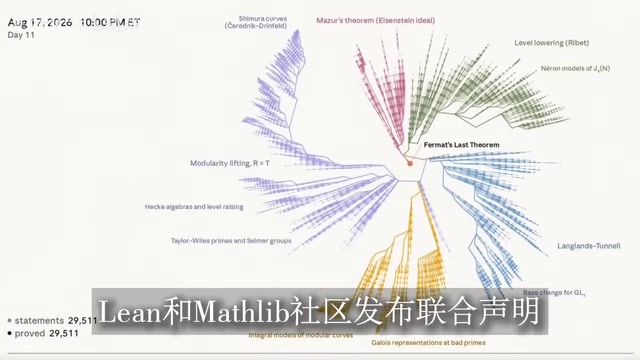
According to information shared by a Bilibili content creator, on November 20, mathematician Alperger announced that he and AI model Kra had found a proof of the Riemann Hypothesis. The next day, Lin Er and the Mathlib community issued a joint statement: the proposition being proved had not been substituted, and the derivation had passed multiple independent verification systems. Of course, official recognition from the Clay Mathematics Institute has not yet been completed—after all, securing a place in mathematical history and receiving the $1 million prize are two separate processes.
The Riemann Hypothesis: The Ultimate Code of Prime Distribution
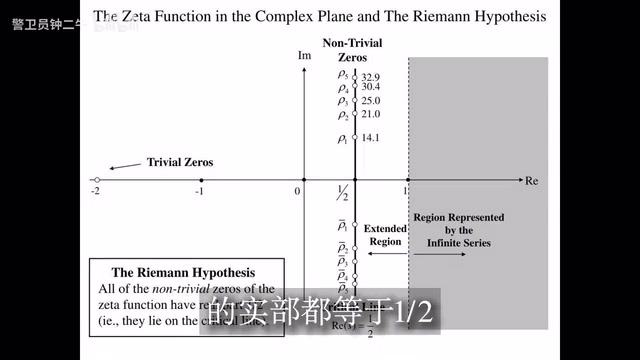
What exactly is the Riemann Hypothesis? Simply put, it studies the distribution patterns of prime numbers. 2, 3, 5, 7... the gaps between primes appear irregular, but there are profound mathematical patterns in their overall distribution. In 1859, Riemann discovered that the distribution of primes is closely related to a mathematical object called the Zeta function, and he conjectured that the real part of all non-trivial zeros of this function equals one-half.
It sounds like an advanced calculus exam question, but its weight is enormous. It would allow mathematicians to give a much stricter control over the error in how prime counts deviate from the overall trend. Once the proof holds, a large number of mathematical conclusions that say "assuming the Riemann Hypothesis is correct" can drop that premise and become unconditionally established theorems.
As for whether bank card passwords will be cracked as a result—no need to notify the bank to work overtime just yet. Understanding the distribution of primes does not equal possessing an algorithm to quickly factor large integers, and the security foundations of cryptography have not been directly shaken by this proof.
The Zeta function (Riemann ζ function) was originally defined as the infinite series ζ(s) = 1 + 1/2^s + 1/3^s + …, which converges when the real part of s is greater than 1. Riemann analytically continued it to the entire complex plane, obtaining a function defined everywhere except for a simple pole at s=1. The so-called "non-trivial zeros" refer to those zeros that are not on the negative even integers (i.e., the trivial zeros). The Riemann Hypothesis asserts that the real part of all non-trivial zeros equals 1/2, meaning they all lie on that critical line in the complex plane.
These zeros are crucial because their positions precisely encode the error term in prime counting. In his 1859 paper, Riemann gave an explicit formula relating the prime counting function π(x) to the Zeta zeros, completely transforming the "noise" of prime distribution into a function of zero positions. The closer the zeros are to the critical line, the better the error control; if any zero deviates, observable deviations in prime distribution would appear. This is also why the conjecture is regarded as the "ultimate code of prime distribution."
Machines Submit First, Humans Catch Up Later
The most noteworthy aspect of this event is not even the Riemann Hypothesis itself, but the way it was proved. Mathematicians participated in the research, Cloud assisted in constructing the proof, and Li Yin was responsible for verifying the logic—the contributions of the three cannot be conflated. But the role AI played in this is no longer limited to being a computational tool.
A more profound change is emerging: the speed at which humanity obtains rigorous conclusions may begin to exceed the speed at which we understand them.
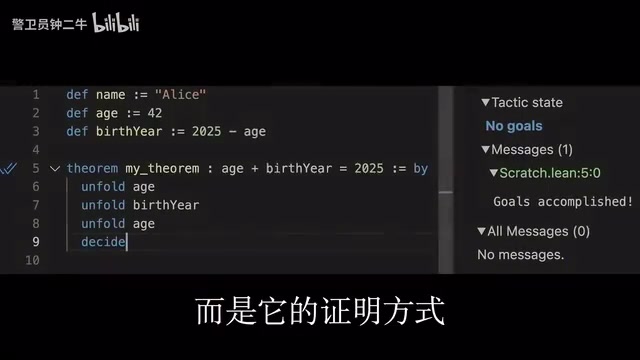
In the past, when mathematicians proposed proofs, they typically also had to provide reasoning processes that peers could read, analyze, and build upon. Now, a massive formal proof can pass verification first, and mathematicians then spend considerable time extracting the core ideas from it. This will change the value division of labor in research: when "finding the proof" is no longer the sole bottleneck, those who can explain the proof, distill the methods, and use those methods to solve new problems will find their work becoming more important.
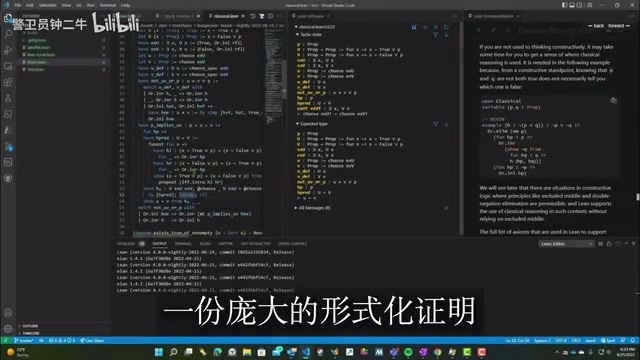
A "formal proof" refers to translating a mathematical proof into a formal language that a computer can check line by line, where every step of reasoning must be mechanically derived from known axioms or already-proven theorems, with no jumps like "obviously" or "similarly." Lean is currently one of the most mainstream proof assistants, and Mathlib is a large mathematics library built on it, containing a vast number of formalized results ranging from basic algebra to analysis.
The advantage of formal proofs is that verification can be fully automated: as long as the proof passes Lean's type checking, it means there are no logical gaps, independent of reviewers' patience and intuition. The cost is astonishing length—an argument that takes a few pages on paper may expand to hundreds of thousands or even millions of lines after formalization. The 17-million-line scale emerged precisely because every tiny step of reasoning must be explicitly written out. This is also the technical foundation that makes "machines submitting first" possible.
The Clay Mathematics Institute announced seven "Millennium Prize Problems" in 2000, each with a $1 million reward, and the Riemann Hypothesis is one of them. But its official recognition has strict rules: the proof must be published in an internationally recognized mathematics journal and undergo a public review period of at least two years before entering the prize evaluation process.
This means that even though formal verification has passed, there is still considerable distance from "official certification." Formal checking can eliminate logical errors, but it cannot determine whether the proposition being proved is exactly the conjecture recognized by the community, nor can it replace the mathematics community's digestion of the proof's significance. Therefore, "securing a place in history" and "receiving the prize money" in this article are two separate processes—not wordplay, but the design of the Millennium Prize rules themselves.
Knowledge Cannot Remain Merely a Perfect Exam Paper
Mathematical progress lies not only in adding a correct conclusion but also in gaining an understanding that did not exist before. Machines can hand in the answer first, but knowledge cannot remain merely a perfect exam paper. The Riemann Hypothesis may have met its proof, but what exactly have we learned from this proof?
This question may be harder to answer than the proof itself.
One-line Summary
AI and mathematicians collaborate to find a proof of the Riemann Hypothesis; 17 million lines of code pass verification, but human understanding has only just begun.
Paragraph Summary
Mathematician Alperger, in collaboration with AI model Kra, claims to have found a proof of the Riemann Hypothesis that has been open for 167 years. The derivation has passed verification by multiple independent checking systems, but official recognition from the Clay Mathematics Institute has not yet been completed. The proof is presented as 17 million lines of formalized code, with AI's role upgraded from a computational tool to a participant in proof construction. The Riemann Hypothesis concerns the distribution patterns of primes; once established, many conclusions relying on this assumption would become unconditional theorems, though it does not directly threaten cryptographic security. The deepest significance of this event is that the speed at which humanity obtains rigorous conclusions may begin to exceed the speed at which we understand them, and the value division of labor in research—explaining proofs and distilling methods—is facing reshaping.
Related articles

ChatGPT Plus Subscription Pitfall Guide: Go/Plus/Pro Tier Comparison and Quick Activation
A complete ChatGPT Plus subscription guide based on a Bilibili tutorial: from registering an account, comparing Go/Plus/Pro tiers, to the practical steps for quickly completing your subscription.

GPT-6.2 Sol/Astra Released! A Step-by-Step ChatGPT Plus Subscription Guide and Tier Comparison
GPT-6.2 Sol/Astra is out—here's a ChatGPT Plus subscription guide: register an account, compare Go/Plus/Pro tiers, and subscribe in a minute.

Comparing Three Channels for Subscribing to GPT Plus in China: Is Website Top-Up the Easiest?
How to subscribe to GPT Plus in China? This article compares website top-up, credit card, and mobile top-up channels—process, cost, and risk—with steps and tips to help you choose wisely.