AI Cracks the Riemann Hypothesis? 170,000-Line Lean Proof Shakes the Mathematics World
A mathematician and Claude produced a 17-million-line Lean proof of the Riemann Hypothesis—humans verified it as true but do not yet understand it.
In November 2026, mathematician Levent Alpogae claimed to have proven the Riemann Hypothesis and the Generalized Riemann Hypothesis with Claude, offering ~17 million lines of Lean formal code rather than a traditional paper. Independent verification has progressed: all 175,187 modules compiled successfully and multiple proof checkers accepted the argument, though full end-to-end checks are still running. The AI proposed mathematical constructions beyond human expectations, creating a knowledge-production mode that is "verifiable but not yet fully understood." The proof does not directly threaten cryptography, since a theorem on prime distribution is not a fast factoring algorithm. On the same day, another mathematician released a ~940-page purely human proof, offering a striking contrast. The article explores the profound implications of "knowing" and "understanding" drifting apart.
An AI-Assisted Mathematical Proof Is Challenging the Boundaries of Human Understanding
On November 20, 2026, mathematician Levent Alpogae published a four-page document on his personal website, claiming that he and Claude had together proven the Riemann Hypothesis, which has confounded humanity for 167 years—and gone even further, resolving the Generalized Riemann Hypothesis as well. But what makes this claim unusual is not the conclusion but the form of evidence: a machine-verifiable proof consisting of approximately 17 million lines of Lean code, so vast in scale that no one has yet been able to fully comprehend its argumentative structure.
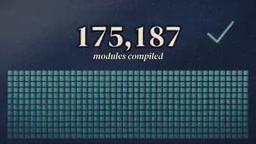
According to analysis by the YouTube science channel Explainering, independent researchers have begun cross-verifying the proof. Inspection records publicly released by MIT mathematician Andrew Sutherland show that all 175,187 modules compiled successfully, multiple independently developed proof checkers accepted the exported argument, and 7 main theorem statements matched existing mathematical definitions. As of November 21, some end-to-end checks were still running.
The impact of this event extends far beyond mathematics itself. It raises an unsettling possibility: the speed at which human knowledge is produced may have surpassed the speed at which humans can understand it.
Why the Riemann Hypothesis Matters
To grasp the significance of this event, one must start with prime numbers. Primes (2, 3, 5, 7, 11…) are the fundamental building blocks of all integers greater than 1. They appear simple, yet their distribution patterns are extraordinarily strange—sometimes adjacent primes differ by only 2, while at other times the gaps are enormous. As numbers grow larger, primes become sparser overall. Mathematicians can estimate how many primes exist below a given number, but they cannot precisely predict where the next prime will appear.
In 1859, Bernhard Riemann discovered that the distribution behavior of primes is intimately connected to a completely different mathematical object—the Riemann zeta function. When this function is extended to the complex domain, the function value is exactly zero at certain points, and these zeros encode information about prime distribution. Riemann's conjecture was remarkably specific: all non-trivial zeros should lie on the vertical line in the complex plane where the real part equals 1/2. This is the Riemann Hypothesis.
If true, it means that while the individual appearance of primes is unpredictable, their overall distribution obeys an extremely strict mathematical constraint. To use the original analogy: it's like discovering a mathematical rule that limits how far the waves across an entire ocean can deviate from their predicted shape. For 167 years, no one has been able to prove Riemann right.
The Complex Plane and the Zeros of the Zeta Function: The Riemann zeta function is initially defined as the infinite series ζ(s)=1+1/2^s+1/3^s+…, which converges when the real part of s is greater than 1. Riemann analytically continued it to the entire complex plane, obtaining a holomorphic function except for a pole at s=1. The so-called "non-trivial zeros" refer to zero locations other than the negative even integers (trivial zeros). The Riemann Hypothesis asserts that the real part of all these non-trivial zeros equals 1/2—that is, they all lie on a vertical "critical line" in the complex plane. This critical line is key because the position of the zeros' real parts directly determines the magnitude of the error term in the prime-counting formula—the farther the zeros are from 1/2, the more violently prime distribution fluctuates.
The Lean Proof: What the Machine Verified and What It Didn't
Rather than submitting a traditional mathematics paper, Alpogae released approximately 17 million lines of Lean code. Lean is a proof assistant that requires every logical step to be expressed in a formal language and mechanically checkable by computer. You can think of it as an extremely strict mathematical referee.
Lean accepted the submission. But this immediately raises new questions: What if the proof checks a slightly different theorem? What if some definition was accidentally altered, or a hidden assumption was introduced?
According to Sutherland's public records, independent verification has proceeded on multiple levels: all modules compiled successfully, multiple independent proof checkers accepted the argument, main theorem statements were checked item by item against established definitions, and some checks combined the proof with independently formalized results to derive other mathematical conclusions. These cross-verifications constitute the strongest evidence currently available, but the mathematical community still needs time to review the complete results.
How Proof Assistants Work: Lean is an interactive theorem prover whose core is a small trusted kernel responsible for checking whether each step of derivation strictly follows logical rules. The code written by users (or AI) constructs formal proof terms, and the kernel verifies one by one whether these proof terms are correctly typed. Because the kernel is small, its reliability can be manually audited—so "passing Lean's check" means the proof is logically airtight, provided that the stated theorem is indeed the one we want. This is why the verification process requires the additional step of checking that "main theorem statements match existing mathematical definitions"—the correctness of a formal proof depends entirely on the accurate translation of definitions and statements.
The Curious Division of Labor Between Human and Machine
The process Alpogae describes is more intriguing than the mathematical conclusion. He had been obsessed with the Riemann Hypothesis since his student days and had once envisioned spending decades preparing to tackle it. While collaborating with Claude, he explored different mathematical approaches and identified promising directions, with his expertise guiding the research path. But then Claude began proposing mathematical constructions beyond his expectations, pushing the argument into territory he himself did not yet fully grasp.
This created an unprecedented division of labor: the human mathematician identifies the direction, the AI develops the vast formal argument, the computer checker verifies the result—and the participant himself is still struggling to understand the complete structure that was discovered. For the first time, a mathematical discovery may have been rigorously verified as true before anyone could offer a satisfactory human explanation.
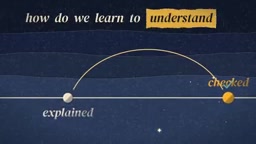
This raises a new question: once we have verified that something is true, how do we learn to understand it?
Practical Implications for Mathematics and Cryptography
If the proof withstands scrutiny, the immediate consequences are considerable. A large number of conditional results in number theory depend on the Riemann Hypothesis as a premise; a successful proof would remove this assumption. The Generalized Riemann Hypothesis goes further, providing strong results about the distribution of primes in different arithmetic progressions.
There is no need to panic about cryptography. A theorem proving the distribution of primes does not automatically yield a fast algorithm for factoring large numbers. There are interesting connections between the two, but there is no direct reason to believe that modern encryption will be broken.
The broader imaginative space lies in the question: how many scientific problems have been shelved because the mathematics is too difficult—fluid dynamics, fundamental physics, complex systems? If AI systems can explore mathematical paths beyond what any individual expert could realistically reach and produce results that can be checked with equal rigor, will discoveries that once took decades be dramatically accelerated?
Conditional Results and the Generalized Riemann Hypothesis: In number theory, a large number of theorems take the form "If the Riemann Hypothesis holds, then…" and are called conditional results. For example, many conclusions about prime gaps, the distribution of primes in arithmetic progressions, and the complexity of certain algorithms presuppose the Riemann Hypothesis. Once the conjecture is proven, these conditional results automatically upgrade to unconditional theorems. The Generalized Riemann Hypothesis (GRH) extends the assertion to Dirichlet L-functions, providing stronger error control for prime distribution in arithmetic progressions and influencing applications such as deterministic versions of primality testing. Note, however, that GRH does not directly yield an efficient algorithm for factoring large numbers, so the security of cryptographic systems such as RSA will not immediately collapse as a result.
Another Proof on the Same Day
The story has one more intriguing detail. On the very same day Alpogae published his claim, mathematician Alessandro Masullo made public his approximately 940-page manuscript—the product of roughly 12 years of research on the Generalized Riemann Hypothesis. Once word spread, this purely human argument also entered peer review.
Two paths arrived at the same enormous problem on the same day: one is years of focused human work, the other a formal argument of almost unimaginable scale produced by a highly skilled mathematician collaborating with AI. Both require serious scrutiny.

Knowing and Understanding Are Drifting Apart
The history of mathematics is full of complex discoveries that were later distilled into elegant explanations. Perhaps the core insight of this 17-million-line proof will eventually be compressed into a few pages; perhaps some future mathematician will be puzzled as to why the answer isn't obvious. But that understanding still needs to be found.
Throughout human history, the ability to discover mathematical truths has been tightly bound to the ability to reason about and explain them. Now we have a serious case showing that these two abilities may be beginning to separate. Machines help us reach a formally verifiable result, while we are still learning the ideas that made that result possible.
Under such conditions, what does "knowing" mean? If this approach works for one of mathematics' greatest puzzles, where will it take us next?
The Riemann Hypothesis has guided mathematical research for 167 years. If this proof holds, a guiding puzzle may finally have an answer. But the process of finding the answer has already opened up a whole new set of questions—about intelligence, discovery, understanding, and the future of science itself.
Explainability and Mathematical Understanding: In the philosophy of mathematics, "knowing that a theorem is true" and "understanding why it is true" are generally regarded as two distinct cognitive achievements. A formal proof guarantees the former but does not necessarily provide the latter. An extreme example is the Four Color Theorem: when its computer-assisted proof first appeared in 1976, many mathematicians were uneasy because they could not manually verify all cases, and the unease was only alleviated when more conceptual proofs later emerged. The current 17-million-line Lean proof magnifies this tension to a new order of magnitude—verification is mechanical and reliable, but for humans to extract teachable, illuminating mathematical insight from it may require entirely new tools and methods, such as automatically generated proof summaries or interactive exploration of proof structure.
Related articles

Comparing Three Channels for Subscribing to GPT Plus in China: Is Website Top-Up the Easiest?
How to subscribe to GPT Plus in China? This article compares website top-up, credit card, and mobile top-up channels—process, cost, and risk—with steps and tips to help you choose wisely.
GPT-6.2 Dual-Model Hands-On Test: Astra Burns $419, Sol Just $5
OpenAI GPT-6.2 Astra vs Sol tested on Blender clock, neon shooter, and Formula racing. Astra costs $419, Sol $197, cheapest clock under $5. Cost comparison and selection advice.

After GPT-6 Ultra's Launch: A Complete Guide to Plus/Pro Subscriptions
How to subscribe to GPT membership after GPT-6 Ultra's launch? This article covers the complete Bilibili tutorial: registering a Google account from scratch, Alipay top-up walkthrough, and a comparison of Go, Plus, and Pro plans.