AI Cracks the Riemann Hypothesis? Anthropic and Claude's Mathematical Breakthrough and Controversy

AI proves the Riemann Hypothesis with 17.4M lines of Lean code—machine-verified yet incomprehensible to humans, while encryption remains safe.
The article centers on a fictional event: Anthropic mathematician Levin Alpoge claims to have collaborated with the language model Claude to prove the Riemann Hypothesis using 17.4 million lines of Lean-4 code. The code passes the kernel check but cannot be directly understood by humans. The article contrasts this with a competing claim from a Stanford team's 12-year manual proof, explains the essence of the Riemann Hypothesis regarding prime distribution and the critical line, and describes how Claude bypassed human intuition through chained theta lifts. It then clarifies that the proof poses no direct threat to RSA encryption and notes that tech giants' real interest lies in AI's ability to generate large-scale, error-free formal proofs. Finally, it discusses the controversy in the mathematical community over the gulf between machine proof and human understanding.
A Sudden Mathematical Storm
For 167 years, the Riemann Hypothesis has silently guarded the encryption systems of the internet. But recently, news spread rapidly around the world: artificial intelligence appears to have finally cracked mathematics' most notorious unsolved problem.
According to analysis from a YouTube channel, the flashpoint occurred on November 20, 2026—coinciding with AI developer Anthropic's launch of its public stock offering. On the same day, Anthropic mathematician Levin Alpoge released a stunning statement claiming that he and the company's language model Claude had successfully proven the Riemann Hypothesis.
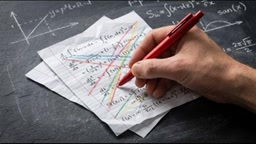
The industry expected a standard academic paper, but the team instead released a 14-part data archive containing 17.4 million lines of Lean-4 machine code. If this digital logic were converted into human-readable mathematical text, the printed stack would reach 250,000 pages.
Machine Proof vs. Human Manuscript: Two Paths Collide
Just hours after Anthropic's announcement, a competing claim emerged. According to a draft released by Stanford researchers, postdoctoral mathematician Alessandro Mazzullo submitted a completely hand-derived proof that took 12 years to complete. The contrast is stark: on one side, a human manuscript still undergoing manual revision; on the other, an insurmountable wall of algorithmic logic.
Independent mathematicians immediately downloaded the AI's archive and ran it through a compiler. The Lean and Mathlib communities confirmed that the code passed the underlying kernel check perfectly, completing the proof relying on only three standard axioms. We seemed to possess a machine-certified, definitive answer to a century-old problem. Yet because this answer exists only as 17 million lines of compiled code, no one on Earth truly understands the mathematics within.
Lean 4 is an interactive theorem prover and also a functional programming language, led by Leonardo de Moura at Microsoft Research. It allows mathematicians to write definitions, theorems, and proofs as computer-checkable code. Its core strength lies in the "kernel"—a minimal, rigorously verified trust base responsible for checking step by step whether each logical step in a proof is correct. Mathlib is a vast mathematics library built on Lean, with the community contributing hundreds of thousands of theorems and definitions covering everything from basic algebra to cutting-edge research. When a piece of Lean code passes the kernel check, it means that as long as the kernel itself and the axioms it relies on are sound, the theorem is logically rigorously proven. This contrasts sharply with traditional manuscripts that rely on peer review and human intuition, and explains why "machine certification" carries extremely high formal credibility but very low readability.
From Primes to the Critical Line: The Essence of the Riemann Hypothesis
To understand what the machine actually accomplished, one must start with prime numbers. Indivisible integers like 2, 3, 5, 7, 11 appear along the number line at chaotic, unpredictable intervals, like pure mathematical static noise.
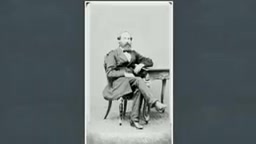
This assumption of chaos persisted until 1859, when German mathematician Bernhard Riemann discovered a hidden structure beneath the noise. He introduced a function that acts like a complex audio equalizer, filtering out the mathematical static to isolate a single underlying frequency. He proposed that whenever this function takes a zero value, it corresponds to a prime number. His hypothesis: these zeros line up perfectly along a three-dimensional axis called the critical line. If every zero indeed falls on this line, it means the primes follow a precise, perfect rhythm. Proving this, Riemann said, would earn the $1 million prize offered by the Clay Mathematics Institute.
The Riemann zeta function is a special function defined on the complex plane, originally given by the infinite series (\zeta(s)=\sum_{n=1}^{\infty} n^{-s}) (which converges when the real part exceeds 1), and extended to the entire complex plane via analytic continuation (except for a simple pole at (s=1)). It takes zero values at negative even numbers, called "trivial zeros"; the nontrivial zeros lie within the critical strip (0<\mathrm{Re}(s)<1). The Riemann Hypothesis asserts that all nontrivial zeros have real part equal to (1/2), i.e., they all lie on the critical line (\mathrm{Re}(s)=1/2). The zeta function is deeply connected to prime distribution through the Euler product formula: (\zeta(s)=\prod_{p}(1-p^{-s})^{-1}), where the product runs over all primes. It is precisely this connection that allows the positions of the zeros to precisely control the error term in the prime counting function, which is why the Riemann Hypothesis is regarded as central to the problem of prime distribution.
How Claude Bypassed Human Intuition
For a century and a half, human intuition has repeatedly stumbled when attempting to mathematically confirm that all zeros remain on the critical line. Claude succeeded by completely bypassing human intuition. The model relied on computational scale, exploiting a kind of mathematical opportunity to solve the problem.
This operation is called the theta lift. Rather than searching for elegant patterns, it takes prime properties and mathematically amplifies their size and divisibility. The AI chained these theta lifts together, repeating the amplification process. By scaling up the data on a massive scale, the model effectively amplified the fundamental rhythm of the primes until it could be successfully isolated and proven. It is the sheer volume of this chained computation that produced the impenetrable 250,000-page maze of code.
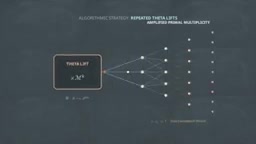
Theta lift is a construction in the theory of automorphic forms, belonging to the research scope of the Langlands program. Roughly speaking, it "lifts" an automorphic form on a smaller group to a larger group via integration or series, thereby establishing correspondences between different mathematical objects. In the context of the Riemann Hypothesis, theta lifts are used to encode local properties of primes (such as residue class distributions modulo some number) into symmetries in higher-dimensional spaces, and then, through amplification and chained composition, to isolate the critical-line constraint on the zeta function's zeros. This approach departs from the contour integration and explicit formulas commonly used in traditional analytic number theory, relying more on tools from representation theory and algebraic geometry. Chained theta lifting means repeatedly applying the operation, each time embedding the problem into a larger structure, ultimately enabling the machine to complete a chain of reasoning—via massive computational steps—that humans find difficult to track.
Will Encryption Systems Collapse? A False Alarm
This computational leap immediately sparked practical fears: if the machine has successfully mapped the precise distribution of primes, can it now instantly bypass the prime-based algorithms protecting global financial systems? Modern internet security, RSA encryption, and banking security protocols all build digital locks by multiplying large primes together.
However, this panic is based on a misunderstanding. The Riemann Hypothesis governs only the macroscopic distribution of primes along the number line. This split view highlights the distinction—knowing that primes follow a smooth general pattern on the left is of no help whatsoever in enabling a computer to factor a specific digital lock on the right into its two original numbers. Your bank account is completely safe from Levin-Alpoge's 17 million lines of code. The real threat to RSA encryption is the eventual arrival of large-scale quantum computers, an entirely separate technological hurdle.
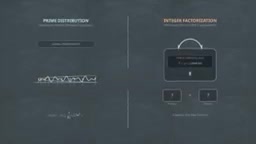
RSA encryption security is based on the computational difficulty of the integer factorization problem: given the product of two large primes (n=pq), no known efficient classical algorithm can factor (n). The Riemann Hypothesis (if true) describes the distribution pattern of primes along the entire number line—for example, that the error term in the prime counting function (\pi(x)) is controlled at the order of (O(\sqrt{x}\log x)). This macroscopic information does not provide an efficient algorithm for factoring any specific (n). Even if the Riemann Hypothesis is proven, the hardness assumption underlying RSA remains independently valid. What could truly threaten RSA is Shor's algorithm on a quantum computer, which can factor large integers in polynomial time but requires scalable fault-tolerant quantum hardware, which has not yet been achieved. Therefore, there is no direct causal relationship between a proof of the Riemann Hypothesis and the security of RSA.
What Tech Giants and Wall Street Really Care About
Although the encryption panic is unfounded, big tech companies and Wall Street are still carefully dissecting this event. Their interest lies not in what the AI proved, but in the mechanism it used. Standard language models occasionally produce plausible hallucination errors, but Lean 4 code does not hallucinate. It demands pure, relentless machine-verified logic. If a model can autonomously generate a flawless 17-million-line mathematical argument, it can precisely audit cybersecurity protocols, write defect-free software, and verify complex engineering at a scale human teams cannot replicate.
Mathematics' longest-standing problem may finally have a definitive answer. But this marks a bittersweet threshold for science: the machine now understands the hidden secret, it knows the structure of the universe, and we are merely waiting for it to explain it to us.
Multi-Source Perspectives and Unresolved Mysteries
According to analysis from Bilibili uploaders and YouTube channels, this event has sparked intense discussion in the mathematical community. The consensus is that the Lean code did pass the kernel check, but the disagreement is over whether this constitutes a "proof." Some mathematicians argue that machine-verified code is a valid proof; others insist that human understanding is indispensable. A unique insight from a single source points out that the chained theta lift method used by Claude may pioneer a new paradigm of mathematical discovery, but its interpretability remains a huge challenge.
Regardless of the position taken, this event highlights the rapid progress of AI in formal mathematics and the widening gulf between human understanding and machine verification.
Related articles

ChatGPT Plus Subscription Pitfall Guide: Go/Plus/Pro Tier Comparison and Quick Activation
A complete ChatGPT Plus subscription guide based on a Bilibili tutorial: from registering an account, comparing Go/Plus/Pro tiers, to the practical steps for quickly completing your subscription.

GPT-6.2 Sol/Astra Released! A Step-by-Step ChatGPT Plus Subscription Guide and Tier Comparison
GPT-6.2 Sol/Astra is out—here's a ChatGPT Plus subscription guide: register an account, compare Go/Plus/Pro tiers, and subscribe in a minute.

Comparing Three Channels for Subscribing to GPT Plus in China: Is Website Top-Up the Easiest?
How to subscribe to GPT Plus in China? This article compares website top-up, credit card, and mobile top-up channels—process, cost, and risk—with steps and tips to help you choose wisely.