AI Cracks the Riemann Hypothesis? Why a Math UP Host Is So Excited
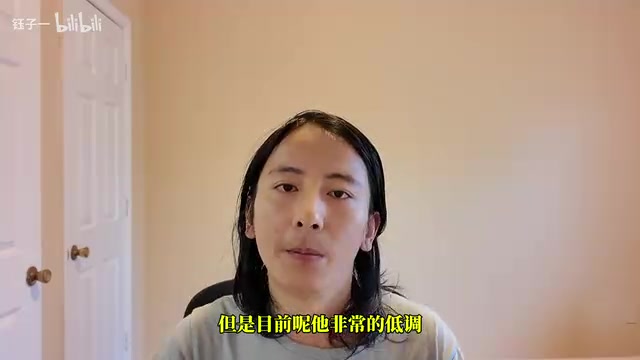
Mathematician Levin solving the Riemann Hypothesis with Claude sparks debate; UP host Li Ziyi shifts from worry to excitement, seeing a new era of human-AI collaboration in math.
Bilibili math UP host Li Ziyi shares her views on "mathematician Levin solving the Riemann Hypothesis with Claude." Initially worried about AI replacing human work, she became excited after letting go, believing the breakthrough means math research is entering a new stage. Levin has been low-key and has not disclosed his method, but the UP host believes he has something unique and looks forward to the internal model being opened and collaboration details being revealed. She emphasizes AI as a powerful partner for asking questions, building frameworks, and discovering connections, and encourages math enthusiasts to try using AI for great work. Although details are unclear, the event has ignited imaginations about AI + math.
Recently, news about AI solving the Riemann Hypothesis has sparked widespread discussion in both math and tech circles. Bilibili math UP host Li Ziyi shared in a video her emotional journey from worry and sadness to letting go, and finally to excitement. She believes mathematics may be entering a new era, and that the way AI collaborates with mathematicians is worth close observation.
Event Recap: Levin and Claude's Assault on the Conjecture
According to the UP host, mathematician Levin used the AI model Claude to solve an important mathematical conjecture (the UP host mentions the "Li Mai conjecture" in the video, which in context likely refers to the Riemann Hypothesis or a related hard problem). The news spread quickly, but Levin himself has been very low-key—he has not given any interviews or publicly disclosed the specific steps. The UP host expressed curiosity: how exactly did Levin use Claude to advance step by step?
At present, very little is known about the details of Levin's work. The UP host mentions that some speculate Levin used an internal model and unlimited resources, but she disagrees with the notion that "any random person using an internal model could solve any problem." She emphasizes that Levin must have something unique.
The Riemann Hypothesis is one of the most famous unsolved problems in mathematics, proposed by Bernhard Riemann in 1859. It asserts that all non-trivial zeros of the Riemann zeta function lie on the critical line in the complex plane where the real part is 1/2. The conjecture is closely related to the distribution of prime numbers, and if proven or disproven, it would profoundly affect number theory, cryptography, and other fields. The Riemann Hypothesis is also one of the seven "Millennium Prize Problems" with a million-dollar bounty from the Clay Mathematics Institute, and it remains unsolved to this day.
Claude is a large language model developed by Anthropic, known for its capabilities in reasoning, programming, and long-context understanding. It is not a tool designed specifically for mathematical proofs, but researchers have attempted to use it to assist mathematical exploration—for example, generating conjectures, checking proof steps, or finding counterexamples. If Levin's case is true, it would be a landmark application of large language models in pure mathematics.
Source of Excitement: A New Era of Mathematics and the Possibility of Problem-Solving
The UP host admits that her initial worry and sadness stemmed from fear of AI replacing human work, but after letting go, she feels very excited. Because the Riemann Hypothesis is a milestone problem, AI's involvement means mathematical research may enter a new stage. She is particularly focused on two things: first, when the internal model will be opened to the public; second, when the specific method of Levin's collaboration with Claude will be disclosed.

"If I could one day solve this conjecture with the help of AI, I would be extremely, extremely happy." The UP host states that every math practitioner has a dream problem in their heart, and AI offers new possibilities. She believes that if she could learn Levin's method, she might be able to crack the problem she cares about.
The Millennium Prize Problems were selected by the Clay Mathematics Institute in 2000, with a $1 million prize for solving each. Currently, only the Poincaré conjecture among the seven has been solved, by Grigori Perelman (who declined the prize). The remaining six—the Riemann Hypothesis, the P vs NP problem, Yang–Mills existence and mass gap, Navier–Stokes existence and smoothness, the Birch and Swinnerton-Dyer conjecture, and the Hodge conjecture—remain open. The UP host mentions "there are four Millennium Problems left," which may refer to the scope she follows or be a slip of the tongue, but the difficulty and importance of these problems are beyond doubt. If AI could intervene in any one of them, it would be a landmark achievement.
Collaboration Model: Lessons from Human-Machine Cooperation
The UP host emphasizes that Levin's case shows that people skilled at using AI can achieve astonishing results. She looks forward to learning about Levin's thought process in the future and trying to collaborate with AI to achieve better results and more freedom to explore.
"AI can definitely ask very good questions." The UP host does not doubt AI's questioning ability. She believes that AI can not only help solve specific problems but also help build frameworks, pose questions, discover connections between fields, and even be used for learning. AI is undoubtedly a powerful partner.
Human-machine collaboration in mathematical research can be roughly divided into several categories: AI as a "questioner" to help generate conjectures or explore directions; as a "proof assistant" to check logical steps or fill in details; as a "knowledge base" to quickly retrieve cross-domain connections; and as a "computational engine" to handle symbolic computation or numerical verification. Levin's case is notable because it may demonstrate AI's role in high-level strategic design rather than merely executing mechanical tasks. This kind of collaboration requires human researchers to have sharp mathematical intuition and judgment, able to filter AI's output and guide it deeper. Therefore, the UP host's emphasis that "Levin must have something unique" is reasonable—powerful tools do not automatically guarantee great results.
Future Outlook: More Roles for AI in Mathematics
The UP host mentions that although there are not many grand conjectures in mathematics (four Millennium Problems remain), every researcher can do what interests them—for example, discovering connections between two fields or applying mathematics to real life. There are some deep mathematical principles inside AI that are not yet understood, and perhaps in the future AI can be used to solve these problems.
"Even a problem as hard as the Riemann Hypothesis has been solved—this discipline of mathematics excites me greatly." The UP host believes many mathematicians will feel the same. This is a new era, the starting point of a new way of collaboration—humans and AI working together.
The UP host hopes that one day Levin will disclose his thought process, and encourages ordinary math enthusiasts to try using AI to do great work. She believes that even if one doesn't care about specific problems, AI can help build frameworks, pose questions, discover connections, or learn.
Conclusion: Excitement and Anticipation
From worry to excitement, the UP host's shift in mindset reflects the complex emotions of mathematical researchers in the AI era. Although the details of Levin's case are unclear, it has already ignited many people's imaginations about AI + mathematics. As the UP host says, this is a new possibility, the starting point of a new way of collaboration. We look forward to more details being disclosed and to AI bringing more breakthroughs in mathematics.
Related articles
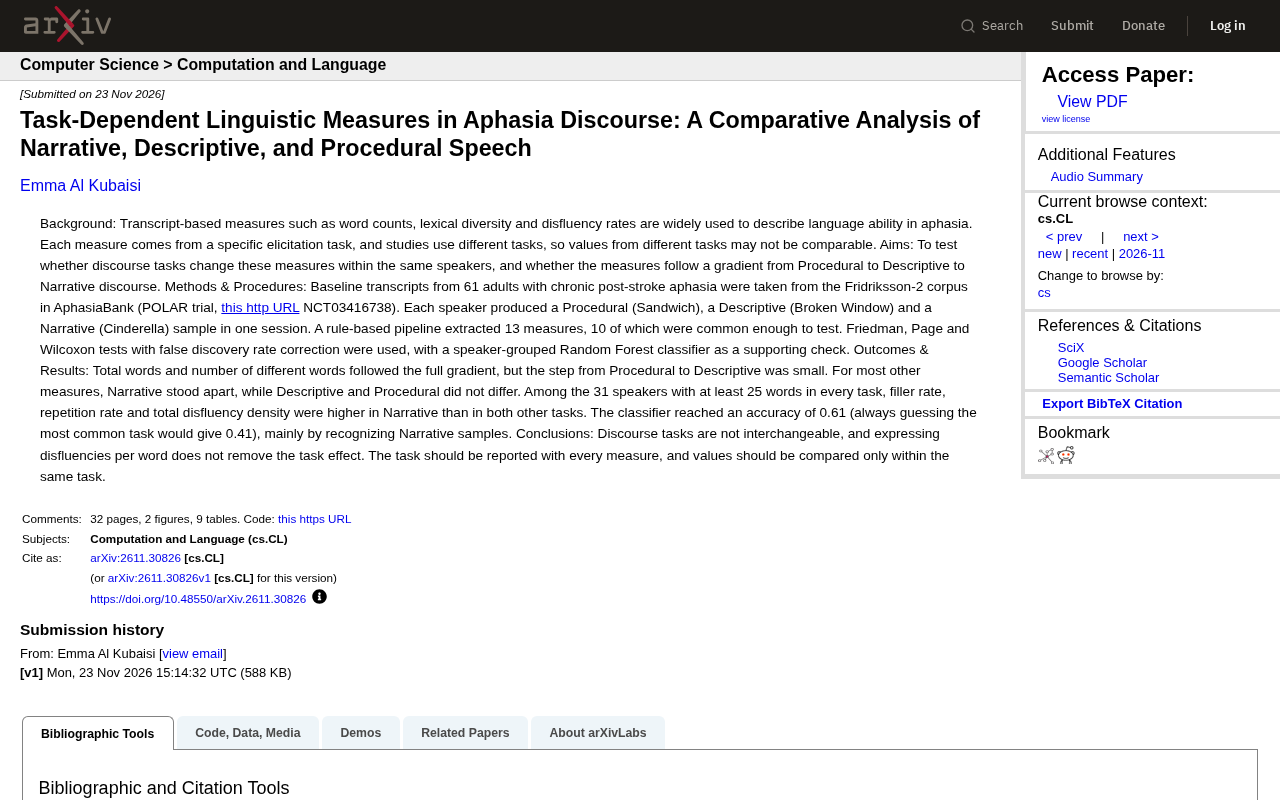
Aphasia Discourse Analysis: Language Metric Differences Across Tasks
A study of 61 adults with aphasia found that narrative, descriptive, and procedural discourse tasks yield non-interchangeable language metrics. Total words and lexical diversity show a gradient; disfluency is higher in narrative tasks. Each metric must be labeled by task type and compared only within the same task.
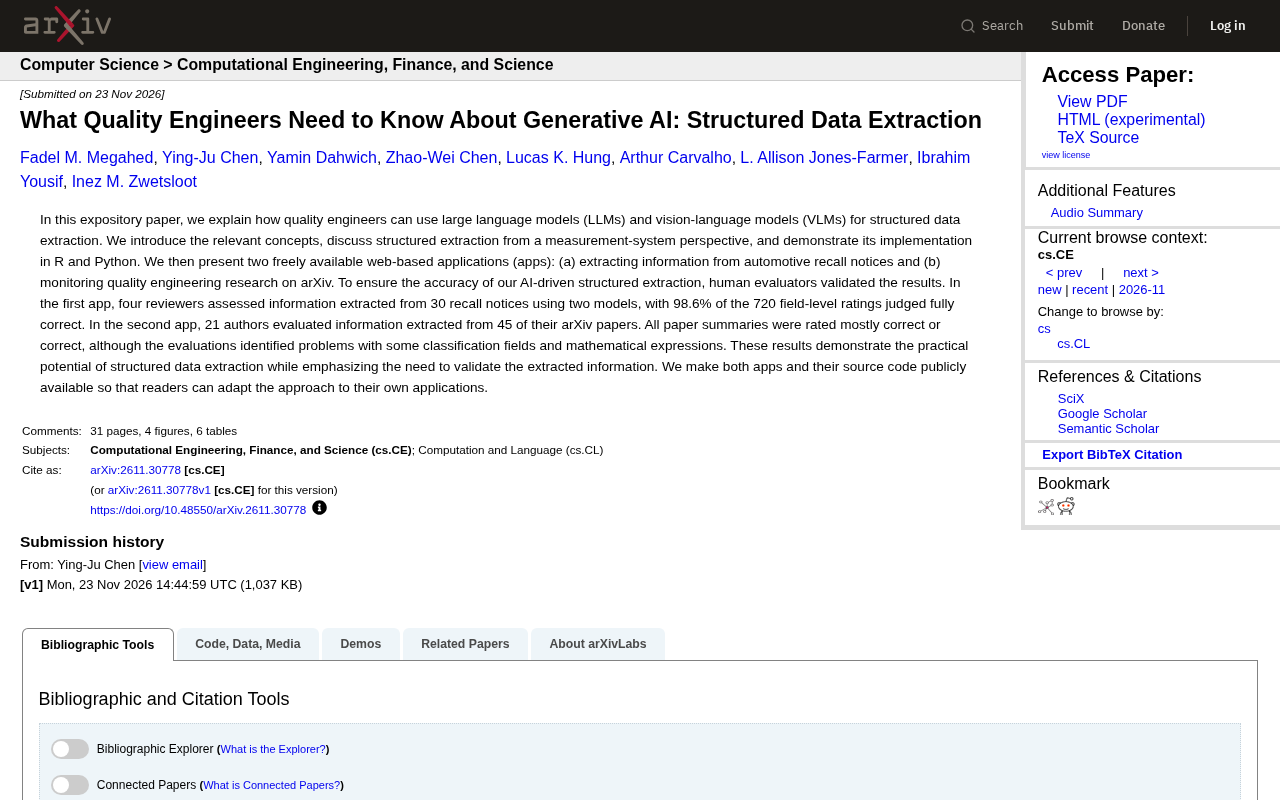
Must-Read for Quality Engineers: A Practical Guide to Structured Data Extraction with Generative AI
A paper shows how quality engineers use LLMs and VLMs for structured data extraction, validated through two web apps, with R and Python implementations.
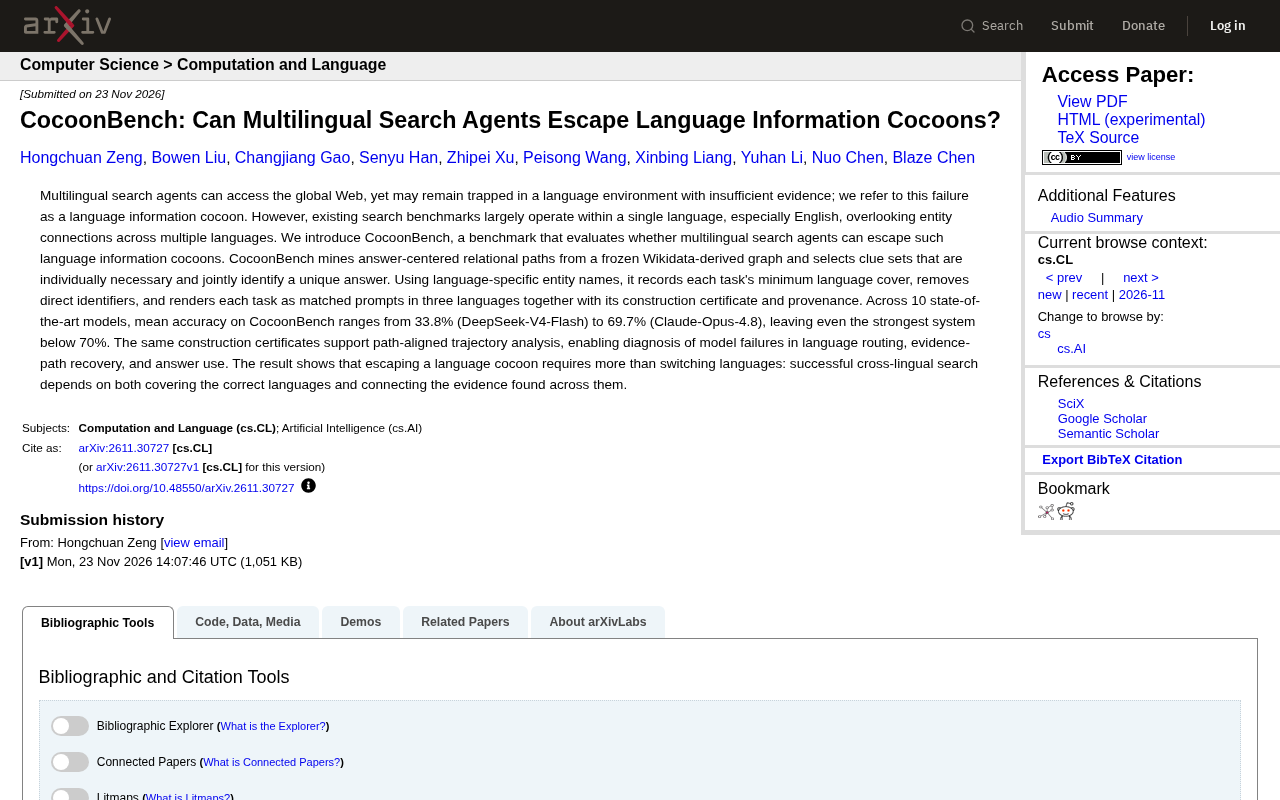
CocoonBench: Can Multilingual Search Agents Break Out of the Language Information Cocoon?
CocoonBench evaluates whether multilingual search agents can escape the language information cocoon. Tests show 10 advanced models range from 33.8% to 69.7% accuracy, with the strongest system still below 70%, revealing key challenges in connecting cross-lingual evidence.