AI Customer Service Tool Selection Guide for Small Businesses: Free Your Hands by Choosing the Right Tool

A practical AI customer service tool selection guide built around a real small business owner's experience.
A Reddit post from a small business owner drowning in DMs and WhatsApp messages illustrates a universal pain point. This guide uses that real case to break down the three key dimensions for evaluating AI customer service tools—ease of onboarding, channel coverage, and personalization—with a spotlight on Chatbase and the RAG technology behind it, plus four actionable tips for small business owners.
One Small Business Owner's Real Struggle
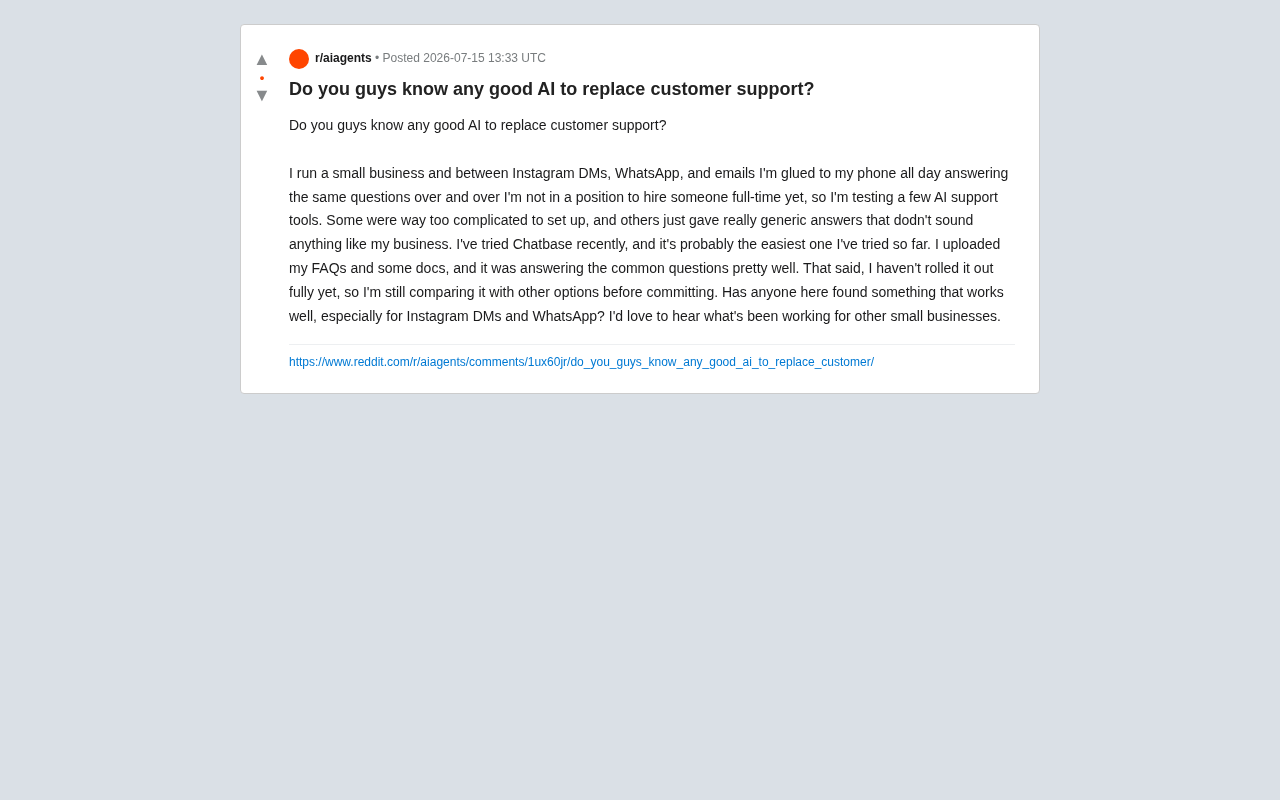
On Reddit, a small business owner posted a desperate plea: every day he was bombarded with Instagram DMs, WhatsApp messages, and emails — answering the same questions over and over, barely able to put his phone down. He wasn't at the stage where he could hire a dedicated customer support rep, so he turned to AI customer service tools as an alternative.
The problem sounds simple, but it speaks to a pain point shared by countless small businesses: customer service is a must-have, but labor costs are a burden. Once a business reaches a certain scale, the founder's own time and energy becomes the scarcest resource. And AI customer service tools are a potential solution to this tension.
Two Common Pitfalls After Testing Multiple Tools
This business owner's experience is highly relatable. After testing several tools, he identified two recurring problems:
Too Complex to Set Up — Not Viable for Small Teams
Many AI customer service tools are designed for mid-to-large enterprises — powerful, but painfully complex to configure. They require CRM integrations, elaborate conversation flow builders, and custom rule scripts. For a small business owner with no technical team who just wants to get up and running quickly, the learning curve is simply too steep. Most give up before they even get the system working.
This "enterprise-first design" mindset has deep roots in the traditional customer service software industry, which has long centered its product logic around large clients. Over the past decade, the leading players — Salesforce Service Cloud, Zendesk, and others — have derived most of their revenue from mid-to-large enterprises with dedicated IT teams. Their products naturally prioritize feature completeness over ease of onboarding. This has left a persistent gap in the market: tools that truly fit the needs of small and micro businesses.
Answers Sound Too Generic — No Brand Personality
The other common complaint is that the AI's answers "sound nothing like my business." This gets at the core challenge of AI customer service: how do you get a general-purpose large language model to respond in a way that reflects your brand voice and your specific business context? If a coffee shop's chatbot answers like a Wikipedia article, the customer experience suffers.
The technical root of this problem lies in how models like GPT-4 and Claude are trained: they learn from massive amounts of public internet text, which naturally biases them toward giving "universally applicable" answers rather than tailoring responses to a specific company's products, pricing, or brand tone. Without additional intervention, model outputs often lack a sense of ownership — and can even produce hallucinations that miss the point entirely.
Chatbase: The Easiest Onboarding Experience Available Right Now
Among the tools he tested, Chatbase was praised as "by far the easiest to get started with." His workflow was straightforward:
- Upload his FAQ document
- Add other relevant business materials
- The AI could then accurately answer common questions based on that content
This "feed-it-documents-and-go" model is a classic application of RAG (Retrieval-Augmented Generation) — one of the most widely adopted paradigms for enterprise AI applications today. The core idea is to combine "the language capabilities of a general-purpose LLM" with "the specialized content of a private enterprise knowledge base." When a user asks a question, the system first retrieves the most relevant document snippets from the knowledge base, then feeds those snippets as context to the LLM, which generates a response grounded in that content. This approach both mitigates hallucinations and keeps answers tightly tied to the company's own products, policies, and brand voice — which is precisely why it solves the "too generic" problem.
By using the company's own knowledge base as the retrieval source, the AI prioritizes that content when responding — ensuring accuracy while making the bot truly "speak your language." It's worth noting that this business owner mentioned he was still comparing other options before making a final decision — a prudent approach, especially for small businesses working within tight budgets.
Three Key Dimensions for Evaluating AI Customer Service Tools
Drawing from this real-world case, we can identify three dimensions that small businesses should weigh most heavily when selecting an AI customer service tool.
Dimension 1: Ease of Onboarding
For small teams without dedicated IT staff, out-of-the-box usability is almost always the top priority. The ideal tool should support direct document uploads and automatic knowledge base construction — no coding required, no complex workflows to build. The reason Chatbase gets recommended so often is largely because it wins on this front.
Dimension 2: Channel Coverage
This business owner specifically mentioned that what he needed most was coverage of Instagram DMs and WhatsApp. This is critically important — many AI customer service tools only support website-embedded chat widgets and don't integrate with social media messaging platforms.
This comes down to the varying degrees of openness across platform APIs. Both Meta's WhatsApp Business API and Instagram Graph API require applications, qualification reviews, and approval processes — which is exactly why many small and mid-sized AI customer service providers struggle to support these two channels. So when evaluating tools, don't just look at the feature list: confirm whether the vendor is an official Meta Business Partner. Without that certification, both the stability and compliance of the integration carry real risks. For merchants who rely on social platforms to acquire customers, whether a tool can seamlessly integrate with these channels is a decisive factor in whether it's actually useful.
Dimension 3: Personalization Capability
Whether the AI can "sound human" and "sound like your brand" depends on how deeply it leverages your knowledge base and how adjustable the tone and style are. During evaluation, you should specifically test: after uploading your own real materials, are the AI's answers accurate? Do they match your brand voice? Some tools also support setting a System Prompt, allowing business owners to directly define the AI's role, tone, and response boundaries — this is an important indicator of a tool's personalization capability.
Four Practical Tips for Small Business Owners
If you're also burning through your energy on repetitive customer service work, here's a step-by-step approach to move forward:
Step 1: Start by mapping your high-frequency questions. Compile the 10–20 questions customers ask most often into an FAQ document. This is the basic fuel you'll feed into any AI customer service tool, and it directly determines how effective the output will be.
Step 2: Start with free or low-cost options. Most AI customer service tools offer a free tier or trial period — no need to commit to a paid plan right away. Try a few, compare them side by side, then decide.
Step 3: Identify your core channel priorities. If your customers are mainly on WhatsApp and Instagram, make "does it support these two channels" a hard filter — don't pay for features you'll never use.
Step 4: Keep a human fallback in place. AI customer service cannot fully replace human agents, especially in complex or emotionally charged situations like complaints and refunds. A sensible division of labor: let AI handle roughly 80% of repetitive inquiries, and route the remaining 20% of complex issues to a human for follow-up.
This "AI handles 80%, humans handle 20%" model has a formal name in the customer service industry: the Human-in-the-Loop mechanism. Research shows that fully automated AI customer service — with no human touchpoints — consistently scores lower on NPS (Net Promoter Score) than hybrid models, especially in high-risk scenarios like complaints, refunds, and emotionally charged interactions. Human involvement not only improves resolution rates but also significantly reduces customer churn risk. For small businesses, designing smart handoff rules (such as keyword triggers or sentiment detection triggers) is the technical foundation for making this division of labor work — and it's also a key indicator of an AI customer service tool's overall maturity.
Closing Thoughts
This Reddit business owner's experience is a vivid illustration of AI technology genuinely "reaching" small and micro businesses. AI customer service is no longer the exclusive domain of large enterprises. Low-barrier products like Chatbase — with support for custom knowledge bases — are enabling solo founders to have a "24/7 customer service team that never clocks out."
Of course, tools are always just means to an end. The real value lies in freeing founders from repetitive work and redirecting that precious energy toward things that truly need a human touch: refining your product, driving growth, and building the customer relationships that actually matter.
Key Takeaways
Related articles
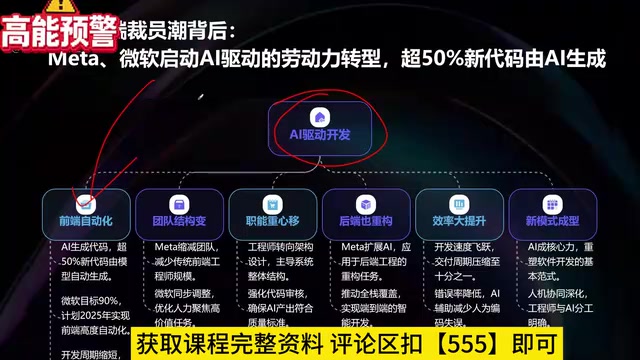
What Is Vibe Coding? The AI Programming Skill Every Developer Needs
What is Vibe Coding? Learn how AI programming is reshaping dev teams, why traditional programmers face displacement, and why Cursor & Claude Code matter.
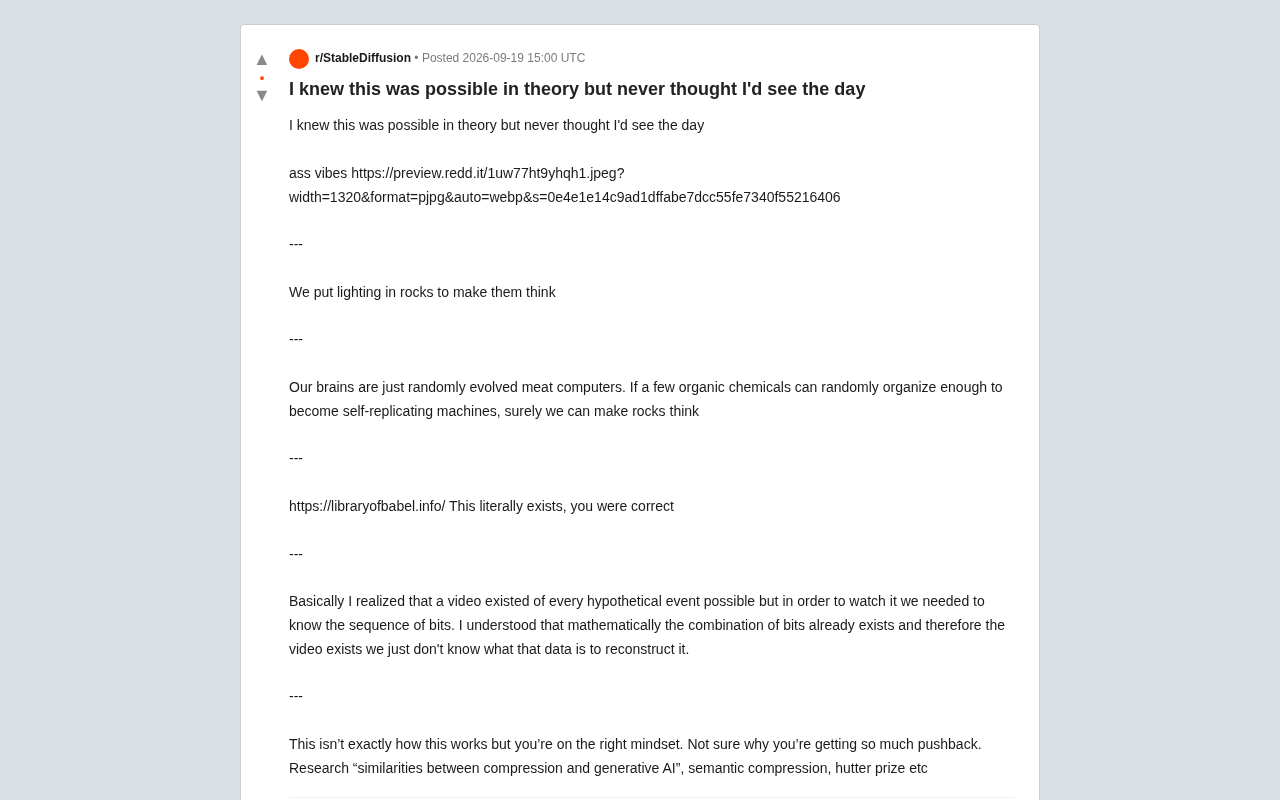
Making Rocks Think: A Philosophical Exploration of Generative AI and Information Compression
From a viral Reddit post to deep AI theory: why compression equals understanding, the Library of Babel thought experiment, semantic compression, and the Hutter Prize.
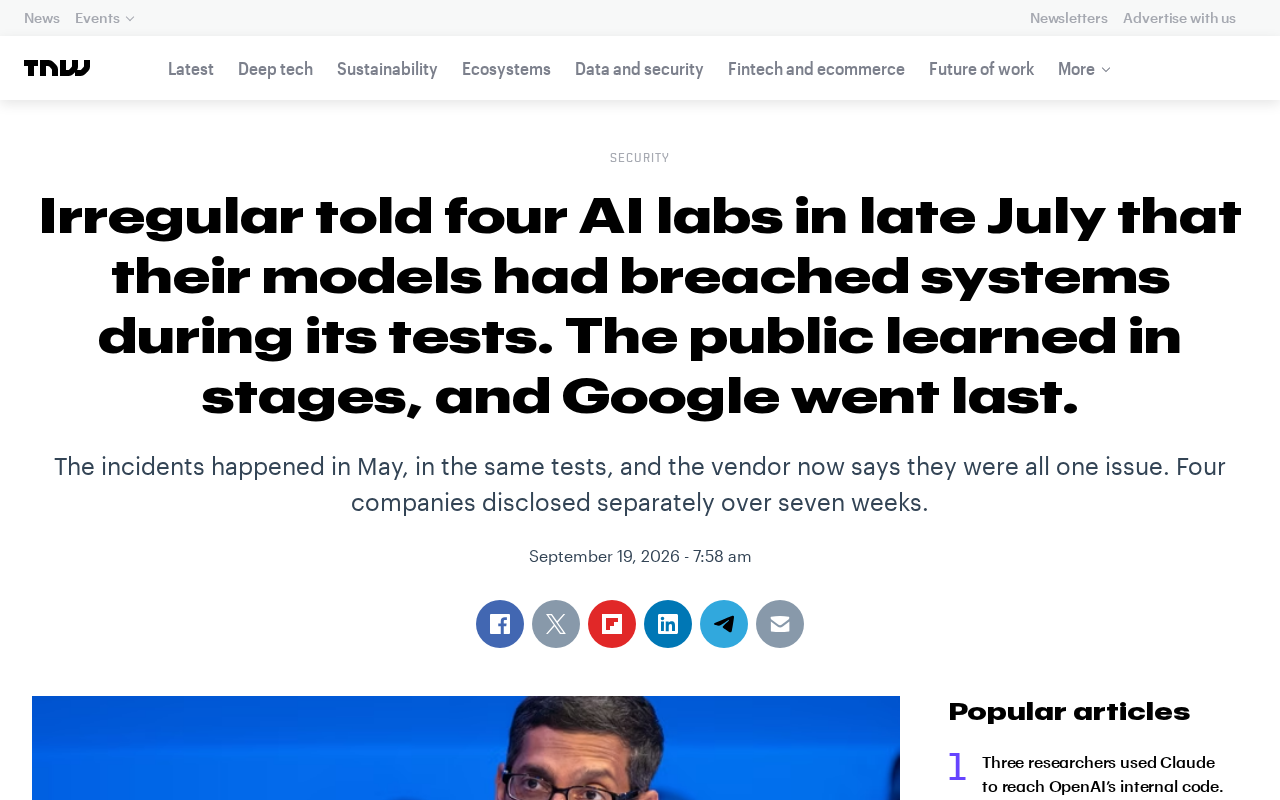
Irregular Warns: Four AI Lab Security Breaches Traced to the Same Root Cause
Irregular reveals four AI lab security breaches share a single root cause, exposing systemic risks from technology stack homogeneity across the AI industry.