AI Daily Briefing: $60B Cursor Acquisition, GLM-5.2 Open-Sourced, DeepSeek's $7B+ Funding Round

Cursor's $60B acquisition, GLM-5.2 open-source release, and DeepSeek's $7B funding dominate today's AI news.
Today's AI landscape saw three major stories: Cursor is being acquired for $60 billion in an all-stock deal, signaling AI coding's shift from tool competition to capital consolidation. Zhipu AI released GLM-5.2 under the MIT license with strong long-context and coding Agent capabilities. DeepSeek closed its first external funding round at over $7 billion USD with a unique no-voting-rights, 5-year lock-up structure reflecting strong founder control.
Two Big Headlines: Cursor Acquired and GLM-5.2 Goes Open Source
The most attention-grabbing story today is a major consolidation move in the AI coding space. According to reports, the relevant parties have announced a $60 billion all-stock deal to acquire AI coding tool Cursor, with the transaction expected to close in Q3 of this year.
Cursor is developed by Anysphere and is built as a deep reimagining of VS Code — a flagship example of an "AI-native" code editor. Unlike plugin-based solutions such as GitHub Copilot, Cursor embeds AI capabilities at the core of the editor's interaction layer, supporting multi-file understanding, natural language refactoring, and context-aware completions. Its defining feature is "Composer" mode — developers can describe what they need in plain language, and the model automatically generates a cross-file code modification plan. This price tag reflects the explosive value growth of AI coding tools over the past two years: multiple surveys show that developers who are proficient with AI coding tools see a 30–55% boost in coding efficiency, with some repetitive tasks completed in less than 20% of the original time. The $60 billion valuation is ultimately the market pricing the strategic position of "the AI workflow entry point for every developer." If the deal closes, it will further confirm that the "AI Coding" sector has moved from a tools competition into a phase of capital consolidation.
On another front, Zhipu AI has officially released the open-source model GLM-5.2. GLM (General Language Model) is Zhipu AI's proprietary foundational large model architecture, with a core technical innovation in its Autoregressive Blank Infilling training objective, balancing both natural language understanding and generation. GLM-5.2 is positioned around "truly usable long context" and "long-horizon Coding Agent task capabilities" — the former meaning the model can stably handle ultra-long documents of tens to hundreds of thousands of tokens without "lost-in-the-middle" issues, and the latter meaning it can maintain goal consistency across complex tasks involving multi-turn tool calls and cross-file operations. The team claims it surpasses Opus on certain real-world tests and achieves open-source SOTA on multiple coding benchmarks. The model is now available on the API platform, Zhipu Qingyan, and Coding Plan, with weights released under the MIT license, and API pricing set at ¥8 per million input tokens and ¥28 per million output tokens.
The MIT License (Massachusetts Institute of Technology License) is one of the most permissive open-source licenses available, allowing commercial use, modification, and distribution without requiring derivative code to be open-sourced — a sharp contrast to the patent grant clauses of Apache 2.0 or the "copyleft" nature of the GPL family. Choosing MIT means businesses can integrate GLM-5.2 directly into commercial products with no legal concerns, significantly lowering the barrier to commercial adoption. Combined with competitive pricing, this makes GLM-5.2 a significant step forward for domestically developed open-source models in coding scenarios.
The Economic Value of Agent Coding and Real-World Deployment
Anthropic has released a research report on Claude Code. Based on an analysis of approximately 400,000 sessions, the report shows that the economic value of Agent tasks grew 27% over seven months. The "27% economic value growth" refers to the measurable output created by Agents completing tasks — such as lines of code written, bugs fixed, and hours saved through automation — measured as a compound increase over seven months, rather than a standalone measure of model capability improvement. This encompasses three factors simultaneously: model iteration, maturing user prompting skills, and expanding use cases.
The most noteworthy finding in the report is this: domain knowledge determines success in Agent coding — non-software professionals using Agent coding are now achieving success rates approaching those of professional engineers.

The mechanism behind this finding is: when an Agent is capable enough to autonomously handle "engineering details" like syntax correction, dependency management, and code conventions, the decisive variable for task success shifts to the "precision of the task description" and "depth of understanding of business logic" — which is exactly where domain experts have an advantage over programmers. This is a milestone for the "Citizen Developer" movement: AI coding Agents are redefining who can write code, dramatically lowering the barrier for internal enterprise automation and self-service development by business users. Low-code/no-code platforms may even be leapfrogged by Agents entirely.
In the physical world direction, NVIDIA's GEAR (General Embodied Agent Research) lab, in collaboration with CMU and UC Berkeley, has introduced the Empire system — the first to enable AI coding Agents to autonomously control robots and complete experimental loops in real physical environments. The core challenge in embodied intelligence lies in error propagation in the perception-planning-execution loop: small deviations in visual perception get amplified in physical operations, causing task failures. The breakthrough in Empire is the introduction of an "experimental loop" mechanism: the Agent not only executes actions but can autonomously design verification steps and adjust strategies based on results, similar to how a scientist runs experiments. The team claims its training strategy achieves a 99% success rate on multiple high-precision manipulation tasks, and the code will be open-sourced. The joint participation of CMU and UC Berkeley also signals that this kind of research has shifted from industry working in isolation to deep academia-industry collaboration. The capability boundary of coding Agents is extending from the digital world into the physical world.
Platform and Products: Office Assistants, Cloud Storage, and Super App Reinvention
Multiple companies continue to push hard at the application layer. Alibaba's desktop AI assistant Goldwork has launched a "Consciousness" feature, integrating three modules — memory, reflection, and skill refinement — supporting proactive organization of redundant information and distilling high-frequency tasks into reusable skills.

Alipay has announced the start of internal testing for an "AI version of Alipay." Users can swipe right to switch to the AI assistant "Abao" and arrange tasks through conversation or voice, with users confirming any financial steps. The rollout is gradual, with invite codes already being sent. This "AI-first" application paradigm represents one vision for how super apps can be reinvented in the AI era.
The cloud storage space is also seeing new developments: according to reports, the official website for Tencent Netdisk has recently gone live and indicates a forthcoming launch, with its key selling points being support for connecting multiple AI applications, enabling data interoperability across those apps, and allowing Agents to access cloud storage data via CLI/MCP. MCP (Model Context Protocol) is an open standard protocol proposed by Anthropic in late 2024 that has been rapidly adopted by the industry. It defines a standardized communication interface between AI models and external data sources and tools — playing a role similar to USB-C for hardware devices. Before MCP, each AI application had to develop separate adapters for different data sources, making integration extremely costly. A cloud drive supporting MCP means that users' personal files, photos, and documents can be directly searched, read, and operated on by authorized Agents — fundamentally changing the paradigm of cloud storage from "manually upload and download" to "an on-demand knowledge base invoked by Agents." This aligns closely with the broader industry trend of "letting AI directly access personal data assets," as data storage shifts from a passive warehouse to an active Agent data source.
Additionally, Google released Android 17 and Wear OS 7 as stable versions, launching first on Pixel devices, with an accompanying Pixel Drop update bringing several AI capabilities including music generation, multitasking improvements, and emergency detection.
The Model Race: Small Model Benchmarks and Long-Context Capabilities
The model layer has also seen a flurry of updates. Weibo AI released the open-source model VibeThinker 3B, claiming this 3B model reaches flagship large model performance on multiple benchmarks. However, the community has raised overfitting concerns about its unusually high scores — a reminder that the "benchmark miracles" of small models still need careful validation in real-world scenarios.
Bailing (百灵) released the Ling & Ring 2.6 technical report. This series is designed specifically for real-world Agent workflows: Ling 2.6 focuses on high token efficiency, Ring 2.6 focuses on complex reasoning, and the series supports up to 256K context. SubQuadratic released the SubQ 1.1 Small model card, using SSA (Sparse Structured Attention) to support up to 12M tokens of context, and is currently deploying to select partners.
Understanding this technical breakthrough requires knowing the bottleneck of traditional Transformers: standard self-attention has O(n²) computational complexity, meaning every time the context length doubles, compute quadruples — making million-token-plus processing extremely expensive in engineering terms. SSA (Sparse Structured Attention) reduces this complexity by having "each token only attend to the most relevant subset rather than all tokens," theoretically compressing complexity to O(n·log n) or even O(n). 12M tokens is roughly equivalent to 15 million Chinese characters — enough to hold dozens of full-length novels or the entire codebase of a mid-sized software project — which has real practical value for enterprise-grade Agent applications requiring cross-document understanding.
In the speech domain, Cartesia released two models — Sonic 3.5 for text-to-speech and Ink 2 for speech-to-text — claiming both rank first in their respective categories.
The Codex team also detailed three ways to control a computer: Computer Use has the broadest coverage and can operate desktop applications; Chrome extensions carry login credentials and are suited for multi-tab operations; and the built-in browser has no login state and is designed for front-end development and debugging.
Capital and Landscape: Funding Waves and Shifting Market Share
The capital front has some particularly weighty news. According to reports, DeepSeekAd has closed its first external funding round at over ¥50 billion RMB, with a valuation exceeding $50 billion USD. Reports indicate that founder Liang Wenfeng contributed ¥20 billion RMB personally, with institutions including Tencent and CATL also participating.
What's most worth examining in this round is not the amount itself, but the special arrangement that "external investors have no voting rights and face a 5-year lock-up period." This kind of structure is uncommon in the history of Chinese tech investment — it more closely resembles Google's early dual-class share structure (Class A/B) or Snap's three-tier equity design, where the founding team maintains absolute strategic control through separation of voting rights. The 5-year lock-up far exceeds the typical 3-year exit window for the VC industry, meaning investors traded liquidity for the privilege of access to a historic-caliber asset. Liang Wenfeng's personal contribution of ¥20 billion RMB reflects an extreme level of founder conviction and also serves as a technical mechanism for maintaining control. The participation of Tencent and CATL reflects a "strategic investor" logic: the former is looking at synergies between AI capabilities and the WeChat ecosystem, while the latter likely sees potential in AI for energy management and intelligent manufacturing. Overall, this arrangement demonstrates the team's intense focus on control and long-termism.
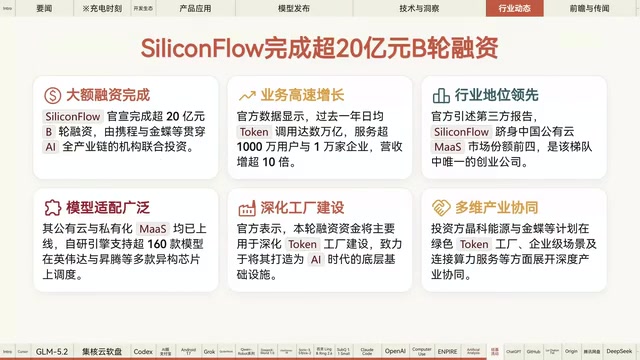
Additionally, SiliconFlow (硅基流动) closed a funding round of over ¥2 billion, with investors including Trip.com Group, with proceeds going toward deepening its "Token Factory" infrastructure.
On the market landscape front, according to a Sensor Tower report, ChatGPT's global market share has dropped below 50% for the first time to approximately 46.4%, though it still holds the top spot globally with over 1.1 billion monthly active users. Understanding this data requires distinguishing two concepts: "market share" vs. "absolute user scale." The absolute volume of over 1.1 billion monthly active users is still growing; the share decline means the overall market is expanding faster than ChatGPT's own growth — new entrants (including Claude, Gemini, Kimi, ERNIE Bot, and others) are serving previously untapped incremental user groups rather than purely "stealing" users from ChatGPT. A 46.4% share still means that nearly one in every two AI assistant users globally is using ChatGPT, and its brand recognition and user habit moat are unlikely to be dismantled in the short term. The real competitive pressure comes from vertical specialization — users only have a genuine motivation to migrate when they find a more specialized alternative for a specific use case.
At the infrastructure layer, there's also a subtle development: due to compute constraints caused by surging AI usage, Microsoft is bringing in AWS cloud capacity for GitHub. Microsoft officially confirmed this "multi-cloud strategy" adjustment — even giants that have built large-scale clouds of their own are being forced to seek support from competitors when compute is tight.
Closing Thoughts
Today's information density is exceptionally high — from the $60 billion Cursor acquisition to GLM-5.2 going open source, from the validated economic value of Agent coding to DeepSeek's massive funding round, all signs point to the same trend: AI Coding and Agents are becoming the value nexus of the entire industry. Capital, models, and platforms are all accelerating simultaneously. AI competition has evolved from "who has the stronger model" to "who can truly deploy Agents into productivity workflows and the physical world."
Related articles
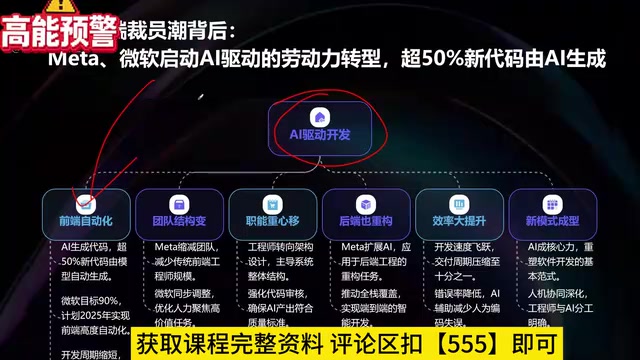
What Is Vibe Coding? The AI Programming Skill Every Developer Needs
What is Vibe Coding? Learn how AI programming is reshaping dev teams, why traditional programmers face displacement, and why Cursor & Claude Code matter.
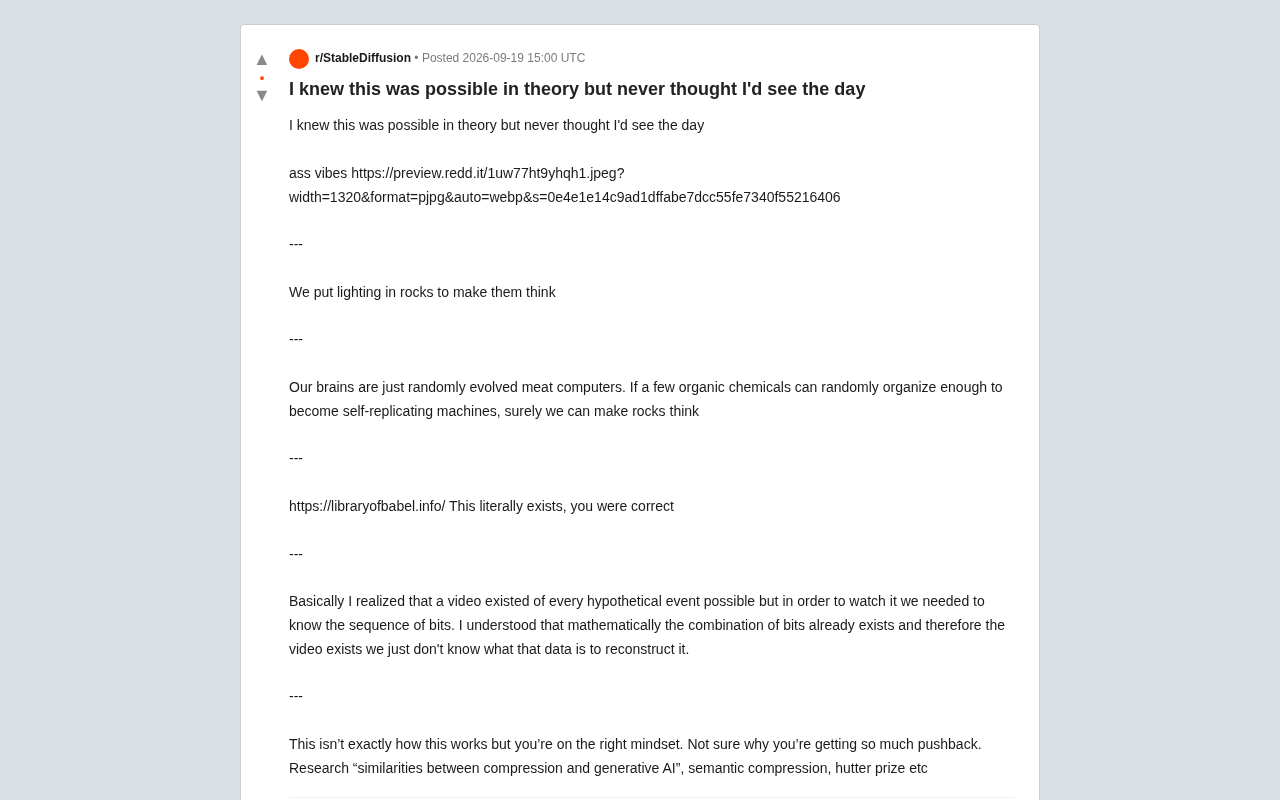
Making Rocks Think: A Philosophical Exploration of Generative AI and Information Compression
From a viral Reddit post to deep AI theory: why compression equals understanding, the Library of Babel thought experiment, semantic compression, and the Hutter Prize.
Irregular Warns: Four AI Lab Security Breaches Traced to the Same Root Cause
Irregular reveals four AI lab security breaches share a single root cause, exposing systemic risks from technology stack homogeneity across the AI industry.