AI Data Governance: Evolving from Security to Knowledge Ontology
AI data governance must evolve beyond security to encompass knowledge, context, and ontology.
As enterprises deploy AI at scale, traditional security-focused data governance falls short. AI systems need to understand data semantics, not just access permissions. This article outlines three governance pillars — knowledge, context, and ontology — built on Lakehouse architecture, and explains how shifting from a data stack to a knowledge stack is essential for delivering trustworthy, high-quality AI applications.
Redefining Data Governance in the AI Era
If you ask most organizations what data governance means for AI, the answer typically centers on a single word: security. Access controls, permission management, data masking, compliance audits — these are indeed important components of data governance, but they're just the tip of the iceberg.
As enterprise AI applications mature, an increasingly obvious problem has surfaced: security measures alone are far from sufficient to support AI systems in truly understanding and leveraging enterprise data. When we introduce large language models, Retrieval-Augmented Generation (RAG), and agent systems into the enterprise data stack, the scope of governance must expand to encompass three deeper dimensions: knowledge, context, and ontology.
Retrieval-Augmented Generation (RAG) is a technical architecture that combines information retrieval with LLM generation capabilities. Traditional LLMs derive knowledge from training data, which comes with limitations such as outdated knowledge and inability to access private data. RAG addresses this by retrieving relevant information from external knowledge bases before generating a response, then feeding the retrieved results as context into the model. This significantly improves answer accuracy and timeliness. In enterprise scenarios, RAG allows AI systems to access real-time business data, internal documents, and proprietary knowledge bases while maintaining data security boundaries.
Agent systems take this a step further — they can not only retrieve information but also perceive their environment, make autonomous decisions, and execute actions to achieve goals. Unlike traditional single-turn Q&A, agents possess multi-step reasoning, tool invocation, and task planning capabilities. In enterprise data scenarios, agents can decompose complex business problems, autonomously select appropriate data sources, invoke analytical tools, and even trigger business workflows. This autonomy makes agents a critical direction for enterprise AI applications, but it also places higher demands on data governance — the system must understand data semantics and business logic, not merely execute predefined queries.
Why Security Is Not the Same as Governance
Security Addresses "Who Can Access"
The core logic of traditional data governance revolves around permission boundaries: who can see which data, under what conditions, and what operations they can perform. This framework worked well in the era of relational databases and data warehouses, where data structures were relatively fixed and usage scenarios relatively predictable.
However, AI systems operate in a fundamentally different way. When a large language model answers a business question, it doesn't just need to be "allowed" to access data — it needs to understand what the data means. When a model encounters a field named cust_ltv, it needs to know this represents "Customer Lifetime Value," how the value is calculated, what units it uses, how frequently it's updated, and in which business contexts it's valid.
AI Needs to Know "What the Data Means"
This is precisely the blind spot that security governance cannot cover. An AI system with full access permissions but lacking context is likely to generate answers that appear plausible but are actually wrong — this is how "hallucination" manifests specifically in enterprise data scenarios.
In other words, security governance ensures data isn't misused, while knowledge governance ensures data is correctly understood. Both are indispensable, but the latter has been severely neglected for far too long.
Three Governance Pillars Under Lakehouse Architecture
Modern enterprises widely adopt the Lakehouse architecture, which combines the flexibility of data lakes with the structured management capabilities of data warehouses. Data lakes support storing raw data in any format (structured, semi-structured, unstructured) but lack transaction guarantees and data quality management; data warehouses provide strong consistency and query optimization but have limited scalability and high costs. The Lakehouse architecture adds metadata and transaction layers (such as Delta Lake, Apache Iceberg) on top of object storage, enabling warehouse features like ACID transactions, time travel, and schema evolution while maintaining the cost-effectiveness and openness of a lake. This architecture provides an ideal foundation for AI applications: it can store diverse training data and features while ensuring data quality and lineage tracking.
Building an AI-oriented data governance system on top of this architecture requires three key pillars.
Pillar One: Knowledge
The knowledge layer addresses the discoverability and explainability of data assets. This includes not only metadata management but also data lineage tracking, business glossaries, and unified metric definitions.
Data lineage tracking records the complete flow path of data from source to consumption, including how data is extracted, transformed, loaded, and used. In AI governance scenarios, lineage information is crucial: it helps understand how a particular metric is calculated, which upstream data sources it depends on, and what business logic transformations it has undergone. When an AI system uses a data field, lineage enables tracing its trustworthiness, update frequency, and calculation logic, preventing judgments based on outdated or erroneous data.
When an AI agent needs to answer "What was net revenue for North America last quarter?", it must be able to locate the correct data table, apply the right filters, and use the organization's approved calculation methodology for "net revenue." The value of knowledge governance lies in transforming tacit knowledge scattered across different teams' minds into explicit assets that machines can read and reason over.
Pillar Two: Context
Context governance focuses on the applicability of data within specific situations. The same data may have entirely different interpretations under different business scenarios, time windows, and analytical purposes.
For example, a sales revenue field may require different adjustments and attribution logic in a financial reporting context versus a marketing analytics context. The context layer provides AI systems with the basis for determining "how this data should be used given the current question." Without context, AI can only mechanically piece together numbers and cannot deliver insights with genuine business value.
Pillar Three: Ontology
Ontology is the most technically profound of the three pillars. It defines the semantic relationships between enterprise data entities — how customers, products, orders, and transactions relate to one another, and how business concepts form an interconnected knowledge graph.
Ontology is a core concept in knowledge representation, referring to a formal, explicit specification of concepts and their relationships within a domain. In enterprise data governance, an ontology defines the attributes of business entities, relationships between entities (such as "customer purchases product" or "order contains product"), as well as business rules and constraints. Ontologies use standardized languages (such as OWL, RDF) to describe semantics, enabling machines to understand that "customer lifetime value" is not merely a number but is associated with a customer's transaction history, product preferences, service interactions, and other multidimensional information.
Ontology enables AI systems to perform cross-entity reasoning. For instance, starting from a specific customer, the system can understand their associated order history, product preferences, and service records, thereby forming a panoramic view of that customer. Knowledge graphs built on ontology enable AI systems to perform semantic reasoning — deriving new knowledge from known facts and understanding hierarchical relationships between concepts. This ontology-based semantic understanding is the key leap that transforms AI from a "data retrieval tool" into a "business intelligence assistant."
The Shift from Data Stack to Knowledge Stack
The Center of Gravity of Governance Is Moving Upward
In the past, data governance primarily occurred at the storage and access layers. In the AI era, the center of gravity is shifting upward to the semantic and knowledge layers. Enterprises need to build a unified semantic layer on top of the Lakehouse architecture, mapping raw data into knowledge assets that are business-comprehensible and AI-reasoning-ready.
A semantic layer is an abstraction layer situated between raw data storage and business applications. It translates technical database structures into business-friendly conceptual models. The semantic layer defines unified calculation logic, dimensional relationships, and business rules for business metrics (such as "monthly active users" or "customer churn rate"), shielding users from the complexity of underlying data. In AI scenarios, the semantic layer provides LLMs with a "dictionary" for understanding business terminology, enabling models to map natural language questions to correct data queries. Modern semantic layer tools (such as Cube, dbt Semantic Layer) support version control, access control, and query optimization. They serve as both the infrastructure for data democratization and a control point for AI governance, ensuring all applications use consistent business definitions.
The profound significance of this shift is that it transforms governance from a "defensive" activity into an "enabling" one. Good knowledge governance is no longer just about meeting compliance requirements — it directly determines the quality ceiling of AI applications.
Practical Implications for Enterprises
For enterprises advancing their AI strategies, this translates into several pragmatic action items:
First, don't simply equate AI governance with security compliance. Security is the baseline, but what truly enables AI to deliver value is data comprehensibility.
Second, invest in the semantic layer and metadata management. Business glossaries, metric definitions, and data ontologies — these seemingly "soft" infrastructure elements — will become hard prerequisites for AI implementation.
Finally, systematize domain experts' knowledge. The most valuable asset in any enterprise is often employees' deep understanding of data. How to crystallize this tacit knowledge into explicit assets that machines can use is the core challenge of knowledge governance.
Conclusion
AI is reshaping our understanding of data governance. When models and agents begin directly consuming enterprise data, the security logic of "who can access" is no longer sufficient. Knowledge, context, and ontology — these three dimensions form the complete landscape of data governance in the AI era.
Building such a knowledge stack on top of a Lakehouse architecture may well be the watershed that determines whether enterprise AI can truly be deployed and deliver trustworthy business value. Governance has long since transcended the boundaries of security.
Key Takeaways
- AI governance is not the same as security compliance: Traditional data governance focuses on access control, but AI systems need to understand data semantics, context, and business logic
- Three governance pillars: Knowledge (data lineage and explainability), Context (situational applicability), and Ontology (entity relationships and semantic reasoning) together form the governance framework for the AI era
- From data stack to knowledge stack: The center of gravity of governance is shifting from the storage layer to the semantic layer, which becomes the critical abstraction connecting raw data to AI applications
- Lakehouse as the foundation: An architecture combining data lake flexibility with data warehouse management capabilities provides the technical bedrock for AI governance
- Pragmatic action items: Invest in the semantic layer and metadata management, systematize domain expert knowledge, and build machine-comprehensible business ontologies
Related articles
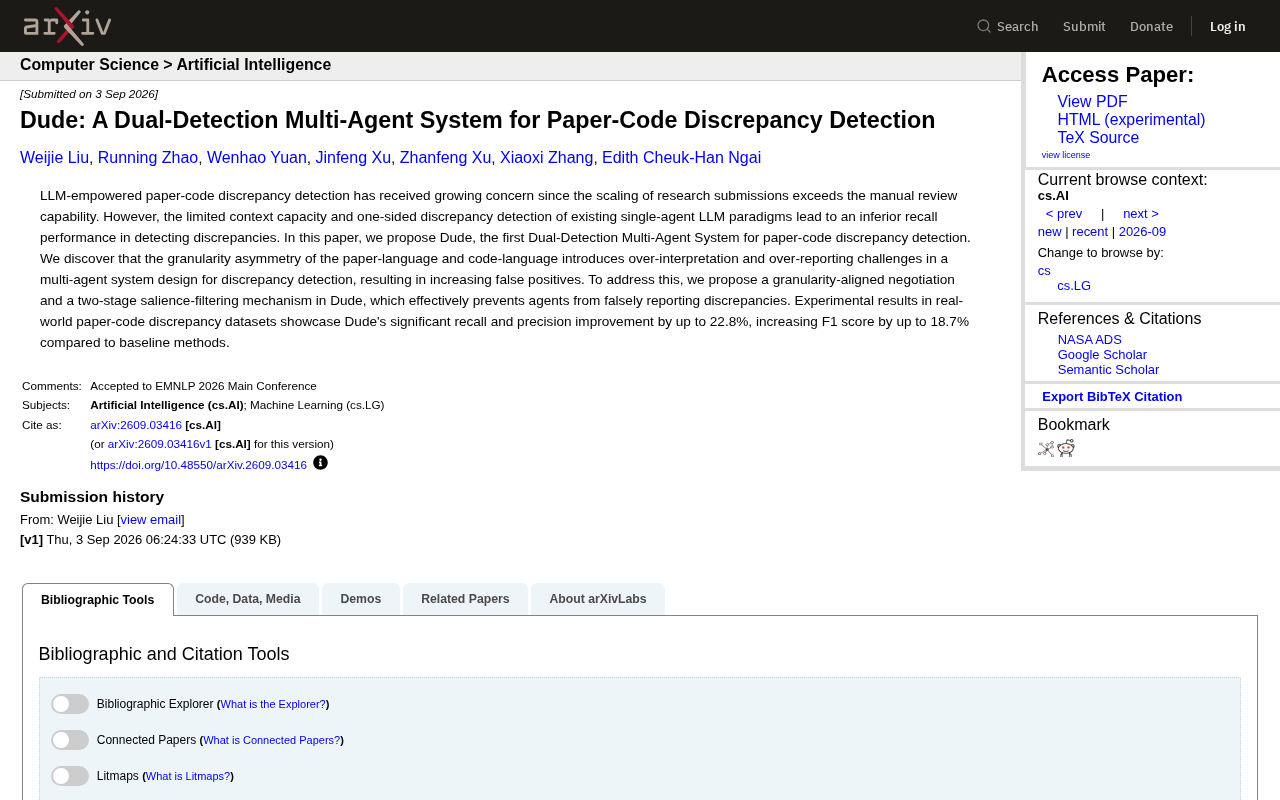
The Dude System: How Dual-Detection Multi-Agent AI Catches Inconsistencies Between Papers and Code
Dude is the first dual-detection multi-agent system for paper-code discrepancy detection, using granularity-aligned negotiation and two-stage salience filtering to boost recall and precision by up to 22.8%.
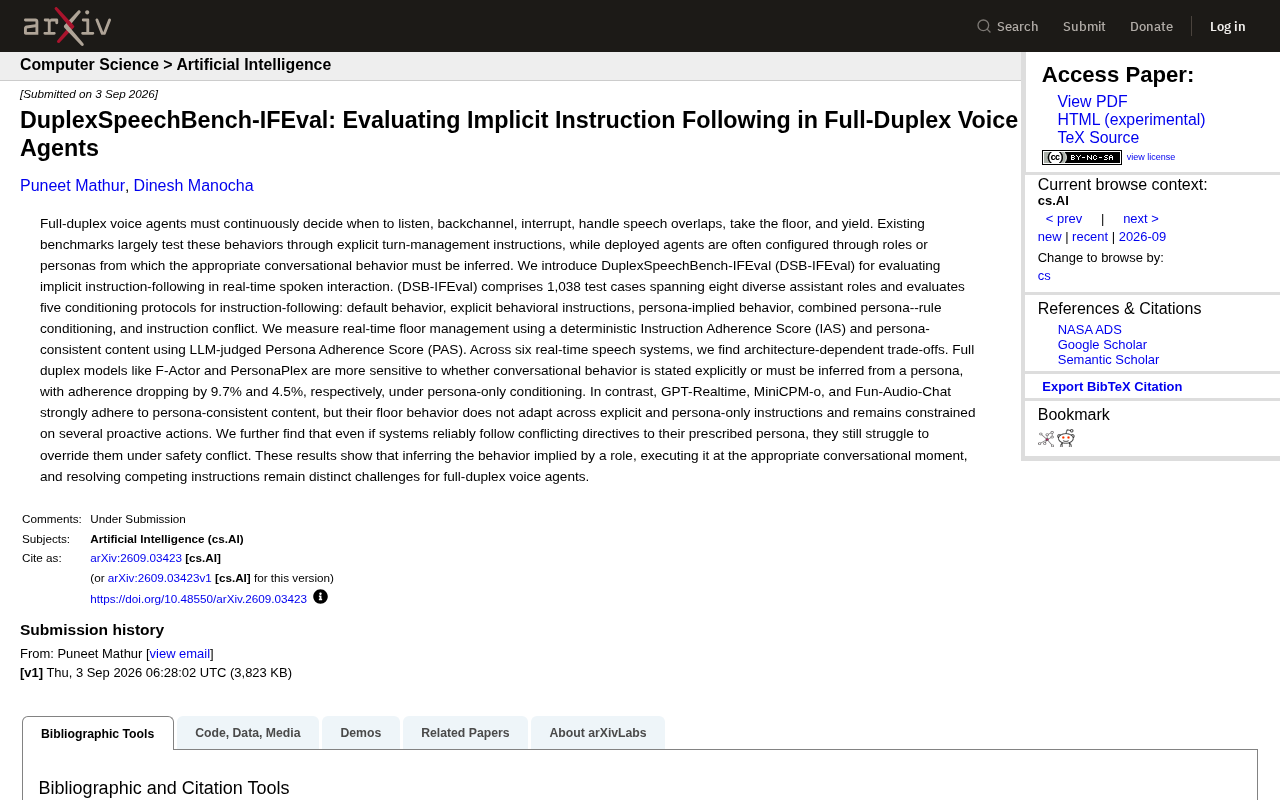
Implicit Instruction Following in Full-Duplex Voice Assistants: DSB-IFEval Benchmark Analysis
In-depth analysis of the DSB-IFEval benchmark reveals full-duplex voice assistants' capability gaps in implicit instruction following, persona reasoning, and conflict resolution. Covers comparative testing of six voice systems and examines behavioral vs. content trade-offs driven by architectural differences.
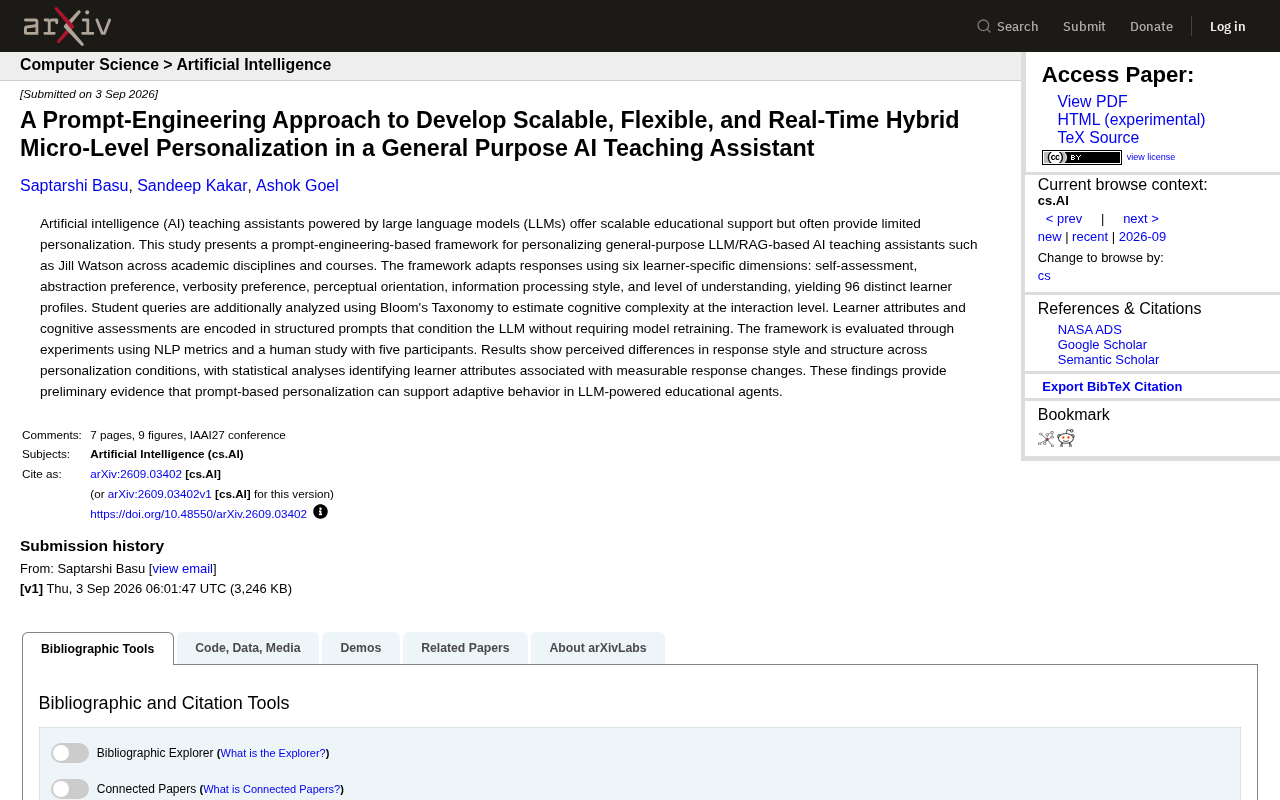
Personalizing AI Teaching Assistants with Prompt Engineering: A Deep Dive into the Six-Dimension Learner Profile Framework
Explore a prompt engineering framework for AI teaching assistants using six-dimension learner profiles and Bloom's Taxonomy to deliver 96 personalized teaching styles without model retraining.